



To effectively navigate the modern marketplace, you must first grasp the significance of purchase history and engagement data. Purchase history refers to the record of transactions made by customers, detailing what they bought, when they bought it, and how much they spent. This data is invaluable as it provides insights into customer preferences, buying patterns, and overall behavior.
By analyzing this information, you can identify trends that inform your marketing strategies and product offerings. Understanding these patterns allows you to tailor your approach to meet the specific needs of your customers, ultimately driving sales and enhancing customer satisfaction. Engagement data, on the other hand, encompasses the interactions customers have with your brand beyond just purchases.
This includes website visits, email opens, social media interactions, and more. By examining engagement data, you can gain a deeper understanding of how customers interact with your brand and what content resonates with them. This information is crucial for creating targeted marketing campaigns that engage customers effectively.
When you combine insights from both purchase history and engagement data, you can develop a comprehensive view of your customers, enabling you to create more personalized experiences that foster loyalty and drive repeat business.
Key Takeaways
- Purchase history and engagement data are essential for understanding customer behavior and preferences.
- Combining these data types enables personalized marketing and tailored customer experiences.
- Analyzing this data supports predictive modeling and dynamic customer segmentation.
- Automated campaigns and A/B testing can be optimized using insights from purchase and engagement data.
- Tracking conversions and improving loyalty programs rely on effectively leveraging these integrated data sources.
Leveraging Purchase History for Targeted Marketing
Once you have a solid understanding of purchase history, the next step is to leverage this information for targeted marketing efforts. By segmenting your customer base according to their purchase behaviors, you can create tailored marketing campaigns that speak directly to their interests. For instance, if you notice that a particular segment frequently purchases outdoor gear, you can design promotions or content that highlights new arrivals in that category.
This targeted approach not only increases the likelihood of conversion but also enhances the overall customer experience by providing relevant offers. Moreover, utilizing purchase history allows you to implement upselling and cross-selling strategies effectively. When you analyze what products are commonly bought together or what items follow a particular purchase, you can recommend complementary products to your customers.
For example, if a customer buys a camera, suggesting accessories like lenses or tripods can enhance their shopping experience while increasing your average order value. By strategically using purchase history in your marketing efforts, you can create a more engaging shopping experience that encourages customers to explore more of what you have to offer.
Utilizing Engagement Data to Enhance Customer Experience


Engagement data plays a pivotal role in enhancing the customer experience by providing insights into how customers interact with your brand across various channels. By analyzing this data, you can identify which touchpoints are most effective in capturing customer attention and driving engagement. For instance, if you find that customers are more likely to engage with your brand through email newsletters rather than social media posts, you can adjust your marketing strategy accordingly.
This ensures that your efforts are focused on the channels that yield the highest return on investment. Additionally, engagement data allows you to personalize communication with your customers. By tracking their interactions with your brand, you can tailor your messaging to align with their interests and preferences.
For example, if a customer frequently engages with content related to fitness, sending them targeted emails about new workout gear or health tips can significantly enhance their experience. This level of personalization not only fosters a stronger connection between your brand and customers but also increases the likelihood of repeat purchases as customers feel valued and understood.
Integrating Purchase History and Engagement Data for Personalized Recommendations
| Purchase Frequency | Average number of purchases per customer in a month | 3.2 | Helps identify active customers for timely recommendations |
| Average Order Value (AOV) | Mean value of customer orders | 75 | Enables targeting with products matching spending habits |
| Engagement Rate | Percentage of customers interacting with recommendations | 45% | Measures effectiveness of personalized content |
| Click-Through Rate (CTR) | Ratio of clicks on recommended items to total recommendations shown | 12% | Indicates relevance of recommendations |
| Conversion Rate | Percentage of recommendations leading to purchases | 8% | Shows success in driving sales through personalization |
| Repeat Purchase Rate | Percentage of customers making multiple purchases | 38% | Reflects customer loyalty influenced by personalized offers |
| Time Spent on Site | Average duration customers spend browsing | 5 min 20 sec | Correlates with engagement and interest in recommendations |
| Product View-to-Purchase Ratio | Number of product views before purchase | 4:1 | Helps optimize recommendation timing and content |
The integration of purchase history and engagement data is essential for creating personalized recommendations that resonate with your customers. By combining these two data sets, you can develop a more nuanced understanding of individual customer preferences and behaviors. For instance, if a customer has previously purchased several books in a specific genre and has engaged with related content on your website, you can recommend new releases or similar titles that align with their interests.
This tailored approach not only enhances the shopping experience but also increases the chances of conversion. Furthermore, personalized recommendations based on integrated data can significantly improve customer retention rates. When customers receive suggestions that genuinely reflect their interests and past behaviors, they are more likely to return for future purchases.
This not only boosts sales but also fosters brand loyalty as customers feel recognized and appreciated. By continuously refining your recommendation algorithms based on ongoing purchase history and engagement data, you can ensure that your suggestions remain relevant and compelling over time.
Analyzing Purchase History and Engagement Data for Predictive Modeling
Analyzing purchase history and engagement data is crucial for developing predictive models that forecast future customer behavior. By examining historical trends and patterns within this data, you can identify potential future purchases and customer needs. For example, if you notice a seasonal spike in sales for certain products during specific months, you can anticipate similar trends in the future and prepare accordingly.
This proactive approach allows you to optimize inventory management and marketing strategies to align with anticipated demand. Moreover, predictive modeling enables you to identify at-risk customers who may be on the verge of churning. By analyzing engagement data alongside purchase history, you can pinpoint customers who have decreased their interactions or have not made a purchase in a while.
With this information, you can implement targeted re-engagement campaigns designed to win back these customers before they decide to take their business elsewhere. By leveraging predictive modeling based on comprehensive data analysis, you can make informed decisions that drive customer retention and long-term success.
Creating Dynamic Segmentation Based on Purchase History and Engagement Data
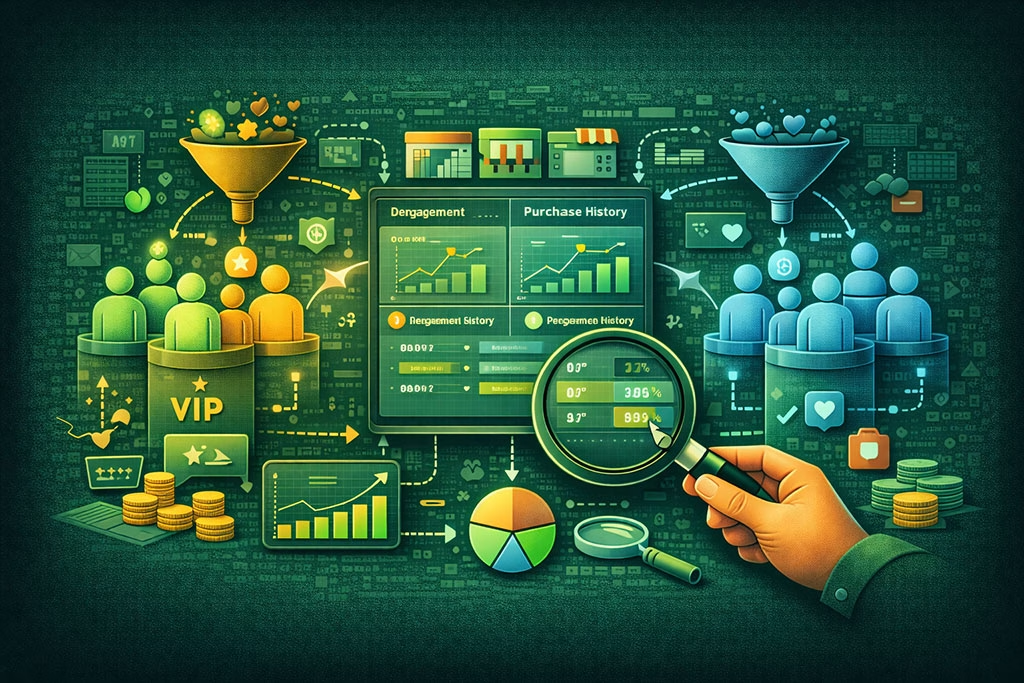
Dynamic segmentation is an effective strategy for categorizing your customer base based on real-time purchase history and engagement data. Unlike static segmentation methods that rely on fixed criteria, dynamic segmentation allows you to adjust customer groups as behaviors change over time. For instance, if a customer who previously purchased only budget-friendly items begins exploring premium products, dynamic segmentation enables you to move them into a new group that reflects their evolving preferences.
This flexibility ensures that your marketing efforts remain relevant and targeted. Additionally, dynamic segmentation empowers you to create highly personalized marketing campaigns tailored to specific customer groups. By continuously monitoring changes in purchase history and engagement patterns, you can develop campaigns that resonate with each segment’s unique interests and behaviors.
For example, if a segment shows increased interest in eco-friendly products based on their recent purchases and engagement with sustainability content, you can craft targeted messaging that highlights your brand’s commitment to sustainability. This level of personalization not only enhances customer satisfaction but also drives higher conversion rates as customers feel understood and valued.
Implementing A/B Testing Using Purchase History and Engagement Data
A/B testing is a powerful tool for optimizing marketing strategies using insights derived from purchase history and engagement data. By creating two variations of a marketing campaign—such as different email subject lines or promotional offers—you can test which version resonates better with your audience. Analyzing the results allows you to make data-driven decisions about which approach yields higher conversion rates or engagement levels.
When implementing A/B testing, it’s essential to consider how purchase history and engagement data inform your hypotheses. For instance, if previous campaigns targeting specific segments have shown varying levels of success, you can tailor your A/B tests accordingly. By focusing on segments that have demonstrated strong engagement in the past or those that have recently made purchases, you increase the likelihood of obtaining meaningful results from your tests.
This iterative process not only refines your marketing strategies but also enhances overall campaign effectiveness.
Automating Marketing Campaigns with Purchase History and Engagement Data
Automation is a game-changer in modern marketing, especially when it comes to utilizing purchase history and engagement data effectively. By automating marketing campaigns based on these insights, you can deliver timely and relevant messages to customers without manual intervention. For example, setting up automated email sequences triggered by specific actions—such as abandoned carts or recent purchases—ensures that customers receive personalized communication at critical moments in their buying journey.
Moreover, automation allows for real-time adjustments based on ongoing data analysis. If a particular product sees a surge in interest due to recent engagement trends or social media buzz, automated campaigns can be adjusted instantly to capitalize on this momentum. This agility ensures that your marketing efforts remain aligned with current customer interests while maximizing conversion opportunities.
Improving Retargeting Strategies with Purchase History and Engagement Data
Retargeting is an essential strategy for re-engaging potential customers who have shown interest in your products but have not completed a purchase. By leveraging purchase history and engagement data, you can create highly targeted retargeting campaigns that resonate with these individuals. For instance, if a customer viewed specific products but did not complete their purchase, retargeting ads featuring those items or similar products can remind them of their interest and encourage them to return.
Additionally, utilizing engagement data allows for more nuanced retargeting strategies. If a customer has engaged with content related to a particular product category—such as reading blog posts or watching videos—you can tailor retargeting ads to highlight those products specifically. This personalized approach increases the likelihood of conversion as it speaks directly to the customer’s demonstrated interests and behaviors.
Enhancing Customer Loyalty Programs with Purchase History and Engagement Data
Customer loyalty programs are most effective when they are tailored to individual preferences based on purchase history and engagement data. By analyzing this information, you can design loyalty programs that reward customers for behaviors that matter most to them. For example, if a customer frequently purchases certain products or engages with specific content types, offering rewards or exclusive access related to those interests can significantly enhance their loyalty experience.
Moreover, leveraging purchase history allows for tiered loyalty programs that recognize varying levels of engagement among customers.
By segmenting customers based on their purchasing frequency or total spend, you can create different tiers within your loyalty program that offer increasingly valuable rewards.
This not only incentivizes repeat purchases but also fosters a sense of exclusivity among loyal customers who feel appreciated for their continued support.
Measuring Success: Tracking Conversions with Purchase History and Engagement Data
To gauge the effectiveness of your marketing strategies utilizing purchase history and engagement data, it’s crucial to implement robust tracking mechanisms for conversions. By establishing clear metrics for success—such as conversion rates from specific campaigns or segments—you can assess how well your efforts translate into actual sales or desired actions. Additionally, analyzing conversion data alongside purchase history provides valuable insights into customer behavior post-purchase.
Understanding how often customers return for repeat purchases or engage further with your brand after initial conversions allows for continuous improvement in your marketing strategies. By regularly reviewing these metrics and adjusting your approach based on findings from both purchase history and engagement data analysis, you can ensure sustained success in driving conversions while enhancing overall customer satisfaction. In conclusion, understanding and leveraging purchase history alongside engagement data is essential for creating effective marketing strategies in today’s competitive landscape.
By integrating these insights into every aspect of your marketing efforts—from targeted campaigns to personalized recommendations—you position yourself for success in building lasting relationships with your customers while driving growth for your business.
In the quest to enhance marketing strategies, understanding how to effectively combine purchase history and engagement data is crucial for creating segments that convert. For those looking to delve deeper into email marketing strategies, a related article titled Email Marketing vs.
Transactional Emails: Understanding the Key Differences provides valuable insights that can complement your approach to segmentation and customer engagement.
FAQs
What is purchase history data?
Purchase history data refers to the record of all past transactions made by a customer, including details such as products bought, purchase dates, quantities, and amounts spent. This data helps businesses understand customer buying behavior.
What is engagement data?
Engagement data tracks how customers interact with a brand across various channels, such as website visits, email opens, clicks, social media interactions, and app usage. It provides insights into customer interests and activity levels.
Why combine purchase history and engagement data for segmentation?
Combining purchase history and engagement data allows businesses to create more accurate and actionable customer segments. This integrated approach helps identify not only who has bought products but also how actively customers engage with marketing efforts, leading to higher conversion rates.
How can combining these data types improve marketing campaigns?
By using both purchase and engagement data, marketers can tailor messages and offers to specific customer needs and behaviors, increasing relevance and effectiveness. This leads to better targeting, improved customer experience, and higher conversion rates.
What tools are commonly used to combine purchase history and engagement data?
Customer Relationship Management (CRM) systems, marketing automation platforms, and data analytics tools are commonly used to integrate and analyze purchase and engagement data for segmentation purposes.
What challenges might arise when combining purchase history and engagement data?
Challenges include data integration issues, inconsistent data formats, data privacy concerns, and ensuring data accuracy. Overcoming these requires proper data management strategies and compliance with privacy regulations.
How often should businesses update their customer segments based on combined data?
Customer segments should be updated regularly, often in real-time or at least monthly, to reflect the latest purchase and engagement behaviors. Frequent updates ensure marketing efforts remain relevant and effective.
Can combining purchase history and engagement data help in predicting future customer behavior?
Yes, integrating these data sets enables predictive analytics models to forecast customer preferences, likelihood to purchase, and potential churn, allowing businesses to proactively engage customers.
Is it necessary to have a large amount of data to effectively combine purchase history and engagement data?
While larger datasets can provide more insights, even small to medium-sized businesses can benefit from combining these data types by focusing on quality and relevance rather than quantity.
How does data privacy impact the use of purchase history and engagement data?
Data privacy regulations such as GDPR and CCPA require businesses to handle customer data responsibly, obtain consent, and provide transparency. Compliance is essential when collecting, combining, and using purchase and engagement data for segmentation.