



In the digital age, email campaigns have become a fundamental component of effective marketing strategies. Despite the proliferation of social media and instant messaging platforms, email continues to be a powerful tool for businesses to connect with their audience. The direct access to customers’ inboxes enables personalized communication that drives engagement and conversions.
Email marketing extends beyond simple message delivery; it involves creating meaningful experiences that resonate with recipients. Email campaigns encompass various formats, including newsletters, promotional offers, event invitations, and product announcements. While each format serves a specific purpose, they all share the common objective of building customer relationships and prompting action.
Understanding the nuances of email marketing allows businesses to utilize this medium effectively, ensuring messages not only reach the intended audience but also stimulate brand engagement.
Key Takeaways
- Personalization and AI are transforming email campaigns for better engagement.
- Automation and triggered emails enhance timely and relevant communication.
- Mobile optimization is crucial for reaching users on various devices.
- Data privacy and compliance remain key challenges in email marketing.
- Integration with other channels and predictive analytics drive campaign effectiveness.
Personalization and Dynamic Content
One of the most significant trends in email marketing is the shift towards personalization and dynamic content. You may have noticed that generic emails often fail to capture attention, while tailored messages resonate more deeply with recipients. By utilizing data such as past purchases, browsing behavior, and demographic information, you can create personalized experiences that speak directly to individual preferences.
This level of customization can significantly enhance open rates and click-through rates, ultimately leading to higher conversion rates. Dynamic content takes personalization a step further by allowing you to change elements within an email based on the recipient’s characteristics or behaviors. For instance, you might include product recommendations that align with a customer’s previous purchases or display different images based on their location.
This approach not only makes your emails more relevant but also fosters a sense of connection between your brand and your audience. As you implement these strategies, you’ll likely see an increase in engagement and loyalty from your subscribers.
Artificial Intelligence and Machine Learning

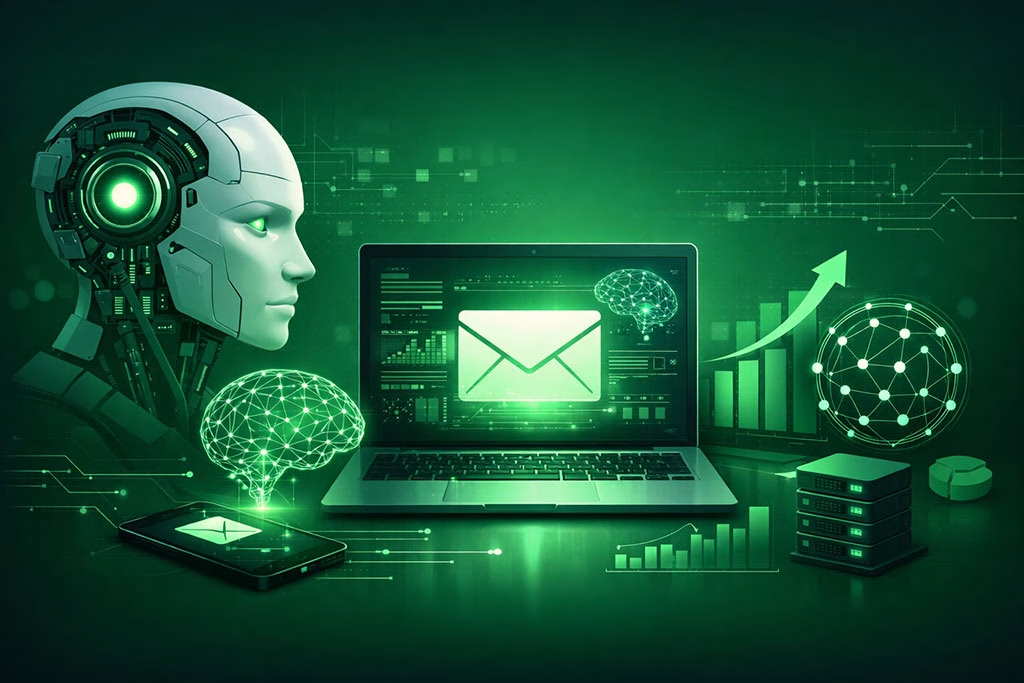
Artificial intelligence (AI) and machine learning are revolutionizing the way you approach email marketing. These technologies enable you to analyze vast amounts of data quickly, providing insights that can inform your campaign strategies. For example, AI can help you identify patterns in customer behavior, allowing you to segment your audience more effectively and tailor your messaging accordingly.
By harnessing these tools, you can create more targeted campaigns that resonate with your audience on a deeper level. Moreover, AI can optimize send times and subject lines based on historical data, ensuring that your emails reach recipients when they are most likely to engage. This level of automation not only saves you time but also enhances the overall effectiveness of your campaigns.
As you embrace AI and machine learning in your email marketing efforts, you’ll find that these technologies can significantly improve your return on investment and help you stay ahead of the competition.
Automation and Triggered Emails
Automation is another game-changer in the realm of email campaigns. You may already be familiar with the concept of triggered emails—messages sent automatically based on specific actions taken by subscribers. For instance, if a customer abandons their shopping cart, an automated email can remind them of the items left behind, often leading to increased sales.
This timely communication not only enhances the customer experience but also allows you to nurture leads without constant manual effort. In addition to cart abandonment emails, automation can be applied to welcome series, re-engagement campaigns, and post-purchase follow-ups. By setting up these automated workflows, you can ensure that your audience receives relevant content at critical moments in their customer journey.
As you explore automation further, you’ll discover how it can streamline your processes and free up valuable time for you to focus on strategy and creativity.
Interactive Email Experiences
| AI-Powered Personalization | Use of artificial intelligence to tailor email content based on user behavior and preferences. | Increases engagement and conversion rates by delivering relevant content. | Open Rate: +25%, Click-Through Rate: +30% |
| Interactive Emails | Embedding interactive elements like polls, carousels, and quizzes directly within emails. | Enhances user experience and encourages immediate interaction. | Engagement Rate: +40%, Bounce Rate: -15% |
| AMP for Email | Accelerated Mobile Pages technology enabling dynamic and real-time content inside emails. | Allows users to take actions without leaving the inbox, improving conversion. | Conversion Rate: +20%, Time Spent on Email: +35% |
| Advanced Segmentation | Using granular data to segment audiences more precisely for targeted messaging. | Improves relevance and reduces unsubscribe rates. | Unsubscribe Rate: -10%, ROI: +15% |
| Automation and Drip Campaigns | Automated sequences triggered by user actions or lifecycle stages. | Maintains consistent communication and nurtures leads effectively. | Lead Conversion: +35%, Email Frequency: Optimized |
| Privacy-First Technologies | Adoption of privacy-compliant tools and practices like zero-party data collection. | Builds trust and ensures compliance with regulations like GDPR and CCPA. | Data Accuracy: +20%, Compliance Rate: 100% |
As technology continues to evolve, so do the possibilities for creating interactive email experiences. You might have seen emails that allow recipients to engage directly within the message—such as surveys, polls, or even product carousels. These interactive elements not only capture attention but also encourage recipients to spend more time engaging with your content.
By incorporating such features into your campaigns, you can create a more dynamic experience that stands out in crowded inboxes. Interactive emails also provide valuable insights into customer preferences and behaviors. For example, if you include a poll in your email and track responses, you can gain a better understanding of what your audience values most.
This data can inform future campaigns and help you refine your messaging strategy. As you experiment with interactive elements, you’ll likely find that they enhance engagement rates and foster a deeper connection with your subscribers.
Mobile Optimization
In today’s fast-paced world, mobile optimization is no longer optional; it’s essential. With a significant portion of email opens occurring on mobile devices, ensuring that your emails are mobile-friendly is crucial for maximizing engagement. You may want to consider responsive design techniques that allow your emails to adapt seamlessly to various screen sizes.
This approach ensures that your content is easily readable and visually appealing, regardless of the device used. Additionally, mobile optimization extends beyond design; it also involves considering user experience elements such as load times and call-to-action buttons. You should aim for concise messaging that captures attention quickly and encourages immediate action.
By prioritizing mobile optimization in your email campaigns, you’ll cater to the preferences of today’s consumers and enhance the likelihood of conversions.
Data Privacy and Compliance
As you navigate the landscape of email marketing, it’s vital to remain aware of data privacy regulations and compliance requirements. With laws such as GDPR and CCPA in place, protecting customer data has become a top priority for businesses worldwide. You must ensure that your email practices align with these regulations by obtaining explicit consent from subscribers before sending marketing communications.
Transparency is key when it comes to data privacy. You should clearly communicate how customer data will be used and provide options for subscribers to manage their preferences easily. By prioritizing data privacy and compliance in your email campaigns, you not only build trust with your audience but also mitigate the risk of potential legal issues down the line.
Email Deliverability and Engagement
Email deliverability is a critical factor in the success of your campaigns. Even the most well-crafted emails will fall flat if they don’t reach their intended recipients’ inboxes. To improve deliverability rates, you should focus on maintaining a clean email list by regularly removing inactive subscribers and ensuring that your content adheres to best practices.
Engaging subject lines and relevant content can also help reduce bounce rates and increase open rates. Engagement metrics play a significant role in determining whether your emails land in the inbox or the dreaded spam folder.
High open rates and click-through rates signal to email service providers that your content is valuable, which can positively impact future deliverability.
As you refine your strategies for improving engagement, you’ll find that fostering genuine connections with your audience leads to better results across all aspects of your email campaigns.
Integration with Other Marketing Channels
To maximize the effectiveness of your email campaigns, consider integrating them with other marketing channels. You may find that combining email marketing with social media, content marketing, or paid advertising creates a cohesive strategy that amplifies your message across multiple touchpoints. For instance, promoting an upcoming webinar through both email and social media can increase awareness and drive registrations.
Cross-channel integration allows for a more holistic approach to customer engagement. By leveraging insights from various channels, you can create targeted campaigns that resonate with your audience at different stages of their journey. As you explore these integrations further, you’ll discover how they can enhance brand visibility and drive conversions more effectively than isolated efforts.
Predictive Analytics and Behavioral Targeting
Predictive analytics is transforming how you approach email marketing by enabling you to anticipate customer behavior based on historical data. By analyzing patterns in past interactions, you can identify trends that inform future campaigns—such as predicting which products a customer is likely to purchase next or when they might be ready for re-engagement. This level of insight allows for more strategic targeting and personalized messaging.
Behavioral targeting takes this concept further by segmenting your audience based on their actions rather than just demographics. For example, if a subscriber frequently engages with specific types of content or products, you can tailor future emails to align with those interests. By leveraging predictive analytics and behavioral targeting in your campaigns, you’ll create more relevant experiences that drive engagement and conversions.
The Future of Email Campaigns
As you look ahead to the future of email campaigns, it’s clear that innovation will continue to shape this dynamic landscape. The integration of advanced technologies such as AI, machine learning, and predictive analytics will empower marketers like yourself to create increasingly personalized experiences for subscribers. Additionally, as consumer expectations evolve, staying attuned to trends such as interactivity and mobile optimization will be essential for maintaining relevance.
Ultimately, the future of email marketing lies in its ability to adapt and evolve alongside changing consumer behaviors and technological advancements. By embracing these trends and prioritizing strategies that foster genuine connections with your audience, you’ll position yourself for success in an ever-competitive marketplace. As you embark on this journey, remember that effective email campaigns are not just about sending messages; they are about building relationships that drive lasting loyalty and engagement.
As businesses continue to adapt to the latest technology trends shaping the future of email campaigns, understanding the importance of nurturing customer relationships becomes crucial. A related article that delves into this topic is titled “Revamp Your Welcome Series: Build a Nurturing Drip Campaign,” which offers insights on how to effectively engage new subscribers through automated email sequences. You can read more about it [here](https://blog.smartmails.io/2025/11/29/revamp-your-welcome-series-build-a-nurturing-drip-campaign-2/).
FAQs
What are the latest technology trends influencing email campaigns?
Recent trends include the use of artificial intelligence (AI) for personalization, automation tools for campaign management, interactive email elements, and advanced analytics to track user engagement and optimize performance.
How is artificial intelligence improving email marketing?
AI enhances email marketing by enabling personalized content recommendations, optimizing send times, segmenting audiences more effectively, and automating responses to increase engagement and conversion rates.
What role does automation play in modern email campaigns?
Automation streamlines the process of sending targeted emails based on user behavior, triggers, and preferences, allowing marketers to deliver timely and relevant messages without manual intervention.
Are interactive emails becoming more common?
Yes, interactive emails that include elements like polls, quizzes, and clickable carousels are gaining popularity as they increase user engagement and provide a more dynamic experience within the inbox.
How do advanced analytics impact email campaign strategies?
Advanced analytics provide deeper insights into recipient behavior, such as open rates, click patterns, and conversion metrics, enabling marketers to refine their strategies and improve campaign effectiveness.
Is mobile optimization still important for email campaigns?
Absolutely. With the majority of emails being opened on mobile devices, ensuring emails are responsive and visually appealing on all screen sizes remains a critical trend in email marketing.
What is the significance of data privacy in email marketing?
Data privacy regulations like GDPR and CCPA require marketers to handle subscriber data responsibly, obtain proper consent, and maintain transparency, which influences how email campaigns are designed and executed.
How are email marketers using machine learning?
Machine learning helps predict subscriber behavior, optimize subject lines, segment audiences dynamically, and personalize content to increase engagement and reduce unsubscribe rates.
Can email campaigns integrate with other marketing channels?
Yes, integrating email campaigns with social media, SMS, and CRM systems creates a cohesive multichannel marketing strategy that enhances customer experience and drives better results.
What future developments can we expect in email marketing technology?
Future developments may include more sophisticated AI-driven personalization, greater use of augmented reality (AR) in emails, enhanced automation capabilities, and improved tools for real-time interaction and feedback.