


Emotional Impact in Email Subject Lines
Incorporating emotional elements into email subject lines significantly enhances engagement rates. Research shows that subject lines triggering specific emotional responses often achieve higher open rates than neutral alternatives. Effective subject lines may evoke positive emotions such as excitement or curiosity, or create a sense of urgency that prompts immediate action.
For example, subject lines suggesting personal transformation or exclusive opportunities typically generate stronger reader interest. The psychological basis for this effectiveness lies in how emotions influence decision-making processes. Subject lines that connect with readers’ aspirations, concerns, or desires create a more compelling reason to engage with the content.
Rather than simply describing email contents, emotionally resonant language frames the communication in terms of potential experiences or benefits. Understanding the target audience’s emotional priorities allows marketers to craft subject lines that align with recipients’ motivations and values, thereby increasing the likelihood of engagement and response.
Key Takeaways
- Emotional subject lines significantly boost open rates by connecting with readers on a personal level.
- Personalization in subject lines increases relevance and encourages higher engagement.
- Curiosity-driven subject lines entice recipients to open emails to satisfy their interest.
- Incorporating social proof, like testimonials or user counts, enhances credibility and effectiveness.
- Using FOMO, numbers, power words, and mobile-friendly formatting further maximizes subject line impact.
The Importance of Personalization
In today’s digital landscape, personalization is no longer just a nice-to-have; it’s a necessity. You may have noticed that emails tailored to your interests or past behaviors tend to stand out in your inbox. This is because personalized subject lines create a sense of relevance and connection.
When you address your audience by name or reference their previous interactions with your brand, you make them feel valued and understood. For example, a subject line like “John, Your Exclusive Offer Awaits!” immediately captures attention because it feels tailored specifically for the recipient. Furthermore, personalization goes beyond just using names; it involves understanding your audience’s preferences and behaviors.
By segmenting your email list based on demographics or past purchases, you can craft subject lines that speak directly to specific groups.
This targeted approach not only increases open rates but also enhances the overall customer experience.
When recipients see content that aligns with their interests, they are more likely to engage with your emails and take action.
In essence, personalization transforms a generic email into a meaningful conversation, fostering loyalty and trust.
Leveraging Curiosity to Increase Opens

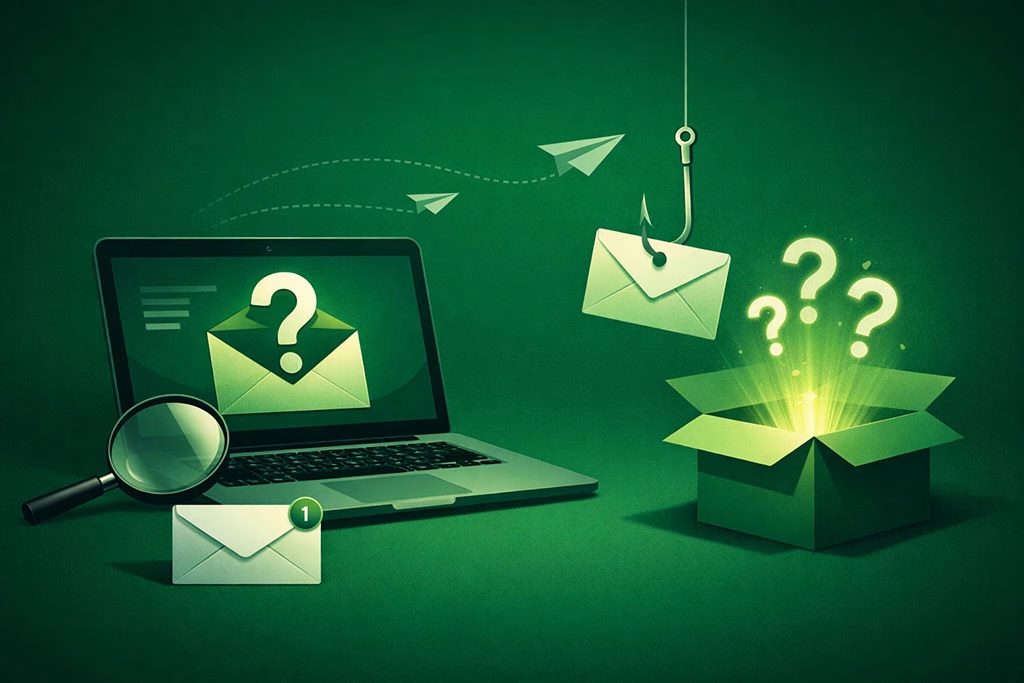
Curiosity is a powerful motivator, and when used effectively in subject lines, it can significantly boost open rates. You might have experienced this yourself—an email with a mysterious or intriguing subject line piques your interest and prompts you to click. By crafting subject lines that leave readers wanting more, you create an irresistible urge to discover what lies within the email.
For instance, a subject line like “You Won’t Believe What We’ve Just Launched!” invites curiosity and encourages recipients to find out more. However, it’s essential to strike a balance between intrigue and clarity. While you want to spark curiosity, you also need to ensure that the subject line aligns with the content of the email.
Misleading subject lines may lead to initial opens but can ultimately damage trust and credibility. Instead, consider using open-ended questions or teasers that hint at valuable information without giving everything away. A subject line such as “Discover the Secret to Effortless Productivity” not only arouses curiosity but also promises valuable insights, making it more likely for recipients to engage.
The Influence of Social Proof on Subject Line Effectiveness
Social proof is a psychological phenomenon where individuals look to others for guidance on how to behave or make decisions. In the context of email marketing, incorporating elements of social proof into your subject lines can enhance their effectiveness significantly. When you mention testimonials, user reviews, or statistics about how many people have benefited from your product or service, you create a sense of trust and credibility.
For example, a subject line like “Join 10,000 Happy Customers Today!” leverages social proof by showcasing the popularity of your offering. Additionally, social proof can also tap into the fear of missing out (FOMO), which we’ll explore further in the next section. By highlighting how many people are already engaged with your brand or product, you encourage others to join in.
This creates a sense of urgency and exclusivity that can drive higher open rates. When recipients see that others are benefiting from what you offer, they are more likely to feel compelled to open your email and learn more about how they can be part of that success story.
The Role of FOMO (Fear of Missing Out) in Subject Lines
| Use Curiosity | Curiosity Gap | Increases open rates by up to 22% | “You Won’t Believe What We Have in Store” |
| Personalization | Social Identity Theory | Boosts open rates by 18% | “John, Your Exclusive Offer Inside” |
| Urgency | Fear of Missing Out (FOMO) | Raises open rates by 15% | “Last Chance: Sale Ends Tonight” |
| Use Numbers | Quantitative Clarity | Improves open rates by 14% | “5 Tips to Boost Your Productivity” |
| Keep it Short | Processing Fluency | Enhances open rates by 12% | “Quick Update for You” |
| Use Power Words | Emotional Triggering | Increases open rates by 10% | “Unlock Your Potential Today” |
FOMO is a powerful psychological trigger that can significantly influence behavior. In email marketing, leveraging FOMO in your subject lines can create a sense of urgency that prompts immediate action from your audience. When people feel they might miss out on something valuable—be it an exclusive offer, limited-time discount, or unique opportunity—they are more likely to open your email right away.
A subject line like “Last Chance: Don’t Miss Out on 50% Off!” effectively communicates urgency and encourages recipients to act quickly. Moreover, FOMO can be particularly effective when combined with other strategies such as social proof or personalization. For instance, if you mention that a limited number of spots are available for an event and highlight how many people have already signed up, you create a compelling reason for recipients to engage with your email.
This combination not only drives urgency but also reinforces the idea that others are taking action, making it even more enticing for those who may be on the fence about participating.
Using Numbers and Statistics to Capture Attention

Incorporating numbers and statistics into your subject lines can be an effective way to capture attention and convey value quickly. People are naturally drawn to quantifiable information because it provides clarity and specificity. For example, a subject line like “5 Tips for Boosting Your Productivity” immediately communicates what the reader can expect from the email while also suggesting that the content is actionable and easy to digest.
Additionally, numbers can help create a sense of authority and credibility. When you present data or statistics in your subject lines, you position yourself as an expert in your field. A subject line such as “Join 80% of Our Customers Who Improved Their Health” not only highlights a compelling statistic but also encourages readers to consider how they too can benefit from what you’re offering.
By using numbers effectively, you can enhance the perceived value of your emails and increase the likelihood of engagement.
The Impact of Power Words on Subject Line Engagement
Power words are emotionally charged terms that evoke strong feelings and reactions from readers. When used strategically in subject lines, these words can significantly enhance engagement and open rates. You might find that certain words resonate more with your audience than others; for instance, words like “exclusive,” “limited,” “proven,” or “guaranteed” can create excitement and urgency.
A subject line such as “Unlock Your Exclusive Access Now!” immediately conveys a sense of privilege and urgency that encourages recipients to take action. Moreover, power words can also help convey the benefits of your offering more effectively. Instead of simply stating what your email contains, consider how you can use impactful language to highlight the value it provides.
A subject line like “Transform Your Life with These Proven Strategies” not only promises valuable insights but also instills confidence in the reader that they will gain something meaningful from opening the email. By carefully selecting power words that align with your brand voice and message, you can create compelling subject lines that resonate with your audience.
Crafting Subject Lines for Mobile Optimization
In an increasingly mobile-driven world, optimizing your subject lines for mobile devices is crucial for ensuring maximum engagement. With many people checking their emails on smartphones or tablets, it’s essential to consider how your subject lines will appear on smaller screens. You may have noticed that longer subject lines often get cut off on mobile devices; therefore, keeping them concise is key.
Aim for around 40 characters or fewer to ensure that your message is clear and impactful even on smaller displays. Additionally, consider how mobile users interact with their devices differently than desktop users. Mobile users often skim through their inboxes quickly; therefore, using clear language and strong calls-to-action in your subject lines can help capture their attention effectively.
Phrases like “Shop Now” or “Get Started Today” provide immediate direction and encourage action. By prioritizing mobile optimization in your subject line strategy, you can enhance user experience and increase the likelihood of engagement across all devices. In conclusion, crafting effective subject lines requires a thoughtful approach that considers various psychological triggers and strategies.
By harnessing the power of emotion, personalization, curiosity, social proof, FOMO, numbers, power words, and mobile optimization, you can create compelling subject lines that resonate with your audience and drive higher engagement rates. As you refine your email marketing strategy, remember that every word counts—so take the time to craft subject lines that not only capture attention but also foster meaningful connections with your readers.
In addition to exploring the intricacies of crafting the perfect subject line in “The Anatomy of a Perfect Subject Line: Psychology-Backed Tips for Higher Opens,” you may find valuable insights in the article on Unlocking Email Success: 5 Advanced A/B Tests for 2025. This piece delves into advanced testing strategies that can further enhance your email marketing effectiveness, complementing the psychological principles discussed in the subject line article.
FAQs
What is the importance of a subject line in email marketing?
A subject line is crucial in email marketing because it is the first thing recipients see and significantly influences whether they open the email. A well-crafted subject line can increase open rates, engagement, and ultimately the effectiveness of the campaign.
How does psychology play a role in creating effective subject lines?
Psychology helps marketers understand human behavior, emotions, and decision-making processes. By applying psychological principles such as curiosity, urgency, social proof, and personalization, subject lines can be designed to capture attention and motivate recipients to open the email.
What are some key psychological triggers used in subject lines?
Common psychological triggers include curiosity (creating intrigue), urgency (implying limited time or availability), exclusivity (making the recipient feel special), social proof (referencing popularity or endorsements), and personalization (using the recipient’s name or preferences).
How long should a subject line be for optimal open rates?
Subject lines are generally most effective when they are concise, typically between 40 to 60 characters. This length ensures the subject line is fully visible on most devices and quickly communicates the message.
Is personalization important in subject lines?
Yes, personalization can significantly improve open rates. Including the recipient’s name or referencing their interests makes the email feel more relevant and engaging, increasing the likelihood of it being opened.
Can using emojis in subject lines improve open rates?
Emojis can enhance subject lines by making them more eye-catching and conveying emotion quickly. However, their effectiveness depends on the audience and context; overuse or inappropriate emojis may reduce credibility or appear unprofessional.
Should subject lines always create a sense of urgency?
While urgency can boost open rates by encouraging immediate action, overusing this tactic may lead to fatigue or distrust. It is best used sparingly and genuinely to maintain credibility.
How can A/B testing help improve subject lines?
A/B testing allows marketers to compare different subject lines by sending variations to small segments of their audience. This data-driven approach helps identify which subject lines perform better, enabling optimization for higher open rates.
Are there any words or phrases to avoid in subject lines?
Yes, certain words like “free,” “guaranteed,” or excessive use of all caps and exclamation marks can trigger spam filters or appear spammy to recipients. Avoiding these can improve deliverability and trust.
What role does clarity play in subject line effectiveness?
Clarity is essential; subject lines should clearly communicate the email’s content or value proposition. Ambiguous or misleading subject lines may increase opens initially but can harm long-term engagement and trust.