



High volume sending is the practice of distributing large quantities of emails or messages in a short period. Organizations typically use this approach for marketing campaigns, product launches, and customer engagement initiatives that require reaching wide audiences efficiently. Successful high volume sending requires understanding several key components: the necessary technical infrastructure, effective content strategies, and best practices to ensure deliverability rather than messages being filtered as spam.
This communication method extends beyond mere message distribution—it involves relationship building with recipients. The success of high volume sending depends significantly on understanding target audience demographics and preferences. While this approach offers extensive reach potential, it requires careful implementation to prevent recipient fatigue and protect brand reputation.
Organizations that effectively implement high volume sending strategies can significantly enhance their marketing effectiveness and strengthen customer relationships.
Key Takeaways
- High volume sending requires robust infrastructure and strategic planning to ensure deliverability and maintain sender reputation.
- Startups face unique challenges like limited resources and scaling difficulties when managing large-scale sending operations.
- Automation, personalization, and segmentation are key tactics to enhance engagement and efficiency in high volume campaigns.
- Compliance with legal regulations and continuous monitoring are essential to avoid penalties and optimize performance.
- Integrating high volume sending with other marketing channels and staying updated on future trends can maximize overall marketing impact.
Challenges of High Volume Sending for Startups
For startups, high volume sending presents unique challenges that can hinder growth if not addressed properly. One of the primary obstacles is the limited resources that many startups face. With smaller teams and budgets, you may find it difficult to invest in the necessary tools and technologies that facilitate effective high volume sending.
This can lead to inefficiencies in your campaigns, resulting in lower engagement rates and wasted resources. Another significant challenge is establishing a strong sender reputation. As a new player in the market, you may not have an established history with email service providers (ESPs), which can make it harder for your messages to reach their intended recipients.
If your emails are flagged as spam or if you experience high bounce rates, it can severely impact your ability to communicate effectively with your audience. To overcome these hurdles, you must prioritize building a solid foundation for your email marketing strategy, focusing on quality over quantity and ensuring compliance with best practices.
Scaling Up Your Sending Operations


As your startup grows, so too will your need for scaling up your sending operations. This process involves not only increasing the volume of messages you send but also enhancing the efficiency and effectiveness of your campaigns. One of the first steps in scaling is to invest in robust email marketing software that can handle larger volumes while providing analytics and automation features.
This will allow you to streamline your processes and focus on crafting compelling content that resonates with your audience. Additionally, consider segmenting your audience as you scale. By categorizing your subscribers based on their behaviors, preferences, or demographics, you can tailor your messaging to meet their specific needs.
This targeted approach not only improves engagement rates but also helps maintain a positive sender reputation as you increase your sending frequency. As you expand your operations, remember that maintaining quality is just as important as increasing quantity; a well-executed campaign can yield better results than a poorly planned mass send.
Choosing the Right Sending Platform
Selecting the right sending platform is crucial for successful high volume sending. With numerous options available, it’s essential to evaluate each platform based on your specific needs and goals. Look for features such as scalability, deliverability rates, user-friendly interfaces, and robust analytics capabilities.
A platform that offers automation tools can significantly enhance your efficiency by allowing you to schedule campaigns and manage subscriber lists seamlessly. Moreover, consider the level of customer support provided by the platform. As a startup, you may encounter challenges that require immediate assistance, so having access to responsive support can make a significant difference in your operations.
Additionally, ensure that the platform complies with industry regulations and best practices to protect your brand’s reputation and maintain compliance with laws such as GDPR or CAN-SPAM.
Managing Deliverability and Reputation
| Emails Sent per Day | 1,000 – 10,000 | 100,000 – 1,000,000+ | Volume increases exponentially during scaleup |
| Server Uptime | 99.5% | 99.9%+ | Higher reliability required to avoid crashes |
| Average Delivery Time | Seconds to minutes | Milliseconds to seconds | Optimized infrastructure reduces latency |
| Bounce Rate | 5% – 10% | 1% – 3% | Improved list hygiene and validation |
| Throughput (Emails per Second) | 10 – 100 | 1,000 – 10,000+ | Scaling infrastructure and parallel processing |
| Error Rate | 1% – 3% | Less than 1% | Better error handling and retry mechanisms |
| Infrastructure Cost Efficiency | Moderate | High | Optimized resource allocation and scaling |
| Monitoring & Alerting | Basic | Advanced with real-time analytics | Critical for managing high volume sending |
Deliverability is a critical aspect of high volume sending that directly impacts the success of your campaigns. To ensure that your emails reach their intended recipients, you must actively manage your sender reputation. This involves monitoring key metrics such as open rates, click-through rates, and bounce rates.
A poor sender reputation can lead to emails being filtered into spam folders or blocked altogether, which can severely limit your outreach efforts. To maintain a positive reputation, focus on building a clean email list by regularly removing inactive subscribers and ensuring that all recipients have opted in to receive communications from you. Additionally, authenticate your emails using protocols like SPF, DKIM, and DMARC to enhance deliverability.
By prioritizing these practices, you can improve your chances of reaching inboxes and fostering engagement with your audience.
Automating High Volume Sending
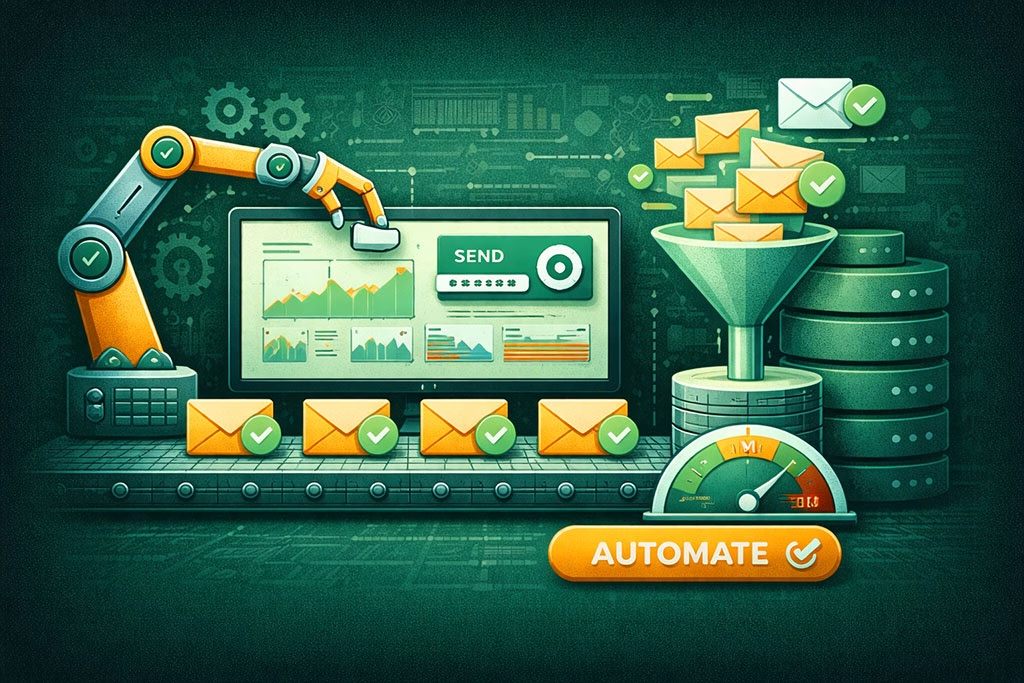
Automation is a game-changer when it comes to high volume sending. By leveraging automation tools, you can streamline various aspects of your email marketing campaigns, from list management to content delivery. This not only saves time but also allows you to focus on crafting engaging content that resonates with your audience.
For instance, automated workflows can help you send welcome emails to new subscribers or follow-up messages after a purchase without manual intervention. Moreover, automation enables you to personalize communications at scale. By utilizing data-driven insights about your subscribers’ behaviors and preferences, you can create tailored messages that speak directly to their needs.
This level of personalization enhances engagement and fosters loyalty among your audience, ultimately leading to higher conversion rates. As you implement automation into your high volume sending strategy, be sure to continuously monitor performance and make adjustments as needed to optimize results.
Personalization and Segmentation Strategies
In today’s digital landscape, personalization is no longer optional; it’s essential for effective communication. When engaging in high volume sending, employing personalization strategies can significantly enhance the relevance of your messages. Start by segmenting your audience based on various criteria such as demographics, purchase history, or engagement levels.
This allows you to tailor content specifically for each group, increasing the likelihood of capturing their attention. Additionally, consider using dynamic content within your emails to further personalize the experience for each recipient. For example, you could display different product recommendations based on past purchases or include personalized greetings that address subscribers by name.
By investing time in developing these strategies, you not only improve engagement rates but also foster a sense of connection with your audience that can lead to long-term loyalty.
Compliance and Legal Considerations
Navigating compliance and legal considerations is paramount when engaging in high volume sending. Various regulations govern email marketing practices, including GDPR in Europe and CAN-SPAM in the United States. As a startup, it’s crucial to familiarize yourself with these laws to avoid potential penalties and protect your brand’s reputation.
Ensure that all recipients have opted in to receive communications from you and provide clear options for unsubscribing from future emails. Additionally, maintain transparency regarding how you collect and use subscriber data. Clearly communicate your privacy policy and adhere to best practices for data protection.
By prioritizing compliance from the outset, you not only safeguard your business but also build trust with your audience—a vital component for long-term success in high volume sending.
Monitoring and Analyzing Performance
To maximize the effectiveness of your high volume sending efforts, continuous monitoring and analysis of performance metrics are essential. Key performance indicators (KPIs) such as open rates, click-through rates, conversion rates, and unsubscribe rates provide valuable insights into how well your campaigns are resonating with your audience. By regularly reviewing these metrics, you can identify trends and areas for improvement.
Utilize A/B testing to experiment with different subject lines, content formats, or send times to determine what resonates best with your audience. This data-driven approach allows you to refine your strategies over time and optimize future campaigns for better results. Remember that monitoring performance is an ongoing process; staying attuned to changes in audience behavior will enable you to adapt quickly and maintain relevance in a competitive landscape.
Integrating High Volume Sending with Other Marketing Channels
To create a cohesive marketing strategy, integrating high volume sending with other channels is crucial. Email marketing should not exist in isolation; instead, it should complement other efforts such as social media marketing, content marketing, and paid advertising. For instance, consider promoting your email sign-up incentives through social media platforms to grow your subscriber base while simultaneously driving traffic to your website.
Additionally, leverage insights from other channels to inform your email campaigns. For example, if certain content performs well on social media or generates significant traffic to your website, consider repurposing that content for an email campaign tailored to engage subscribers further. By creating synergy between channels, you enhance overall brand visibility and increase the likelihood of conversions across multiple touchpoints.
Future Trends in High Volume Sending
As technology continues to evolve, so too will the landscape of high volume sending. One emerging trend is the increased use of artificial intelligence (AI) and machine learning algorithms to enhance personalization and optimize campaign performance. These technologies enable marketers to analyze vast amounts of data quickly and make informed decisions about content delivery and audience segmentation.
Another trend is the growing emphasis on interactive content within email campaigns. Incorporating elements such as polls, quizzes, or videos can significantly boost engagement rates by encouraging recipients to interact with your messages actively. As consumer preferences shift towards more dynamic experiences, adapting to these trends will be essential for maintaining relevance in high volume sending.
In conclusion, navigating the world of high volume sending requires a strategic approach that encompasses understanding its mechanics, overcoming challenges specific to startups, scaling operations effectively, choosing the right platforms, managing deliverability and reputation, automating processes, personalizing content, ensuring compliance with legal standards, monitoring performance metrics diligently, integrating with other marketing channels seamlessly, and staying ahead of future trends.
By embracing these principles and continuously refining your strategies, you can harness the power of high volume sending to drive meaningful engagement and growth for your startup.
In the journey from startup to scaleup, managing high volume sending without crashing is crucial for maintaining customer engagement and ensuring deliverability. A related article that delves into the technical aspects of email marketing is titled “Are Your Email Templates Affecting Deliverability? A Marketer’s Technical Guide,” which provides insights on how to optimize email templates for better performance. You can read it [here](https://blog.
smartmails.
io/2025/11/14/are-your-email-templates-affecting-deliverability-a-marketers-technical-guide/).
FAQs
What does “high volume sending” mean in the context of startups and scaleups?
High volume sending refers to the process of dispatching large quantities of emails, messages, or data transmissions, often as part of marketing campaigns, customer communications, or transactional notifications. For startups and scaleups, managing this efficiently is crucial to maintain deliverability and system performance.
Why is managing high volume sending important for startups transitioning to scaleups?
As startups grow into scaleups, the volume of communications typically increases significantly. Proper management ensures that systems do not crash, messages reach their intended recipients, and the company maintains a good sender reputation, which is vital for ongoing customer engagement and business growth.
What are common challenges faced when scaling up sending volumes?
Common challenges include system overloads leading to crashes, increased bounce rates, spam filtering, maintaining deliverability, managing sender reputation, and ensuring compliance with regulations like GDPR or CAN-SPAM.
How can startups prevent system crashes when increasing sending volumes?
Startups can prevent crashes by optimizing infrastructure, using scalable cloud services, implementing rate limiting, employing queue management systems, and monitoring system performance to anticipate and address bottlenecks.
What role does sender reputation play in high volume sending?
Sender reputation affects email deliverability. A poor reputation can lead to emails being marked as spam or blocked. Maintaining a good reputation involves sending relevant content, managing bounce rates, avoiding spam traps, and adhering to best practices.
Are there tools or services that help manage high volume sending?
Yes, there are various email service providers (ESPs), cloud-based messaging platforms, and delivery optimization tools designed to handle high volume sending efficiently, offering features like automated scaling, analytics, and compliance management.
How important is compliance with regulations in high volume sending?
Compliance is critical to avoid legal penalties and maintain customer trust. Regulations like GDPR, CAN-SPAM, and CASL set rules for consent, content, and data handling that must be followed when sending large volumes of communications.
What strategies can improve deliverability during scaleup?
Strategies include segmenting audiences, personalizing content, authenticating emails with SPF, DKIM, and DMARC, cleaning email lists regularly, and monitoring engagement metrics to adjust sending practices accordingly.
When should a startup consider transitioning to a more robust sending infrastructure?
A startup should consider upgrading when current systems show signs of strain, such as delayed sending, increased errors, or when the volume of communications grows beyond the capacity of existing infrastructure, typically during the scaleup phase.
Can high volume sending impact customer experience?
Yes, poorly managed high volume sending can lead to delayed or missed communications, spam filtering, or overwhelming customers with irrelevant messages, all of which can negatively affect customer satisfaction and retention.