



You operate in an increasingly competitive market where the acquisition cost of a new customer frequently exceeds the cost of retaining an existing one. Furthermore, a substantial segment of your existing customer base may deviate from active engagement over time, leading to a phenomenon commonly referred to as churn. This necessitates a strategic focus on not merely retaining current customers but also on re-engaging those who have become inactive. This article will guide you through the implementation of predictive win-back campaigns, a data-driven approach designed to revitalize customer relationships and substantially enhance customer lifetime value (CLV).
Before embarking on win-back initiatives, you must establish a clear understanding of what Customer Lifetime Value (CLV) signifies for your business and the mechanisms through which customer churn occurs. CLV represents the total revenue a business can reasonably expect from a single customer account throughout their relationship. Churn, conversely, is the rate at which customers discontinue their relationship with your service or product.
Defining Customer Lifetime Value
You calculate CLV using various methodologies, from simple historical averages to complex predictive models. Regardless of the specific formula, the core principle remains consistent: understanding the long-term profitability of each customer. This metric enables you to allocate resources effectively and justify investments in customer retention and re-engagement strategies. A high CLV signifies a robust customer base and a sustainable business model.
Analyzing Churn Patterns
Identifying the patterns and predictors of churn is paramount. You need to distinguish between voluntary and involuntary churn, understand the typical lifecycle of your customers, and pinpoint critical junctures where disengagement often begins. Through detailed analysis, you can uncover the ‘why’ behind customer departures, forming the bedrock for targeted win-back efforts. Consider factors such as purchase frequency, last purchase date, engagement with marketing communications, and interactions with customer support.
In the quest to enhance customer retention and maximize Customer Lifetime Value (LTV), businesses can benefit from understanding the strategies outlined in related articles. For instance, the article on maximizing conversions through retargeting pixels provides valuable insights into how targeted advertising can effectively re-engage past customers. By integrating these techniques with predictive win-back campaigns, companies can create a comprehensive approach to retaining valuable customers. To learn more about this topic, you can read the article here: Maximizing Conversions with Retargeting Pixels.
The Strategic Imperative of Predictive Win-Back Campaigns
Predictive win-back campaigns represent a sophisticated evolution of traditional re-engagement efforts. Instead of reactive, generic outreach, these campaigns leverage data and analytics to anticipate customer disengagement and deliver personalized interventions at opportune moments. Historical data indicates that even dormant customers are not entirely lost; strategic win-back campaigns can recover up to 26% of churned customers, demonstrating their significant economic impact.
Moving Beyond Reactive Re-engagement
Your traditional approach to win-back might involve a blanket “we miss you” email sent to all customers who haven’t purchased in an arbitrary timeframe. This method, while better than no outreach, is inherently inefficient. It fails to account for individual customer journeys, specific reasons for churn, or their unique preferences. Predictive win-back, in contrast, is proactive and personalized.
Anticipating Customer Behavior
The essence of prediction lies in identifying early warning signs of dormancy. You must develop models that analyze historical customer data to anticipate when customers are approaching a state of inactivity. This allows you to intervene before they fully disengage, akin to patching a small leak before it becomes a flood. This proactive stance significantly increases the likelihood of successful re-engagement.
Architecting Your Predictive Win-Back Framework

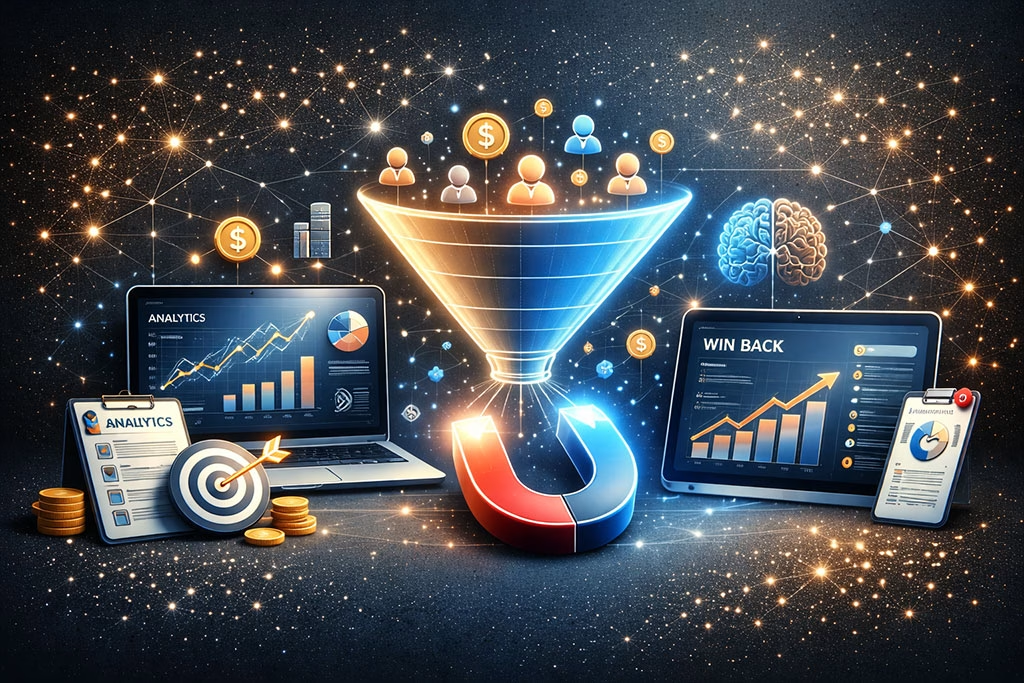
The construction of an effective predictive win-back framework requires a multi-faceted approach, integrating data analytics, AI-driven personalization, and a structured communication strategy. This framework should be designed to be agile and responsive to evolving customer behaviors.
Data Collection and Segmentation
The foundation of any predictive campaign is robust data. You must collect and analyze comprehensive customer data, including purchase history, browsing behavior, engagement with marketing materials, interaction with customer service, and demographic information. This data then facilitates meaningful segmentation. For instance, you could segment customers by their last purchase date, product categories purchased, or their value tier.
Identifying Dormant Customer Segments
Your data analysis should prioritize identifying “dormant” customers, typically those who haven’t made a purchase within a 60-90 day window. This specific timeframe is critical because customers within this period are often considered “at-risk” rather than irrevocably churned. Targeting this segment with well-crafted “We miss you” messages, coupled with compelling offers, has proven to be an effective strategy.
Understanding Churn Triggers
Beyond mere inactivity, delve into the specific reasons for dormancy. Did they stop purchasing a particular product line? Did their engagement with your emails decline sharply after a specific interaction? Understanding these triggers allows for more precise and empathetic messaging.
Leveraging AI for Personalization and Nurturing
Artificial intelligence, particularly machine learning algorithms, plays a pivotal role in operationalizing predictive win-back campaigns. These technologies enable a level of personalization and timely intervention that manual processes cannot achieve.
AI-Driven Chatbots for Engagement
You can deploy AI-powered chatbots to engage inactive customers. These chatbots can deliver personalized win-back messages and incentives, dynamically tailored based on the customer’s past purchase history, browsing patterns, or even previous conversations. This direct, interactive engagement creates a more compelling re-engagement experience.
Predictive Lifecycle Nurturing
AI algorithms can anticipate when customers are likely to be ready for their next purchase. By analyzing historical data and behavioral patterns, the system can trigger timely, personalized recommendations. This proactive nurturing aims to increase repeat purchases and preemptively reduce churn, ensuring you remain top-of-mind at critical junctures.
Crafting Compelling Win-Back Communications
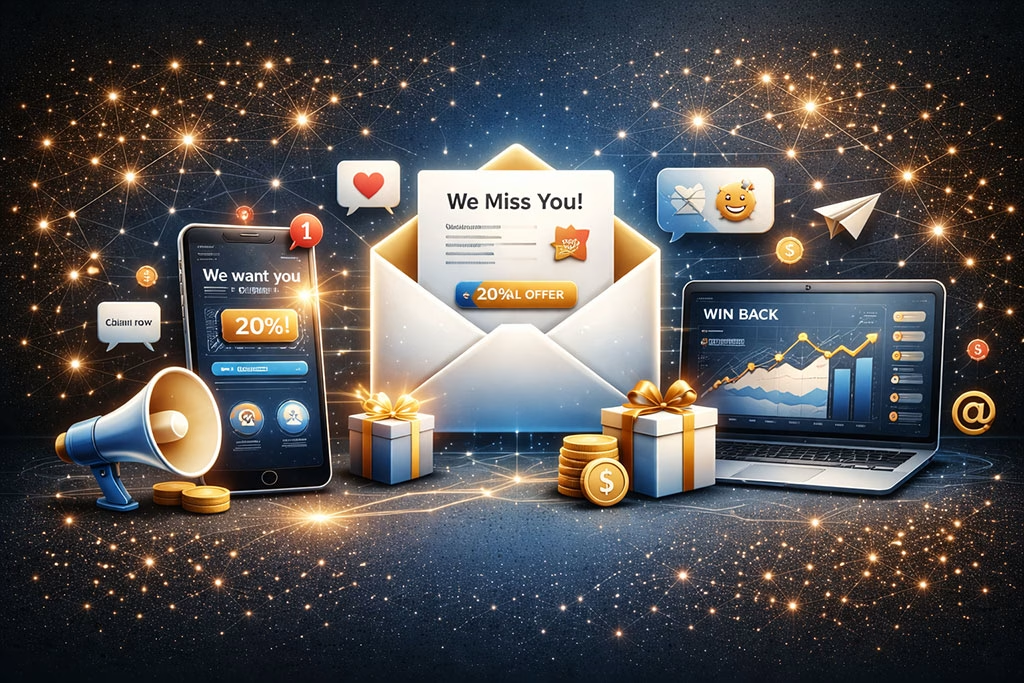
The effectiveness of your win-back campaigns hinges significantly on the quality and relevance of your communication. Generic messages are unlikely to resonate; instead, you must focus on brief, personal, and value-driven content.
Short, Personal Messaging Frameworks
Your win-back sequences should be concise and direct. The goal is to remind customers of the value they once found in your product or service and to highlight improvements or new offerings that might address their past concerns. Avoid lengthy emails; instead, opt for sharp, impactful messages.
Highlighting “What’s Changed”
Rather than relying solely on discounts, emphasize what has changed since the customer last engaged. Have you released new features? Improved customer service? Expanded your product range? Articulate these advancements clearly, demonstrating that you have evolved and are responsive to feedback. This approach helps to overcome previous pain points directly.
Addressing Specific Pain Points
Generic “we miss you” messages possess limited efficacy. Instead, customize your win-back campaigns to address the specific pain points that may have led to churn. If analysis indicates a customer churned due to a known product deficiency, highlight how that issue has been resolved. This targeted approach demonstrates that you understand their needs and are committed to improving their experience.
Crafting Irresistible Offers and Incentives
While the emphasis should not solely be on discounts, strategic offers and incentives remain a powerful tool to encourage re-engagement. These offers should be carefully designed to align with the customer’s perceived value and your business objectives.
Time-Sensitive Promotions
Utilize time-sensitive promotions to create a sense of urgency and encourage quick re-engagement. These can be delivered through conversational AI interfaces, adding an interactive and immediate dimension to the offer. The transient nature of the offer motivates prompt action.
Tiered Loyalty Programs
Introduce or highlight multi-tiered loyalty structures that reward increasing engagement. These programs can offer benefits such as bonus points, complimentary shipping, early access to new products, or exclusive content. By reinforcing actions customers already value, you create a compelling reason for them to return and ascend the loyalty ladder.
In the quest for maximizing Customer Lifetime Value (LTV), implementing predictive win-back campaigns can significantly enhance customer retention and engagement. A related article discusses the importance of creating inclusive marketing strategies that cater to diverse audiences, which can further support your efforts in retaining customers. By understanding the nuances of customer preferences, businesses can tailor their campaigns effectively. For more insights on this topic, you can read about future-proof email accessibility in this article.
Optimizing and Expanding Win-Back Strategies
| Metric | Description | Typical Value | Impact on LTV |
|---|---|---|---|
| Customer Churn Rate | Percentage of customers lost over a period | 5-10% monthly | Lower churn increases LTV |
| Win Back Campaign Response Rate | Percentage of lapsed customers who respond to re-engagement efforts | 15-25% | Higher response improves LTV |
| Reactivation Rate | Percentage of customers who resume purchasing after win back | 10-20% | Directly increases LTV |
| Average Purchase Frequency | Number of purchases per customer per year | 4-6 times | Higher frequency boosts LTV |
| Average Order Value (AOV) | Average amount spent per purchase | Varies by industry | Higher AOV increases LTV |
| Predictive Model Accuracy | Effectiveness of model in identifying customers likely to churn | 75-90% | Better targeting improves campaign ROI and LTV |
| Campaign ROI | Return on investment from win back campaigns | 3x – 5x | Higher ROI indicates effective LTV maximization |
The journey of maximizing CLV through predictive win-back campaigns is continuous. It requires ongoing optimization, testing, and exploration of new channels and acquisition methods.
Re-engagement Through Conversational AI
Beyond initial outreach, conversational AI can facilitate ongoing re-engagement. These AI tools can provide personalized recommendations, answer queries, and even help customers navigate purchase decisions, effectively acting as an always-on sales and support assistant. This continuous interaction keeps your brand relevant and accessible.
Personalized Recommendations
Leverage conversational AI to deliver highly personalized product or service recommendations based on the customer’s past behavior and inferred preferences. This bespoke approach can reignite interest and guide them towards a new purchase. For example, if a customer previously purchased a specific type of software, the AI could recommend an upgrade or complementary tool.
Referral Programs as a CLV Multiplier
While not strictly a win-back tactic for individuals, integrating referral programs into your overall customer value strategy has a direct impact on CLV in an indirect manner. Customers acquired through referrals are inherently more valuable.
The Power of Referred Customers
Research consistently demonstrates that customers acquired through referrals exhibit significantly higher lifetime value, often 16-25% greater, compared to those acquired through paid channels. Furthermore, referred customers convert at a rate 3-5 times faster than leads generated through traditional paid marketing. By encouraging your active customer base to refer new customers, you are effectively seeding your ecosystem with high-CLV individuals who are less prone to churn, thereby reducing the future burden on your win-back campaigns. This creates a virtuous cycle of customer acquisition and retention.
In conclusion, you must recognize that maximizing Customer Lifetime Value is a dynamic, ongoing process that extends beyond initial acquisition. Predictive win-back campaigns, underpinned by robust data analytics and sophisticated AI, offer a powerful mechanism to re-engage inactive customers, mitigate churn, and ultimately drive sustainable business growth. By adopting these strategies, you effectively transform past liabilities into future assets, ensuring a resilient and profitable customer base.
FAQs
What is Customer Lifetime Value (LTV)?
Customer Lifetime Value (LTV) is a metric that estimates the total revenue a business can expect from a single customer account throughout the entire duration of their relationship. It helps companies understand the long-term value of their customers and make informed marketing and retention decisions.
How do predictive win-back campaigns help maximize LTV?
Predictive win-back campaigns use data analytics and machine learning to identify customers who are at risk of churning. By targeting these customers with personalized offers or communications, businesses can re-engage them, reduce churn rates, and ultimately increase their lifetime value.
What data is typically used in predictive win-back campaigns?
Predictive win-back campaigns often utilize customer purchase history, engagement metrics, browsing behavior, demographic information, and past interaction data. This information helps build models that predict the likelihood of churn and the best strategies to win back customers.
What are common strategies used in win-back campaigns?
Common strategies include personalized email offers, discounts or incentives, targeted advertisements, re-engagement content, and customer feedback requests. These tactics aim to remind customers of the brand’s value and encourage them to resume purchasing or interacting.
Why is it important to focus on maximizing LTV rather than just acquiring new customers?
Focusing on maximizing LTV is often more cost-effective because retaining existing customers typically costs less than acquiring new ones. Additionally, loyal customers tend to spend more over time, provide valuable feedback, and can become brand advocates, all of which contribute to sustainable business growth.