



Optimizing your customer retention strategy is crucial for sustainable business growth. One of the most effective tools at your disposal for this endeavor is the email campaign. By consistently engaging your existing customer base, you can foster loyalty, encourage repeat purchases, and ultimately increase their lifetime value. This article will guide you through the process of developing and implementing robust email campaigns designed to maximize your customer retention.
Before diving into the specifics of email campaigns, it’s beneficial to grasp why customer retention is so vital. Acquiring new customers generally costs significantly more than retaining existing ones. A loyal customer base provides a steady revenue stream and acts as advocates for your brand, often through word-of-mouth referrals.
The Lifetime Value of a Customer
Consider the long-term impact of a single customer. Their initial purchase is just one transaction. Over time, recurring purchases, upgrades, and referrals contribute substantially to your business’s bottom line. Email campaigns are instrumental in nurturing this relationship and extending their customer journey with your brand. You are not just selling a product or service; you are cultivating a lasting connection.
Identifying Churn Risk
A key aspect of retention is recognizing when a customer might be disengaging. Early identification of ‘at-risk’ customers allows you to proactively intervene with targeted email campaigns. Look for signs such as decreased engagement with your emails, prolonged periods without a purchase, or a lack of interaction with your product or service. Analyzing these behavioral patterns is critical for effective intervention.
In the quest to minimize customer churn, businesses often turn to effective email campaigns as a strategic tool. A related article that delves deeper into the various email marketing tools available is titled “Email Marketing Tools: Ultimate Resource List 2025.” This comprehensive resource provides insights into the best tools that can enhance email marketing efforts, ultimately helping businesses retain customers and improve engagement. For more information, you can read the article here: Email Marketing Tools: Ultimate Resource List 2025.
Building Your Customer Email List Ethically and Effectively
The foundation of any successful email campaign is a robust and engaged email list. The methods you use to collect email addresses are as important as the content you send. You want to ensure that subscribers genuinely want to receive your communications.
Permission-Based Opt-Ins
Never purchase email lists. This practice often leads to low engagement rates, high unsubscribe rates, and potential damage to your sender reputation. Instead, focus on obtaining explicit consent from individuals.
Transparent Consent Forms
Clearly state what subscribers will receive when they sign up for your emails. Avoid ambiguity. A simple checkbox indicating agreement to receive marketing communications is a good practice. This transparency builds trust from the outset.
Incentivizing Sign-Ups
Offer value in exchange for an email address. This could be a discount on their first purchase, exclusive content, early access to sales, or a free resource. The incentive should be relevant to your target audience and your product or service.
Segmenting Your Audience for Precision Targeting
Once you have a growing email list, the next step is to segment it. Sending generic emails to your entire list is rarely effective. Different segments of your customer base will have varying needs, preferences, and stages in their customer journey.
Demographic Segmentation
Divide your audience based on attributes like age, location, gender, or income level. This allows you to tailor promotions or content that is specifically relevant to these demographic groups. For example, local events might be promoted to customers within a certain geographical radius.
Behavioral Segmentation
This is perhaps one of the most powerful segmentation methods for retention. Categorize customers based on their interactions with your brand. This includes purchase history, website browsing behavior, engagement with previous emails, or product usage patterns.
Recent Purchasers
Customers who have recently made a purchase are prime candidates for follow-up emails that offer product tips, complementary items, or request feedback.
Inactive Customers
Identify customers who haven’t purchased or engaged in a defined period. These individuals are high-priority for re-engagement campaigns.
High-Value Customers
Recognize your most loyal and frequent spenders. These customers deserve special treatment, such as exclusive early access to sales or personalized recommendations.
Crafting Engaging Email Content for Retention


The content of your emails is what ultimately determines their effectiveness. It needs to be valuable, relevant, and compelling enough to encourage interaction and reinforce the customer’s connection with your brand.
Personalization Beyond the First Name
Going beyond simply addressing a customer by their first name is crucial. Leverage your segmented data to create truly personalized experiences.
Dynamic Content Blocks
Based on a customer’s purchase history or browsing behavior, dynamically insert product recommendations, relevant articles, or special offers directly into their email. This makes the email feel handcrafted for them.
Behavioral Triggers
Automate emails based on specific actions or inactions. For example, a “thank you for your purchase” email, a “happy birthday” email with a special discount, or a “we miss you” email for inactive customers.
Providing Value Beyond Sales Pitches
While sales are important, your emails should not solely focus on promoting products. Provide genuine value to your customers to build a stronger relationship.
Educational Content
Share blog posts, tutorials, guides, or webinars that help customers get more out of your product or service, or address common pain points related to your industry. Position yourself as a helpful resource.
Exclusive Content and Early Access
Offer subscribers content that isn’t available anywhere else or grant them early access to new product launches, sales events, or beta features. This makes them feel like insiders.
Customer Spotlights or Testimonials
Showcase how other customers are successfully using your products or services. This builds social proof and inspires current customers. You could feature user-generated content or success stories.
Optimizing for Mobile Readability
A significant portion of email opens occur on mobile devices. If your emails are not optimized for mobile, you risk alienating a large segment of your audience.
Responsive Design
Ensure your email templates automatically adjust their layout, font size, and images to fit different screen sizes. Test your emails on various devices.
Concise Copy and Clear CTAs
Mobile users often scan emails. Keep your subject lines, preheaders, and email body concise. Make your calls to action (CTAs) prominent and easy to tap.
Implementing Automated Retention Flows
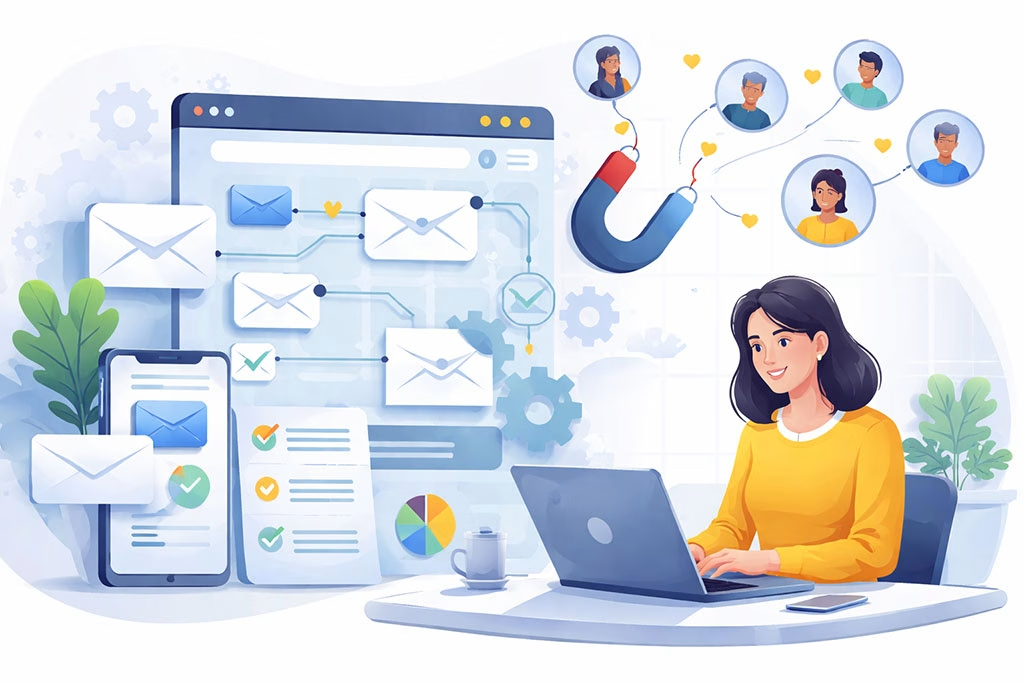
Automation is key to scaling your email marketing efforts and ensuring timely, relevant communication. Setting up automated email sequences based on customer actions or timelines can significantly improve retention.
Welcome Series
This is often the first interaction a new subscriber has with your email marketing. A well-crafted welcome series sets the tone for future communications and helps onboard new customers.
Introduction to Your Brand
Beyond a simple “welcome,” use this series to introduce your brand’s mission, values, and what makes you unique. Share your story.
Highlighting Key Benefits or Features
Educate new customers on the core functionalities or benefits of your product or service. Provide quick-start guides or links to helpful resources.
First Purchase Incentive
Consider offering a special discount or incentive to encourage their initial purchase if they haven’t made one yet.
Post-Purchase Follow-Up Series
This series is crucial for reinforcing a positive purchasing experience and encouraging subsequent purchases.
Order Confirmation and Shipping Updates
These seemingly transactional emails are opportunities to reinforce trust and keep customers informed. Consider adding a small upsell or cross-sell suggestion that is relevant to their order.
Product Usage Tips and Tricks
Help customers get the most out of their new purchase. Share tips, tutorials, or FAQs that address common challenges or highlight advanced features.
Soliciting Feedback and Reviews
After they’ve had sufficient time to use their product, ask for their feedback. This shows you value their opinion and provides valuable insights. Positive reviews can also be leveraged for social proof.
Re-Engagement Campaigns for Lapsed Customers
Customers will inevitably become inactive. A targeted re-engagement campaign can often bring them back into the fold.
Identifying Inactivity
Define what “inactive” means for your business. This could be no purchases in X months, no website visits in Y months, or no email opens in Z months.
Offering a Compelling Reason to Return
A simple “we miss you” isn’t always enough. Offer an enticing incentive, such as a substantial discount, a personalized recommendation, or an exclusive offer for returning customers.
“Last Chance” Emails
If initial re-engagement efforts are unsuccessful, a “last chance” email before removing them from your list can sometimes prompt action. Clearly state that they will be unsubscribed unless they engage.
In the quest to minimize customer churn, businesses are increasingly turning to targeted email campaigns as an effective strategy. By analyzing customer behavior and preferences, companies can craft personalized messages that resonate with their audience. For insights on how to harness data for creating high-converting segments, you can explore this informative article on leveraging data. Understanding these techniques not only enhances customer engagement but also significantly reduces the likelihood of churn, ensuring long-term loyalty and satisfaction. For more details, check out the article on leveraging data for high-converting segments.
Measuring and Iterating for Continuous Improvement
| Metrics | Data |
|---|---|
| Customer Churn Rate Before Email Campaign | 15% |
| Customer Churn Rate After Email Campaign | 8% |
| Number of Email Campaigns Sent | 10 |
| Open Rate of Email Campaigns | 25% |
| Click-Through Rate of Email Campaigns | 10% |
Email marketing is an iterative process. You need to constantly monitor your performance, analyze data, and make adjustments to optimize your retention efforts.
Key Performance Indicators (KPIs) for Retention
Tracking the right metrics is essential for understanding the effectiveness of your campaigns.
Open Rate
Indicates how many people are opening your emails. A low open rate might suggest issues with your subject lines, sender name, or audience targeting.
Click-Through Rate (CTR)
Measures how many recipients clicked on a link within your email. A low CTR could indicate irrelevant content, weak calls to action, or poor email design.
Conversion Rate
The percentage of recipients who completed a desired action after clicking a link (e.g., made a purchase, filled out a form). This is a direct measure of your campaign’s success in driving business outcomes.
Unsubscribe Rate
While some unsubscribes are natural, a consistently high rate indicates that your content is not resonating with your audience or you are emailing too frequently.
Customer Lifetime Value (CLTV)
This overarching metric tracks the total revenue you expect to generate from a customer over their entire relationship with your business. Effective retention email campaigns should directly contribute to an increase in CLTV.
A/B Testing for Optimization
Never assume what works best. A/B testing allows you to systematically test different elements of your emails to identify what resonates most with your audience.
Subject Line Variations
Test different subject lines to see which ones generate higher open rates. Experiment with urgency, personalization, emojis, and question-based subjects.
Call to Action (CTA) Buttons
Experiment with different phrasing, colors, and placement of your CTAs to improve click-through rates.
Email Layout and Design
Test different email layouts, image placements, and content organization to see what improves readability and engagement.
Send Times and Frequencies
Determine the optimal time of day and day of the week to send your emails, as well as the ideal frequency of communication, to maximize engagement and minimize unsubscribe rates.
By consistently applying these principles and continuously refining your approach based on data, you can transform your email campaigns into a powerful engine for maximizing customer retention and fostering long-term customer loyalty. The ongoing investment in these relationships will yield substantial returns for your business.
FAQs
What is customer churn?
Customer churn refers to the rate at which customers stop doing business with a company. It is a critical metric for businesses as it directly impacts revenue and growth.
How do businesses use email campaigns to reduce customer churn?
Businesses use email campaigns to engage with customers, provide valuable content, and offer personalized promotions. By staying in regular contact with customers, businesses can build loyalty and reduce the likelihood of churn.
What types of emails are effective in reducing customer churn?
Effective emails for reducing customer churn include personalized offers, product recommendations, educational content, and customer feedback requests. These types of emails help businesses stay top-of-mind and provide value to customers.
What are some best practices for businesses when using email campaigns to reduce customer churn?
Best practices for businesses using email campaigns to reduce customer churn include segmenting their email lists, personalizing content, testing different email strategies, and monitoring key metrics such as open rates and click-through rates.
What are the benefits of reducing customer churn through email campaigns?
The benefits of reducing customer churn through email campaigns include increased customer retention, higher customer lifetime value, and a more predictable revenue stream. Additionally, it can be more cost-effective to retain existing customers than to acquire new ones.