


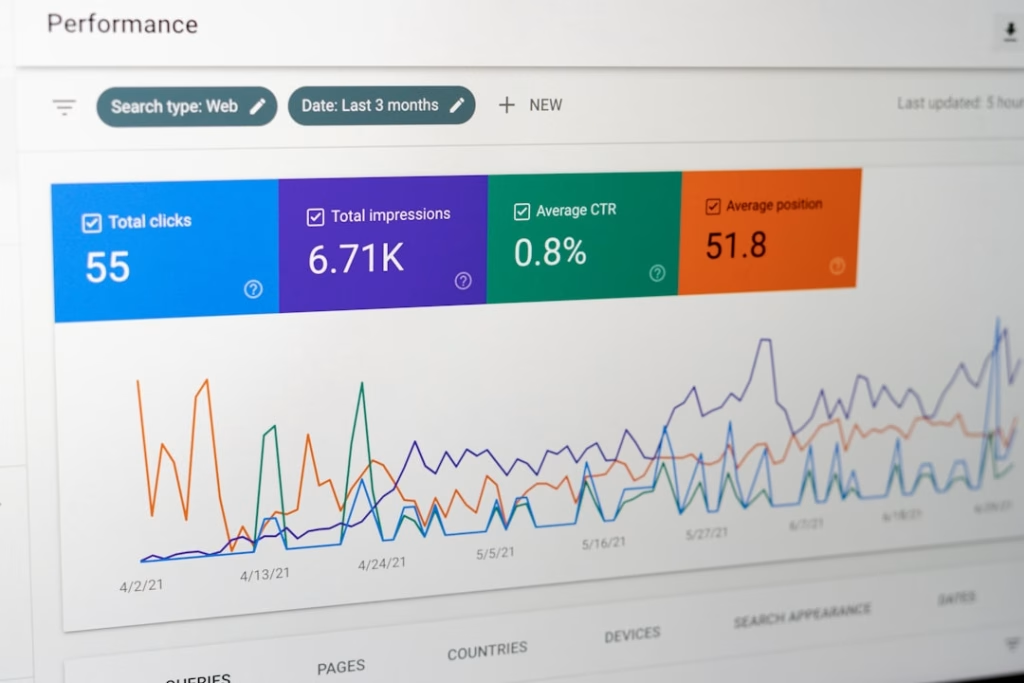
In the current competitive landscape, understanding your customer base and the efficacy of your marketing efforts is paramount. Email campaign analytics offer a robust mechanism for extracting valuable business intelligence. By meticulously analyzing the data generated from your email marketing initiatives, you can gain actionable insights that drive strategic decisions, optimize future campaigns, and ultimately enhance your bottom line. This article will guide you through the process of maximizing business intelligence through the shrewd application of email campaign analytics.
Before you can effectively leverage analytics, you must first comprehend the fundamental metrics that underpin email campaign performance. These metrics provide the raw data from which deeper insights are derived. Without a clear understanding of what each metric represents, your analysis will lack precision and relevance.
Open Rate: Beyond the Initial Glance
Your open rate, the percentage of recipients who open your email, is often the first indicator of a campaign’s initial success. A high open rate suggests effective subject lines and a recognized sender. However, this metric alone does not tell the full story. For instance, a recipient might open an email but immediately delete it, indicating a disconnect between their expectation and the content.
- Subject Line Optimization: Analyze variations in open rates across different subject lines. A/B testing can reveal which phrasing, emojis, or personalization strategies resonate most effectively with your audience.
- Sender Reputation: A consistent sender name and email address build trust. A low open rate can sometimes indicate an issue with your sender reputation, leading emails to be flagged as spam.
- Preheader Text Impact: The short snippet of text appearing after the subject line can significantly influence open decisions. Test different preheader texts to see which ones compel more opens.
- Audience Segmentation: Different segments of your audience may respond differently to the same subject line. Analyze open rates per segment to identify nuanced preferences.
Click-Through Rate (CTR): The Gateway to Engagement
The click-through rate, the percentage of recipients who clicked on at least one link within your email, is a more robust indicator of engagement than the open rate. It signifies that your content was compelling enough to motivate further interaction. A high CTR suggests your content aligns with your audience’s interests and that your calls to action are effective.
- Call-to-Action (CTA) Efficacy: Assess the placement, design, and wording of your CTAs. Are they prominent? Do they use action-oriented language?
- Content Relevance: A low CTR often points to content that does not meet the recipient’s expectations or interests. Analyze which content topics generate the most clicks.
- Link Placement: Experiment with the number and placement of links within your email. Too many links can dilute focus, while too few might limit opportunities for engagement.
- Mobile Responsiveness: Ensure your email renders correctly on various devices. If your links are difficult to tap on a mobile device, your CTR will suffer.
- Landing Page Alignment: The content on your landing page must directly relate to the promise made in your email. Discrepancies can lead to higher bounce rates and reduced conversions.
Conversion Rate: The Ultimate Measure of Success
The conversion rate, the percentage of recipients who completed a desired action (e.g., purchase, download, form submission) after clicking through from your email, is arguably the most critical metric. It directly ties your email efforts to business objectives. Improving your conversion rate means your email campaigns are effectively driving revenue or achieving strategic goals.
- Offer Clarity and Value: Is your offer clear, concise, and providing tangible value to the recipient? Ambiguity can hinder conversions.
- Seamless User Experience: From the email to the landing page and beyond, the user journey should be intuitive and frictionless. Any hurdles can deter conversions.
- A/B Testing of Offers: Test different offers, discounts, or incentives to determine which ones most effectively drive conversions.
- Urgency and Scarcity: Strategic use of urgency (e.g., “limited-time offer”) or scarcity (e.g., “only 10 remaining”) can motivate immediate action and improve conversion rates.
- Post-Click Experience: Analyze what happens after the click. Are your landing pages optimized for conversions? Do they load quickly?
Bounce Rate: Identifying Delivery Obstacles
Your bounce rate, the percentage of emails that could not be delivered to the recipient’s inbox, directly impacts your sender reputation and overall campaign effectiveness. High bounce rates indicate issues with your mailing list quality or potential blacklisting. You must differentiate between “soft” and “hard” bounces.
- Soft Bounces: These are temporary delivery failures, often due to a full inbox or a server issue. These emails may still be delivered later.
- Hard Bounces: These are permanent delivery failures, indicating an invalid email address. Hard bounces should be immediately removed from your list to protect your sender reputation.
- List Hygiene Practices: Regularly clean your email list to remove invalid or inactive addresses. This maintains list quality and improves deliverability.
- Domain Reputation: Monitor your domain’s reputation. A poor reputation can lead to emails being blocked by internet service providers (ISPs).
Unsubscribe Rate: Understanding Dissatisfaction
The unsubscribe rate, the percentage of recipients who opt out of your email list, provides critical feedback regarding content relevance, frequency, and overall subscriber satisfaction. While some unsubscribes are inevitable, a high rate signals deeper issues that require attention.
- Content Relevancy: Are you sending content that genuinely interests your audience? Irrelevant communications are a primary driver of unsubscribes.
- Email Frequency: Are you emailing too often? Over-communication can lead to fatigue and unsubscribes. Analyze the optimal frequency for your audience.
- Segmentation Effectiveness: Poor segmentation can result in recipients receiving messages that are not tailored to their preferences, increasing the likelihood of unsubscribing.
- Clear Unsubscribe Process: Make the unsubscribe process simple and straightforward. Frustration with a complex process can lead to spam reports, which are more damaging than an unsubscribe.
In the realm of Business Intelligence, understanding the effectiveness of email campaigns is crucial for optimizing marketing strategies. A related article that delves into enhancing email personalization is titled “The Art of Variation: How Spintags Create Unique Emails.” This piece explores the innovative use of spintags to generate diverse email content, ultimately improving engagement rates and providing valuable insights for analytics. For more information, you can read the article here: The Art of Variation: How Spintags Create Unique Emails.
Deeper Dive into Customer Behavior: Segmented Analysis
Generic analytics provide a broad overview, but true business intelligence emerges when you segment your audience and analyze their specific interactions. Different customer groups will exhibit distinct behaviors, and understanding these nuances allows for highly targeted and effective strategies.
Geographic Segmentation: Localizing Your Approach
Customers in different geographical locations might have varying preferences, purchasing habits, and even linguistic requirements. Analyzing email performance by region can reveal opportunities for localized campaigns.
- Regional Preferences: Identify products or services that sell better in particular regions and tailor your email content accordingly.
- Time Zone Optimization: Schedule emails to arrive at optimal times for recipients in different time zones, maximizing open and click rates.
- Language and Cultural Nuances: For international audiences, consider personalizing email content in their native language and adhering to cultural sensitivities.
Demographic Segmentation: Age, Gender, and Beyond
Demographic data, where available and ethically collected, can provide powerful insights into how different age groups or genders interact with your emails.
- Content Tailoring: Craft messaging and offers that resonate with specific demographic groups. For example, a younger audience might respond better to interactive content.
- Product Recommendations: Use demographic data to suggest products or services that are most relevant to a particular group.
Behavioral Segmentation: Actions Speak Louder
This form of segmentation focuses on how customers interact with your brand and previous campaigns. It is arguably the most powerful for driving relevant engagement.
- Purchase History: Segment customers based on their past purchases. Send targeted recommendations, upsell opportunities, or follow-up content related to their previous acquisitions.
- Website Activity: Analyze which pages customers have visited on your website. This can inform personalized emails offering more information on those products or services.
- Email Engagement History: Divide your list into highly engaged, moderately engaged, and disengaged subscribers. This allows you to tailor re-engagement campaigns for disengaged users or reward your most loyal subscribers.
- Cart Abandonment: Implement automated email sequences for customers who abandon their shopping carts, providing reminders or incentives to complete the purchase.
Attribution and Return on Investment (ROI): Connecting Emails to Revenue


While individual metrics are valuable, the ultimate measure of your email campaign’s business intelligence lies in its ability to generate tangible returns. Understanding attribution models and calculating ROI is crucial for demonstrating the value of your email marketing efforts and securing future investment.
Single-Touch Attribution Models: Simplicity and Limitations
These models attribute 100% of the conversion credit to a single touchpoint. While simple, they often provide an incomplete picture.
- First-Touch Attribution: Attributes conversion to the very first interaction a customer had with your brand (e.g., the first email they opened). Useful for understanding top-of-funnel effectiveness.
- Last-Touch Attribution: Attributes conversion to the last interaction before purchase (e.g., the email that directly led to the sale). Good for understanding the final push in the sales cycle.
Multi-Touch Attribution Models: A Holistic View
These models distribute credit across multiple touchpoints, offering a more nuanced understanding of the customer journey.
- Linear Attribution: Assigns equal credit to each touchpoint in the customer journey. Provides a balanced view but might not reflect true impact.
- Time Decay Attribution: Gives more credit to touchpoints closer to the conversion. Reflects the idea that recent interactions are more influential.
- Position-Based Attribution (U-shaped): Assigns more credit to the first and last interactions, with the remaining credit distributed among middle interactions. This acknowledges the importance of both initial awareness and final conversion catalysts.
Calculating Email ROI: Quantifying Your Success
Calculating ROI demonstrates the financial impact of your email campaigns. It helps you justify your budget and identify which efforts yield the highest returns.
- Revenue Generated: Track the direct revenue attributable to your email campaigns.
- Campaign Costs: Include all costs associated with your email marketing, such as email platform fees, content creation, and list acquisition.
- ROI Formula: (Revenue Generated – Campaign Costs) / Campaign Costs * 100. A positive ROI indicates a profitable campaign.
Experimentation and Optimization: The Continuous Improvement Cycle

The landscape of email marketing is dynamic. What works today might not be effective tomorrow. Therefore, a commitment to continuous experimentation and optimization is essential for maximizing business intelligence. This iterative process ensures your campaigns remain relevant and high-performing.
A/B Testing: Isolating Variables for Improvement
A/B testing involves sending two different versions of an email to a segmented portion of your audience to determine which performs better. This is a crucial method for data-driven optimization.
- Subject Line Tests: Experiment with length, personalization, emojis, and power words.
- Call-to-Action Variations: Test different button colors, text, placement, and number of CTAs.
- Content Layout and Design: Evaluate the effectiveness of single-column versus multi-column layouts, image-heavy versus text-heavy designs.
- Offer Variations: Test different discount percentages, free shipping offers, or bundle deals.
- Send Times and Days: Experiment with different times of day and days of the week to identify optimal delivery schedules for your audience.
Multivariate Testing: Multiple Variables, Deeper Insights
While A/B testing changes one variable at a time, multivariate testing allows you to test multiple variations simultaneously. This can provide faster insights into complex interactions between elements, but it requires a larger audience and more sophisticated tools.
- Combined Element Testing: Analyze the impact of changes to subject lines, preheader text, and hero images in combination.
- Comprehensive Layout Changes: Test entire email templates with multiple design and content modifications.
Personalization Across the Customer Journey: Beyond Simple Names
True personalization extends beyond addressing recipients by their first name. It involves leveraging all available data to deliver emails that are highly relevant to each individual’s needs and preferences at every stage of their customer journey.
- Dynamic Content Insertion: Automatically display different content blocks based on the recipient’s segmentation (e.g., show products relevant to their past purchases).
- Behavioral Triggers: Send automated emails based on specific actions, such as viewing a product, adding to cart, or engaging with a specific content piece.
- Lifecycle Stage Personalization: Tailor communication based on where the customer is in their relationship with your brand (e.g., welcome series for new subscribers, loyalty programs for long-term customers).
In the realm of Business Intelligence, understanding the effectiveness of email campaigns is crucial for optimizing marketing strategies. A related article that delves into the importance of real-time reporting versus relying on outdated data can provide valuable insights for marketers looking to enhance their email campaign analytics. You can explore this topic further in the article titled Unlocking Profit: Real-Time Reporting vs. Yesterday’s Data, which discusses how timely information can significantly impact decision-making and profitability.
Leveraging Predictive Analytics and AI: Glimpsing the Future
| Metrics | Description |
|---|---|
| Open Rate | The percentage of recipients who opened the email |
| Click-Through Rate (CTR) | The percentage of recipients who clicked on a link in the email |
| Conversion Rate | The percentage of recipients who completed a desired action, such as making a purchase, after clicking on a link in the email |
| Bounce Rate | The percentage of emails that were not delivered to recipients’ inboxes |
| Unsubscribe Rate | The percentage of recipients who opted out of receiving future emails |
As your data collection grows more sophisticated, you can move beyond descriptive and diagnostic analytics to embrace predictive and prescriptive analytics. Artificial intelligence (AI) and machine learning (ML) are transforming the capabilities of email campaign analysis, enabling more intelligent and automated decision-making.
Anticipating Customer Needs: Proactive Engagement

Predictive analytics uses historical data to forecast future behavior. This allows you to anticipate what your customers might want or need before they even know it themselves.
- Churn Prediction: Identify subscribers who are at risk of disengaging or unsubscribing and proactively send re-engagement campaigns.
- Product Recommendation Engines: Suggest products or content that a customer is likely to be interested in based on their past behavior and the behavior of similar customers.
- Optimal Send Time Prediction: AI algorithms can analyze individual subscriber engagement patterns to determine the perfect time to send an email for maximum impact.
Automating Optimization: Efficiency at Scale
AI-powered tools can automate many aspects of campaign optimization, making your efforts more efficient and effective.
- Automated A/B Testing: AI can continuously run A/B tests on subject lines, content, and CTAs, automatically deploying the winning variation.
- Dynamic Content Optimization: Algorithms can personalize content for each individual recipient in real-time, based on their live behavior and preferences.
- Smart Segmentation: AI can identify new, highly granular segments within your audience that might not be apparent through manual analysis.
Sentiment Analysis: Understanding the Emotional Landscape
While direct email analytics focus on quantitative metrics, sentiment analysis can provide a qualitative layer of understanding by evaluating the emotional tone of text.
- Feedback Analysis: Analyze responses to surveys or direct replies to your emails to gauge customer sentiment towards your brand, products, or campaigns.
- Social Media Cross-Reference: Combine insights from email engagement with sentiment analysis of related social media conversations to get a broader perspective on customer perceptions.
By systematically applying these analytical techniques, you transform raw email data into potent business intelligence. This intelligence enables you to refine your marketing strategies, deepen customer relationships, and achieve a measurable and sustainable impact on your business objectives. The continuous evolution of analytical tools and methodologies means that ongoing learning and adaptation are not just beneficial, but essential for staying ahead in the digital marketing landscape.
FAQs
What is business intelligence through email campaign analytics?
Business intelligence through email campaign analytics refers to the process of using data and analytics to gain insights into the performance of email marketing campaigns. This involves analyzing metrics such as open rates, click-through rates, conversion rates, and engagement to make informed business decisions.
Why is business intelligence through email campaign analytics important?
Business intelligence through email campaign analytics is important because it allows businesses to understand the effectiveness of their email marketing efforts. By analyzing data, businesses can identify trends, patterns, and areas for improvement, ultimately leading to more targeted and successful email campaigns.
What are some key metrics used in email campaign analytics?
Some key metrics used in email campaign analytics include open rates, click-through rates, conversion rates, bounce rates, unsubscribe rates, and engagement metrics such as time spent reading an email and interaction with content.
How can businesses use email campaign analytics to improve their marketing strategies?
Businesses can use email campaign analytics to improve their marketing strategies by identifying which types of content and messaging resonate with their audience, understanding the best times to send emails, segmenting their audience for more targeted campaigns, and optimizing their email design and layout for better engagement.
What are some tools and platforms for conducting email campaign analytics?
There are several tools and platforms available for conducting email campaign analytics, including popular email marketing platforms such as Mailchimp, Constant Contact, and HubSpot, as well as analytics tools like Google Analytics and Adobe Analytics. These tools provide businesses with the ability to track and analyze the performance of their email campaigns.