



You’ve launched your product, you’ve made your sales, and now you’re looking at your customer list. The immediate rush of a new sale is satisfying, but the long-term health of your business hinges on something more sustainable: repeat business. Email campaigns, when executed strategically, are your most powerful tool for transforming one-time buyers into loyal, returning customers. This isn’t about wishful thinking; it’s about implementing systematic approaches that foster relationships and drive consistent revenue.
Before you even think about crafting your first email, you need a solid understanding of your customers and a clear objective for your campaigns. This groundwork is crucial. Without it, your emails will feel random and disconnected, failing to achieve the desired outcome of repeat purchases.
Understanding Your Customer Segmentation
You have a customer base, but are you truly seeing them as individuals with distinct needs and behaviors? Generic email blasts are relics of a less sophisticated marketing era. Effective repeat sales strategies require segmentation. You need to categorize your customers based on their purchase history, demographics, engagement levels, and stated preferences.
Identifying Key Customer Segments
Think about the types of customers who have purchased from you. Are there early adopters who tend to buy new products immediately? Are there bargain hunters who primarily respond to discounts? Do you have customers who purchase specific product categories consistently? Identifying these groups allows you to tailor your messaging.
Analyzing Purchase History
Your transaction data is a goldmine. Who bought what? How often? What was the average order value? Customers who have bought high-margin items might respond to exclusive offers on similar products. Those who bought introductory items might be prime candidates for upgrade offers or complementary products.
Leveraging Demographic and Psychographic Data
Where are your customers located? What are their age ranges? What are their declared interests through surveys or profile information? This data, when ethical and privacy-compliant, can inform your email content and timing. A customer in a colder climate might be interested in different seasonal promotions than someone in a warmer region.
Tracking Engagement Metrics
Who opens your emails? Who clicks on your links? Who hasn’t responded in months? These engagement levels are critical indicators of a customer’s current interest. Re-engagement campaigns should target those who have gone quiet, while those who are highly engaged might receive more frequent, personalized content.
Defining Clear Campaign Objectives
What do you want to achieve with each email campaign focused on repeat sales? Is it a specific product repurchase? An upgrade? A cross-sell? A loyalty program sign-up? Vague goals lead to vague results. Precise objectives allow you to measure success and iterate effectively.
Setting SMART Goals for Campaigns
Ensure your objectives are Specific, Measurable, Achievable, Relevant, and Time-bound. Instead of “increase repeat sales,” aim for “increase repeat purchases of Product X by 15% within the next quarter among customers who purchased Product Y in the last six months.”
Aligning Email Campaigns with the Customer Journey
Consider where your customer is in their lifecycle. A customer who just made their first purchase needs a different approach than someone who has been buying from you for years. Your email strategy should mirror these stages.
First-Time Buyer Follow-Up
The initial purchase is just the beginning. Your follow-up emails should confirm their order, provide helpful information about the product, and subtly hint at future benefits of remaining a customer.
Repeat Purchase Encouragement
For customers who have bought before, the focus shifts to re-engagement and demonstrating ongoing value. This might involve reminding them of benefits, offering proactive support, or suggesting complementary items.
Loyalty Program Integration
If you have a loyalty program, your emails should actively promote its benefits and encourage participation. This incentivizes repeat behavior and builds stronger customer relationships.
In the quest to enhance repeat purchase rates through effective email campaigns, it’s essential to understand the nuances of different email types. A related article that delves into this topic is “Email Marketing vs. Transactional Emails: Understanding the Key Differences,” which provides valuable insights into how these two email strategies can be leveraged to maximize customer engagement and retention. You can read the article [here](https://blog.smartmails.io/2025/11/07/email-marketing-vs-transactional-emails-understanding-the-key-differences/).
Crafting Compelling Email Content for Retention
Once you have your foundation, the real work begins: creating emails that resonate with your audience and drive them back to your store. Generic templates won’t cut it. Your content needs to be valuable, personalized, and action-oriented.
Delivering Personalized and Relevant Content
The adage “personalization is key” is particularly true for repeat sales. Customers expect to be treated as individuals, not just another name on a list. Generic offers are easily ignored.
Utilizing Dynamic Content
Leverage customer data to dynamically insert personalized elements into your emails. This could include their name, past purchase details, or product recommendations based on their history.
Name Personalization
A simple yet effective tactic. Addressing the recipient by name in the subject line and body of the email immediately makes it more personal.
Product Recommendations Based on Past Purchases
If a customer bought a camera, recommend accessories like lenses, memory cards, or camera bags. This shows you understand their needs and interests.
Location-Based or Seasonal Offers
Tailor offers based on the recipient’s location or the time of year. A customer in a snowy region might appreciate winter clothing recommendations, while someone in a coastal area might be interested in summer gear.
Implementing Strategic Offers and Incentives
While relationship building is crucial, well-timed and relevant offers can be powerful drivers of repeat purchases. The key is to offer value without devaluing your products.
Discount Strategies for Repeat Customers
Not all discounts are created equal. Consider tiered discounts based on purchase history or loyalty status.
Targeted Discount Codes
Offer exclusive discount codes to loyal customers as a thank you for their continued business. This makes them feel valued.
Bundle Offers and Package Deals
Create attractive bundles of complementary products that offer a perceived value saving compared to purchasing items individually.
Free Shipping Thresholds
Encourage larger order values by offering free shipping once a certain threshold is met. This is a common and effective incentive.
Driving Action with Clear Calls to Action (CTAs)
Every email you send should have a clear purpose, and that purpose should be communicated through a compelling Call to Action. If your reader doesn’t know what you want them to do, they won’t do it.
Designing Effective CTAs
Your CTAs need to be prominent, clear, and enticing. They should tell the recipient exactly what to do and what benefit they will receive.
Action-Oriented Language
Use strong verbs that encourage immediate action, such as “Shop Now,” “Learn More,” “Claim Your Offer,” or “Discover New Arrivals.”
Visual Prominence
Make your CTAs stand out visually. Use contrasting colors, sufficient white space, and buttons rather than just text links for maximum impact.
Creating Urgency and Scarcity (When Appropriate)
Used sparingly and honestly, a sense of urgency or scarcity can prompt immediate action. However, overdoing it can lead to customer distrust.
Limited-Time Offers
Clearly state the expiration date of your promotion to encourage timely purchasing.
Limited Stock Notifications
If a popular item is running low, alert customers before it’s gone. This taps into the fear of missing out (FOMO).
Strategies for Ongoing Engagement and Loyalty

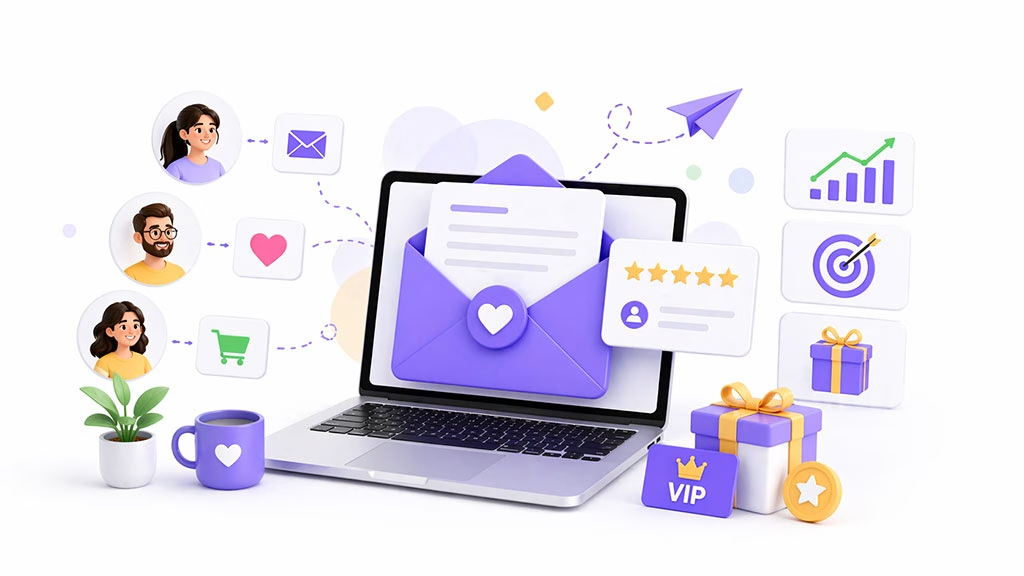
Repeat sales aren’t just about the next purchase; they’re about cultivating a long-term relationship with your customers. This involves consistent communication and demonstrating value beyond transactional interactions.
Utilizing Post-Purchase Email Sequences
The journey doesn’t end once a customer clicks “buy.” Strategic post-purchase emails can significantly influence their likelihood of returning.
Order Confirmation and Shipping Updates
These are essential touchpoints that build trust and manage expectations. Clear and timely information reduces customer anxiety.
Providing Order Details
Reiterate what they ordered, the total cost, and their shipping address for confirmation.
Tracking Information and Estimated Delivery Dates
Keep customers informed about the status of their shipment. This proactive communication reduces customer service inquiries.
Product Usage Tips and Support
Help customers get the most out of their purchase. This adds value and reduces instances of product dissatisfaction.
“Getting Started” Guides
For complex products, provide easy-to-follow instructions or links to video tutorials.
Frequently Asked Questions (FAQs)
Address common questions proactively. This empowers customers and reduces the need for direct support.
Requesting Feedback and Reviews
Customer feedback is invaluable for improvement and social proof. Reviews can also drive new sales.
Soliciting Product Reviews
Encourage customers to share their experiences with the product. Positive reviews act as powerful testimonials.
Net Promoter Score (NPS) Surveys
Gauge overall customer satisfaction and identify potential promoters and detractors.
Implementing Loyalty Programs and Rewards
Formal loyalty programs are an excellent way to incentivize repeat business and make customers feel appreciated.
Tiered Loyalty Programs
Create different levels of membership based on spending or engagement, with increasing benefits at higher tiers.
Exclusivity and Early Access
Offer members early access to new products or sales, or exclusive content.
Birthday Rewards and Anniversary Bonuses
Personalized rewards during special occasions make customers feel recognized.
Points-Based Systems
Customers earn points for every purchase, which can be redeemed for discounts or free products.
Clear Point Accumulation and Redemption Rules
Ensure the system is easy to understand and the redemption process is straightforward.
Referral Programs
Turn your satisfied customers into advocates. Encourage them to refer friends and family in exchange for rewards.
Incentivize Both Parties
Reward the referring customer and the new customer they bring in.
Re-engagement Campaigns for Inactive Customers
Don’t let past customers go cold. Targeted re-engagement campaigns can often bring them back into the fold.
Identifying Lapsed Customers
Define what constitutes an “inactive” customer based on your business cycle and sales patterns.
Crafting “We Miss You” Campaigns
These emails should be warm, inviting, and offer a compelling reason to return.
Special Re-activation Offers
Provide a compelling discount or exclusive offer specifically for customers who haven’t purchased in a while.
Highlighting New Products or Improvements
Showcase what they’ve missed since their last purchase, focusing on benefits.
Win-Back Surveys
Understand why customers have become inactive. This feedback is invaluable for refining your strategies.
Asking for Feedback on Their Experience
Politely inquire about their reasons for not purchasing and what could bring them back.
Leveraging Data and Analytics for Optimization
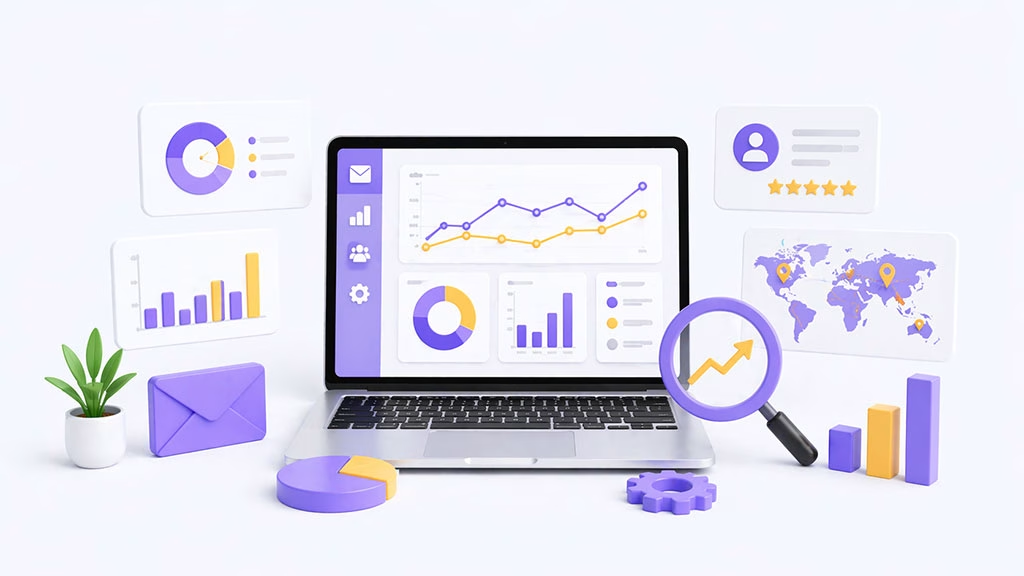
Your email campaigns are not static. Continuous monitoring and analysis are essential to refine your approach and maximize your return on investment.
Tracking Key Email Performance Metrics
Understanding your data allows you to identify what’s working and what’s not, enabling you to make informed adjustments.
Open Rates and Click-Through Rates (CTR)
These are fundamental indicators of your subject line effectiveness and content engagement.
Subject Line Performance Analysis
Experiment with different subject line styles and track which ones achieve the highest open rates.
CTA Button Performance
Analyze which CTAs are driving the most clicks and leading to conversions.
Conversion Rates and Revenue Attribution
Ultimately, you need to know if your emails are driving sales and contributing to your bottom line.
Measuring Purchases Directly Attributed to Emails
Use tracking parameters to link sales back to specific email campaigns.
Analyzing Average Order Value (AOV) from Email Campaigns
See if email-driven purchases tend to be larger than other channels.
A/B Testing for Continuous Improvement
Don’t assume you know what your audience wants. Test different elements of your emails to find what performs best.
Testing Subject Lines
Experiment with different lengths, tones, and the inclusion of emojis or personalization.
Evaluating Different CTA Placements and Wording
See if moving your CTA or changing its wording impacts click-through rates.
Experimenting with Offer Variations
Test different discount percentages, bundle compositions, or free shipping thresholds.
Analyzing Email Send Times and Frequencies
Determine the optimal times and how often to send emails without overwhelming your subscribers.
Utilizing Automation for Efficiency and Scalability
Email automation frees up your time and ensures consistent communication without manual intervention.
Setting Up Triggered Email Flows
Automate emails based on specific customer actions or inactivity.
Welcome Series for New Subscribers
Guide new contacts through their initial interactions with your brand.
Abandoned Cart Recovery Emails
Prompt customers to complete their purchase if they’ve left items in their cart.
Post-Purchase Follow-Up Sequences
As discussed earlier, these can be automated to ensure consistent engagement.
Workflow Optimization for Efficiency
Regularly review your automated workflows to ensure they are still relevant and effective.
In the quest to enhance repeat purchase rates, utilizing effective email campaigns is crucial for businesses. A related article discusses strategies for optimizing email engagement, which can significantly impact customer retention. By implementing techniques to increase open and click-through rates, brands can create more compelling email experiences that encourage repeat purchases. For more insights on this topic, you can read the article on winning the inbox and improving your email campaigns here.
Conclusion
| Metrics | Results |
|---|---|
| Number of Email Campaigns Sent | 10 |
| Open Rate | 25% |
| Click-Through Rate | 10% |
| Conversion Rate | 5% |
| Repeat Purchase Rate | 15% |
Maximizing repeat sales through email campaigns is a marathon, not a sprint. It requires a commitment to understanding your customers, crafting valuable content, and continuously analyzing your performance. By implementing these strategies, you transform your email list from a passive contact database into a dynamic engine for sustainable business growth, fostering lasting relationships with your most valuable asset: your customers.
FAQs
What are email campaigns?
Email campaigns are a series of targeted emails sent to a specific group of recipients with the goal of achieving a specific outcome, such as increasing repeat purchase rates.
How can email campaigns increase repeat purchase rates?
Email campaigns can increase repeat purchase rates by reminding customers of products they have previously purchased, offering exclusive discounts or promotions, and providing personalized recommendations based on their past purchases.
What are some best practices for creating effective email campaigns?
Some best practices for creating effective email campaigns include segmenting your audience, personalizing the content, using compelling subject lines, and including clear calls to action.
What metrics should be used to measure the success of email campaigns in increasing repeat purchase rates?
Metrics such as open rates, click-through rates, conversion rates, and the number of repeat purchases can be used to measure the success of email campaigns in increasing repeat purchase rates.
What are some common mistakes to avoid when running email campaigns to increase repeat purchase rates?
Common mistakes to avoid when running email campaigns to increase repeat purchase rates include sending too many emails, not personalizing the content, using generic subject lines, and not optimizing for mobile devices.