



You’re sitting at your desk, the familiar glow of your monitor illuminating your face. The question on your mind is likely: “How can I get customers to spend more each time they open their wallets?” You’ve built a decent customer base, your products or services are appealing, but the average order value (AOV) feels… stagnant. You’re looking for tangible strategies, not wishful thinking. Email marketing, often the workhorse of digital outreach, presents a robust avenue to achieve precisely this. It’s not about sending more emails; it’s about sending the right emails, strategically designed to encourage larger purchases. This guide focuses on practical, actionable steps you can implement to leverage your email campaigns for increased order values.
Before you dive into crafting emails, it’s crucial to understand the underlying psychological drivers that influence a customer’s decision to spend more. This isn’t about tricking people; it’s about understanding their motivations, perceived value, and decision-making processes. When you can tap into these, your email campaigns become far more effective.
The Appeal of Perceived Value
Customers are always looking for the best deal, not necessarily the cheapest one. Perceived value is the customer’s assessment of the benefits they receive from a product or service relative to its cost. Higher perceived value often leads to a willingness to spend more.
Bundling and Package Deals
When you offer complementary items together at a slightly reduced price compared to buying them individually, customers see an immediate advantage. This isn’t just about throwing things in a box; it’s about creating a narrative of convenience and added benefit. A well-curated bundle suggests you understand your customer’s needs and have anticipated their desires.
- How to Identify Bundling Opportunities: Analyze your sales data. What products are frequently purchased together? Do certain items enhance the functionality or enjoyment of others? Consider creating themed bundles for holidays, seasons, or specific customer segments.
- Communicating the Value: Clearly present the individual prices of items and then the bundled price. Highlight the savings. Use phrases like “Get more for less,” “Complete your set,” or “The perfect pairing.”
Tiered Offerings and Premium Versions
Not all your customers are looking for the same thing. Offering different tiers of a product or service allows customers to select an option that aligns with their budget and their desire for enhanced features or quality.
- Defining Your Tiers: Consider what makes a premium version truly premium. Is it superior materials, additional features, exclusive access, or enhanced support? Clearly delineate the differences between each tier.
- Email Strategy for Tiers: In your emails, you can showcase the standard option and then introduce the premium as the “enhanced experience” or “ultimate solution.” Frame the higher price as an investment in greater satisfaction or better results. Use comparative language to highlight what the customer gains by opting for the higher tier.
The Power of Scarcity and Urgency
Humans are driven by the fear of missing out (FOMO). When something is perceived as limited, either in quantity or time, its desirability increases, and people are more likely to act quickly to secure it, often with a higher commitment.
Limited-Time Promotions
This is a classic tactic for a reason. Setting a clear expiration date for an offer compels immediate action. It removes the procrastination factor.
- Designing Effective Promotions: Ensure the discount or offer is genuinely appealing. Vague or insignificant discounts won’t create urgency. The promotion should directly incentivize a higher spend, perhaps by offering a percentage off orders over a certain threshold or a free premium upgrade for a limited period.
- Email Cadence for Urgency: Start with the announcement of the promotion, followed by reminders as the deadline approaches. Use clear countdown timers in your emails. Avoid being overly aggressive; the tone should be helpful and informative, not demanding.
Low Stock Alerts
This tactic leverages the fear of missing out on a specific desirable item. When customers know a product is in high demand and supplies are dwindling, they are more likely to purchase it quickly, often adding it to a larger order to justify the immediate purchase.
- Authenticity is Key: Only use low stock alerts when they are genuine. False scarcity erodes trust. Integrate your inventory management system with your email platform to automate these alerts accurately.
- Targeting and Segmentation: These alerts are most effective when sent to customers who have shown interest in the specific product, perhaps by browsing it, adding it to their wishlist, or having previously purchased similar items.
To effectively enhance your email campaigns and increase your average order value, it’s essential to consider the strategies outlined in a related article on list segmentation. By tailoring your messaging to specific customer segments, you can create more personalized and relevant content that resonates with your audience. For further insights on this topic, check out the article on smarter marketing techniques at Smarter Marketing: Stop Shouting with List Segmentation.
Optimizing Your Email Content for Upselling and Cross-selling
Simply announcing a sale won’t automatically boost your AOV. Your email content needs to be strategically crafted to encourage customers to add more items to their cart or upgrade to a more expensive option. This involves intelligent recommendations and persuasive copywriting.
Strategic Product Recommendations
The days of generic “recommendations” are over. Today’s customers expect personalized and relevant suggestions that genuinely add value to their shopping experience.
“Customers Also Bought” Intelligence
This is a powerful data-driven approach. Analyze your purchase history to identify products that are frequently bought together.
- Data Implementation: Ensure your e-commerce platform or CRM can track and analyze co-purchase data. This requires robust data collection and analytical capabilities.
- Email Integration: When a customer is viewing a particular product, or has just added an item to their cart, present them with items that are commonly purchased alongside it. Frame it as helpful advice, e.g., “Did you know that many customers who purchased [Product A] also found [Product B] to be an essential addition?”
Complementary Product Suggestions
Beyond what’s bought together, think about items that enhance the primary product the customer is interested in. This requires a deeper understanding of product relationships.
- Product Knowledge is Crucial: Your team needs to understand the entire product catalog and how items interact. This might involve product managers, marketing specialists, or even customer service representatives who have direct customer feedback.
- Contextual Placement: These recommendations should appear at relevant moments. This could be on the product page itself, in the cart confirmation email, or in subsequent emails triggered by a purchase. For example, after buying a new camera, recommend a memory card and a camera bag.
Crafting Compelling Offer Language
The words you use in your emails have a direct impact on customer behavior. Subtle shifts in phrasing can lead to significant changes in order value.
Emphasizing Benefits Over Features
Customers buy solutions and improvements, not just a list of specifications. Highlight how a higher-priced item or an additional product will make their life better or solve a problem more effectively.
- Understanding Customer Needs: This goes back to segmentation. What are the pain points and desires of your target audience? Tailor your benefit statements to address these directly.
- Transformative Language: Instead of saying “This shirt is made of 100% Egyptian cotton,” say “Experience unparalleled comfort and breathability with our premium Egyptian cotton shirt, designed to keep you cool and stylish all day long.”
Creating Incentive-Driven Calls to Action (CTAs)
Your CTAs should not only tell customers what to do but also why they should do it, especially when encouraging larger purchases.
- Clear and Actionable CTAs: Use verbs that encourage action, such as “Upgrade Now,” “Add to Cart,” “Shop the Collection,” or “Discover More.”
- Value Proposition in CTAs: Integrate the benefit of the action into the CTA itself. For example, instead of “Click Here,” use “Unlock Exclusive Savings” or “Claim Your Free Gift.” For higher AOV, consider CTAs like “Complete Your Look” or “Bundle and Save.”
Designing Email Flows for Incremental Purchases

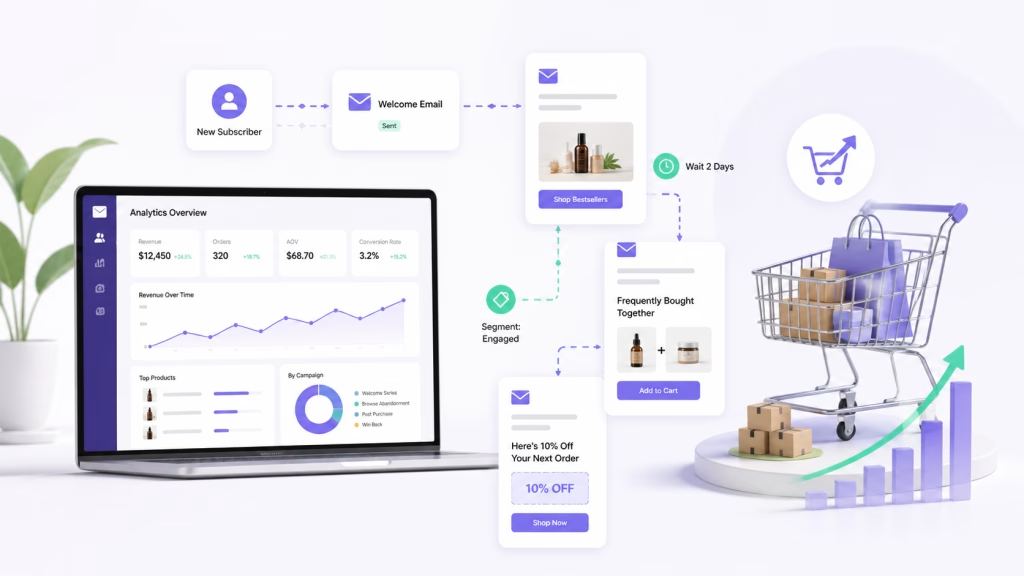
A single email might convert, but a well-designed sequence of emails can nurture leads, encourage repeat purchases, and, most importantly, guide customers towards higher spending over time.
Post-Purchase Engagement Strategies
The relationship with your customer doesn’t end at checkout. The period immediately after a purchase is prime time for encouraging further engagement and future higher-value transactions.
Upselling in Order Confirmation Emails
While the primary purpose is to confirm the order, this email is a prime opportunity for a subtle upsell.
- Timing is Critical: You can’t offer something the customer just bought. Instead, suggest complementary items that enhance the purchased product. For example, if they bought a coffee maker, suggest high-quality coffee beans or cleaning supplies for the machine.
- Non-Intrusive Presentation: Keep the main focus on the order confirmation. The upsell should be presented as a helpful suggestion, not a demand.
Follow-up Emails with Loyalty Rewards or Bundled Offers
After the initial excitement of a purchase fades, a well-timed follow-up can re-engage the customer and present new opportunities for them to spend.
- Tiered Loyalty Programs: Introduce a loyalty program where spending more unlocks greater rewards. Communicate this clearly in follow-up emails. For instance, “You’re just [X amount] away from earning your next reward tier!”
- Exclusive Bundles for Repeat Customers: Offer curated bundles that are only available to existing customers. This makes them feel valued and encourages them to explore new combinations.
Nurturing Campaigns for Future Purchases
These campaigns are designed to keep your brand top-of-mind and gently guide customers towards making larger or more frequent purchases over time.
Re-engagement Campaigns with Exclusive Offers
When a customer hasn’t purchased in a while, a re-engagement campaign is necessary. The offers within these campaigns should be compelling enough to warrant a return.
- Segmentation is Key for Re-engagement: Target customers based on their past purchase behavior. Are they price-sensitive? Do they respond to discounts?
- Strong Incentives: Offer a significant discount or a valuable freebie for their next purchase. You can also use this as an opportunity to introduce them to new, higher-value product lines.
Educating Customers on Product Value and Innovation
Sometimes, customers don’t spend more because they aren’t aware of the full benefits or the innovative aspects of your higher-priced offerings.
- Content Marketing Integration: Use email to share blog posts, case studies, or testimonials that highlight the superior quality, durability, or unique features of your premium products.
- Demonstrating ROI: For B2B or high-ticket items, focus on the return on investment. Show how a more expensive solution can lead to greater efficiency, cost savings, or increased revenue in the long run.
Leveraging Segmentation and Personalization for Individualized Value
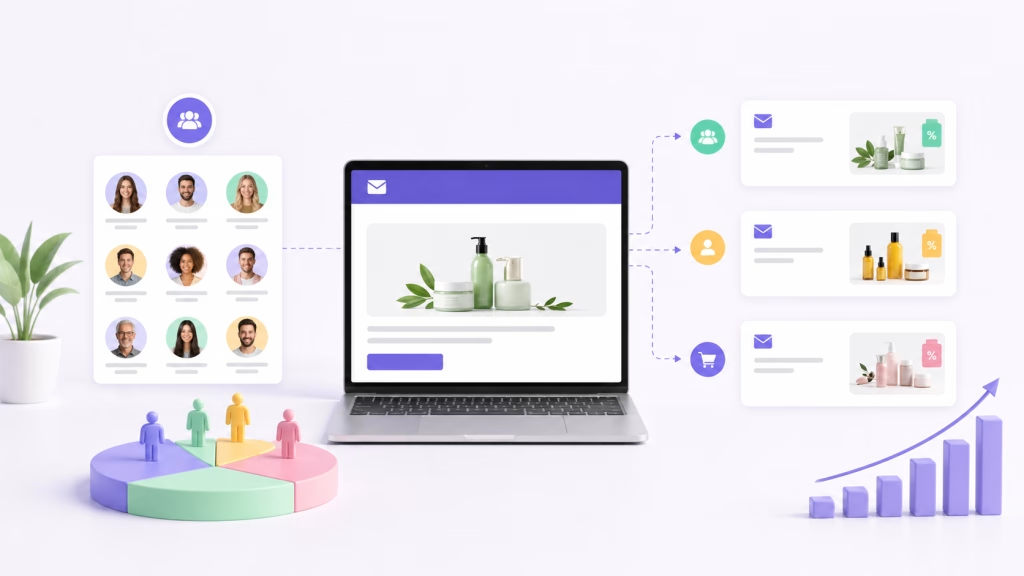
The concept of “one size fits all” doesn’t apply to modern marketing. To truly drive higher order values, your email campaigns must be tailored to the individual preferences and behaviors of your customers.
Segmenting Your Audience Effectively
Not all customers are the same, and treating them as such will never lead to optimized results. Segmenting your email list allows for highly targeted messaging.
Behavioral Segmentation
This is perhaps the most powerful form of segmentation. It looks at how customers interact with your brand.
- Key Behavioral Metrics: Track purchase history, browsing behavior, email engagement (opens, clicks), cart abandonment, and time since last purchase.
- Creating Actionable Segments: Examples include “High-Value Repeat Customers,” “First-Time Buyers,” “Cart Abandoners,” “Inactive Subscribers,” and “Browsers of [Specific Category].”
Demographic and Psychographic Segmentation
While behavioral data is king, understanding who your customers are and what they care about can further refine your messaging.
- Demographic Insights: Age, location, income level, and occupation can inform product recommendations and offer pricing.
- Psychographic Insights: Interests, values, lifestyle, and personality traits can help you craft more resonant copy and identify the motivations behind their purchasing decisions.
Personalizing Your Email Content and Offers
Once segmented, you can go a step further by personalizing the actual content of your emails. This makes the customer feel seen and understood.
Dynamic Content and Product Recommendations
This involves using data to automatically insert personalized content into your emails.
- Personalized Greetings and Content: Use the customer’s name. Reference their past purchases or browsing history directly within the email copy.
- Tailored Product Suggestions: Display product recommendations that are specifically chosen for that individual based on their segmentation and past interactions. For example, “Based on your recent purchase of [Product X], you might also love [Product Y] and [Product Z].”
Customized Promotions and Incentives
Generic discounts are less impactful than offers that feel specifically crafted for the recipient.
- Offer Tiers Aligned with Spending Habits: If a customer consistently spends a certain amount, offer them discounts that require them to reach a slightly higher threshold to maximize their savings. Conversely, for a customer who typically makes smaller purchases, a threshold that encourages them to add just one or two more items might be more effective.
- Birthday and Anniversary Offers: These are classic personalization tactics that can be leveraged to encourage a purchase, often with a special discount or gift that adds perceived value.
In the quest to enhance your email marketing strategy, you might find it beneficial to explore how to effectively engage your audience through web forms. A related article discusses the process of creating your first web form with SmartMails, which can be instrumental in capturing valuable customer information and preferences. By integrating such forms into your email campaigns, you can not only increase your average order value but also tailor your offerings to better meet the needs of your customers. For more insights, check out the article on creating your first web form with SmartMails.
Measuring and Iterating for Continuous Improvement
| Metrics | Value |
|---|---|
| Number of Email Campaigns Sent | 10 |
| Open Rate | 25% |
| Click-through Rate | 5% |
| Conversion Rate | 3% |
| Average Order Value Before Campaign | 50 |
| Average Order Value After Campaign | 60 |
The most effective email campaigns are not static; they evolve. Continuously analyzing your results and iterating on your strategies is fundamental to achieving sustained growth in order values.
Key Performance Indicators (KPIs) for AOV Campaigns
You need to know what to measure to understand if your efforts are paying off. Several KPIs are crucial for evaluating the success of your AOV-focused email campaigns.
Average Order Value (AOV)
This is your primary metric. Track it diligently, both overall and for specific segments and campaigns.
- Calculation: Total Revenue / Number of Orders.
- Tracking Trends: Look for increases in AOV over time. Analyze which campaigns or strategies are correlated with higher AOV.
Conversion Rate and Revenue Per Email
While AOV is important, you also need to ensure your campaigns are driving sales and generating revenue.
- Conversion Rate: The percentage of recipients who make a purchase after clicking through from an email.
- Revenue Per Email: The total revenue generated from a specific email campaign divided by the number of emails sent. This helps you understand the overall financial impact of your outreach.
Click-Through Rate (CTR) and Engagement Metrics
These metrics indicate how well your subject lines and email content are resonating with your audience.
- Click-Through Rate (CTR): The percentage of recipients who click on a link within your email.
- Open Rate: The percentage of recipients who open your email. While less directly tied to AOV, a good open rate is a prerequisite for any other metric.
A/B Testing and Optimization Techniques
Data without action is just data. You need to use your measurements to actively refine your email strategies.
Testing Subject Lines and CTAs
These are the first and last impressions your email makes. Small changes can have a significant impact.
- Subject Line Variations: Test different lengths, tones, use of emojis, and benefit-driven hooks. For AOV, test subject lines that hint at bundled savings or premium upgrades.
- CTA Button Copy and Placement: Experiment with different wording, colors, and locations of your call-to-action buttons. Ensure they are prominent and compelling.
Iterating on Content and Offer Structure
Your email content and the way you structure your offers are prime candidates for optimization.
- Testing Offer Types: Compare the effectiveness of percentage-off discounts versus dollar-off discounts, free shipping thresholds, or free gift offers. For AOV, test which structure encourages larger basket sizes the most.
- Varying Content Formats: Experiment with different email layouts, inclusion of images versus plain text, and the use of storytelling versus direct product promotion.
By consistently applying these principles, understanding your customers’ psychology, and meticulously measuring your results, you can transform your email campaigns from simple communication tools into powerful engines for driving higher order values. This is an ongoing process, one that rewards patience, strategic thinking, and a genuine desire to provide exceptional value to your customers.
FAQs
What is an email campaign?
An email campaign is a targeted marketing effort that involves sending a series of emails to a specific group of recipients with the goal of achieving a specific outcome, such as increasing sales or engagement.
How can email campaigns increase average order value?
Email campaigns can increase average order value by promoting upsells, cross-sells, and special offers to existing customers. By strategically targeting customers with personalized product recommendations and exclusive deals, businesses can encourage customers to spend more with each purchase.
What are some effective strategies for using email campaigns to increase average order value?
Some effective strategies for using email campaigns to increase average order value include segmenting your email list to target specific customer groups, offering personalized product recommendations, promoting limited-time offers and discounts, and providing incentives for larger purchases, such as free shipping for orders over a certain amount.
What are the key metrics to track when measuring the success of email campaigns in increasing average order value?
Key metrics to track when measuring the success of email campaigns in increasing average order value include average order value, conversion rate, click-through rate, and revenue generated from the campaign. These metrics can provide insights into the effectiveness of the campaign and help identify areas for improvement.
What are some best practices for creating effective email campaigns to increase average order value?
Some best practices for creating effective email campaigns to increase average order value include personalizing the content and offers based on customer behavior and preferences, using compelling and visually appealing design, optimizing for mobile devices, testing different subject lines and calls to action, and providing clear and relevant product recommendations and incentives.