



You’re in the business of building relationships, not just making sales. And one of the most powerful, yet often underutilized, tools in your arsenal for fostering those lasting connections is email marketing. Forget the idea of simply blasting out promotions; effective email campaigns are about weaving a narrative, providing value, and making your customers feel seen and appreciated. It’s how you transform a one-time buyer into a lifelong advocate. This guide will walk you through the art and science of building customer loyalty through well-crafted email campaigns, so you can nurture those precious relationships and watch your business thrive.
In a world saturated with social media feeds and pop-up ads, you might wonder if email has lost its luster. The answer is a resounding no. While the landscape of digital communication has evolved, email remains a direct, personal, and highly effective channel for engaging with your audience. It offers a level of intimacy and control that other platforms simply can’t match. When done right, it’s not an interruption; it’s a welcome conversation.
The Direct Line to Your Customer’s Inbox
Think of your customer’s inbox as a curated space. They’ve actively opted into receiving your communications, which means there’s an inherent level of interest and willingness to engage. Unlike fleeting social media posts that can be lost in the scroll, an email sits patiently, ready to be opened and acted upon when your customer has the time and inclination. This direct access is invaluable for building trust and maintaining relevance.
Building Trust Through Consistent Value
The key to any successful relationship, personal or professional, is consistent value. For your email campaigns, this translates to providing content that educates, entertains, solves problems, or offers exclusive benefits. When your emails consistently deliver something worthwhile, your customers begin to anticipate them, knowing they’ll gain something from the interaction. This builds a deep sense of trust and reliability.
The Personal Touch in a Digital World
Despite the digital nature of email, it offers an unparalleled opportunity for personalization. You can address customers by name, reference their past purchases, understand their preferences, and tailor your messaging accordingly. This level of personalization makes your customers feel like individuals, not just data points, which is crucial for fostering loyalty in an increasingly impersonal digital world.
In the realm of digital marketing, understanding the nuances of email deliverability is crucial for brands aiming to build customer loyalty through effective email campaigns. A related article that delves into this topic is titled “Are Other Senders Ruining Your Deliverability? The Case for a Dedicated IP,” which explores how a dedicated IP can enhance email performance and ensure that your messages reach the intended audience. For more insights, you can read the article here: Are Other Senders Ruining Your Deliverability?.
Crafting Your Strategy: The Blueprint for Loyalty-Building Emails
Before you even think about hitting “send,” you need a solid strategy. haphazard email blasts will likely fall flat. Instead, you need to meticulously plan your approach, considering your audience, your goals, and the journey you want to take your customers on. This strategic thinking is the bedrock upon which loyal customer relationships are built.
Defining Your Target Audience: Who Are You Talking To?
Every successful communication starts with understanding your audience. You can’t speak to everyone in the same way and expect to resonate. Take the time to segment your email list. Consider their demographics, their interests, their purchase history, their engagement levels, and their stage in the customer journey. The more you know about who you’re talking to, the more relevant and impactful your message will be.
Buyer Personas: Bringing Your Customers to Life
Develop detailed buyer personas that represent your ideal customers. Give them names, backstories, motivations, and pain points. This exercise will help you empathize with your audience and craft emails that truly speak to their needs and desires. Imagine you’re having a coffee with Sarah, a busy mom looking for time-saving solutions, or a heartfelt conversation with David, a tech enthusiast excited about the latest innovations.
Segmentation: The Power of Precision
Don’t treat all your subscribers the same. Segment your list based on various criteria:
- Demographics: Age, location, gender, income level.
- Purchase History: First-time buyers, repeat customers, high-value customers, customers who bought specific products.
- Engagement Level: Active subscribers, inactive subscribers, those who opened recent emails, those who haven’t opened in a while.
- Interests: Based on website browsing behavior, previous survey responses, or stated preferences.
- Stage in the Customer Journey: New subscribers, leads, active customers, lapsed customers.
Setting Clear Goals: What Do You Want to Achieve?
Every email campaign should have a specific, measurable, achievable, relevant, and time-bound (SMART) goal. Without clear objectives, you’ll struggle to define success and optimize your efforts. Are you aiming to increase repeat purchases, boost engagement with a new product, re-engage inactive customers, or gather valuable feedback?
Examples of Loyalty-Focused Goals
- Increase repeat purchase rate by 15% within the next quarter.
- Boost engagement with educational content by 20% among existing customers.
- Reduce churn rate by 10% by implementing a targeted re-engagement campaign.
- Generate 50 positive customer testimonials through a follow-up email sequence.
Mapping the Customer Journey: Guiding Your Subscribers Through Time
Your email strategy shouldn’t be a series of isolated messages. Instead, think of it as a progressive journey, guiding your customers from initial interest to loyal advocacy. Each email should serve a purpose in this journey, building upon the previous one and leading towards your desired outcome.
The Welcome Series: Setting the Right First Impression
Your welcome series is your first opportunity to make a lasting impression on a new subscriber. This series is crucial for setting expectations, introducing your brand, and demonstrating the value you offer.
Email 1: The Warm Welcome (Instant Send)
- Subject Line: Welcome to the [Your Brand Name] Family!
- Content: Enthusiastic greeting, brief introduction to your brand’s mission or unique selling proposition, confirmation of subscription, and a touch of personalization (e.g., “We’re so excited to have you, [Customer Name]!”).
- Call to Action (CTA): “Explore our bestsellers” or “Discover what makes us special.”
Email 2: Introducing Your Value Proposition (Day 1-2)
- Subject Line: Here’s What You Can Expect From Us
- Content: Highlight the benefits of being a subscriber (exclusive content, early access, special offers). Showcase your core values or what makes you different.
- CTA: “Learn more about our [product/service]” or “Read our latest blog post.”
Email 3: A Gentle Nudge (Day 3-4)
- Subject Line: Don’t Miss Out! Your [Incentive] Awaits
- Content: Offer a small incentive to encourage their first purchase or engagement (e.g., a discount code, a freebie, a guide related to their interests).
- CTA: “Claim your [incentive]” or “Shop now and save.”
Post-Purchase Series: Nurturing the New Relationship
The relationship doesn’t end at the sale. Your post-purchase series is vital for reinforcing their decision, ensuring satisfaction, and encouraging future engagement.
First Purchase Follow-Up: Confirmation and Gratitude (Instant)
- Subject Line: Your Order Confirmation & A Big Thank You!
- Content: A clear and concise order confirmation, along with sincere gratitude for their business. Include order details and estimated delivery times.
Product Use and Tips: Empowering Your Customer (Days 1-3 after delivery)
- Subject Line: Get the Most Out of Your New [Product Name]!
- Content: Provide helpful tips, tutorials, or FAQs related to the purchased product. This demonstrates your commitment to their success and satisfaction.
- CTA: “Watch our demo video” or “Find helpful tips here.”
Request for Feedback: Valuing Their Opinion (Days 7-14 after delivery)
- Subject Line: We’d Love Your Feedback on Your Recent Purchase
- Content: Politely request a review or feedback on their experience and the product. Make it easy to provide feedback.
- CTA: “Leave a review” or “Share your thoughts.”
Re-engagement Campaigns: Winning Back the Drifting Customer
It’s inevitable that some customers will become less active. Re-engagement campaigns are designed to gently bring them back into the fold before they churn entirely.
The “We Miss You” Email: A Gentle Reminder (After a period of inactivity, e.g., 60-90 days)
- Subject Line: We Miss You, [Customer Name]! Come Back and See What’s New
- Content: A friendly, non-pressuring message indicating you’ve noticed their absence. Highlight new arrivals, exciting updates, or a special offer to entice them back.
- CTA: “Check out our latest arrivals” or “Rediscover what you love.”
The “Last Chance” Offer: A Final Incentive (After a period of continued inactivity)
- Subject Line: Your Exclusive Offer Expires Soon!
- Content: Present a compelling, time-limited offer (discount, free shipping) as a final incentive to encourage a return.
- CTA: “Claim your exclusive offer now!”
Loyalty Programs and Exclusive Offers: Rewarding Your Best Customers
Loyalty isn’t just about sending emails; it’s about actively rewarding your most valuable customers. Email is your primary vehicle for communicating these rewards.
Announcing New Loyalty Tiers or Rewards
- Subject Line: You’ve Reached a New Loyalty Level! 🎉
- Content: Celebrate their achievement and clearly outline the new benefits they’ve unlocked.
Exclusive Early Access to Sales or New Products
- Subject Line: Early Bird Access: Be the First to Shop Our [New Collection/Sale]!
- Content: Grant your loyal customers a head start on popular products or limited-time sales.
Crafting Compelling Content: More Than Just Words
The most beautiful strategy will fail if your emails are poorly written, uninspired, or irrelevant. Your content is the fuel that drives customer loyalty. It’s where you demonstrate your brand’s personality, expertise, and commitment to your customers.
The Art of the Subject Line: Your First Impression Matters
Your subject line is the gatekeeper to your email. It needs to be enticing enough to make someone open it. Be clear, concise, and pique curiosity.
Personalization is Key: Include the customer’s name for a more direct approach.
Highlight Value: Clearly state what’s inside (e.g., “Save 20% Today,” “Your Weekly [Industry] Insights”).
Create Urgency (When Appropriate): “Last Chance to Grab This Deal!”
Ask a Question: “Are You Making These [Common Mistake]?”
Use Emojis Wisely: Emojis can add personality but use them sparingly and ensure they align with your brand.
Engaging Body Copy: Speak Directly to Your Reader
Once they’ve opened your email, the body copy needs to keep them engaged. Use a conversational tone, be clear and concise, and focus on benefits, not just features.
Speak in “You” Language: Frame everything from the customer’s perspective.
Tell Stories: Narrative is powerful. Share customer success stories or tales about your brand’s journey.
Break Up Text: Use short paragraphs, bullet points, and bold text to make your emails scannable.
Maintain Brand Voice: Ensure your tone is consistent with your overall brand personality.
Powerful Calls to Action (CTAs): Guide Them to the Next Step
Every email should have a clear and compelling call to action. Tell your readers exactly what you want them to do next.
Be Specific: Instead of “Click Here,” use “Shop the New Collection” or “Download Your Free Guide.”
Make it Visually Prominent: Use buttons for your CTAs to make them stand out.
Create a Sense of Urgency or Benefit: “Get Yours Now,” “Learn More & Save.”
Offer Multiple CTAs (Strategically): If relevant, you can offer secondary CTAs but ensure the primary one is clear.
Visual Appeal: Making Your Emails Look Good
A visually appealing email is more likely to be read and enjoyed. This doesn’t mean you need to be a graphic designer, but some basic principles can make a big difference.
High-Quality Images and Graphics: Use professional-looking visuals that enhance your message.
Consistent Branding: Ensure your emails reflect your brand’s colors, fonts, and overall style.
Mobile Responsiveness: Most emails are read on mobile devices, so ensure your design looks good on all screen sizes.
White Space: Don’t cram too much information into your email. Use white space to make it easy on the eyes.
Implementing Advanced Tactics: Elevating Your Email Game

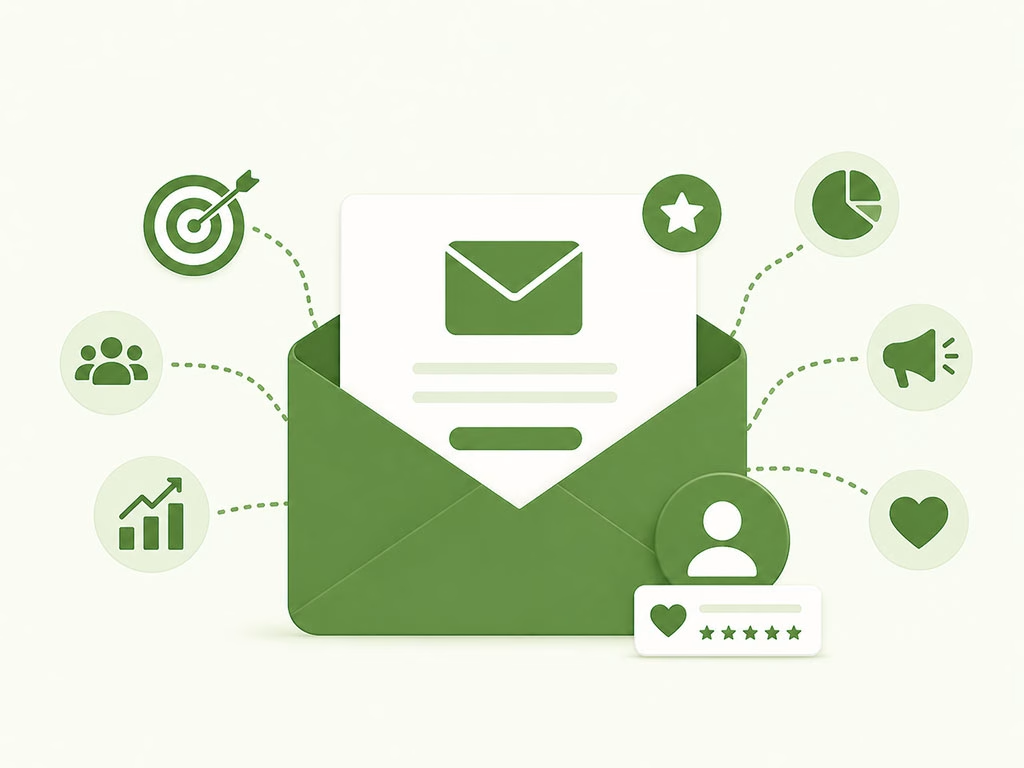
Once you’ve mastered the basics, it’s time to explore more advanced strategies to truly supercharge your customer loyalty. These tactics can help you build deeper connections and drive more meaningful engagement.
Personalization Beyond the Name: Data-Driven Messaging
The true power of email marketing lies in its ability to personalize messages based on individual customer data. This goes far beyond simply including their name.
Dynamic Content: Tailoring Content Within an Email
Dynamic content allows you to show different content blocks to different segments of your audience within the same email. For example, you can show product recommendations based on past purchases, or feature different promotions based on their location.
- Example: An email promoting a new apparel line could show menswear for male subscribers and womenswear for female subscribers.
Behavioral Triggers: Sending Emails at the Right Moment
Behavioral triggers are automated emails sent in response to specific customer actions (or inactions). These are incredibly effective for timely and relevant communication.
- Abandoned Cart Reminders: If a customer adds items to their cart but doesn’t complete the purchase, send a reminder with a clear CTA to finish their order.
- Browse Abandonment Emails: If a customer views specific products but doesn’t add them to their cart, send an email featuring those items or related products.
- Post-Purchase Follow-ups: As mentioned earlier, these are crucial for confirming orders, providing support, and requesting feedback.
- Birthday/Anniversary Emails: A simple, personalized message with a special offer can make customers feel cherished.
A/B Testing: The Science of Optimization
You can’t know for sure what’s working best unless you test it. A/B testing (or split testing) involves sending two variations of an email to different segments of your audience to see which performs better.
What to Test
- Subject Lines: Test different wording, length, and the inclusion of emojis.
- CTAs: Experiment with button text, color, and placement.
- Email Copy: Try different tones, lengths, and calls to value.
- Images and Visuals: See what resonates most with your audience.
- Send Times: Determine the optimal time to reach your subscribers.
How to Test
- Identify a Single Variable: Only change one element at a time to ensure you know what caused the difference in results.
- Create Two Versions: Design your emails with the single variable changed.
- Send to Segments: Divide your audience randomly and send each version.
- Analyze Results: Track key metrics like open rates, click-through rates, and conversion rates.
- Implement Winner: Use the winning version for future campaigns.
Leveraging Automation for Scale and Efficiency
Automation is your best friend when it comes to building loyalty at scale. It allows you to send personalized, timely emails without manual intervention, freeing up your time to focus on strategy and creativity.
Automated Workflows for Different Scenarios
- Onboarding New Subscribers: As detailed in the welcome series.
- Customer Retention: Re-engagement campaigns, loyalty program updates.
- Upselling and Cross-selling: Recommending complementary products or upgraded services.
- Win-Back Campaigns: Targeting inactive or lapsed customers.
The Benefit of Timeliness and Relevance
Automation ensures that your messages are delivered at the most opportune moments, increasing their relevance and impact. This proactive approach to communication shows your customers you’re attentive to their needs and preferences.
Measuring Success: Tracking Your Loyalty Metrics
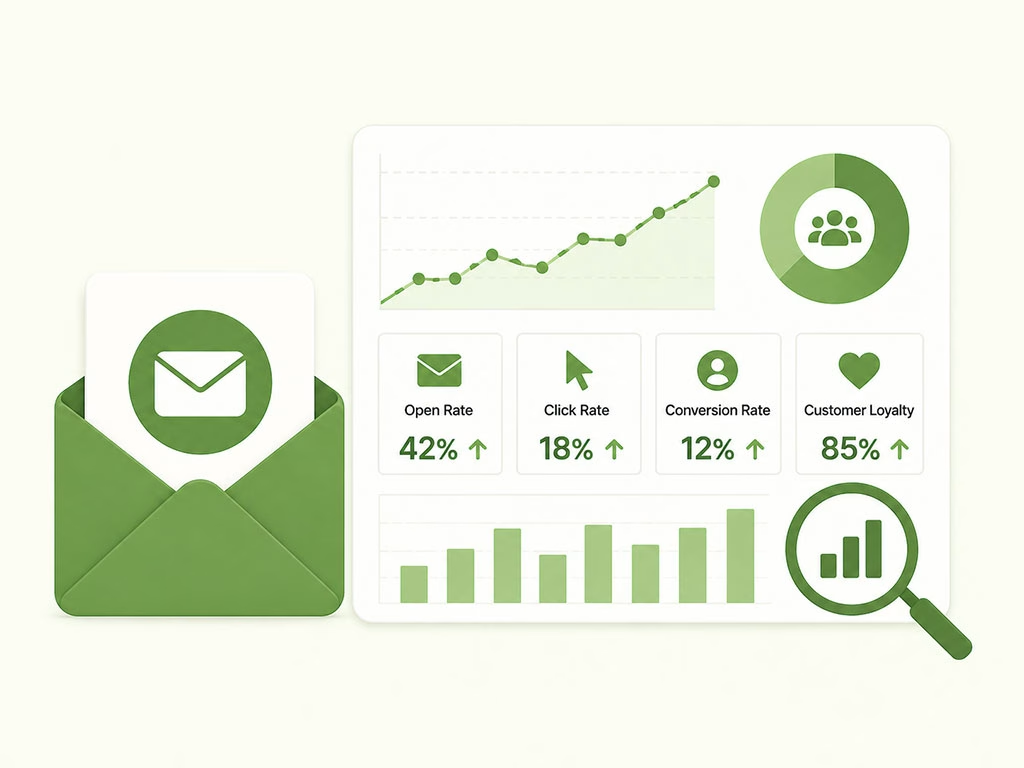
You can’t improve what you don’t measure. Regularly tracking your email campaign performance is essential for understanding what’s working, what’s not, and where you can make improvements to foster stronger customer loyalty.
Key Metrics to Monitor
- Open Rate: The percentage of recipients who opened your email. This indicates the effectiveness of your subject line and sender name.
- Click-Through Rate (CTR): The percentage of recipients who clicked on a link within your email. This measures the engagement with your content and CTAs.
- Conversion Rate: The percentage of recipients who completed a desired action (e.g., made a purchase, downloaded a resource) after clicking through. This is a crucial indicator of ROI.
- Unsubscribe Rate: The percentage of recipients who opted out of your email list. A high unsubscribe rate can signal an issue with your content or frequency.
- Bounce Rate: The percentage of emails that couldn’t be delivered. This can be due to invalid email addresses or server issues.
- Customer Lifetime Value (CLTV): While not solely an email metric, your email campaigns play a significant role in influencing CLTV by fostering repeat purchases and loyalty.
Analyzing the Data for Actionable Insights
Don’t just look at the numbers; interpret them. What do your open rates tell you about your subject lines? What do your CTRs suggest about your content and CTAs? Use this data to inform your future strategy and make continuous improvements.
Identifying Trends and Patterns
Are certain types of emails performing better than others? Are specific customer segments more responsive? Identifying these trends will help you refine your approach and tailor your campaigns more effectively.
Iterative Improvement: The Cycle of Growth
Building customer loyalty through email marketing is an ongoing process. It requires continuous learning, testing, and refinement. Embrace the iterative nature of this work, and you’ll find yourself constantly discovering new ways to connect with and delight your customers.
In the ever-evolving landscape of digital marketing, brands are increasingly turning to email campaigns as a powerful tool to foster customer loyalty. A recent article highlights the importance of understanding audience behavior through innovative techniques, such as tracking pixels, which can provide valuable insights into customer preferences and engagement. For more information on how these strategies can enhance your email marketing efforts, you can read the full article on leveraging tracking pixels for audience insights here.
The Future of Email Loyalty: Staying Ahead of the Curve
| Brand | Email Campaign Strategy | Customer Loyalty Metrics |
|---|---|---|
| Amazon | Personalized product recommendations, order updates, and exclusive deals | Increased repeat purchases, higher customer lifetime value |
| Sephora | Beauty tips, new product launches, and loyalty program rewards | Higher engagement, increased membership retention |
| Starbucks | Customized offers, birthday rewards, and mobile app integration | Improved customer retention, higher in-store visits |
The digital landscape is constantly evolving, and so too should your email marketing strategies. To maintain and enhance customer loyalty, you need to stay informed about emerging trends and adapt your approach accordingly.
Embracing Interactive Content
Beyond static text and images, consider incorporating interactive elements into your emails. Quizzes, polls, surveys, and even embedded videos can significantly boost engagement and provide valuable insights.
- Example: A quiz about skincare concerns can lead to personalized product recommendations within the email itself.
AI-Powered Personalization and Optimization

Artificial intelligence is revolutionizing email marketing. AI can analyze vast amounts of data to predict customer behavior, personalize content at an unprecedented level, and even automate the creation of email campaigns.
- Predictive Analytics: AI can identify customers who are at risk of churning and trigger proactive re-engagement campaigns.
- Automated Content Generation: AI can help draft email copy, suggest subject lines, and even design email layouts.
Hyper-Segmentation and Micro-Targeting
As data becomes more granular, you can move beyond broad segmentation to hyper-segmentation. This involves creating highly specific audience groups based on nuanced behaviors and preferences, allowing for incredibly tailored messaging.
- Example: Targeting customers who have repeatedly purchased a specific brand of coffee and then offering them an exclusive discount on a new, companion product from the same brand.
The Rise of Conversational Marketing in Email
While email is inherently a one-to-many communication channel, you can foster more conversational experiences. Think about incorporating chatbots for immediate support within emails or using email to drive customers to live chat or social media for real-time interactions.
By investing in your email campaigns, you’re investing in the heart of your customer relationships. You’re building a bridge of trust, value, and personal connection that transcends the transactional. So, start crafting those compelling messages, personalize with purpose, and watch your customer loyalty flourish.
FAQs
What are email campaigns used for in building customer loyalty?
Email campaigns are used by brands to engage with their customers, provide them with valuable content, and keep them informed about new products, promotions, and events. By consistently communicating with customers through email, brands can build trust and loyalty.
How do brands use email campaigns to personalize customer experiences?
Brands use email campaigns to personalize customer experiences by segmenting their email lists based on customer behavior, preferences, and demographics. This allows brands to send targeted and relevant content to different groups of customers, making the email communication more personalized and effective.
What are some best practices for brands to follow when using email campaigns to build customer loyalty?
Some best practices for brands to follow when using email campaigns to build customer loyalty include providing valuable and relevant content, personalizing the email communication, optimizing for mobile devices, and maintaining a consistent sending schedule. Additionally, brands should regularly analyze the performance of their email campaigns and make adjustments based on the data.
How do brands measure the success of their email campaigns in building customer loyalty?
Brands measure the success of their email campaigns in building customer loyalty by tracking metrics such as open rates, click-through rates, conversion rates, and customer retention. These metrics provide insights into how engaged and loyal customers are as a result of the email campaigns.
What are some examples of successful email campaigns that have helped build customer loyalty?
Some examples of successful email campaigns that have helped build customer loyalty include personalized product recommendations based on past purchases, exclusive offers and discounts for loyal customers, and informative content that adds value to the customer’s experience with the brand. These types of email campaigns can help strengthen the relationship between the brand and its customers, leading to increased loyalty.