



Email marketing isn’t just about sending messages; it’s about cultivating connections that translate directly into your bottom line. In today’s competitive landscape, where customer attention is a fleeting commodity, a strategically executed email campaign can be your most powerful tool for maximizing profits and fostering enduring relationships. You’re not simply broadcasting information; you’re engaging in a dialogue, offering value, and building trust that makes customers want to return, again and again.
Before you even start thinking about sending your first email, you need to lay a robust foundation. This isn’t just about having a list; it’s about understanding the core principles that will drive your success and ensure every email you send contributes to your profit goals.
Defining Your Target Audience Precisely
You can’t effectively communicate with everyone, so don’t try. Your email campaigns will be far more impactful if you know exactly who you’re talking to.
Identifying Demographics and Psychographics
Go beyond basic age and location. What are your customers’ interests? Their pain points? Their aspirations? What motivates them to make a purchase? Use surveys, analytics, and market research to build detailed customer personas. For example, if you sell artisanal coffee, are you targeting college students looking for a cheap caffeine fix, or sophisticated connoisseurs who appreciate single-origin beans and specific brewing methods? Understanding this distinction will inform your messaging, offers, and even the time of day you send emails.
Segmenting Your Existing List
Once you have a general understanding of your audience, you need to segment your existing email list. Don’t treat all subscribers the same. Create groups based on their past behavior, interests, purchase history, and engagement level. A customer who bought an item from your summer collection last year might be interested in a pre-season discount on new summer arrivals, while a brand-new subscriber might need an introductory series explaining your core values and product range. This personalization is crucial for relevance.
Setting Clear, Measurable Objectives
Without clear objectives, you can’t measure success. Before you send a single email, define what you hope to achieve.
Quantifiable Goals for Each Campaign
Are you aiming to increase sales of a specific product by 15%? Drive traffic to a new blog post? Reduce cart abandonment rates by 10%? Increase repeat purchases by 5%? Your goals should be SMART: Specific, Measurable, Achievable, Relevant, and Time-bound. This will allow you to track your progress and identify what’s working and what isn’t. For instance, rather than “increase sales,” aim for “increase sales of our new eco-friendly water bottle by 20% in the next quarter through targeted email promotions.”
Key Performance Indicators (KPIs) to Track
Once you have your goals, identify the KPIs that will tell you if you’re hitting them. This will include open rates, click-through rates (CTR), conversion rates, unsubscribe rates, and return on investment (ROI). Other important metrics might include forward rates, list growth rate, and average order value from email campaigns. Regularly review these metrics to understand the health and effectiveness of your email strategy.
Building profitable customer relationships through email campaigns is essential for any business looking to thrive in today’s competitive market. To enhance your email marketing strategy, you may find it beneficial to explore related insights on audience engagement. A valuable resource is the article titled “Unlock Audience Insights with Real-Time Reporting: Stop Guessing, Start Knowing,” which delves into the importance of leveraging real-time data to better understand customer preferences and behaviors. You can read the article here: Unlock Audience Insights with Real-Time Reporting.
Crafting Compelling Content That Converts
Once you know who you’re talking to and what you want to achieve, your next step is to create emails that grab attention, provide value, and ultimately drive action. This is where your creativity and understanding of your audience truly come into play.
Mastering the Art of the Subject Line
Your subject line is your first, and often only, chance to make an impression. It’s the gatekeeper to your email’s content.
Creating Curiosity and Urgency
A well-crafted subject line piques interest without giving everything away. Use compelling language, ask questions, or hint at an exclusive offer. E.g., “Don’t Miss Out: Last Chance for 25% Off!” or “A Secret Just For You: Our New Summer Collection.” Introduce a sense of urgency without being overly aggressive. Words like “limited-time,” “today only,” or “flash sale” can be very effective.
Personalizing and Segmenting Subject Lines
Generic subject lines often get lost in a cluttered inbox. Incorporate the recipient’s name if possible, or reference their past purchases or expressed interests. Remember the segmentation you did earlier? This is where it pays off. A subject line referencing a product they viewed but didn’t buy will likely perform better than a generic “newsletter update.” For example, “John, your wishlist item is now on sale!”
A/B Testing Subject Lines
Never assume you know what will work best. Always A/B test different subject lines to see which ones generate the highest open rates. Experiment with length, emojis, questions, and different calls to action. Your audience’s preferences might surprise you. Testing two very different subject lines (e.g., one benefit-driven and one curiosity-driven) can provide valuable insights into what resonates most.
Designing Visually Appealing Emails
Beyond the words, how your email looks plays a crucial role in engagement and readability.
Mobile-First Design Principles
A significant portion of your audience will open emails on their smartphones. If your email isn’t responsive and easy to read on a small screen, you’re losing out. Use single-column layouts, large fonts, and clear, clickable buttons. Test your emails on various devices before sending. Ensure images are optimized for mobile and load quickly.
Branding Consistency and Aesthetics
Your emails should instantly be recognizable as coming from your brand. Use your brand colors, fonts, logo, and overall visual style consistently. Maintain a clean, uncluttered layout with ample white space. High-quality images and clear typography enhance the professional appearance and readability of your emails.
Strategic Use of Images and Videos
Images can break up text, illustrate points, and showcase products. However, too many images can slow down load times and trigger spam filters. Use them strategically as supporting elements. Short, embedded videos can also be highly engaging, but ensure they don’t bloat the email size. Always include alt text for images for accessibility and in case images don’t load.
Building profitable customer relationships through email campaigns can be significantly enhanced by leveraging creative design strategies. For instance, utilizing pre-designed templates can save time while ensuring a professional appearance. A related article discusses how to transform these templates into branded masterpieces, providing insights that can elevate your email marketing efforts. To explore this further, you can read about it here. By incorporating such creative elements, businesses can foster deeper connections with their audience and drive engagement.
Writing Engaging Copy
Even with a great subject line and beautiful design, weak copy will fail to convert. Your words need to be compelling, clear, and action-oriented.
Focusing on Benefits, Not Just Features
Customers buy solutions to problems or ways to enhance their lives. Instead of just listing what your product does (features), explain what it means for them (benefits). E.g., instead of “Our new phone has a 50-megapixel camera,” say “Capture stunning, professional-quality photos wherever you go with our new phone’s advanced 50-megapixel camera.”
Clear and Concise Language
Get straight to the point. Most people scan emails rather than read them word-for-word. Use short paragraphs, bullet points, and headings to make your content digestible. Avoid jargon and overly complex sentences. Your goal is to convey information efficiently and effectively.
Strong Call-to-Actions (CTAs)
Every email should have a clear purpose and a single primary call-to-action. Make your CTA prominent, use action-oriented language, and tell the recipient exactly what you want them to do. E.g., “Shop Now,” “Learn More,” “Download Your Free Guide,” “Get Your Discount.” Use contrasting colors for your CTA buttons to make them stand out.
Implementing Strategic Automation and Personalization

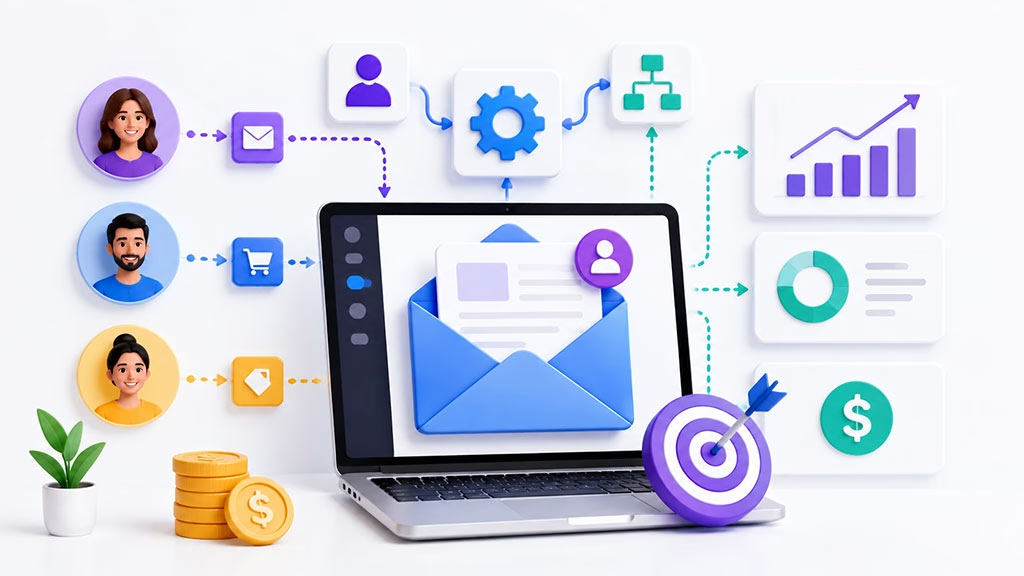
Manual email sending is inefficient and limits your potential. Automation and personalization are the engine of a truly profitable email marketing strategy, allowing you to deliver the right message at the right time to the right person.
Leveraging Email Automation Workflows
Set up automated sequences that trigger based on specific customer actions or inactions. This ensures timely and relevant communication without manual effort.
Welcome Series for New Subscribers
This is your first impression. A well-designed welcome series nurtures new leads, introduces your brand, highlights your value proposition, and encourages initial engagement. You can offer a discount, showcase popular products, or invite them to follow you on social media. A typical welcome series might be 3-5 emails spread over a week, progressively introducing your brand’s core offerings.
Cart Abandonment Reminders
One of the most profitable automation sequences. When a customer adds items to their cart but doesn’t complete the purchase, send a series of reminders. The first might simply be a gentle nudge, the second could highlight benefits or social proof, and the third might include a small incentive like free shipping. These emails can recover a significant portion of lost sales.
Post-Purchase Follow-Ups
Don’t let the relationship end after a sale. Send thank-you emails, order confirmations, shipping updates, and requests for reviews. You can also suggest complementary products or provide useful tips on how to get the most out of their new purchase. This builds loyalty and encourages repeat business. For example, if they bought a coffee maker, email them a week later with brewing tips and a discount on a bag of specialty coffee.
Re-engagement Campaigns
Customers go quiet. When subscribers haven’t opened an email or engaged with your brand in a while, initiate a re-engagement campaign. Offer an exclusive deal, ask for their preferences, or simply remind them of the value you offer. The goal is to reactivate dormant subscribers or, if they remain unresponsive, remove them from your list to maintain good sender reputation.
Deepening Personalization Beyond the Name
Personalization is more than just addressing someone by their first name. It’s about showing you understand their individual needs and preferences.
Dynamic Content Based on User Behavior
Use your email platform’s capabilities to display different content to different segments within the same email. For instance, if a segment has purchased from your “men’s clothing” category, show them new arrivals in that category. If they’ve browsed “women’s accessories,” highlight those items. This makes the email feel tailor-made.
Product Recommendations and Cross-selling
Based on past purchases and browsing history, suggest relevant products. “Customers who bought X also loved Y” is a powerful psychological trigger. This increases average order value and introduces customers to more of your offerings. Use AI-powered recommendation engines if your platform supports it.
Birthday and Anniversary Emails
These personal touches can be incredibly effective. A special birthday discount or a small gift for their customer anniversary shows you value them as individuals, fostering goodwill and often leading to a celebratory purchase. Collect this data during signup.
Analyzing and Optimizing for Continuous Profit Growth
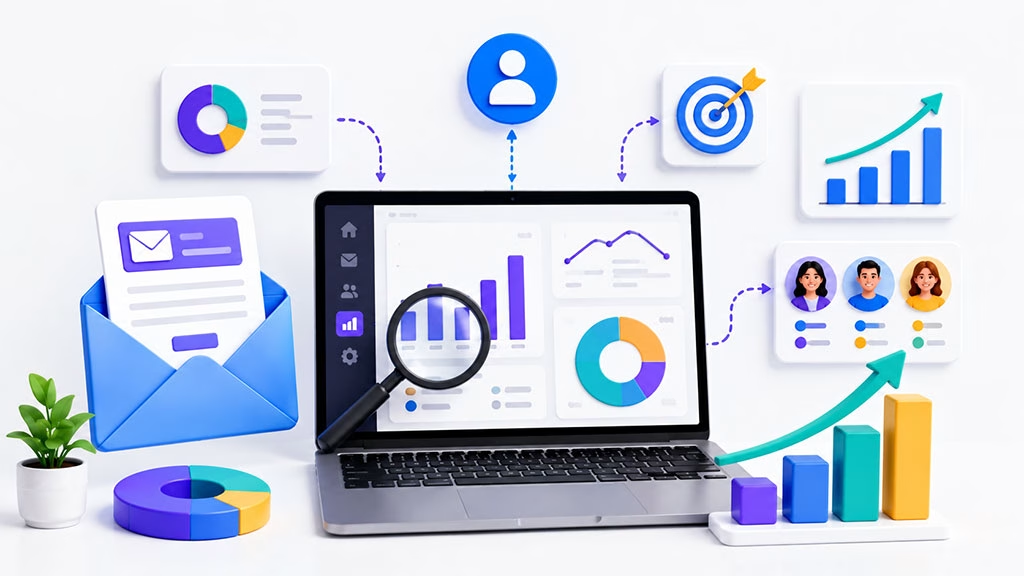
Your email marketing strategy is not a “set it and forget it” endeavor. To truly maximize profits, you must continuously monitor, analyze, and refine your campaigns based on data.
Tracking Key Metrics and Performance
Data is your compass. Regularly review your performance metrics to understand what’s working and what needs improvement.
Open Rates and Click-Through Rates (CTR)
These are foundational metrics. Low open rates suggest issues with your subject lines or sender reputation. Low CTRs indicate your content isn’t engaging or your call-to-action isn’t compelling. Monitor these trends over time and compare them against industry benchmarks.
Conversion Rates and ROI
Ultimately, are your emails leading to sales or desired actions? Calculate the conversion rate for each campaign (e.g., purchases, sign-ups, downloads). More importantly, calculate the ROI of your email marketing efforts. Are you generating more revenue than you’re spending on your email platform and content creation? This is the ultimate measure of profit maximization.
Unsubscribe Rates and Spam Complaints
High unsubscribe rates or, worse, spam complaints, are red flags. They indicate your audience is no longer interested, or you’re sending too many emails, or your content isn’t relevant. Address these swiftly to protect your sender reputation and ensure your emails continue to land in the inbox. A healthy unsubscribe rate is generally below 0.5%.
Conducting A/B Testing Consistently
Never stop experimenting. There’s always room for improvement, and A/B testing is how you find it.
Testing Elements Beyond Subject Lines
While subject lines are crucial, A/B test other elements too. Experiment with different calls-to-action (e.g., “Shop Now” vs. “Explore Collection”), image placements, email lengths, personalization levels, and even sender names. Small changes can sometimes lead to significant improvements in performance.
Understanding Statistical Significance
Ensure your A/B test results are statistically significant before making permanent changes. Don’t make decisions based on marginal differences from small sample sizes. Use tools within your email platform or external calculators to determine if your results are robust enough to warrant a change.
Refining Your Strategy Based on Insights
Data is useless if you don’t act on it. Use your analysis to make informed decisions and continuously improve.
Iterative Improvements to Content and Design
If certain types of content consistently perform better, create more of it. If a particular design layout leads to higher engagement, adopt it across your campaigns. If mobile open rates are low, focus more on mobile optimization. This cycle of analysis and improvement is vital.
Adjusting Send Times and Frequencies
Your ideal send time and frequency will depend on your audience. Test sending emails on different days of the week and at various times of the day. Some audiences respond better to morning emails, others to evening. Likewise, some brands can send daily, others weekly or monthly. Find the sweet spot that maximizes engagement without leading to fatigue or unsubscribes.
Optimizing Segmentation and Personalization Further
As you gather more data, you’ll uncover new ways to segment your audience and personalize your messages. Perhaps you discover a sub-segment with unique needs you hadn’t considered. Continuously refine your segmentation strategy to ensure maximum relevance for every email sent. The more granular you can get, the better you can cater to individual preferences, ultimately leading to stronger customer relationships and greater profits.
By meticulously implementing these strategies, you’re not just sending emails; you’re building a powerful, automated system that fosters deep customer relationships, drives engagement, and consistently maximizes your profits. This strategic approach transforms email marketing from a mere communication channel into a central pillar of your business growth.
FAQs
What are email campaigns?
Email campaigns are a marketing strategy that involves sending targeted, personalized emails to a group of recipients with the goal of promoting products or services, building brand awareness, and nurturing customer relationships.
How can email campaigns help build profitable customer relationships?
Email campaigns can help build profitable customer relationships by providing valuable and relevant content to subscribers, nurturing leads through the sales funnel, and creating personalized experiences that resonate with the recipients’ needs and interests.
What are some best practices for creating successful email campaigns?
Some best practices for creating successful email campaigns include segmenting your email list, personalizing the content, using compelling subject lines, providing clear calls to action, and testing and analyzing the performance of your campaigns to optimize results.
What are the key metrics to measure the success of email campaigns?
Key metrics to measure the success of email campaigns include open rate, click-through rate, conversion rate, bounce rate, and unsubscribe rate. These metrics provide insights into the effectiveness of your campaigns and help you make data-driven decisions for improvement.
How can businesses use email campaigns to increase profitability?
Businesses can use email campaigns to increase profitability by nurturing leads, upselling and cross-selling to existing customers, promoting new products or services, and building brand loyalty through targeted and personalized communication with their audience.