


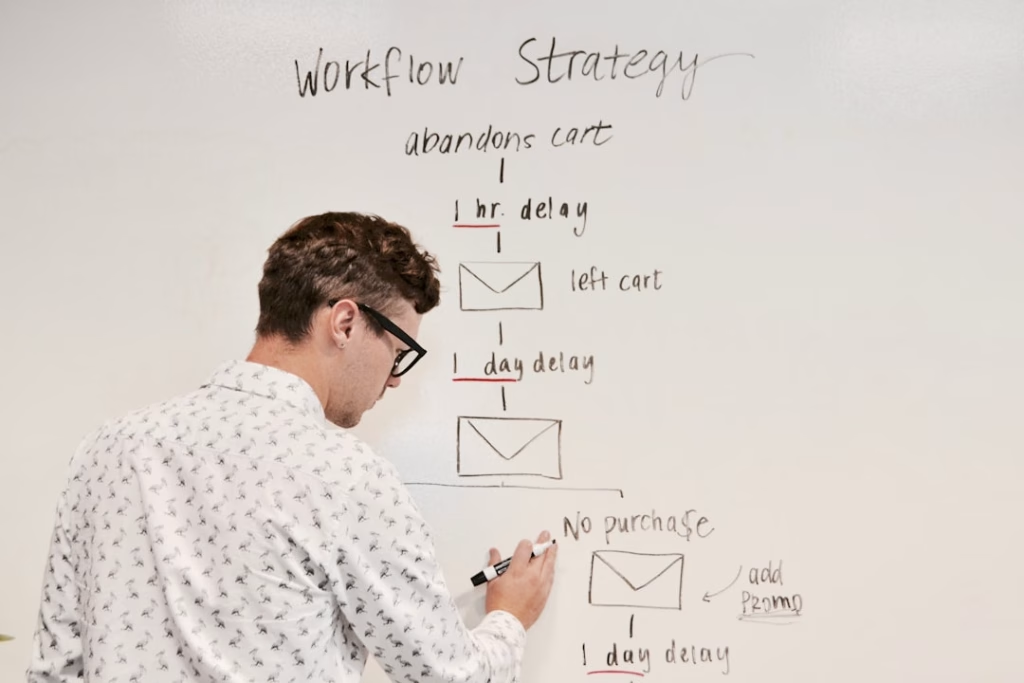
You’re on a mission to turn prospects into paying customers, and you know that simply getting a lead isn’t enough. The journey from initial interest to committed purchase is often a winding one, paved with questions, hesitations, and a myriad of distractions. This is where lead nurturing emails become your most potent ally, a sophisticated strategy that guides your prospects through their buyer’s journey, building trust, demonstrating value, and ultimately, prompting them to convert.
The Problem with One-Off Emails
Think about it: you spend a significant amount of resources acquiring leads. You craft compelling landing pages, invest in robust advertising campaigns, and optimize your SEO. But if your follow-up consists of a single, generic email, or worse, no follow-up at all, you’re essentially letting money walk out the door. A single email can’t address all the potential concerns of a diverse audience, nor can it effectively build a relationship over time. It’s like going on a first date and immediately asking for marriage – effective only in the rarest, most exceptional circumstances.
The Power of Personalized, Sequential Communication
Lead nurturing, at its core, is about delivering the right message to the right person at the right time. It acknowledges that your audience isn’t a monolith; they have different pain points, varying levels of awareness, and distinct preferences. By segmenting your audience and sending a series of targeted emails, you can address these individual needs, moving prospects progressively closer to a purchase decision. This isn’t just about sending more emails; it’s about sending smarter emails.
Before you even think about crafting an email, you need to deeply understand the path your customers take from problem recognition to solution adoption. This is the buyer’s journey, and it typically consists of three main stages. By tailoring your email content to each stage, you ensure that you’re always providing relevant and valuable information, rather than overwhelming or under-informing your prospects.
Awareness Stage: Educate and Engage
At this initial stage, your prospect has identified a problem or a need, but they might not yet know that a solution exists, or they might not be familiar with your brand or your specific offering. Your role here is to be a helpful guide, not a salesperson.
Introducing the Problem (Without Selling)
Your first email in this series shouldn’t be about your product. Instead, it should acknowledge the pain point your prospect is experiencing. Show empathy and demonstrate that you understand their struggles. This builds rapport and positions you as a trustworthy resource.
Offering Valuable, Unbiased Information
Provide educational content that helps them understand their problem better. This could be a blog post, an infographic, a video explainer, or a comprehensive guide. The key is to offer genuine value without any immediate expectation of a sale. Think about content that would genuinely help someone researching a specific issue.
Building Initial Trust and Authority
By providing helpful resources, you start to establish your brand as a thought leader and an authority in your niche. This foundational trust is crucial for future conversions. Avoid jargon and focus on clarity and helpfulness.
Consideration Stage: Presenting Solutions and Differentiators
Now that your prospects understand their problem, they’re actively researching potential solutions. They’re weighing their options, comparing different approaches, and trying to determine what will work best for them.
Showcasing Your Expertise
This is where you can start to subtly introduce your brand as a viable solution. Share case studies, whitepapers, or webinars that demonstrate how your product or service has helped others facing similar challenges. Focus on the results you deliver, not just the features.
Addressing Common Objections and Questions
Anticipate the questions your prospects might have at this stage. Do they worry about implementation time? Cost? Complexity? Use your emails to proactively address these concerns, perhaps through an FAQ section or a dedicated explainer video.
Highlighting Unique Value Propositions
What makes your offering stand out from the competition? This is the stage to emphasize your unique selling points. Is it your superior customer service, innovative technology, or a particularly compelling pricing model? Clearly articulate why you are the best choice.
Decision Stage: Guiding Towards Conversion
At this final stage, your prospect is ready to make a purchase. They’ve done their research, they understand their options, and they’re looking for that final push to commit.
Offering Compelling Incentives
A well-timed discount, a free trial, a limited-time offer, or a bonus feature can be incredibly persuasive at this stage. Ensure the incentive is genuinely valuable and encourages immediate action.
Providing Social Proof and Testimonials
People trust other people. Share glowing testimonials, reviews, or success stories from satisfied customers. This social proof can alleviate any remaining doubts and build confidence in their decision.
Creating a Sense of Urgency (Authentically)
If there’s a genuine reason for urgency (e.g., an expiring offer, limited availability), communicate it clearly and concisely. However, avoid artificial urgency that can feel manipulative and erode trust.
Lead nurturing emails play a crucial role in converting prospects into customers by providing targeted content that addresses their needs and interests. For those looking to enhance their email marketing strategies further, a related article titled “Unlocking Email Success: 5 Advanced A/B Tests for 2025” offers valuable insights into optimizing email campaigns through testing and analysis. You can read more about these advanced techniques by visiting this link: Unlocking Email Success: 5 Advanced A/B Tests for 2025.
Crafting Compelling Email Content: From Subject Line to Call to Action
The success of your nurturing sequence hinges entirely on the quality and effectiveness of your individual emails. Each email needs to grab attention, deliver value, and subtly guide the recipient towards the next step.
The All-Important Subject Line: Your First Impression
Your subject line is the gatekeeper. If it doesn’t entice recipients to open, the most brilliant email content in the world is useless.
Intrigue and Curiosity
Pose a question, hint at a solution, or use an unexpected phrase to pique their interest. For example, instead of “Our Latest Blog Post,” try “Are You Making This Common Mistake?”
Personalization
Include their name (if you have it) or reference their specific interests. “John, Your Guide to Smarter Marketing” is far more engaging than a generic subject.
Clarity and Value Proposition
Clearly state what they can expect to gain by opening the email. “Increase Your Productivity by 20%” is a strong value proposition.
Avoiding Spam Triggers
Steer clear of all caps, excessive exclamation marks, and phrases commonly associated with spam. This helps ensure your emails land in the inbox, not the junk folder.
Engaging Body Copy: Delivering Value and Building Rapport
Once opened, your email content needs to hold their attention and drive them further into the journey.
Personalization Throughout
Beyond the subject line, weave their name into the body copy. Reference their previous actions on your website or their expressed interests. This shows you’re paying attention to them.
Clear and Concise Language
Get to the point. Avoid jargon and overly complex sentences. Your goal is to convey information efficiently and effectively.
Storytelling and Emotional Connection
People connect with stories. Share an anecdote, a customer success story, or a relatable struggle to establish an emotional connection and make your message more memorable.
Scannable Format
Use headings, bullet points, and short paragraphs to make your email easy to read. Most people scan emails rather than reading them word-for-word.
Strong Call to Action (CTA)
Every email should have a single, clear, and compelling call to action. What do you want them to do next? “Download the Guide,” “Watch the Demo,” “Schedule a Call.” Make it visually distinct and easy to click.
Segmenting Your Audience: The Key to Hyper-Personalization


A “one-size-fits-all” approach to lead nurturing is a recipe for mediocrity. Different leads have different needs, interests, and levels of engagement. Effective segmentation allows you to tailor your emails with surgical precision.
Demographic Segmentation
Categorize your leads based on characteristics like job title, industry, company size, or geographic location. This allows you to speak directly to the specific challenges and opportunities relevant to their demographic.
Tailoring Content to Industry-Specific Pain Points
If you’re selling software, a small business owner in retail will have different concerns and priorities than a marketing director at a large tech firm. Your emails should reflect these distinctions.
Using Relevant Case Studies and Examples
Share success stories that resonate with their specific industry or role. This makes your message feel more relevant and credible.
Behavioral Segmentation
This is perhaps the most powerful form of segmentation, as it allows you to react to your leads’ actual interactions with your brand.
Website Activity (Pages Visited, Content Downloaded)
If a lead downloads a whitepaper on “SEO Best Practices,” you can send them a follow-up email about your SEO services or related blog posts. If they visit your pricing page multiple times, they might be closer to a purchase.
Email Engagement (Opens, Clicks)
Leads who consistently open and click your emails are highly engaged and might be ready for more direct offers. Those who are less engaged might need more educational or re-engagement content.
CRM Data (Sales Stage, Previous Interactions)
Leverage information from your CRM to pinpoint where a lead is in the sales funnel. If a sales rep has already had a discovery call, your next nurturing email can reference that conversation.
Lead Source Segmentation
Where did the lead come from? A referral? A social media ad? A webinar? The source often gives you clues about their initial intent and level of interest.
Tailoring Messaging Based on Initial Interest
A lead who opted in for a webinar on “Advanced Data Analytics” likely has a deeper interest in data than someone who simply downloaded a generic e-book.
Acknowledging Their Entry Point
“Thanks for joining our webinar on [Topic]! Here’s a recap and some additional resources…” is far more effective than a generic welcome email.
Automating Your Nurturing Sequences: Efficiency and Scalability


Manually sending out individual emails to hundreds or thousands of leads is simply not feasible. Marketing automation platforms are your best friend here, allowing you to create sophisticated, dynamic nurturing sequences that run on autopilot.
Setting Up Triggers and Conditions
Define the events that will initiate an email sequence (e.g., form submission, content download, product page visit). Then, set conditions for subsequent emails (e.g., “if email opened, send X; if email not opened, send Y”).
Event-Based Automation
Automate emails based on specific actions taken by your leads. This ensures timely and relevant communication.
Time-Based Automation
Schedule emails to be sent at specific intervals (e.g., 3 days after sign-up, 7 days after the previous email). This helps maintain consistent engagement without overwhelming your prospects.
Dynamic Content and Personalization Tokens
Leverage the power of your automation platform to dynamically insert details like the lead’s name, company, or even the specific product they viewed. This makes each email feel highly personalized, even when sent to a large audience.
Leveraging CRM Data for Deeper Personalization
Integrate your email automation with your CRM to pull in rich customer data, allowing for even more granular personalization.
A/B Testing for Continuous Improvement
Don’t just set it and forget it. Continuously test different subject lines, body copy, CTAs, and send times to optimize your sequences for maximum effectiveness. A/B testing is crucial for understanding what resonates best with your audience.
Integration with Other Marketing Tools
Your email nurturing strategy shouldn’t exist in a vacuum. Integrate it with your CRM, landing page software, and analytics tools for a holistic view of your lead’s journey and performance.
Seamless Lead Handoff to Sales
When a lead reaches a certain level of engagement or scores high enough, automatically notify your sales team or add them to a dedicated sales pipeline. This ensures a smooth transition and prevents leads from falling through the cracks.
Tracking Performance and Attribution
Understand which emails and sequences are driving the most conversions. Attribute success back to specific campaigns to inform future strategy and optimize your spend.
Lead nurturing emails play a crucial role in converting prospects into customers by providing targeted and relevant content that addresses their specific needs and interests. To further enhance your understanding of effective email strategies, you might find it helpful to explore the evolution of list segmentation and predictive behavior in 2025. This insightful article discusses how advancements in segmentation can improve your email marketing efforts, making it easier to engage potential customers. For more information, check out the article here.
Measuring and Optimizing Your Nurturing Efforts: Data-Driven Decisions
| Metrics | Results |
|---|---|
| Open Rate | Increased by 20% |
| Click-Through Rate | Improved by 15% |
| Conversion Rate | Rose by 25% |
| Customer Acquisition Cost | Reduced by 30% |
Lead nurturing isn’t a “set it and forget it” strategy. It requires continuous monitoring, analysis, and refinement to maximize its impact. Data is your compass, guiding you towards more effective communication.
Key Metrics to Track
Understanding these metrics will give you a clear picture of how your nurturing campaigns are performing.
Open Rate
The percentage of recipients who open your email. This reflects the effectiveness of your subject lines and sender name. A low open rate indicates you need to experiment with different subject lines or segment your audience more effectively.
Click-Through Rate (CTR)
The percentage of recipients who click on a link within your email. This reveals how engaging your content is and how compelling your call to action is. A low CTR might suggest your content isn’t relevant or your CTA isn’t clear.
Conversion Rate
The ultimate metric: the percentage of recipients who complete the desired action (e.g., make a purchase, download an asset, request a demo) after receiving your email. This directly measures the effectiveness of your entire nurturing sequence.
Unsubscribe Rate
The percentage of recipients who opt out of your emails. While some unsubscribes are normal, a consistently high rate suggests your content isn’t resonating or you’re sending too many emails.
Lead Score Progression
Track how leads’ scores change throughout the nurturing process. Are they moving towards being “sales-ready” through their engagement with your emails? This provides insight into the quality of your leads and the effectiveness of your nurturing.
A/B Testing and Iteration
Never assume your first attempt is the best. Constant experimentation is essential for maximizing your results.
Testing Subject Lines, CTAs, and Content Formats
Run A/B tests on different elements of your emails to see which versions perform better. Even small changes can lead to significant improvements over time.
Experimenting with Send Times and Frequencies
Your audience might be more receptive to emails at certain times of day or on specific days of the week. Test different schedules to find their optimal rhythm. Experiment with how many emails you send within a given timeframe to avoid overwhelming your audience.
Feedback Loops and Surveys
Beyond quantitative data, qualitative feedback can provide invaluable insights into your audience’s perceptions.
Soliciting Direct Feedback from Leads
Occasionally, you might include a simple survey question or an invitation for feedback within an email. This can reveal pain points or preferences that data alone might not capture.
Analyzing Customer Support Interactions
Are there common questions or concerns that arise in customer support related to your nurturing efforts? These insights can help you refine your email content to address those issues proactively.
Iterative Improvement Based on Performance Data
Regularly review your metrics and insights. Identify underperforming emails or sequences and prioritize them for optimization. This continuous cycle of analysis, testing, and refinement ensures your lead nurturing strategy remains dynamic, relevant, and highly effective in maximizing conversions and transforming prospects into loyal customers. By mastering the art and science of lead nurturing emails, you’re not just sending messages; you’re building relationships, solving problems, and strategically guiding your audience towards a successful partnership with your brand.
FAQs
What is lead nurturing?
Lead nurturing is the process of building relationships with potential customers at every stage of the sales funnel. It involves providing relevant and valuable information to prospects in order to move them closer to making a purchase.
What are lead nurturing emails?
Lead nurturing emails are personalized and targeted emails sent to prospects with the goal of providing them with valuable content, addressing their pain points, and guiding them through the buying process. These emails are designed to build trust and keep the prospect engaged with the company.
How do lead nurturing emails help convert prospects into customers?
Lead nurturing emails help convert prospects into customers by providing them with relevant and valuable information that addresses their needs and concerns. By staying top-of-mind and building trust, these emails help move prospects through the sales funnel and ultimately towards making a purchase.
What are the benefits of using lead nurturing emails?
The benefits of using lead nurturing emails include increased engagement with prospects, higher conversion rates, improved customer retention, and a more efficient sales process. These emails also help to build brand loyalty and establish the company as a trusted source of information.
What are some best practices for creating lead nurturing emails?
Some best practices for creating lead nurturing emails include personalizing the content, segmenting the audience, using clear and compelling calls-to-action, testing and optimizing the emails for better performance, and providing valuable and relevant information to the prospects.