


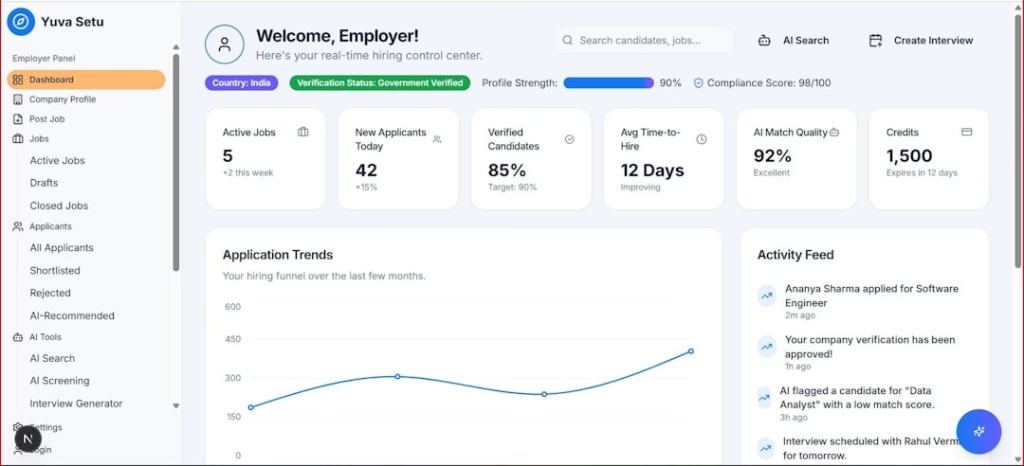
You’re living in a world that’s moving at the speed of a thousand heartbeats per minute. Every click, every swipe, every transaction, every sensor reading – it’s all data, flowing constantly, and it’s happening NOW. If you’re still relying on yesterday’s reports to make today’s decisions, you’re essentially driving blindfolded. This is where the transformative power of real-time analytics comes into play, offering you the ability to not just react, but to proactively shape your destiny.
Imagine this: You’re managing an e-commerce platform, and a sudden surge of traffic hits your site. Without real-time insights, you might be scrambling to understand what’s happening long after the opportunity or the crisis has passed. But with real-time analytics, you see the spike the moment it occurs. You can identify the source of the traffic, understand what products are suddenly in demand, and even detect fraudulent activity before it impacts your business significantly. This isn’t science fiction; this is the tangible benefit of embracing real-time data.
The allure of real-time analytics isn’t just about speed; it’s about precision, agility, and a profound understanding of your operational landscape. It’s about shifting from a retrospective view to a panoramic, instantaneous one. This is the key to unlocking a new level of effectiveness and competitive advantage in virtually every industry. You’re not just observing, you’re participating in the ongoing narrative of your business, armed with the most up-to-date information possible.
Why Now is the Time to Embrace Real-Time Analytics
The digital transformation you’re experiencing has created an explosion of data. Every device, every interaction, every process is generating a continuous stream of information. This deluge, when harnessed effectively, becomes an incredibly powerful asset. The technologies to capture, process, and analyze this data in real-time have matured significantly, making it more accessible and affordable than ever before.
The Data Deluge: A Catalyst for Change
You’re seeing it everywhere. IoT devices in your factory are spitting out sensor data every millisecond. Customers are interacting with your online presence constantly, leaving a trail of digital breadcrumbs. Cloud-native applications are generating logs and metrics at an unprecedented rate. This isn’t just noise; it’s rich, actionable intelligence waiting to be unearthed. The sheer volume and velocity of this data make traditional batch processing methods obsolete. You need tools that can keep pace with the real-time flow.
Understanding the Velocity of Information
Think about how quickly news travels today. Information that was once considered valuable for weeks is now measured in seconds or minutes. This speed phenomenon extends to your business operations. Customer sentiment can shift dramatically in a short period. Market trends can emerge and disappear with surprising rapidity. Your ability to monitor and respond to these changes in real-time directly impacts your success.
The Interconnectedness of Modern Systems
Your business isn’t an island. You’re connected to suppliers, partners, and customers through complex digital ecosystems. A disruption in one part of this chain can ripple outwards. Real-time analytics allows you to monitor these interdependencies and detect potential issues before they escalate, providing you with the crucial lead time to mitigate risks.
Technological Advancements Paving the Way
Gone are the days when real-time analytics was a prohibitively expensive and complex undertaking reserved for the tech giants. Cloud computing, distributed processing frameworks, and advancements in data streaming technologies have democratized access to these capabilities. You now have the power of sophisticated analytical tools at your fingertips, capable of handling massive data volumes with low latency.
The Rise of Cloud-Native Analytics Platforms
The cloud has revolutionized how you access and leverage computing resources. Real-time analytics platforms are increasingly built on cloud infrastructure, offering you scalability, flexibility, and cost-effectiveness. You can provision and de-provision resources as needed, ensuring you have the processing power to handle peak loads without over-investing in hardware.
Stream Processing Technologies: The Backbone of Real-Time
Technologies like Apache Kafka, Apache Flink, and Amazon Kinesis have become the de facto standards for handling continuous data streams. They enable you to ingest, transform, and analyze data as it arrives, rather than waiting for it to be batched. This fundamental shift in data processing is what unlocks the power of real-time insights.
In the discussion of why real-time analytics are superior to monthly email reports, it is essential to consider the impact of timely data on lead generation strategies. A related article that delves into effective methods for capturing leads is available at Mastering Lead Capture with High-Converting Web Forms. This resource highlights how immediate insights can enhance the effectiveness of web forms, ultimately leading to better engagement and conversion rates.
Unpacking the Pillars of Real-Time Analytics
To truly unlock this power, you need to understand the core components that make real-time analytics possible. It’s not just about having the data; it’s about how you capture it, process it, and then translate it into action.
Data Ingestion: Capturing the Living Stream
The first step in any real-time analytics strategy is the efficient ingestion of data as it’s generated. This means setting up robust pipelines that can handle the continuous flow of information from various sources without dropping packets or introducing significant delays.
Batch vs. Streaming: A Critical Distinction
While batch processing involves collecting data over a period and then processing it in scheduled chunks, streaming processes data continuously, element by element, as it arrives. For real-time analytics, streaming is your essential tool. You need to move away from aggregating data hourly or daily and embrace immediate capture.
Diverse Data Sources and Integration Challenges
Your data will come from a multitude of sources: web servers, mobile applications, databases, IoT devices, social media feeds, financial transactions, and more. Integrating these disparate sources into a unified, real-time stream can be a significant challenge, but it’s crucial for a comprehensive view.
Data Processing: Transforming Raw Data into Insight
Once ingested, the raw data needs to be processed and analyzed. This is where the “real-time” aspect truly shines. Sophisticated engines work on the data as it flows through, performing calculations, aggregations, and applying machine learning models.
In-Memory Processing: Speeding Up Computations
Traditional disk-based processing can be a bottleneck. In-memory processing, which loads data into RAM, dramatically speeds up analytical computations, allowing for near-instantaneous results. This is particularly important for complex queries and aggregations.
Applying Machine Learning in Real-Time
Machine learning models are no longer just for historical analysis. In real-time, they can predict outcomes, detect anomalies, classify events, and personalize experiences on the fly. Imagine a recommendation engine that adjusts its suggestions based on your very last click.
Data Storage and Access: Making Insights Available
Even with real-time processing, you need a way to store and access the results of your analysis. This often involves specialized databases designed for rapid querying of time-series data or fast analytical processing.
Fast Querying Databases: The Key to Responsiveness
You need databases that can return answers to your queries in milliseconds, even when querying petabytes of data. Technologies like time-series databases and in-memory column stores are often employed for this purpose.
Data Lakes and Warehouses in a Real-Time Context
While traditional data warehouses might be updated in batches, they can still play a role in storing historical context for real-time analysis. Data lakes, with their ability to store raw, unstructured data, can also be a valuable part of your real-time architecture, allowing for exploration and discovery.
Real-World Applications: Where Real-Time Analytics Delivers Impact
The theoretical benefits of real-time analytics are impressive, but their true power lies in their practical application across various industries. You’re seeing these transformations happen every day.
Enhancing Customer Experience: The Personalization Imperative
In today’s competitive landscape, delivering a hyper-personalized customer experience is paramount. Real-time analytics allows you to understand customer behavior as it happens and tailor interactions accordingly.
Dynamic Website Personalization
Imagine a website that instantly recognizes a returning visitor and displays personalized product recommendations or content based on their past browsing history and current browsing session. This isn’t just about showing recent purchases; it’s about predicting what they’ll want next.
Real-Time Fraud Detection and Prevention
For financial institutions and e-commerce businesses, real-time fraud detection is a massive concern. By analyzing transaction patterns in milliseconds, you can identify and flag suspicious activity, preventing financial loss and protecting your customers. This goes beyond simple rule-based systems; advanced machine learning can detect subtle anomalies that humans might miss.
Proactive Customer Support
When a customer encounters an issue, you don’t want them to have to go through a lengthy troubleshooting process. Real-time analytics can monitor user interactions and flag potential problems before the customer even reaches out, allowing for proactive support and resolution. Think of a system that detects when a user is repeatedly struggling with a particular feature and automatically offers help.
Optimizing Operational Efficiency: Driving Performance in Real-Time
Beyond customer-facing applications, real-time analytics is a game-changer for optimizing your internal operations, from manufacturing to logistics.
Smart Manufacturing and Industrial IoT (IIoT)
In manufacturing, real-time sensor data from machinery can alert you to potential equipment failures before they occur, enabling predictive maintenance. This reduces downtime, minimizes repair costs, and ensures continuous production. You can also monitor production line performance in real-time, identifying bottlenecks and adjusting processes on the fly to maximize output.
Supply Chain Visibility and Optimization
The modern supply chain is complex and prone to disruptions. Real-time tracking of goods, inventory levels, and transportation status provides you with complete visibility. This allows you to respond quickly to delays, reroute shipments, and optimize inventory levels, minimizing costs and ensuring timely delivery. Imagine knowing exactly where your shipment is at every moment and being alerted to potential delays due to weather or traffic, allowing you to proactively adjust delivery schedules.
Energy Management and Grid Optimization
For utilities, real-time energy consumption data allows for better grid management, balancing supply and demand dynamically. This leads to greater efficiency, reduced waste, and improved reliability. You can predict peak demand periods and adjust generation accordingly, preventing blackouts and ensuring stable power delivery.
Enhancing Business Intelligence and Decision Making: Agility in Action
The ability to access and analyze data in real-time fundamentally changes how you make business decisions. It empowers you with the agility to adapt to dynamic market conditions.
Dynamic Performance Monitoring and Alerting
Instead of waiting for weekly or monthly reports, you can monitor key performance indicators (KPIs) in real-time. Dashboards can provide an instant snapshot of your business health, and automated alerts can notify you of deviations from expected performance, allowing for immediate intervention.
Real-Time Market Trend Analysis
Stay ahead of the curve by analyzing social media sentiment, news feeds, and competitor activities in real-time. This allows you to identify emerging market trends, anticipate changes in consumer behavior, and adjust your strategies accordingly before your competitors do.
Agile Campaign Management
For marketing teams, real-time analytics allows for the immediate monitoring of campaign performance. You can see which ads are resonating with your audience, which channels are driving the most conversions, and make adjustments to your campaigns on the fly to maximize ROI. No more waiting for post-campaign analysis; you can optimize during the campaign.
Overcoming Challenges on the Path to Real-Time Dominance
While the benefits are clear, transitioning to a real-time analytics approach isn’t without its hurdles. You’ll need to address certain challenges to make this transformation successful.
Data Quality and Governance: The Foundation of Trust
The accuracy and reliability of your real-time insights depend heavily on the quality of your data. Poor data quality can lead to flawed decisions, undermining the very purpose of real-time analytics.
Establishing Robust Data Validation and Cleansing Processes
Implementing real-time data validation and cleansing mechanisms is crucial. This ensures that data entering your system is accurate and consistent, preventing errors from propagating through your analytics pipelines. You need to catch bad data as it enters, not after it’s caused problems.
Defining Clear Data Governance Policies
Establishing clear policies for data ownership, access, security, and retention is essential, especially in a real-time environment where data moves rapidly. This ensures compliance and maintains data integrity.
Integration Complexity: Connecting the Dots Seamlessly
Integrating diverse data sources and legacy systems into a unified real-time stream can be a complex technical undertaking. You need the right architecture and the right tools.
Architecting for Scalability and Flexibility
Your real-time analytics architecture needs to be designed for scalability, able to handle increasing data volumes and processing demands. Flexibility is also key, allowing you to adapt to new data sources and evolving business requirements.
Leveraging Middleware and APIs Effectively
Middleware and APIs play a critical role in bridging the gap between different systems. Properly configuring and utilizing these tools is essential for seamless data flow and integration.
Skill Gaps and Talent Acquisition: Empowering Your Teams
Implementing and managing real-time analytics requires specialized skills and expertise. You need to invest in your people.
Training and Upskilling Existing Teams
Provide your existing data engineers, analysts, and IT professionals with the necessary training to work with real-time technologies and methodologies. This builds internal capacity and fosters a culture of continuous learning.
Attracting and Retaining Specialized Talent
There’s a growing demand for professionals with expertise in areas like stream processing, big data engineering, and real-time data science. Developing a strategy to attract and retain this talent is crucial.
In today’s fast-paced digital landscape, businesses are increasingly recognizing the advantages of real-time analytics over traditional monthly email reports. This shift allows organizations to make quicker decisions based on current data, enhancing their responsiveness to market changes. For those interested in optimizing their data collection processes, a related article discusses how to create a stylish responsive web form in minutes, which can significantly improve user engagement and data accuracy. You can read more about it here.
The Future of Your Business: Powered by Real-Time Insights
The journey to real-time analytics is not just about adopting new technology; it’s about fundamentally changing how you perceive and interact with data. It’s about shifting from a reactive, historical view to a proactive, instantaneous one. This transformation empowers you with unprecedented agility, enabling you to seize opportunities, mitigate risks, and deliver exceptional value to your customers and stakeholders.
The Continuous Evolution of Real-Time Capabilities
As technology continues to advance, the capabilities of real-time analytics will only expand. You can expect even more sophisticated machine learning applications, deeper integration with AI, and more intuitive interfaces for data exploration and decision-making. The lines between data science, business operations, and customer experience will continue to blur, all powered by the relentless flow of real-time data.
Predictive vs. Prescriptive Analytics in Real-Time
While predictive analytics tells you what might happen, prescriptive analytics recommends what actions you should take. In the real-time realm, you’re moving towards increasingly prescriptive capabilities, where systems not only predict outcomes but also suggest the optimal course of action, often automating those actions.
The Rise of Autonomous Systems Driven by Real-Time Data
The ultimate evolution of real-time analytics is the development of autonomous systems that can self-monitor, self-optimize, and self-heal based on continuous data streams. This can range from self-driving vehicles to fully automated manufacturing plants.
Your Competitive Advantage: The Real-Time Edge
In the hyper-competitive landscape you operate in, the organizations that master real-time analytics will have a distinct advantage. They will be the ones that can adapt fastest, respond most effectively, and innovate most rapidly. They will be the ones that truly understand their customers and their operations in the moment.
Building a Data-Driven Culture for the Real-Time Era
To truly unlock the power of real-time analytics, you need to foster a data-driven culture throughout your organization. This means empowering your teams with the tools, knowledge, and trust to leverage real-time insights in their daily work. It’s about making data analysis and informed decision-making a core part of everyone’s role.
The Continuous Journey: From Reactive to Proactive and Beyond
Embracing real-time analytics is not a one-time project; it’s a continuous journey. The landscape of data and technology is constantly evolving, and so too must your approach. By committing to this journey, you position yourself not just to survive, but to thrive in the dynamic, fast-paced world you inhabit, always one step ahead.
FAQs
What are real-time analytics?
Real-time analytics refers to the process of collecting, processing, and analyzing data as it is generated, allowing for immediate insights and decision-making based on the most current information available.
What are monthly email reports?
Monthly email reports are summaries of data and insights that are sent out on a monthly basis via email. These reports typically provide a snapshot of performance over the previous month.
How do real-time analytics differ from monthly email reports?
Real-time analytics provide immediate and up-to-date insights, allowing for quick decision-making and the ability to respond to changes in real-time. Monthly email reports, on the other hand, offer a retrospective view of performance over a set period of time.
What are the benefits of real-time analytics over monthly email reports?
Real-time analytics allow for faster decision-making, the ability to identify and respond to trends as they happen, and the potential to capitalize on opportunities in real-time. Monthly email reports may be outdated by the time they are received and lack the immediacy needed for agile decision-making.
How can businesses leverage real-time analytics effectively?
Businesses can leverage real-time analytics by implementing the necessary technology and processes to collect, process, and analyze data in real-time. This may involve using advanced analytics tools, setting up automated data collection processes, and ensuring that decision-makers have access to real-time insights.