


Welcome, ambitious marketer. You’ve poured your heart and soul into crafting compelling email campaigns, designed stunning visuals, and written copy that sings. But the crucial question lingers: are your efforts truly translating into tangible revenue? In today’s competitive digital landscape, merely sending emails isn’t enough; you need to understand their impact, optimize for performance, and relentlessly pursue profit. This guide will arm you with the knowledge and tools to precisely track the revenue generated by your email campaigns, transforming your intuition into data-driven success.
Before you dive into the “how,” let’s solidify the “why.” You might be thinking, “I see sales coming in, isn’t that enough?” Spoiler alert: it’s not. Without robust tracking, you’re essentially flying blind. You’re left guessing which campaigns are resonating, which offers are converting, and where your precious marketing budget is best spent.
The Power of Informed Decision-Making
Imagine being able to confidently say, “Campaign X delivered a 15% uplift in Q3 revenue compared to Q2, primarily driven by our personalized product recommendations.” This isn’t wishful thinking; it’s the power of informed decision-making. Tracking provides the empirical evidence you need to:
- Allocate Resources Wisely: Stop throwing money at underperforming strategies. Knowing what works allows you to double down on success and reallocate budget from areas that aren’t delivering.
- Optimize Future Campaigns: Every data point is a lesson. By understanding what resonates with your audience, you can fine-tune subject lines, refine call-to-actions (CTAs), and craft more engaging content for future campaigns.
- Demonstrate ROI: In a world where every marketing dollar is scrutinized, you need to prove your worth. Comprehensive tracking allows you to clearly demonstrate the return on investment (ROI) of your email marketing efforts to stakeholders.
- Segment Your Audience More Effectively: Tracking reveals which segments respond to which messages. This intelligence empowers you to create even more targeted and effective campaigns in the future.
Moving Beyond Vanity Metrics
Click-through rates (CTRs) and open rates (ORs) are important, but they are often considered “vanity metrics” if they don’t directly correlate with revenue. While they indicate engagement, they don’t tell the whole story. You need to connect those clicks and opens to actual purchases. This guide focuses on bridging that gap.
To enhance your understanding of tracking revenue from email campaigns, you may find it beneficial to explore the article on maximizing efficiency and conversions with AI email tools. This resource provides insights into leveraging advanced technologies to optimize your email marketing strategies, ultimately leading to improved revenue tracking and performance. For more information, visit the article here: Maximize Efficiency and Conversions with AI Email Tools.
Essential Metrics for Revenue Tracking
To effectively track revenue, you need to go beyond the basics. Here are the core metrics you must be monitoring to understand your email campaign’s financial impact.
Conversion Rate (CR)
This is arguably the most critical metric for revenue tracking. Your conversion rate tells you the percentage of recipients who completed a desired action after clicking through your email. For revenue, this action is typically a purchase.
- Formula: (Number of Purchases / Number of Clicks) * 100
- Why it Matters: A high conversion rate indicates that your email content, landing page, and offer are all working in harmony to drive sales. A low conversion rate, even with high click-throughs, suggests a disconnect somewhere in your funnel.
Average Order Value (AOV)
Your AOV reveals how much money customers are spending, on average, when they make a purchase after clicking through from your email.
- Formula: Total Revenue from Email Campaigns / Number of Purchases from Email Campaigns
- Why it Matters: A higher AOV directly translates to more revenue per customer. Tracking this helps you identify which campaigns or offers encourage larger purchases. For example, campaigns promoting bundles or upsells might boast a higher AOV.
Revenue Per Email (RPE)
This metric gives you a snapshot of the average revenue generated for every single email you send, regardless of whether it’s opened or clicked.
- Formula: Total Revenue from Email Campaigns / Total Number of Emails Sent
- Why it Matters: RPE provides a holistic view of your campaign’s efficiency. Even if a specific email has a lower open rate, a high RPE could indicate that the few who did open and click were highly valuable.
Return on Investment (ROI)
Ultimately, you need to know if your email marketing efforts are profitable. ROI measures the financial gain from your investment in email marketing.
- Formula: ((Revenue from Email Campaigns – Cost of Email Campaigns) / Cost of Email Campaigns) * 100
- Why it Matters: ROI is your ultimate report card. A positive ROI means your email campaigns are making you money. A negative ROI signals that you need to re-evaluate your strategy or costs. Don’t forget to factor in all costs, including your email service provider (ESP), content creation, and employee time.
Customer Lifetime Value (CLTV) Attributed to Email
While more advanced, tracking CLTV generated by customers acquired or influenced by email campaigns is paramount for long-term strategic planning.
- Why it Matters: Email is a powerful tool for nurturing relationships and fostering loyalty. Understanding how email contributes to the overall CLTV of your customers helps you appreciate its long-term impact beyond initial purchases. This requires sophisticated attribution models.
Setting Up Your Tracking Infrastructure

Having the right tools and configuration is fundamental to accurate revenue tracking. You can’t track what you don’t measure, and you can’t measure effectively without proper setup.
UTM Parameters: Your Attribution Superpower
UTM (Urchin Tracking Module) parameters are small snippets of text added to the end of your URLs. They are absolutely critical for telling your analytics platform where your website visitors are coming from. Without them, all your email traffic might be lumped together as “direct” or “referral,” making it impossible to attribute revenue.
- Campaign Source (utm_source): Identifies the origin of your traffic (e.g., “newsletter_june,” “promo_flashsale”).
- Campaign Medium (utm_medium): Specifies the marketing channel (e.g., “email”).
- Campaign Name (utm_campaign): The specific marketing campaign or promotion (e.g., “winter_sale_2023”).
- Campaign Term (utm_term): Used for paid search campaigns to track keywords, but less relevant for email unless you’re segmenting very granularly.
- Campaign Content (utm_content): Differentiates between different versions of an ad or link within the same campaign (e.g., “button_top,” “text_link_bottom”).
Example: https://yourwebsite.com/product-page?utm_source=newsletter_july&utm_medium=email&utm_campaign=summer_collection_launch&utm_content=hero_banner_cta
Integration with Your Email Service Provider (ESP)
Most modern ESPs (like Mailchimp, Constant Contact, HubSpot, ActiveCampaign, etc.) have built-in tracking capabilities. Ensure these are properly integrated with your analytics platform.
- Automated UTM Tagging: Many ESPs allow you to automatically add UTM parameters to all links in your emails. Leverage this feature to ensure consistency and prevent manual errors.
- Event Tracking: Configure your ESP to track key email events like opens, clicks, unsubscribes, and bounces. This data, while not directly revenue, helps you understand engagement trends that influence conversions down the line.
- E-commerce Integration: If you run an e-commerce store, ensure your ESP is seamlessly integrated with your platform (e.g., Shopify, WooCommerce). This integration usually facilitates passing purchase data back to your ESP, allowing for more advanced segmentation and automation.
Google Analytics (or Your Preferred Analytics Platform)
This is your central hub for consolidating and analyzing website traffic and conversion data.
- Goal Setting: Set up “Goals” in Google Analytics (or “Conversions” in GA4) for every revenue-generating action on your website. This typically includes “Purchase Complete” or “Order Confirmation.” Assign a monetary value to these goals where applicable, or leverage enhanced e-commerce tracking.
- Enhanced E-commerce Tracking: For online stores, this is non-negotiable. Enhanced E-commerce in Google Analytics provides detailed insights into product performance, sales funnels, and transaction data, directly attributing revenue to specific sources, including your email campaigns.
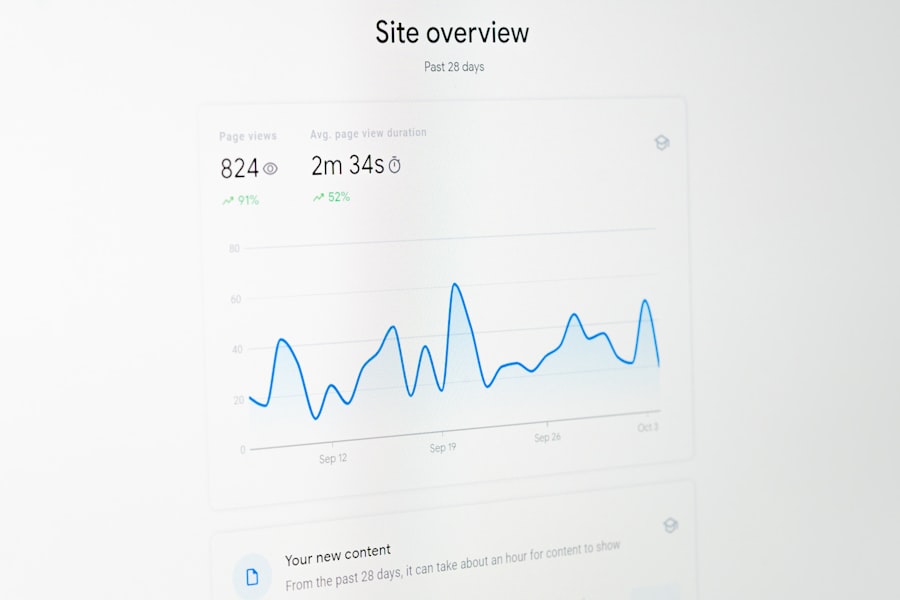
- Custom Reports and Dashboards: Create custom reports in your analytics platform to quickly visualize email campaign performance. Focus on metrics like transactions, revenue, conversion rate, and average order value, segmented by your UTM parameters.
Advanced Tracking and Attribution Models
As you mature in your email marketing efforts, you’ll want to move beyond basic last-click attribution to gain a more nuanced understanding of your email’s impact.
Understanding Attribution Models
Attribution models determine how credit for a conversion is assigned to different touchpoints in a customer’s journey.
- Last-Click Attribution: This is the default in many analytics platforms. It gives 100% of the credit to the last marketing touchpoint before a conversion. While simple, it often undervalues earlier touchpoints (like a nurturing email).
- First-Click Attribution: Gives 100% of the credit to the first marketing touchpoint. Useful for understanding initial awareness.
- Linear Attribution: Distributes credit equally across all touchpoints in the conversion path.
- Time Decay Attribution: Gives more credit to touchpoints that occurred closer in time to the conversion.
- Position-Based (U-Shaped) Attribution: Gives more credit to the first and last interactions, with the remaining credit distributed evenly to middle interactions.
- Data-Driven Attribution: (Primarily in GA4 and other advanced platforms) Uses machine learning to algorithmically assign credit based on your specific historical data. This is often the most accurate and insightful model.
Leveraging Customer Journeys
Recognize that an email rarely acts in isolation. A customer might see a social media ad, click an email, browse your site, receive another email reminder, and then convert.
- Multi-Channel Funnels: Use your analytics platform’s multi-channel funnel reports to uncover the assists email provides. You’ll see how often email appears before the final conversion touchpoint, indicating its role in nurturing leads.
- Sequence Analysis: If you’re using email automation sequences (welcome series, abandoned cart flows, re-engagement campaigns), track the entire sequence’s performance, not just individual emails. This allows you to optimize the flow for maximum impact.
Integrating CRM Data
For B2B businesses or those with longer sales cycles, integrating your email data with your Customer Relationship Management (CRM) system is invaluable.
- Lead Scoring: Track how email engagement influences lead scores. A higher lead score signals a more engaged and sales-ready prospect, often driven by email interactions.
- Sales Pipeline Influence: See which email campaigns are generating opportunities that ultimately close into deals. This provides a clear line of sight from email activity to closed-won revenue.
- Personalized Follow-Ups: CRM data enriched by email interactions allows your sales team to have more informed and personalized conversations, boosting conversion rates.
To effectively track revenue from email campaigns, it is essential to understand the broader context of customer engagement and retention strategies. A great resource that delves into this topic is an article on unlocking the forever funnel, which discusses how to turn one-time traffic into recurring revenue. You can read more about it in this insightful piece here. By integrating the principles outlined in that article with your email marketing efforts, you can enhance your overall revenue tracking and customer loyalty.
Optimizing for Revenue: What to Do With Your Data
| Metrics | Description |
|---|---|
| Open Rate | The percentage of recipients who opened the email. |
| Click-Through Rate (CTR) | The percentage of recipients who clicked on a link in the email. |
| Conversion Rate | The percentage of recipients who completed a desired action, such as making a purchase, after clicking on a link in the email. |
| Revenue Generated | The total amount of revenue generated from the email campaign. |
| Return on Investment (ROI) | The ratio of the net profit generated from the email campaign to the cost of the campaign. |
Tracking is only the first step. The real magic happens when you use that data to make better decisions and optimize your campaigns for maximum revenue.
Segment Your Audience for Targeted Offers
Your data will inevitably show that different segments of your audience respond differently to various emails and offers.
- Behavioral Segmentation: Send specific campaigns based on past purchase behavior, website visits, or email engagement (e.g., “Customers who bought product X also liked Y,” “Viewed product, didn’t purchase,” “Engaged with X email, but not Y”).
- Demographic/Psychographic Segmentation: Tailor content and offers based on age, location, interests, or other relevant characteristics.
- Engagement-Based Segmentation: Reward your most engaged subscribers with exclusive offers, and try to re-engage dormant subscribers with special incentives.
A/B Test Everything That Matters
Never assume; always test. A/B testing allows you to compare different versions of your emails to see which performs better in terms of revenue-driving metrics.
- Subject Lines: Test length, emojis, personalization, urgency, and specific offers.
- Call-to-Actions (CTAs): Test button text, color, placement, and size.
- Email Content: Experiment with different layouts, image placement, ad copy length, and personalization elements.
- Offers and Promotions: Test different discounts, free shipping thresholds, or bonus incentives.
- Send Times and Days: Your audience has preferences; find their sweet spot for higher engagement and conversions.
Analyze Your Sales Funnel
Your email is just one part of the journey. Utilize your analytics to understand the entire path to purchase.
- Identify Drop-Off Points: Where are customers abandoning the process after clicking your email? Is it the landing page? The cart? The checkout? Once identified, you can focus your optimization efforts there.
- Page Speed Optimization: A slow landing page will kill conversions, regardless of how good your email is. Use page speed tools to ensure a smooth transition from email to website.
- Mobile Responsiveness: Ensure your landing pages are flawless on mobile devices, as a significant portion of email opens and clicks occur on smartphones.
Personalization and Dynamic Content
Leverage the data you collect (past purchases, browsing behavior, demographic information) to personalize your email content.
- Personalized Product Recommendations: Showcase products relevant to each recipient’s preferences or past purchases.
- Dynamic Content Blocks: Display different content sections based on recipient data. For example, a sports apparel retailer might show different team gear based on a subscriber’s stated favorite team.
- Transactional Emails: Optimize emails like order confirmations and shipping updates to include upsell or cross-sell opportunities, as these emails often have very high open rates.
Maintaining and Reviewing Your Tracking
Tracking isn’t a one-and-done setup. It requires ongoing maintenance and regular review to ensure accuracy and derive continuous insights.
Regular Audits for Accuracy
- UTM Parameter Consistency: Periodically check your campaigns to ensure UTM parameters are being applied correctly and consistently across all links. Inconsistent tagging will lead to fragmented data.
- Goal Configuration: Verify that your conversion goals in Google Analytics are still accurately tracking revenue-generating actions. Changes to your website flow could break existing goals.
- Integration Health: Confirm that all integrations between your ESP, e-commerce platform, and analytics tool are functioning as expected.
Scheduled Reporting and Analysis
- Weekly/Monthly Performance Reviews: Set aside dedicated time to review your key email revenue metrics. Look for trends, anomalies, and opportunities.
- Campaign-Specific Deep Dives: After each major campaign, conduct a post-mortem analysis. What worked? What didn’t? How can you improve for next time?
- Benchmarking: Compare your performance against industry benchmarks and your own historical data. Are you improving? Where do you stand against competitors?
- Share Insights: Don’t keep your findings to yourself. Share your email revenue performance and insights with your team and relevant stakeholders to foster a data-driven culture.
By meticulously tracking, analyzing, and optimizing your email campaigns for revenue, you move beyond mere guesswork. You transform your email program into a highly efficient, profit-generating machine, providing undeniable evidence of its value to your business. This isn’t just about sending emails; it’s about strategically leveraging one of your most powerful marketing channels to drive measurable financial growth.
FAQs
1. Why is it important to track revenue from email campaigns?
Tracking revenue from email campaigns is important because it allows businesses to measure the effectiveness of their email marketing efforts. It helps in understanding the return on investment (ROI) and identifying which campaigns are driving the most revenue.
2. What are the key metrics to track when measuring revenue from email campaigns?
Key metrics to track when measuring revenue from email campaigns include open rates, click-through rates, conversion rates, and the total revenue generated from each campaign. These metrics provide insights into the performance of the email campaigns and help in optimizing future strategies.
3. How can businesses track revenue from email campaigns?
Businesses can track revenue from email campaigns by using email marketing platforms that offer tracking and reporting features. These platforms provide insights into the performance of each campaign, including revenue generated, conversion rates, and customer engagement.
4. What are some best practices for tracking revenue from email campaigns?
Some best practices for tracking revenue from email campaigns include setting up conversion tracking, using unique tracking links for each campaign, integrating email marketing platforms with CRM systems, and regularly analyzing the performance data to make informed decisions.
5. How can businesses use the data from tracking revenue to improve their email marketing strategies?
Businesses can use the data from tracking revenue to identify which email campaigns are most effective in driving revenue and customer engagement. This information can be used to optimize future campaigns, personalize content, and target specific customer segments to improve overall email marketing strategies.