


Understanding the Power of Landing Pages for Email Growth
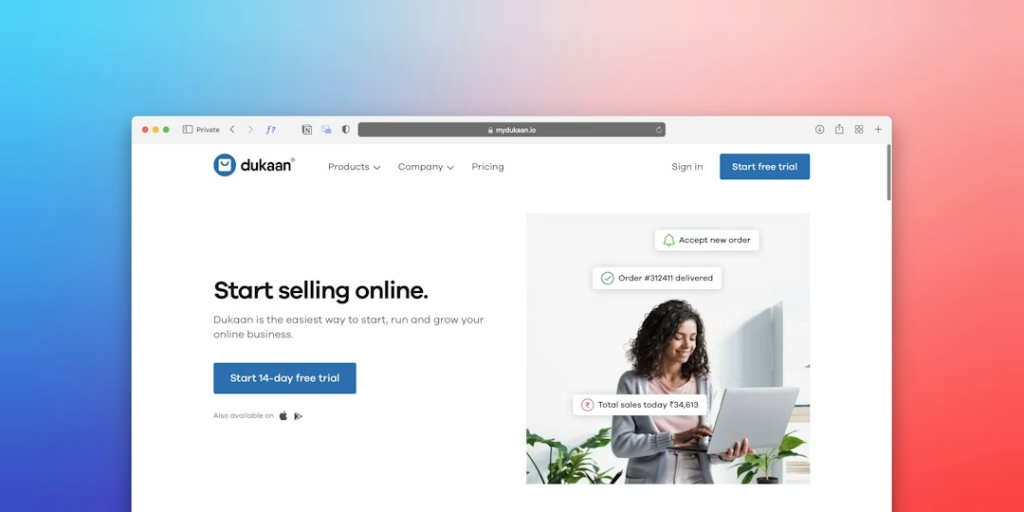
You’ve heard the buzz about building an email list – it’s your direct line to your audience, a powerful asset for nurturing leads, and a cornerstone of effective digital marketing. But how do you actually get people to give you their email address? This is where the often-underestimated landing page steps in, transforming from a simple web page into your most effective lead magnet. Think of a landing page not just as a destination, but as a dedicated conversion machine, meticulously crafted to achieve one singular goal: capturing a visitor’s contact information. Unlike your homepage, which serves many purposes, a landing page is laser-focused. It eliminates distractions, guides the visitor through a clear journey, and presents an irresistible offer in exchange for their email.
Consider the typical journey of someone encountering your brand online. They might click an ad, find you through social media, or stumble upon your blog post. If they land on your homepage, they’re faced with navigation menus, links to “About Us,” “Services,” “Blog,” and a myriad of other options. While these are necessary for a full website experience, they act as conversion killers when your primary goal is to collect an email. Each additional link is an exit ramp, diverting attention away from your ultimate objective. A landing page, however, strips away all these distractions. It offers a single, compelling call to action, making it incredibly clear what you want the visitor to do and why they should do it. This singular focus dramatically increases your chances of successful email capture.
Why Not Just Use a Pop-Up?
You might be thinking, “What about pop-ups? They seem to work for getting emails.” While pop-ups certainly have their place in an email list growth strategy, they serve a different purpose and often come with their own set of challenges. A pop-up is a temporary interruption, a fleeting invitation. It’s often triggered by a specific action (like an exit intent or a timed delay) and while it can be effective for a quick, low-barrier offer, it lacks the space and dedicated environment to build significant value.
A landing page, on the other hand, is a dedicated experience. It provides ample room to explain the value of your offer in detail, showcase testimonials, answer potential objections, and reinforce trust. It allows for a more considered decision from the visitor. Furthermore, landing pages are highly versatile. You can tailor them to specific campaigns, traffic sources, and audience segments, offering a deeply personalized experience that a generic pop-up simply cannot match. You can run A/B tests on every element of a landing page – headlines, images, copy, form fields – to continuously optimize your conversion rates. This level of granular control is crucial for maximizing your email list growth.
The Anatomy of an Effective Landing Page
Before diving into creation, it’s vital to understand the core components that make a landing page a high-converting powerhouse. Think of these elements as the essential building blocks:
- Compelling Headline: This is the first thing your visitor sees, and it needs to grab their attention immediately. It should clearly state the benefit of your offer and pique their curiosity.
- Irresistible Offer (Lead Magnet): This is the “why” behind someone giving you their email address. It could be an ebook, a checklist, a free course, a webinar, a discount code, or exclusive content. The perceived value of this offer must outweigh the perceived cost of sharing personal information.
- Benefit-Oriented Body Copy: Don’t just describe your offer; explain how it will benefit the visitor. Focus on solving their problems, improving their lives, or helping them achieve their goals. Use clear, concise language and avoid jargon.
- Visually Engaging Design: A clean, professional, and on-brand design builds trust and makes the page pleasant to interact with. Use high-quality images or videos that reinforce your message. Ensure the design is responsive and looks great on all devices.
- Clear Call to Action (CTA): This is the button that prompts the visitor to take action. It should be prominently placed, use action-oriented language (e.g., “Download Now,” “Get Instant Access,” “Sign Up for Free”), and stand out visually.
- Concise Lead Capture Form: Keep your form as short as possible. Only ask for the essential information you need (usually just name and email). Every additional field decreases conversion rates.
- Trust Elements: Social proof (testimonials, reviews, logos of clients/partners), privacy policy links, and security badges help build credibility and reduce visitor apprehension about sharing their details.
By meticulously crafting each of these elements, you transform a simple web page into a high-performance conversion engine dedicated solely to expanding your email audience.
In addition to learning how to effectively use landing pages to grow your email audience, you may find it beneficial to explore the article on mastering lead capture with high-converting web forms. This resource provides valuable insights into optimizing your forms to maximize conversions and enhance your email marketing strategy. For more information, check out the article here: Mastering Lead Capture with High-Converting Web Forms.
Designing for Maximum Conversion Rates

You’ve understood the foundational importance of landing pages; now, you need to master their construction. Designing for maximum conversion means every element on your page is strategically placed and optimized to encourage a specific action: submitting an email address. This isn’t about artistic flair for its own sake, but about psychological triggers and clear user experience.
Crafting an Unmissable Headline
Your headline is your first and often last chance to capture attention. In a world saturated with information, visitors make snap judgments. A weak or ambiguous headline will lead to an immediate bounce. Your headline needs to achieve several things simultaneously: it must be clear, concise, and compelling.
- Clarity over Cleverness: While a witty headline might seem appealing, if it doesn’t immediately convey the core benefit of your offer, it’s failing. For example, instead of “Unlock Your Potential,” try “Download Our Free Ebook: 5 Steps to Double Your Productivity in 30 Days.” The latter is much clearer about the specific value proposition.
- Highlight the Core Benefit: What problem does your lead magnet solve? What desire does it fulfill? Your headline should articulate this clearly. If you’re offering a checklist for social media, don’t just say “Social Media Checklist.” Instead, try “Never Run Out of Content Ideas Again: Grab Your 2024 Social Media Content Checklist.”
- Use Power Words and Numbers: Words like “Free,” “New,” “Instant,” “Secrets,” “Proven,” and “Exclusive” can boost engagement. Numbers also tend to stand out and provide specific value (e.g., “7 Ways,” “3 Steps,” “10X Your Results”).
- Create Urgency or Curiosity (Sparingly): Phrases like “Limited Time Offer” or “Discover the Secret to…” can be effective, but use them genuinely. Overuse or false urgency can damage trust.
- A/B Test Your Headlines: Never assume your first idea is the best. Always test different headlines to see which ones resonate most with your audience. Tools like Google Optimize or built-in A/B testing features in landing page builders make this straightforward.
Remember, the headline is a promise. Make sure it’s a promise you can keep and one that your audience genuinely wants.
Developing an Irresistible Lead Magnet
The lead magnet is the heart of your offer. It’s the valuable resource you’re giving away in exchange for an email address. The perceived value of your lead magnet directly correlates with your conversion rate. It needs to be genuinely useful, solve a specific problem, or provide significant information that your target audience desperately wants or needs.
- Solve a Specific Problem: The best lead magnets address a pain point that your audience experiences. Are they struggling with a specific task? Do they lack certain knowledge? Your lead magnet should be the solution.
- Provide Immediate Value: Don’t make them wait. The lead magnet should deliver quick wins or easily digestible information. An hour-long webinar might be a good lead magnet, but a short, actionable checklist or template can also be highly effective because it offers immediate utility.
- Be Easily Consumable: People are busy. Opt for formats that are easy to digest. Ebooks are popular, but consider templates, checklists, cheat sheets, short video tutorials, resource lists, or mini-courses.
- Align with Your Core Offering: Your lead magnet should naturally lead people to your paid products or services. If you sell project management software, a lead magnet like “The Ultimate Project Planning Template” makes perfect sense. If your lead magnet is completely unrelated, you’ll attract the wrong audience.
- Quality over Quantity: A short, high-quality guide is far more effective than a long, poorly written one. Invest time in creating something truly valuable. Poor quality reflects poorly on your brand as a whole.
- Consider Different Formats:
- Ebooks/Guides: Comprehensive information on a specific topic.
- Checklists/Templates: Actionable tools for immediate use.
- Webinars/Workshops: Live or recorded in-depth training.
- Resource Libraries: Curated collections of valuable links and tools.
- Quizzes/Assessments: Interactive tools that provide personalized results.
- Discount Codes/Free Trials: Direct incentives for product or service engagement.
Your lead magnet isn’t just about getting an email; it’s about starting a relationship by providing value upfront.
Writing Persuasive Body Copy
Once the headline has hooked them, your body copy needs to seal the deal. This is where you elaborate on the benefits of your lead magnet and overcome any lingering doubts. Your copy should be concise, benefit-driven, and easy to scan.
- Focus on Benefits, Not Features: Instead of listing what your lead magnet is, tell them what it does for them. For example, don’t say “Our guide includes 15 pages on SEO.” Say “Improve your search engine rankings and drive more organic traffic with our 15-page SEO strategy guide.”
- Use Bullet Points: Break down information into easily digestible bullet points. This improves readability and allows visitors to quickly grasp key benefits.
- Address Pain Points and Aspirations: Show empathy by acknowledging your audience’s struggles. Then, present your lead magnet as the solution that will help them achieve their goals.
- Keep it Concise: Eliminate jargon and unnecessary words. Get straight to the point. Most people skim, so make sure your most important messages stand out.
- Maintain a Consistent Tone: Ensure your copy’s tone aligns with your brand voice – whether that’s authoritative, friendly, innovative, or humorous.
- Build Anticipation: Use language that creates excitement about what they will gain once they download your offer.
- Short Paragraphs: Avoid dense blocks of text. Break your copy into short, digestible paragraphs to maintain reader engagement.
Your copy acts as a sales pitch for your free offer. Make it compelling and you’ll see your email list grow.
Optimizing the User Experience and Trust Signals

You’ve got compelling content, but if your landing page is clunky or raises red flags, your efforts will be wasted. A smooth user experience (UX) and strong trust signals are paramount to converting visitors into subscribers. People are naturally hesitant to give out their personal information, so you need to proactively build confidence and make the process as frictionless as possible.
Streamlining the Lead Capture Form
The form is the gateway to your email list. Any friction here can lead to abandonment. Your goal is to make the act of submitting information as quick and effortless as possible.
- Minimum Viable Information: Only ask for what is absolutely essential. For most email list growth, “Name” and “Email Address” are sufficient. If you add “Company,” “Phone Number,” or “Job Title,” you’ll see a drop in conversions unless there’s a strong justification (e.g., a highly specialized B2B offer where lead qualification is critical).
- Clear Labels and Placeholder Text: Ensure each field has a clear label (e.g., “Your First Name,” “Your Email Address”). Placeholder text can offer examples or instructions, but ensure it disappears when the user types.
- Logical Field Order: Arrange fields in a natural, intuitive sequence (e.g., Name, then Email).
- Single-Column Layout: Research suggests that single-column forms convert better than multi-column layouts because they create a clear, vertical flow.
- Error Handling: If a user makes a mistake (e.g., enters an invalid email format), provide clear, immediate, and helpful feedback before they try to submit again. Highlight the error field and explain what needs to be corrected.
- Autofill Compatibility: Ensure your form fields are coded correctly to allow browser autofill features, saving users time.
- Submission Confirmation: After submission, redirect them to a “Thank You” page or display a clear confirmation message. This reassures them that their submission was successful and can also be an opportunity to set expectations or offer a next step.
Remember, every extra field represents a hurdle. Only add fields if you can clearly justify their necessity for your specific lead qualification or personalization strategy.
Visual Design and Mobile Responsiveness
First impressions matter. A poorly designed, cluttered, or non-responsive landing page screams unprofessionalism and can instantly erode trust. Your design should be clean, intuitive, and consistent with your brand.
- Clean and Uncluttered Layout: White space is your friend. Avoid overwhelming the visitor with too much text, too many images, or competing elements. The focus should always be on the headline, benefits, and the CTA.
- High-Quality Visuals: Use high-resolution images or videos that are relevant to your offer and your brand. Avoid generic stock photos if possible. Custom visuals often perform better.
- Brand Consistency: Your landing page should visually align with your website, social media, and other marketing materials. Use your brand colors, fonts, and logo to create a cohesive experience. This reinforces brand identity and builds trust.
- Clear Visual Hierarchy: Guide the visitor’s eye through the page using size, color, and placement. The headline should be the largest, the CTA should stand out, and important benefits should be easily scannable.
- Mobile-First Design: A significant portion of your traffic will come from mobile devices. Your landing page must be fully responsive, meaning it adapts seamlessly to different screen sizes. Test your page rigorously on various phones and tablets. Elements should be easy to tap, text should be legible, and forms should be easy to fill out on small screens.
- Fast Loading Speed: Page load time is a critical factor for user experience and SEO. Optimize images, minimize scripts, and use a reliable hosting provider to ensure your page loads quickly. Even a few extra seconds can significantly increase bounce rates.
A well-designed landing page doesn’t just look good; it functions effectively to guide visitors toward conversion.
Leveraging Trust Signals and Social Proof
In an age of skepticism, demonstrating trustworthiness is non-negotiable. Trust signals help alleviate visitor concerns and increase their confidence in giving you their email address.
- Testimonials and Reviews: Showcase short, impactful testimonials from satisfied users or clients. Include their name, photo (if possible and permitted), and company to add authenticity. These act as powerful endorsements.
- Client Logos/Partner Logos: If you work with recognizable brands or have notable partners, display their logos. This provides social validation and implies authority.
- Security Badges/Certifications: For offers involving sensitive data or purchases, display SSL certificates (HTTPS in the URL is a must), security seals (e.g., Norton Secured, McAfee Secure), or trust badges.
- Privacy Policy Link: Include a clear, accessible link to your privacy policy. This assures visitors that their data will be handled responsibly and according to regulations.
- “No Spam” Guarantee: A short phrase like “We respect your privacy. No spam, ever.” near your email form can be very reassuring.
- Authority Building: If you’ve been featured in reputable publications, won awards, or have impressive statistics (e.g., “Trusted by over 10,000 users”), subtly highlight these achievements.
- Clear Contact Information: While not always on the landing page itself, ensuring easy access to your contact information on your main site provides another layer of trust.
By strategically incorporating these trust signals, you dismantle psychological barriers and encourage more visitors to take the leap and join your email list.
Driving Traffic to Your Landing Pages
You’ve built a beautiful, high-converting landing page. But it’s just a digital island without visitors. The next crucial step is to strategically drive traffic to it. Your landing page is the destination; now, you need to create the pathways that lead people there. Not all traffic sources are created equal, and understanding which ones best suit your offer and audience is key.
Paid Advertising Campaigns
Paid advertising is often the fastest way to get qualified traffic to your landing page, allowing you to scale your email list growth quickly. Platforms like Google Ads and social media advertising offer precise targeting capabilities.
- Google Search Ads: If your lead magnet solves a specific problem that people are actively searching for, Google Search Ads are incredibly effective. You bid on keywords related to your offer. For example, if your lead magnet is a “SEO Checklist,” you might bid on keywords like “how to do SEO,” “SEO best practices,” or “free SEO tools.” Your ad copy should promise the solution and link directly to your landing page.
- Social Media Ads (Facebook, Instagram, LinkedIn, etc.): These platforms allow for highly granular audience targeting based on demographics, interests, behaviors, and even custom audiences (e.g., lookalike audiences based on your existing customer list).
- Facebook/Instagram: Excellent for B2C and visually driven offers. Use captivating images or videos in your ads that highlight the benefit of your lead magnet. Target users who have shown interest in related topics or competitors.
- LinkedIn: Ideal for B2B lead magnets. Target specific job titles, industries, company sizes, and professional interests. LinkedIn ads tend to be more expensive, but the lead quality can be higher.
- Retargeting Ads: Don’t forget visitors who almost converted. Set up retargeting campaigns to show ads specifically to people who visited your landing page but didn’t sign up. Remind them of the value of your offer and encourage them to complete the action.
- Ad Copy and Creative: Your ad copy must be compelling and directly relate to your landing page’s offer. Use strong calls to action within the ad itself. The visual (image or video) should grab attention and resonate with your target audience. Ensure there’s a seamless message match between your ad and your landing page to avoid jarring user experiences.
- Budget and Bidding: Start with a modest budget, monitor your performance closely, and optimize your bids and targeting based on conversion data. Focus on metrics like Cost Per Lead (CPL) and adjust your strategy accordingly.
Paid advertising requires ongoing management and optimization, but it offers unparalleled control over who sees your offer and provides immediate results.
Organic Traffic Sources
While paid ads offer speed, organic traffic builds sustainable, long-term email list growth. These strategies focus on attracting visitors naturally through valuable content and community engagement.
- Content Marketing (Blog Posts, Articles): Create high-quality blog posts that are relevant to your target audience and address their pain points. Within these posts, strategically place calls to action (CTAs) that lead to your landing page.
- Contextual CTAs: Embed CTAs naturally within the body of your content. For example, after discussing a problem, offer your lead magnet as a solution.
- End-of-Post CTAs: Include a clear CTA at the end of every relevant blog post.
- Sidebar/Hello Bar CTAs: Use static elements on your blog to promote your lead magnet across multiple pages.
- Search Engine Optimization (SEO): Optimize your blog posts and other content for relevant keywords to rank higher in search engine results. When people search for information related to your lead magnet, you want your content to appear, leading them to your landing page. This involves keyword research, on-page optimization, and building high-quality backlinks.
- Social Media Marketing: Share valuable content, engage with your audience, and periodically promote your landing pages on your social media channels (Facebook, X, LinkedIn, Pinterest, etc.).
- Direct Links: Share direct links to your landing page in posts.
- Profile Links: Always ensure your primary “link in bio” on platforms like Instagram directs to your latest or most important landing page.
- Native Content with CTA: Create engaging posts that provide a snippet of value and then prompt users to click the link for the full resource (your lead magnet).
- Guest Blogging/Podcast Appearances: Contribute content to other authoritative websites or appear as a guest on relevant podcasts. In your author bio or during your segment, you can often include a link back to your landing page as a resource for the audience. This introduces your offer to a new, engaged audience.
- Email Signatures: Include a subtle link to your most relevant landing page in your professional email signature. This is a low-effort, high-impact tactic.
- Video Marketing (YouTube, TikTok): Create engaging videos that provide value and then direct viewers to your landing page in the video description or through verbal calls to action.
- Community Engagement (Forums, Groups): Participate in relevant online communities and forums. When appropriate, and without being spammy, offer your lead magnet as a helpful resource in discussions where it genuinely solves a problem.
Organic traffic strategies build long-term authority and trust, and while they take time to cultivate, they often yield highly engaged subscribers. The key is to consistently provide value and integrate your landing page offers naturally within that value.
To effectively grow your email audience through landing pages, it’s essential to understand how to maximize conversions by leveraging various data points. A related article that delves into this topic is Maximizing Conversions: Combining Purchase History and Engagement Data, which explores strategies for enhancing user engagement and tailoring your marketing efforts. By integrating insights from both landing pages and customer behavior, you can create a more compelling experience that encourages sign-ups and boosts your email list.
Measuring and Optimizing for Continuous Growth
| Metric | Description | Typical Range/Value | Tips to Improve |
|---|---|---|---|
| Conversion Rate | Percentage of visitors who sign up via the landing page | 10% – 25% | Use clear CTAs, reduce form fields, and offer incentives |
| Visitor Traffic | Number of visitors landing on the page | Varies widely based on promotion | Promote via social media, ads, and SEO |
| Bounce Rate | Percentage of visitors who leave without interacting | 30% – 60% | Improve page load speed and relevance of content |
| Average Time on Page | How long visitors stay on the landing page | 30 seconds – 2 minutes | Engage with compelling copy and visuals |
| Form Completion Rate | Percentage of visitors who complete the signup form | 70% – 90% of those who start filling | Keep forms short and simple, use progress indicators |
| Lead Quality | Relevance and engagement level of new subscribers | Measured by open and click rates post-signup | Target audience precisely and personalize offers |
You’ve put in the effort to create and promote your landing page. But your work isn’t done once it’s live. The true power of a well-executed landing page strategy lies in its continuous optimization. By meticulously tracking your performance and making data-driven adjustments, you can exponentially increase your email audience over time. This iterative process of measurement, analysis, and refinement is what separates good results from outstanding ones.
Key Performance Indicators (KPIs)
To effectively optimize your landing pages, you need to know what to measure. Focus on these crucial KPIs:
- Conversion Rate: This is the most critical metric. It’s the percentage of visitors who complete your desired action (i.e., submit their email address) out of the total number of visitors to your landing page.
- Calculation: (Number of Conversions / Number of Visitors) * 100
- Significance: A high conversion rate indicates your offer is compelling, your copy is persuasive, and your design is effective. A low rate signals issues that need addressing.
- Bounce Rate: The percentage of visitors who leave your landing page after viewing only one page.
- Significance: A high bounce rate often suggests that the page isn’t relevant to what the visitor expected (misaligned ad/content with landing page), loads too slowly, or the design is off-putting.
- Traffic Sources: Understanding where your visitors are coming from (e.g., Google Ads, Facebook, organic search, referral from a blog post) allows you to allocate your marketing budget and efforts more effectively.
- Significance: Helps identify which channels are most effective at driving qualified traffic to your landing page.
- Cost Per Lead (CPL): (Relevant for paid traffic) The average cost you incur to acquire one email subscriber through a specific campaign.
- Calculation: Total Campaign Cost / Number of Leads Acquired
- Significance: Essential for evaluating the profitability and efficiency of your paid advertising efforts. You want your CPL to be lower than the lifetime value of an email subscriber.
- Time on Page: The average amount of time visitors spend on your landing page.
- Significance: While not a direct conversion metric, a longer time on page can indicate higher engagement with your content.
- Form Abandonment Rate: The percentage of visitors who start filling out your form but don’t complete it.
- Significance: High abandonment can point to issues with form length, confusing fields, or unexpected requirements.
Most landing page builders and analytics tools (like Google Analytics) will provide these metrics. Regularly reviewing them is paramount.
A/B Testing Your Way to Better Conversions
A/B testing (or split testing) is the process of comparing two versions of a landing page (A and B) to see which one performs better. It’s not guesswork; it’s a scientific approach to optimization. You change one element at a time to isolate its impact on conversion rates.
- What to A/B Test:
- Headlines: Even slight changes in wording can have a dramatic effect.
- Call to Action (CTA) Buttons: Test different button copy (“Download Now” vs. “Get Instant Access”), colors, and placement.
- Lead Magnet Offers: Is an ebook performing better than a checklist? What about a webinar?
- Body Copy: Experiment with different messaging, lengths, and benefit highlights.
- Images/Videos: Does a different hero image or a short video increase engagement?
- Form Length: Test a shorter form versus a slightly longer one if you need more data (though shorter usually wins for email capture).
- Trust Elements: Does adding a specific testimonial or security badge improve conversions?
- Overall Layout/Design: Sometimes a complete redesign is necessary, but test smaller changes first.
- How to Conduct an A/B Test:
- Formulate a Hypothesis: Based on your current data or best practices, what do you think will happen? (e.g., “Changing the CTA button color from blue to green will increase conversions by 5%”).
- Create Your Variations: Change only one element between version A and version B.
- Split Your Traffic: Distribute traffic evenly between the two versions (e.g., 50/50).
- Run the Test for a Statistically Significant Period: Don’t stop the test too early. You need enough data (conversions and visitors) to be confident in the results. Tools will often tell you when statistical significance is reached.
- Analyze Results: Determine which version performed better based on your conversion rate.
- Implement the Winner: Make the winning version your default.
- Iterate: Start the process again, testing another element. Optimization is an ongoing cycle.
Tools like Google Optimize (while sunsetting), VWO, Optimizely, or built-in features in landing page platforms (Leadpages, Unbounce, Instapage) make A/B testing accessible.
Post-Conversion Nurturing and Segmentation
Capturing an email address is just the first step. What happens next is critical for building a long-term relationship and eventually converting subscribers into customers.
- Thank You Page Strategy: Don’t just show a generic “Thank You.”
- Deliver the Lead Magnet: Provide immediate access to the lead magnet.
- Set Expectations: Tell them what to expect next from your emails (e.g., “Your first exclusive tip will arrive in your inbox tomorrow!”).
- Offer a Next Step: Guide them to related content, a social media follow, or a low-commitment offer.
- Share Testimonials/Social Proof: Reinforce their decision.
- Email Segmentation: As your list grows, segment it based on how people subscribed. This allows you to send highly relevant content.
- Lead Magnet Specific: Tag subscribers based on which lead magnet they downloaded. This tells you about their specific interests.
- Traffic Source: Segment by where they came from (e.g., Facebook Ad, Blog Post).
- Engagement: Segment based on how they interact with your emails (open rates, click-through rates).
- Automated Email Nurture Sequences: Set up a series of automated emails that are sent to new subscribers over a period of days or weeks.
- Welcome Series: Introduce your brand, provide more value, and build rapport.
- Educational Series: Deepen their understanding of the topic related to your lead magnet.
- Soft Pitch: Gradually introduce your products or services as solutions to the problems you’ve been addressing.
- Relationship Building: Share personal stories, behind-the-scenes content, or ask questions to encourage interaction.
By continuously measuring, testing, and nurturing your email list, you’re not just collecting addresses; you’re building a valuable community that drives sustainable growth for your business.
FAQs
What is a landing page?
A landing page is a standalone web page created specifically for a marketing or advertising campaign. It is where a visitor “lands” after clicking on a link in an email, social media post, advertisement, or search engine result.
How can landing pages help grow an email audience?
Landing pages can be optimized to capture visitor information, such as email addresses, through forms or sign-up boxes. By offering valuable content or incentives in exchange for their email, landing pages can effectively grow an email audience.
What elements should a landing page have to be effective in growing an email audience?
An effective landing page should have a clear and compelling headline, concise copy that highlights the benefits of signing up, a visually appealing design, a prominent call-to-action button, and a simple and user-friendly opt-in form.
How can I drive traffic to my landing page to increase email sign-ups?
You can drive traffic to your landing page through various channels such as email marketing, social media promotion, pay-per-click advertising, search engine optimization, influencer partnerships, and content marketing. It’s important to use a combination of these strategies to reach a wider audience.
How can I track the effectiveness of my landing page in growing my email audience?
You can track the effectiveness of your landing page by using web analytics tools like Google Analytics to monitor metrics such as conversion rate, bounce rate, average time on page, and number of email sign-ups. A/B testing different elements of your landing page can also help optimize its performance.