



Understanding the Power of Your Own Data
In the ever-evolving landscape of digital marketing, the ability to connect with your audience on a personal and relevant level is no longer a luxury; it’s a necessity. You’ve likely heard the buzzwords “data-driven marketing” and “personalization,” but how do you truly harness these concepts to supercharge your email campaigns? The answer lies in your first-party data. This isn’t just anonymous demographic information you’ve purchased or gleaned from third-party cookies that are quickly becoming obsolete. This is your data – information you’ve collected directly from your customers and prospects through their interactions with your website, app, CRM, and even your email sign-up forms.
Think of first-party data as your secret weapon. It’s the closest you’ll get to understanding your individual subscribers without sitting down for a personal conversation. You see their purchase history, their browsing behavior, their preferences, and even their complaints. This direct insight provides an unparalleled foundation for crafting email marketing strategies that resonate deeply, drive engagement, and ultimately, convert. Ignoring this rich resource is like trying to navigate a complex city without a map, relying instead on vague directions from strangers. You might get somewhere, but it won’t be efficient, and it certainly won’t be optimal.
The beauty of first-party data is its accuracy and exclusivity. Unlike third-party data, which can be broad, outdated, or even inaccurate, your first-party data is fresh, relevant, and specific to your audience. It’s a direct reflection of their relationship with your brand. As privacy regulations tighten globally, the reliance on third-party data is diminishing. This shift isn’t a threat; it’s an opportunity. It compels you to build stronger, more direct relationships with your customers, and first-party data is the cornerstone of that effort. By focusing on collecting and utilizing this valuable information, you’ll not only improve your email marketing performance but also build a more resilient and future-proof marketing strategy.
What Constitutes First-Party Data for Email Marketing?
To effectively leverage first-party data, you first need to understand what it encompasses. It’s more than just an email address. It’s any information you gather directly from your audience.
- Explicitly Provided Information: This is the most straightforward category. It includes details your subscribers willingly share when they sign up for your newsletter, create an account, or complete a profile. Examples include name, email address, demographic information (age, gender, location), job title, company, and expressed interests or preferences (e.g., “I’m interested in menswear and new arrivals”).
- Behavioral Data on Your Platforms: This is incredibly rich and tells you what your subscribers do. It encompasses their interactions with your website and app. Think about pages viewed, products added to cart (and abandoned), items purchased, search queries, content downloaded, and even time spent on certain sections. For email specifically, it includes open rates, click-through rates, and unsubscribes.
- Transactional Data: This category details their purchase history. What did they buy? When? How much did they spend? What payment method did they use? Did they use a discount code? This data is gold for understanding purchasing patterns and customer lifetime value.
- Customer Service Interactions: While often overlooked, data from customer support can be immensely valuable. What questions do they ask? What problems do they encounter? This can reveal pain points, product interests, and common objections that you can address in your email campaigns.
- Offline Data (if integrated): If you have a physical store, loyalty programs, or in-person events, any data collected there (with consent) can also be considered first-party. This might include in-store purchase history, event attendance, or preferences noted by sales associates.
The more diverse and comprehensive your first-party data collection, the deeper your understanding of your audience will be, leading to more impactful email marketing.
To enhance your email marketing strategy using first-party data, it’s beneficial to explore related topics such as retargeting. A great resource on this subject is the article titled “Maximizing Conversions with Retargeting Pixels,” which discusses how to effectively utilize retargeting techniques to boost engagement and conversions. You can read it here: Maximizing Conversions with Retargeting Pixels. This article complements your understanding of leveraging first-party data by providing insights into how retargeting can further enhance your email marketing efforts.
Strategically Collecting Valuable First-Party Data
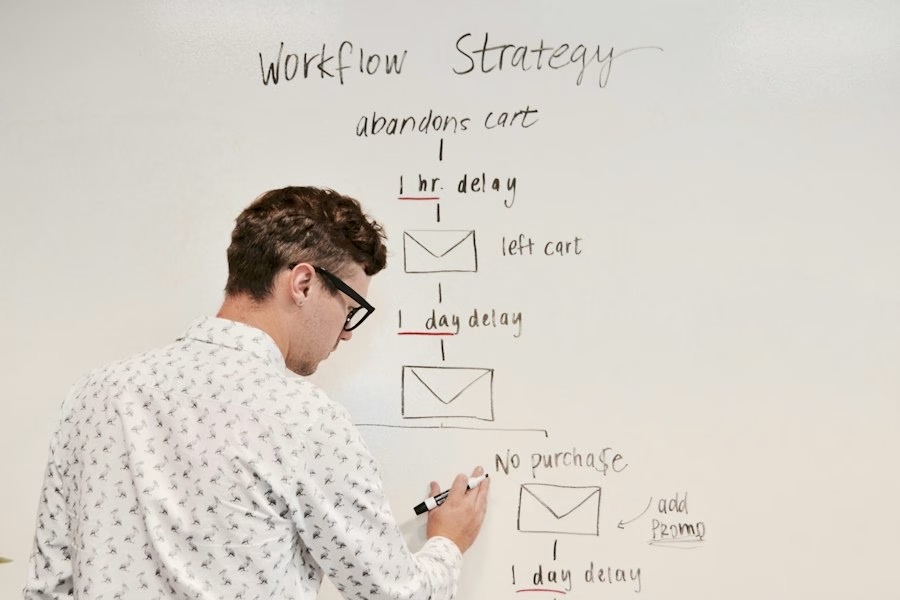

Collecting first-party data isn’t a one-time event; it’s an ongoing process that should be integrated into every touchpoint of your customer journey. You need to be intentional and transparent about what data you’re collecting and why, always prioritizing the user experience and respecting privacy. Remember, trust is paramount. If your subscribers feel their data is being misused or collected surreptitiously, they will disengage, and your efforts will be counterproductive.
Optimizing Your Email Sign-Up Forms
Your email sign-up form is often the first point of data collection, so make it count. Don’t overwhelm users with too many fields upfront, but strategically ask for information that will immediately help you segment and personalize.
- Start with the Essentials: Email address is non-negotiable. A first name is also highly recommended for basic personalization.
- Progressive Profiling: Instead of asking for everything at once, consider progressive profiling. Ask for basic information initially, then, over time, as your subscribers engage more, prompt them to provide additional details. For instance, after a few emails, you might send a preferences update email asking about their interests.
- Incentivize Data Sharing: Offer something valuable in exchange for more detailed information. This could be exclusive content, a discount code, early access to sales, or entry into a contest. Clearly communicate the benefits of providing additional data (e.g., “Tell us your preferences so we can send you more relevant offers!”).
- Clear Value Proposition: Always articulate why someone should sign up for your emails and share their data. What specific benefits will they receive? “Sign up for our newsletter” is far less compelling than “Get exclusive discounts, early access to new collections, and personalized style tips directly to your inbox!”
Leveraging On-Site Behavior Tracking
Your website is a treasure trove of behavioral data. Implement robust analytics and tracking tools to capture how users interact with your content and products. This isn’t just for general website optimization; it’s fundamental for personalized email marketing.
- Page Views: Track which product categories, blog posts, or service pages a user visits. This indicates their interests.
- Product Interactions: Monitor products viewed, added to wishlists, added to cart, and removed from cart. This is crucial for abandoned cart campaigns and product recommendations.
- Search Queries: What are users searching for on your site? This reveals explicit intent and unmet needs.
- Content Engagement: For content-driven businesses, track article reads, video views, and downloads. This can inform content recommendations in your emails.
- Exit Intent: Observe when users are about to leave your site. An exit-intent pop-up can be a last chance to capture an email address or offer a targeted incentive based on their current browsing.
Ensure your tracking is compliant with privacy regulations like GDPR and CCPA, and clearly inform users about your data collection practices through a transparent privacy policy.
Integrating CRM and Purchase Data
Your CRM (Customer Relationship Management) system and e-commerce platform hold some of your most valuable first-party data. These systems track direct interactions and transactions, providing a holistic view of your customer relationships.
- Centralized Customer Profiles: Strive to create a unified customer profile where all data points – email, browsing, purchase history, customer service interactions – are consolidated. This allows for a comprehensive understanding of each individual.
- Purchase History: Integrate purchase data directly into your email platform. Knowing what a customer has bought, how frequently, and at what price point is essential for segmentation, upselling, cross-selling, and loyalty programs.
- Customer Lifecycle Stages: Use CRM data to identify where a customer is in their lifecycle (new, active, lapsed, VIP). This allows you to tailor email campaigns to their specific needs and relationship status.
- Feedback and Surveys: Use email to solicit feedback and conduct surveys. This explicitly asks customers for their opinions and preferences, enriching your first-party data with qualitative insights. Offer incentives to increase participation.
Segmenting Your Audience for Precision Targeting

Once you’ve diligently collected your first-party data, the real magic begins with segmentation. Sending generic emails to your entire list is a surefire way to achieve mediocre results. Segmentation allows you to divide your audience into smaller, more homogeneous groups based on shared characteristics or behaviors. This enables you to send highly relevant messages that resonate with each specific group, increasing engagement and conversion rates. Think of it like a master chef preparing different dishes for different guests based on their dietary preferences, rather than serving the same meal to everyone.
Demographic Segmentation for Basic Personalization
While not as deep as behavioral segmentation, demographics provide a foundational layer for personalization. This data is often collected through sign-up forms or progressive profiling.
- Location: Tailor content based on geographical location. This could be for local events, region-specific promotions, or even adapting product recommendations based on climate (e.g., winter coats for colder regions).
- Age/Gender: While often sensitive, this data can inform product recommendations, imagery, and language used in your emails, especially for age or gender-specific products. Always use this responsibly and avoid stereotypes.
- Job Title/Industry (B2B): For B2B businesses, knowing a subscriber’s role or industry allows you to send highly relevant content, case studies, and solutions tailored to their professional needs and challenges.
- Income Level (if collected): For luxury brands or businesses with varied price points, income can help tailor product recommendations and promotional offers.
Behavioral Segmentation for Hyper-Relevance
This is where first-party data truly shines. Behavioral segmentation focuses on what your subscribers do, providing powerful insights into their interests and intent.
- Purchase History:
- First-time buyers: Welcome sequences, product care tips, suggestions for complementary items.
- Repeat customers: Loyalty programs, exclusive offers, early access to new products.
- High-value customers (VIPs): Special recognition, personalized recommendations, dedicated support.
- Customers who bought specific products: Cross-sell related items, upsell newer models or premium versions.
- Customers who haven’t purchased in a while: Re-engagement campaigns with incentives.
- Website Browsing Activity:
- Product page viewers: Follow-up with emails featuring the viewed products, similar items, or reviews.
- Category browsers: Send emails showcasing products within that specific category.
- Content readers: Recommend similar blog posts or resources.
- Abandoned Cart Users: This is a classic and highly effective use of behavioral data. Send automated emails reminding them of their cart, offering a small incentive, or addressing common objections.
- Email Engagement:
- High openers/clickers: These are your most engaged subscribers. Reward them with exclusive content, surveys for feedback, or early access.
- Low openers/clickers (disengaged): Send re-engagement campaigns with a clear value proposition or an option to update preferences. If no engagement, consider a sunsetting policy.
- Clickers on specific links: Further segment them based on the type of content they clicked on (e.g., “clicked on discounts” vs. “clicked on new arrivals”).
Lifecycle-Based Segmentation for Timely Communication
Segmentation based on where a customer is in their journey with your brand ensures you’re sending the right message at the right time.
- New Subscribers: Welcome series introducing your brand, values, and benefits.
- Active Customers: Regular newsletters, product updates, loyalty rewards.
- Lapsed Customers: Re-engagement campaigns, special offers to entice a return.
- Advocates/Referral Sources: Encourage sharing, invite to beta programs.
- Onboarding Users (for SaaS/services): Educational emails guiding them through product features and setup.
The more granular your segmentation, the more relevant your emails will become, driving higher open rates, click-through rates, and ultimately, conversions.
Crafting Personalized Email Content and Offers
Segmentation sets the stage, but personalization is where the performance truly comes alive. It’s not enough to send an email to a segment; you need to tailor the content of that email to the individual preferences and behaviors within that segment. This moves beyond simply using a subscriber’s first name in the salutation; it’s about making every part of the email feel like it was crafted specifically for them.
Dynamic Content and Merge Tags
Dynamic content allows you to change elements within an email based on the recipient’s data. Merge tags (or personalization tokens) pull specific data points directly into your email copy.
- Name Personalization: Start with the basics: “Hi [First Name],” This builds immediate rapport.
- Location-Specific Content: Display store hours for their nearest location, event invitations in their city, or weather-appropriate product recommendations.
- Product Recommendations: Based on past purchases, browsing history, or stated preferences, dynamically display relevant products. “Because you loved [Product X], we think you’ll enjoy [Product Y].”
- Recent Activity Reminders: “You recently viewed these items,” or “Your cart is waiting!”
- Preferences-Based Content: If a subscriber indicated interest in “menswear” and “new arrivals,” populate the email with exactly that. If they prefer “vegetarian recipes,” send only those.
- Membership Tiers/Loyalty Points: Display their current loyalty status, points balance, or exclusive benefits for their tier.
Modern email marketing platforms offer sophisticated dynamic content blocks that make implementing these highly personalized elements straightforward.
Tailoring Offers and Promotions
Not all promotions are created equal for every subscriber. Use your first-party data to present offers that are most likely to convert each specific segment.
- Purchase History-Based Discounts: Offer a discount on a product that complements a previous purchase, or a unique offer to re-engage a customer who hasn’t bought in a while.
- Abandoned Cart Incentives: For those who left items in their cart, a small discount or free shipping might be enough to push them to complete the purchase. However, don’t offer it too early, as some might complete the purchase without it.
- Loyalty Rewards: Provide exclusive discounts or early access to sales for your most valuable customers as a thank you for their continued business.
- Birthday/Anniversary Offers: Use birthdate data (if collected) to send personalized birthday discounts or freebies, fostering a sense of appreciation.
- Product Category-Specific Promotions: If a subscriber primarily browses electronics, send them promotions specifically for electronics, not clothing.
- Tiered Offers: For different segments (e.g., new vs. returning customers), offer varying discount levels or incentives.
The goal is to move away from spray-and-pray promotions and towards targeted, value-driven offers that feel like a personalized gift rather than a generic advertisement.
Personalizing Subject Lines and Preview Text
The subject line and preview text are your email’s first impression. Personalizing these elements can significantly impact your open rates.
- Use First Name: “John, check out our new arrivals!” or “A Special Offer Just for You, Sarah.”
- Reference Recent Activity: “Your Cart Awaits,” “Did You Forget Something?” or “Updates on your viewed items.”
- Highlight a Specific Interest: “New Styles in Womenswear You’ll Love,” or “Your Weekly Tech Digest.”
- Leverage Urgency/Scarcity (if applicable): “Only 2 Left: The Item You Viewed,” or “Your Special Offer Expires Tonight.”
Testing different personalized subject lines is crucial to discover what resonates most with your audience. A/B test variations to optimize your open rates.
Incorporating first-party data into your email marketing strategy can significantly enhance your campaigns, allowing for more personalized and targeted messaging. To further explore the impact of data-driven approaches, you might find it interesting to read about the evolution of list segmentation and predictive behavior in 2025. This article provides valuable insights into how businesses can leverage data to improve engagement and conversion rates. For more information, check out this related article.
Measuring and Optimizing Your Personalized Campaigns
| Metric | Description | Example Value | Importance in Email Marketing |
|---|---|---|---|
| Open Rate | Percentage of recipients who open the email | 25% | Measures engagement and effectiveness of subject lines using first party data |
| Click-Through Rate (CTR) | Percentage of recipients who click on links within the email | 10% | Indicates relevance of content personalized with first party data |
| Conversion Rate | Percentage of recipients who complete a desired action after clicking | 5% | Shows effectiveness of targeted offers based on first party data |
| List Growth Rate | Rate at which the email list is growing with new subscribers | 3% monthly | Helps maintain a healthy database for first party data collection |
| Unsubscribe Rate | Percentage of recipients who opt out of the email list | 0.5% | Monitors relevance and frequency of emails personalized with first party data |
| Data Accuracy | Percentage of first party data that is up-to-date and correct | 90% | Ensures personalization efforts are based on reliable information |
| Segmentation Rate | Percentage of email list segmented based on first party data attributes | 80% | Improves targeting and personalization in campaigns |
Collecting data, segmenting your audience, and personalizing content are only part of the equation. To truly leverage first-party data for better results, you must continuously measure the performance of your campaigns and use those insights to optimize future efforts. This iterative process of analysis and refinement is what separates good email marketers from great ones.
Key Metrics to Track
Go beyond vanity metrics and focus on those that directly indicate the effectiveness of your personalization efforts.
- Open Rate (OR): While a basic metric, comparing the open rates of personalized segments versus generic sends can reveal the power of tailored subject lines and sender names. Higher OR usually indicates greater relevance.
- Click-Through Rate (CTR): This is a crucial indicator of content relevance. Are people clicking on your personalized product recommendations, articles, or offers? A high CTR suggests your content is resonating.
- Conversion Rate (CR): Ultimately, are your personalized emails leading to desired actions – purchases, sign-ups, downloads, or leads? Track conversions at the segment level to identify which personalized strategies are driving the most revenue or goal completions.
- Revenue Per Email (RPE): This metric provides a clear financial value of each email sent. Compare RPE for different segments and personalized campaigns to understand their direct monetary impact.
- Unsubscribe Rate: A high unsubscribe rate in a personalized segment might indicate that your personalization isn’t landing well, or perhaps your segmentation is flawed. A low unsubscribe rate suggests relevance and value.
- Customer Lifetime Value (CLTV): Over time, personalized campaigns built on first-party data should contribute to a higher CLTV by fostering stronger customer relationships and encouraging repeat purchases. Track CLTV for different customer segments.
- A/B Testing Results: Regularly A/B test different personalized elements – subject lines, call-to-actions, product recommendations, offer types – to pinpoint what works best for each segment.
A/B Testing and Iteration
Never assume you know what works best. Always test your hypotheses, especially when it comes to personalization.
- Test One Variable at a Time: When A/B testing, isolate a single element (e.g., personalized subject line vs. generic, dynamic product block vs. static recommendations) to accurately attribute changes in performance.
- Segment-Specific Testing: What works for your VIP segment might not work for first-time buyers. Conduct A/B tests within specific segments to optimize for their unique characteristics.
- Analyze Results and Apply Learnings: Don’t just run tests; thoroughly analyze the data. What did the winning variation tell you about your audience? Apply these insights to future campaigns and other segments.
- Continual Optimization: Email marketing is not a set-it-and-forget-it endeavor. The preferences and behaviors of your audience evolve, and so should your personalized strategies. Regularly review your data, test new ideas, and refine your approach.
Integrating Feedback Loops
First-party data isn’t just about what you observe; it’s also about what your customers tell you. Create channels for direct feedback.
- Preference Centers: Allow subscribers to update their interests, frequency, and content types. This directly feeds into your first-party data and improves personalization accuracy.
- Post-Purchase Surveys: Ask customers about their experience, product satisfaction, and what they might be interested in next.
- Email Feedback Buttons: Include a simple “Was this email helpful?” or “What kind of content do you want to see?” link in your emails.
- Unsubscribe Surveys: When someone unsubscribes, ask for a brief reason. This invaluable (though negative) feedback can highlight issues with content, frequency, or personalization.
By creating a robust system for collecting, analyzing, and acting on your first-party data, you transform your email marketing from a broadcast channel into a highly personalized communication engine that builds stronger customer relationships and delivers superior results. It’s a commitment to understanding your audience at an individual level, and that commitment pays dividends in engagement, loyalty, and revenue.
FAQs
What is first party data in email marketing?
First party data in email marketing refers to the information collected directly from your customers or subscribers. This data includes their interactions with your website, purchase history, preferences, and any other information they have willingly shared with your brand.
How can first party data be used in email marketing?
First party data can be used in email marketing to personalize content, segment your audience, send targeted campaigns, and improve overall engagement with your subscribers. By leveraging this data, you can create more relevant and tailored email experiences for your audience.
What are some examples of first party data that can be used in email marketing?
Examples of first party data that can be used in email marketing include customer demographics, purchase history, website browsing behavior, email engagement metrics, and any other information that your subscribers have provided directly to your brand.
How can I collect first party data for email marketing purposes?
You can collect first party data for email marketing purposes through various channels such as website forms, email sign-ups, surveys, social media interactions, and tracking customer interactions with your brand. It’s important to ensure that you have the necessary permissions to use this data for marketing purposes.
What are the benefits of using first party data in email marketing?
The benefits of using first party data in email marketing include increased personalization, higher engagement rates, improved targeting, better ROI, and the ability to build stronger relationships with your audience. By leveraging first party data, you can create more effective and relevant email campaigns that resonate with your subscribers.