


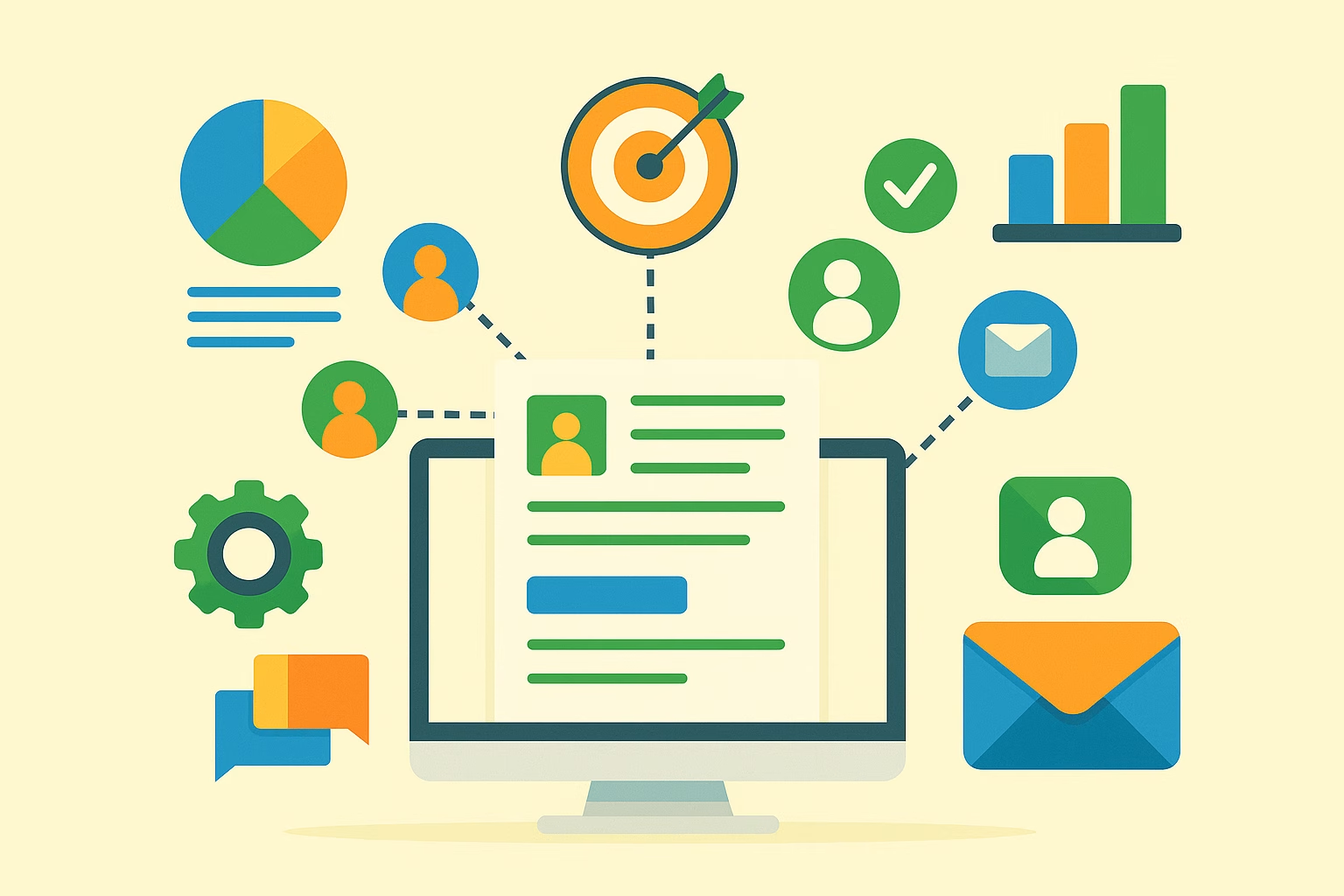
Digital marketing relies heavily on personalization and segmentation strategies to improve audience engagement and campaign effectiveness. Personalization refers to the customization of marketing messages based on individual recipient data and preferences. This technique encompasses basic elements such as using recipients’ names in subject lines and extends to sophisticated approaches like product recommendations derived from purchase history analysis.
Research demonstrates that personalized email campaigns generate higher open rates and click-through rates compared to generic messaging. Data analytics tools enable marketers to analyze customer behavior patterns, purchase preferences, and engagement metrics to develop targeted content strategies. Segmentation involves categorizing email subscribers into distinct groups based on shared attributes or behavioral patterns.
Common segmentation criteria include demographic information, geographic location, purchase frequency, transaction value, and engagement history. This approach allows marketers to deliver relevant content to specific audience subsets, resulting in improved conversion rates. For example, customers with documented interest in fitness products can receive targeted promotions for health and wellness items, while inactive subscribers might receive re-engagement campaigns.
Effective segmentation strategies increase message relevance, reduce unsubscribe rates, and enhance customer retention by delivering content that aligns with recipients’ interests and needs.
Key Takeaways
- Personalization and segmentation enhance email relevance and engagement.
- Automation streamlines workflows, saving time and improving consistency.
- Responsive design ensures emails display well on all devices, especially mobile.
- A/B testing and analytics provide data-driven insights to optimize campaigns.
- Integration with CRM and e-commerce platforms enables targeted and seamless marketing.
Automation and Workflow
Automation has revolutionized the way you manage your email marketing campaigns. By setting up automated workflows, you can ensure that your messages reach the right people at the right time without manual intervention. This not only saves you time but also allows for a more consistent communication strategy.
For example, you can create a welcome series for new subscribers that automatically sends them a sequence of emails introducing your brand and its offerings. This kind of automation helps nurture leads and guide them through the customer journey seamlessly. Moreover, automation enables you to respond to customer behaviors in real-time.
If a subscriber abandons their shopping cart, an automated email can be triggered to remind them of their items and encourage them to complete their purchase. This level of responsiveness can significantly boost conversion rates and reduce cart abandonment. By utilizing automation effectively, you can create a more efficient workflow that enhances customer experience while freeing up your time to focus on strategy and creativity.
Responsive Design and Mobile Optimization

In today’s digital landscape, where mobile devices dominate internet usage, responsive design and mobile optimization are no longer optional; they are essential. When you design your emails with responsiveness in mind, you ensure that they look great and function well across all devices, whether it’s a smartphone, tablet, or desktop computer. A well-optimized email will adapt its layout and content to fit the screen size, providing a seamless experience for your recipients.
This is crucial because a significant portion of your audience will likely open your emails on their mobile devices. Mobile optimization goes beyond just responsive design; it also involves considering how users interact with your emails on smaller screens. For instance, using larger fonts, concise messaging, and easily clickable buttons can enhance usability.
If your emails are difficult to read or navigate on mobile devices, you risk losing potential customers. By prioritizing mobile optimization, you not only improve user experience but also increase engagement rates, as recipients are more likely to interact with content that is easy to consume on their preferred devices.
A/B Testing and Analytics
A/B testing is a powerful tool that allows you to experiment with different elements of your email campaigns to determine what resonates best with your audience. By creating two versions of an email—Version A and Version B—you can test variables such as subject lines, images, call-to-action buttons, or even the time of day you send your emails. This data-driven approach enables you to make informed decisions based on actual performance rather than assumptions.
As you analyze the results of your A/B tests, you gain valuable insights into your audience’s preferences and behaviors. Analytics play a crucial role in understanding the effectiveness of your email campaigns. By tracking metrics such as open rates, click-through rates, conversion rates, and unsubscribe rates, you can gauge how well your emails are performing.
These insights allow you to refine your strategies continuously. For instance, if you notice that emails sent on Wednesdays have higher open rates than those sent on Mondays, you can adjust your sending schedule accordingly. By combining A/B testing with robust analytics, you empower yourself to optimize your email marketing efforts continually.
Integration with CRM and E-commerce Platforms
| Feature | Description | Impact on ROI | Example Metric |
|---|---|---|---|
| Automation | Ability to create automated email sequences based on user behavior. | Increases efficiency and engagement by delivering timely messages. | Conversion rate uplift by 30% |
| Segmentation | Target specific groups within your audience for personalized messaging. | Improves open and click rates through relevance. | Open rate increase by 25% |
| Analytics & Reporting | Detailed insights on campaign performance and user behavior. | Enables data-driven decisions to optimize campaigns. | Click-through rate improvement by 20% |
| Responsive Design | Emails that render well on all devices, including mobile. | Enhances user experience and reduces bounce rates. | Mobile open rate above 50% |
| Integration Capabilities | Connects with CRM, e-commerce, and other marketing tools. | Streamlines workflows and enriches customer data. | Lead generation increase by 15% |
| A/B Testing | Test different subject lines, content, and send times. | Optimizes campaigns for better engagement. | Improved click rate by 18% |
| Deliverability | Ensures emails reach the inbox, not the spam folder. | Maximizes audience reach and potential conversions. | Inbox placement rate above 95% |
| Personalization | Customizes emails with recipient’s name, preferences, etc. | Boosts engagement and customer loyalty. | Revenue per email increase by 22% |
| Template Library | Pre-designed, customizable email templates. | Saves time and maintains brand consistency. | Campaign creation time reduced by 40% |
| Compliance & Security | Adheres to GDPR, CAN-SPAM, and protects user data. | Prevents legal issues and builds trust. | Zero compliance violations |
Integrating your email marketing efforts with Customer Relationship Management (CRM) systems and e-commerce platforms can significantly enhance your marketing capabilities. When you connect these systems, you create a unified view of your customers that allows for more personalized communication. For example, by integrating with a CRM, you can access detailed customer profiles that include purchase history and engagement levels.
This information enables you to tailor your email campaigns more effectively, ensuring that each message is relevant to the recipient’s interests. Additionally, integration with e-commerce platforms streamlines the process of managing customer data and automating workflows. You can set up triggers based on customer actions—such as making a purchase or signing up for a newsletter—that automatically add them to specific email lists or initiate targeted campaigns.
This level of integration not only saves time but also enhances the overall customer experience by delivering timely and relevant content. By leveraging these integrations, you position yourself to create more effective marketing strategies that drive sales and foster customer loyalty.
Compliance with Email Regulations

As an email marketer, it is crucial to stay informed about compliance with email regulations such as the General Data Protection Regulation (GDPR) and the CAN-SPAM Act. These regulations are designed to protect consumers’ privacy and ensure that they have control over their personal information. To comply with these laws, you must obtain explicit consent from recipients before sending them marketing emails.
This means providing clear opt-in options and allowing users to easily unsubscribe from your communications. Failure to comply with these regulations can result in hefty fines and damage to your brand’s reputation. Therefore, it is essential to implement best practices for compliance in your email marketing strategy.
This includes maintaining accurate records of consent, providing transparent information about how you use customer data, and ensuring that your emails contain clear unsubscribe links. By prioritizing compliance, you not only protect your business but also build trust with your audience.
Dynamic Content and Dynamic Lists
Dynamic content is an innovative approach that allows you to customize the content of your emails based on individual recipient data in real-time. This means that different subscribers can receive different content within the same email campaign based on their preferences or behaviors. For instance, if you have a segment of customers interested in outdoor gear and another interested in fitness apparel, dynamic content enables you to showcase relevant products for each group within a single email template.
This level of personalization enhances engagement and increases the likelihood of conversions.
For example, if a subscriber makes a purchase or changes their preferences, they can be automatically moved to a different list that reflects their current interests.
This ensures that your communications remain relevant over time without requiring manual updates from your end. By utilizing dynamic content and lists effectively, you create a more tailored experience for your audience that fosters loyalty and drives sales.
Deliverability and Email Reputation Management
Deliverability is a critical aspect of email marketing that determines whether your messages land in recipients’ inboxes or get lost in spam folders. To ensure high deliverability rates, it is essential to maintain a positive sender reputation. This involves monitoring key metrics such as bounce rates, spam complaints, and engagement levels.
If recipients frequently mark your emails as spam or if many emails bounce back undelivered, it can negatively impact your sender reputation and hinder future campaigns. To manage your email reputation effectively, consider implementing best practices such as regularly cleaning your email list to remove inactive subscribers and ensuring that all recipients have opted in to receive communications from you.
By prioritizing deliverability and reputation management in your email marketing strategy, you enhance the chances of reaching your audience effectively while building trust in your brand. In conclusion, mastering these aspects of email marketing—personalization and segmentation, automation and workflow, responsive design and mobile optimization, A/B testing and analytics, integration with CRM and e-commerce platforms, compliance with regulations, dynamic content and lists, as well as deliverability—will empower you to create impactful campaigns that resonate with your audience while driving business growth. Embracing these strategies will not only enhance customer engagement but also position you as a leader in the competitive landscape of digital marketing.
FAQs
What is an email marketing platform?
An email marketing platform is a software tool that allows businesses to create, send, and manage email campaigns to engage with their audience, promote products or services, and drive sales.
Why is ROI important in email marketing?
ROI, or Return on Investment, measures the profitability of email marketing efforts by comparing the revenue generated to the costs involved. Maximizing ROI ensures that marketing resources are used efficiently to achieve the best financial results.
What are some essential features to look for in an email marketing platform?
Key features include automation capabilities, segmentation and targeting options, customizable templates, analytics and reporting tools, A/B testing, integration with other software, deliverability optimization, personalization options, compliance with regulations, and scalability.
How does automation improve email marketing ROI?
Automation allows marketers to send timely, relevant emails based on user behavior or predefined triggers, reducing manual effort and increasing engagement rates, which can lead to higher conversions and better ROI.
Why is segmentation important in email marketing?
Segmentation enables marketers to divide their audience into specific groups based on demographics, behavior, or preferences, allowing for more personalized and relevant messaging that improves open and click-through rates.
What role do analytics and reporting play in email marketing?
Analytics and reporting provide insights into campaign performance, such as open rates, click rates, and conversions, helping marketers understand what works, optimize strategies, and make data-driven decisions to enhance ROI.
How does A/B testing benefit email campaigns?
A/B testing allows marketers to compare different versions of an email to determine which performs better, enabling continuous improvement of content, design, and subject lines to maximize engagement and ROI.
Is integration with other tools necessary for an email marketing platform?
Yes, integration with CRM systems, e-commerce platforms, and other marketing tools streamlines data flow, enhances targeting, and provides a unified view of customer interactions, improving campaign effectiveness.
What is email deliverability, and why is it important?
Email deliverability refers to the ability of emails to reach recipients’ inboxes rather than spam folders. High deliverability ensures that marketing messages are seen, which is critical for achieving desired engagement and ROI.
How does personalization impact email marketing success?
Personalization tailors email content to individual recipients based on their preferences or behavior, increasing relevance and engagement, which can lead to higher conversion rates and improved ROI.