



IP warming is a systematic process that involves gradually increasing email volume from a new IP address to establish credibility with Internet Service Providers (ISPs). When emails are sent from a new IP address, ISPs treat the sender with caution due to spam prevention measures. The warming process demonstrates legitimate sending practices and improves email deliverability rates.
ISPs evaluate sender reputation through multiple metrics including email volume, recipient engagement rates, bounce rates, and spam complaint rates.
These providers monitor sending patterns to distinguish between legitimate senders and potential spammers. A properly warmed IP address typically achieves higher inbox placement rates compared to new or unwarmed IP addresses.
The warming process typically spans several weeks, beginning with small daily volumes that gradually increase. Initial volumes may start at 50-100 emails per day, scaling up to full sending capacity over 4-6 weeks. This gradual approach allows ISPs to observe consistent sending behavior and positive recipient interactions, which contributes to building sender reputation.
Key Takeaways
- IP warming is essential for establishing a positive sending reputation and avoiding spam filters.
- A well-planned IP warming strategy involves gradually increasing email volume and frequency.
- Continuous monitoring and adjustment are crucial to ensure successful IP warming progress.
- Implementing authentication, encryption, and feedback loops enhances deliverability and reputation.
- Avoiding common mistakes and maintaining best practices helps sustain a healthy sending reputation long-term.
Importance of IP Warming for Bypassing Spam Filters
The significance of IP warming cannot be overstated when it comes to bypassing spam filters. When you send emails from a new IP address without a warming strategy, ISPs may flag your messages as potential spam due to the sudden influx of emails. This can lead to high bounce rates and low engagement, which further damages your sender reputation.
By implementing an effective warming strategy, you can gradually build trust with ISPs, ensuring that your emails are more likely to reach your audience. Moreover, a well-executed IP warming process helps you establish a consistent sending pattern. ISPs monitor the behavior of email senders, and erratic sending habits can raise red flags.
By gradually increasing your email volume and maintaining a steady cadence, you demonstrate reliability and commitment to best practices. This not only helps in bypassing spam filters but also enhances your overall email marketing effectiveness.
Creating a Successful IP Warming Plan

To create a successful IP warming plan, you need to start with a clear understanding of your goals and objectives. What do you hope to achieve through your email marketing efforts? Are you looking to promote a new product, engage with existing customers, or build brand awareness?
Defining these goals will help you tailor your warming strategy accordingly. Additionally, consider segmenting your audience based on engagement levels; this allows you to send emails to your most responsive contacts first, which can boost your initial engagement rates. Once you have established your goals, outline a timeline for your warming process.
A typical IP warming plan spans several weeks, during which you gradually increase the volume of emails sent. Start with a small number of emails and incrementally raise that number each week. This gradual approach not only helps build trust with ISPs but also allows you to monitor engagement metrics closely.
Adjust your plan as needed based on the feedback you receive from your audience and the performance of your emails.
Determining the Right Volume and Frequency for IP Warming
Determining the right volume and frequency for IP warming is essential for success. A common mistake is to ramp up email volume too quickly, which can lead to negative consequences such as being blacklisted by ISPs. Instead, begin with a conservative approach by sending a limited number of emails—perhaps starting with a few hundred per day—and gradually increasing that number over time.
The key is to find a balance that allows you to build your reputation without overwhelming ISPs or your recipients. In addition to volume, consider the frequency of your sends. Consistency is vital in establishing a positive sending reputation.
Aim for a regular schedule that aligns with your audience’s preferences and engagement patterns. For instance, if your audience typically engages with emails on weekends, consider timing your sends accordingly. By maintaining a steady frequency and volume, you can foster trust with ISPs while also keeping your audience engaged.
Building a Positive Sending Reputation
| Sending Volume | Number of emails sent per day from a new IP address | Start with 50-100, gradually increase to thousands | Gradual increase helps build IP reputation and avoid spam filters |
| Complaint Rate | Percentage of recipients marking emails as spam | Less than 0.1% | Low complaint rates improve sender reputation and deliverability |
| Bounce Rate | Percentage of emails that are undeliverable | Less than 2% | High bounce rates can damage IP reputation and trigger filters |
| Engagement Rate | Percentage of recipients opening or clicking emails | Above 20% | Higher engagement signals legitimacy to spam filters |
| Spam Trap Hits | Number of emails sent to known spam trap addresses | Zero | Any hits can severely damage IP reputation |
| Authentication Pass Rate | Percentage of emails passing SPF, DKIM, and DMARC checks | 100% | Ensures emails are verified and trusted by receiving servers |
| IP Reputation Score | Score assigned by ISPs based on sending behavior | Scale from 0 (bad) to 100 (excellent) | Higher scores improve inbox placement and reduce filtering |
Building a positive sending reputation is at the heart of successful email marketing and is intricately linked to the IP warming process. Your sending reputation is determined by various factors, including open rates, click-through rates, and complaint rates. To cultivate a strong reputation, focus on delivering high-quality content that resonates with your audience.
Personalization plays a significant role here; when recipients feel that emails are tailored to their interests, they are more likely to engage positively. Another critical aspect of building a positive reputation is managing subscriber lists effectively. Regularly clean your lists by removing inactive subscribers or those who have opted out.
This not only improves engagement rates but also reduces the likelihood of spam complaints. By prioritizing quality over quantity in your subscriber base, you can enhance your sending reputation and ensure that your emails are well-received.
Monitoring and Adjusting IP Warming Progress
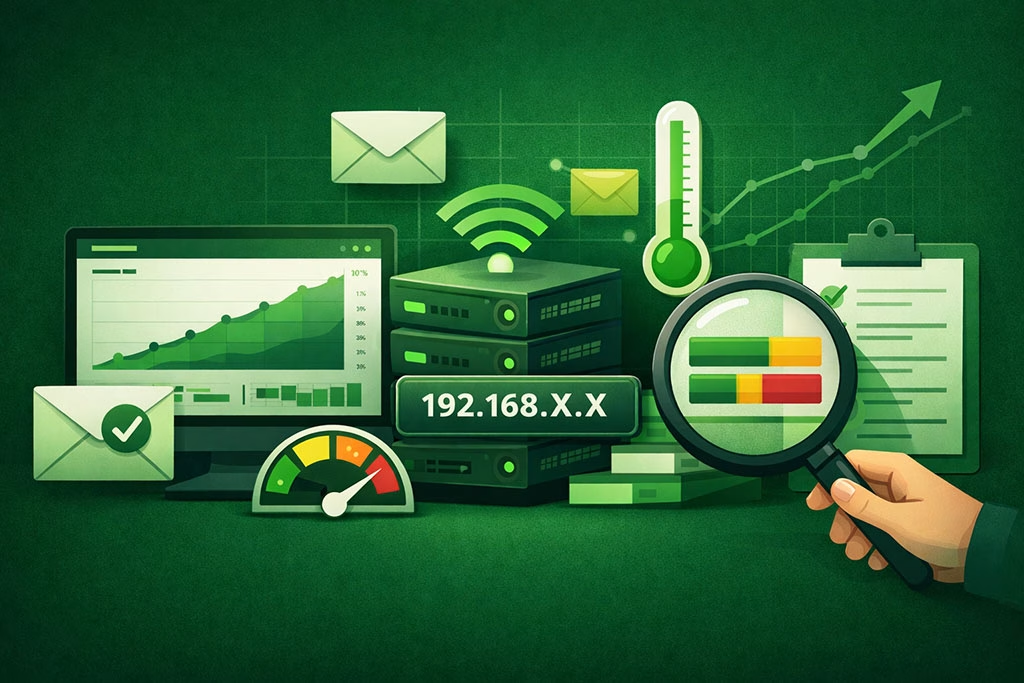
Monitoring and adjusting your IP warming progress is vital for ensuring that your strategy remains effective. Utilize analytics tools to track key performance indicators (KPIs) such as open rates, click-through rates, and bounce rates. These metrics provide valuable insights into how well your emails are performing and whether adjustments are necessary.
If you notice declining engagement or increasing bounce rates, it may be time to reassess your approach. In addition to monitoring performance metrics, pay attention to feedback from ISPs. Many providers offer feedback loops that allow you to see how recipients are interacting with your emails.
If you receive complaints or reports of spam, take immediate action to address the issues at hand. This proactive approach not only helps improve your current campaign but also contributes to long-term success in building a positive sending reputation.
Implementing Best Practices for IP Warming
Implementing best practices for IP warming is essential for maximizing the effectiveness of your strategy. Start by ensuring that all email content adheres to industry standards and best practices. This includes using clear subject lines, avoiding spammy language, and providing valuable content that resonates with your audience.
Additionally, make sure that all recipients have opted in to receive communications from you; this not only complies with regulations but also fosters trust. Another best practice is to segment your audience based on engagement levels and preferences. By sending targeted messages to specific segments, you can increase engagement rates and reduce the likelihood of complaints.
For example, consider sending re-engagement campaigns to inactive subscribers before including them in broader sends. This targeted approach not only enhances engagement but also helps maintain a positive sending reputation throughout the warming process.
Avoiding Common Mistakes in IP Warming
Avoiding common mistakes in IP warming is crucial for achieving success in your email marketing efforts.
One prevalent error is failing to warm up the IP gradually; many marketers make the mistake of sending too many emails too quickly, which can lead to being flagged as spam by ISPs.
Instead, take the time to develop a well-structured plan that allows for gradual increases in volume over several weeks.
Another common pitfall is neglecting list hygiene during the warming process. Sending emails to outdated or unengaged subscribers can negatively impact your sender reputation and hinder the effectiveness of your warming efforts. Regularly clean and update your subscriber lists by removing inactive contacts and ensuring that all recipients have opted in to receive communications from you.
Leveraging Authentication and Encryption for IP Warming
Leveraging authentication and encryption is an essential component of an effective IP warming strategy. Implementing authentication protocols such as SPF (Sender Policy Framework), DKIM (DomainKeys Identified Mail), and DMARC (Domain-based Message Authentication, Reporting & Conformance) helps establish credibility with ISPs and enhances deliverability rates. These protocols verify that the emails sent from your domain are legitimate and not forged by spammers.
Encryption also plays a vital role in securing email communications during the warming process. Utilizing Transport Layer Security (TLS) ensures that emails are transmitted securely between servers, protecting sensitive information from potential threats. By prioritizing authentication and encryption, you not only enhance deliverability but also build trust with both ISPs and recipients.
Utilizing Feedback Loops and Complaint Monitoring
Utilizing feedback loops and complaint monitoring is essential for refining your IP warming strategy over time. Feedback loops allow you to receive notifications when recipients mark your emails as spam or unsubscribe from your list. This information is invaluable; it enables you to identify potential issues with specific campaigns or content types and make necessary adjustments.
In addition to feedback loops, actively monitor complaint rates throughout the warming process. High complaint rates can indicate problems with content relevance or list quality; addressing these issues promptly can help mitigate damage to your sender reputation. By staying attuned to recipient feedback and complaints, you can continuously improve your email marketing efforts while successfully warming up your IP.
Sustaining a Healthy Sending Reputation after IP Warming
Once you’ve successfully completed the IP warming process, sustaining a healthy sending reputation becomes paramount for long-term success in email marketing. Continue monitoring key performance metrics such as open rates, click-through rates, and bounce rates regularly. This ongoing analysis will help you identify trends and make informed decisions about future campaigns.
Additionally, maintain best practices for list management and content quality even after warming is complete. Regularly engage with subscribers through targeted campaigns and personalized content that resonates with their interests. By prioritizing engagement and adhering to industry standards, you’ll not only sustain a healthy sending reputation but also foster lasting relationships with your audience.
In conclusion, mastering the art of IP warming is essential for anyone looking to succeed in email marketing. By understanding its importance, creating a solid plan, monitoring progress diligently, and implementing best practices, you can build a positive sending reputation that ensures high deliverability rates for years to come.
In the realm of email marketing, understanding the intricacies of spam filters is crucial for successful campaigns. A related article that delves into the importance of analyzing email performance metrics is “Navigating Email Analytics Post iOS 15: Essential Metrics to Focus On.” This piece provides valuable insights into how to effectively measure and interpret email analytics, which can complement the strategies discussed in “Bypassing Spam Filters: The Technical Science Behind IP Warming.” For more information, you can read the article [here](https://blog.smartmails.io/2025/11/30/navigating-email-analytics-post-ios-15-essential-metrics-to-focus-on/).
FAQs
What is IP warming?
IP warming is the process of gradually increasing the volume of emails sent from a new IP address to establish a positive sender reputation with Internet Service Providers (ISPs) and avoid being flagged as spam.
Why is IP warming important for email deliverability?
IP warming helps build trust with ISPs by demonstrating consistent, legitimate email sending behavior. This reduces the likelihood that emails will be blocked or sent to spam folders, improving overall deliverability rates.
How do spam filters work in relation to new IP addresses?
Spam filters evaluate various factors including sender reputation, email content, sending volume, and recipient engagement. New IP addresses lack an established reputation, so sudden high-volume sending can trigger spam filters.
What technical steps are involved in IP warming?
Technical steps include starting with low email volumes, gradually increasing the number of emails sent, monitoring bounce rates and engagement metrics, authenticating emails with SPF, DKIM, and DMARC, and maintaining consistent sending patterns.
Can IP warming help bypass spam filters completely?
IP warming does not guarantee complete bypassing of spam filters but significantly reduces the risk of emails being marked as spam by building a positive sender reputation over time.
How long does the IP warming process typically take?
The IP warming process usually takes several weeks, depending on the volume of emails sent and the responsiveness of ISPs. A gradual increase in sending volume is recommended to avoid triggering spam filters.
What role does email content play in bypassing spam filters during IP warming?
Email content should be relevant, personalized, and free of spam-triggering keywords or suspicious links. High-quality content combined with IP warming improves engagement rates and sender reputation.
Are there tools available to assist with IP warming?
Yes, many email service providers offer IP warming tools and guidance that automate the gradual increase of email volume and provide analytics to monitor deliverability and engagement.
What are the risks of not performing IP warming when using a new IP address?
Without IP warming, sending large volumes of email from a new IP can lead to poor sender reputation, increased likelihood of emails being blocked or sent to spam, and potential blacklisting by ISPs.
Is IP warming necessary for all types of email senders?
IP warming is especially important for organizations sending large volumes of emails from new IP addresses. Smaller senders or those using established IPs may not require a formal warming process.