



You’ve likely observed the fragmentation of customer interaction. A customer might browse your website on their desktop, add items to a cart on their tablet, then abandon it. Later, they could receive an email about the abandoned cart, only to ignore it. A few hours later, a compelling SMS offer arrives, but they’re not in a buying mood. Finally, a push notification about a flash sale pings their phone while they’re on public transport, and they make a purchase. This scenario, while common, highlights a missed opportunity for a truly cohesive experience. The disparate channels are working in isolation rather than concert. To move beyond this, you need an omnichannel strategy that weaves together email, SMS, and push notifications into a unified customer journey.
The modern customer navigates numerous digital touchpoints daily. They expect seamless transitions and consistent messaging, regardless of the channel. A fragmented approach, where each communication tool operates independently, not only creates a disjointed experience but also exhausts your marketing resources inefficiently.
Moving Beyond Multichannel Marketing
You might think you’re already doing omnichannel marketing because you use multiple channels. However, there’s a crucial distinction. Multichannel simply means you’re present on various channels. Omnichannel, conversely, focuses on integrating these channels to create a single, harmonious customer experience. Your customer should feel as though they are interacting with one entity, not a series of disconnected departments or automated systems.
The Customer-Centric Core
At the heart of an effective omnichannel strategy lies a deep understanding of your customer. You’re not just sending messages; you’re facilitating a continuous conversation. This means recognizing their preferences, past interactions, and current context across all touchpoints. Without this customer-centric approach, your efforts will likely fall flat.
In the ever-evolving landscape of digital marketing, an effective omnichannel marketing strategy that integrates email, SMS, and push notifications is crucial for engaging customers across multiple touchpoints. For those looking to enhance their understanding of how to optimize their marketing efforts, a related article titled “Unlocking the Power of Exclusivity: Dedicated IP for High-Volume Senders” provides valuable insights into the benefits of dedicated IP addresses for email marketing. You can read more about it here: Unlocking the Power of Exclusivity.
Crafting Your Omnichannel Foundation
Before you even think about individual messages, you need a robust infrastructure and a clear strategy. This foundational work will dictate the success of your entire omnichannel endeavor.
Data Unification and Segmentation
The cornerstone of any successful omnichannel strategy is a unified customer profile. You need to aggregate data from all your channels – website visits, purchase history, email opens, SMS responses, app activity – into a single, accessible database. This comprehensive view allows for sophisticated segmentation.
- Behavioral Segmentation: Group customers based on their actions, such as cart abandoners, recent purchasers, or frequent browsers of a specific product category.
- Demographic Segmentation: While not as dynamic as behavioral, demographic data can still inform basic targeting for certain campaigns.
- Engagement Segmentation: Categorize customers by their level of engagement with specific channels. Some might respond well to email, others to SMS, and some primarily to push notifications.
Journey Mapping and Scenario Planning
Don’t just send messages in a vacuum. Map out typical customer journeys, identifying key touchpoints and potential pain points. Consider various scenarios that might trigger a communication.
- Onboarding Journey: How do you welcome new customers across channels?
- Purchase Journey: What steps do customers take from interest to conversion?
- Post-Purchase Journey: How do you maintain engagement after a sale?
- Re-engagement Journey: How do you bring back lapsed customers?
Defining Channel Roles and Synergies
Each channel has its strengths and limitations. You need to define the primary role each channel will play in your overall strategy and how they will complement each other. Avoid redundancy; aim for synergy.
- Email for Rich Content: Ideal for newsletters, detailed promotions, personalized recommendations, and educational content. Its asynchronous nature allows for longer messages and multiple calls to action.
- SMS for Urgency and Immediacy: Best for time-sensitive offers, order updates, appointment reminders, and quick alerts. Its brevity ensures a high open rate.
- Push Notifications for Real-Time Engagement: Perfect for flash sales, price drop alerts, personalized recommendations based on browsing, and re-engagement with app users. They cut through the noise with immediate delivery.
Integrating Email into Your Omnichannel Mix
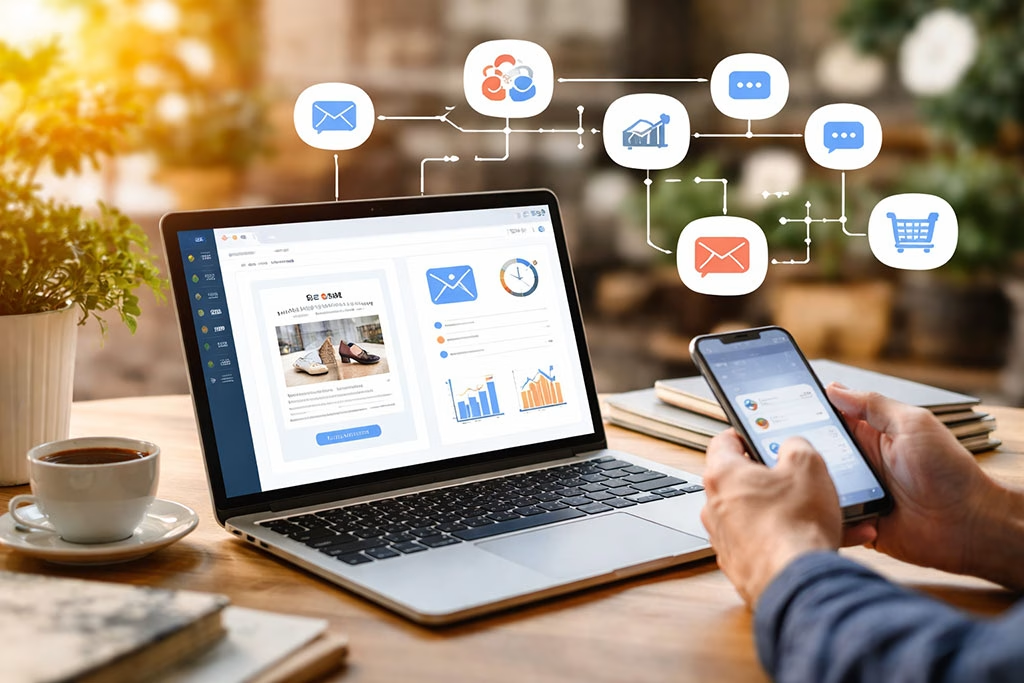
Email remains a cornerstone of digital marketing due to its versatility and established user base. In an omnichannel context, its role shifts from a primary broadcast channel to a strategic component of a larger conversation.
Personalized Email Campaigns
Beyond basic segmentation, leverage your unified customer data to create highly personalized email content. This moves beyond simply addressing the customer by name.
- Dynamic Content: Tailor product recommendations based on browsing history or previous purchases.
- Event-Triggered Emails: Send automatic emails based on actions like cart abandonment, wishlist additions, or product reorder reminders.
- Behavioral Nudges: Prompt customers to complete profiles, leave reviews, or explore complementary products based on their activity.
Email as a Nurturing Tool
Email is excellent for nurturing leads and building long-term relationships. Use it to provide value beyond simple sales pitches.
- Educational Series: Offer a series of emails with tips, guides, or behind-the-scenes content related to your products or industry.
- Loyalty Program Communications: Keep your most valuable customers informed about their rewards, exclusive offers, and upcoming events.
- Feedback Collection: Solicit customer feedback through surveys, demonstrating that you value their input.
Bridging Email with Other Channels
Your email campaigns should never exist in isolation. Integrate calls to action that encourage engagement with your other channels.
- Link to SMS Opt-in: Include clear calls to action within emails for customers to opt-in to SMS alerts for real-time updates or exclusive mobile offers.
- Promote App Downloads: Encourage users to download your mobile app through email campaigns, highlighting the benefits of in-app exclusive content or faster checkout.
- Cross-Promote Content: Use email to highlight new blog posts, videos, or social media campaigns, driving traffic to other customer touchpoints.
Harnessing the Power of SMS
SMS, often overlooked in favor of richer channels, offers unparalleled immediacy and a high open rate. Its strategic integration can significantly boost engagement and drive conversions.
Timely and Actionable SMS Alerts
The key to effective SMS marketing is sending messages that are highly relevant, timely, and demand immediate attention.
- Order Confirmations and Shipping Updates: Provide instant peace of mind to customers by sending real-time updates on their order status.
- Appointment Reminders: Reduce no-shows by sending concise reminders for appointments or service bookings.
- Flash Sale Notifications: Alert customers to limited-time offers that require immediate action to capitalize on the deal.
- Back-in-Stock Alerts: Notify interested customers when a previously unavailable product is back in stock.
Personalization and Micro-segmentation in SMS
While SMS is brief, it doesn’t mean it can’t be personal. Leverage your customer data for targeted, relevant messages.
- Location-Based Offers: Send relevant promotions to customers when they are near your physical store locations (with their consent, of course).
- Abandoned Cart Reminders with Incentive: Follow up on abandoned carts via SMS, potentially including a small discount code to encourage completion.
- Loyalty Point Updates: Inform loyal customers about their current points balance and how they can redeem them.
SMS as a Two-Way Communication Channel
Consider using SMS for more than just broadcasting. Facilitate two-way communication to enhance customer service and engagement.
- Customer Support Inquiries: Allow customers to text questions and receive quick, concise answers.
- Feedback Requests: Solicit quick feedback after a purchase or service interaction.
- Polls and Surveys: Engage customers with short, interactive polls that provide valuable insights.
An effective omnichannel marketing strategy requires a seamless integration of various communication channels, including email, SMS, and push notifications, to enhance customer engagement and drive conversions. For marketers looking to optimize their email campaigns, understanding the intricacies of email deliverability is crucial. A related article that delves into this topic is available here, where you can learn about the challenges of bounced emails and how to effectively manage them to improve your overall marketing performance. By addressing these issues, businesses can ensure their messages reach the intended audience, thereby maximizing the impact of their omnichannel efforts.
Leveraging Push Notifications for Real-Time Impact
| Channel | Advantages | Challenges |
|---|---|---|
| Widely used, cost-effective, customizable content | High competition, deliverability issues | |
| SMS | High open rates, immediate delivery, direct communication | Character limit, opt-in regulations |
| Push Notifications | Instant delivery, high engagement, personalized | Dependent on app usage, opt-in required |
Push notifications, particularly for mobile apps, are powerful tools for re-engaging users and delivering hyper-personalized messages directly to their devices.
Behavioral Triggered Push Notifications
The most effective push notifications are those triggered by specific user actions or inactions within your app or website.
- Abandoned Browser Sessions: Remind users about products they viewed but didn’t add to their cart.
- Price Drop Alerts: Notify users when an item on their wishlist or a product they’ve viewed recently has a price reduction.
- In-App Feature Updates: Announce new features or functionalities within your app, encouraging users to explore them.
- Milestone Achievements: Congratulate users on achieving certain milestones within your app (e.g., reaching a loyalty tier, completing a course module).
Geo-Fencing and Location-Based Push
For businesses with physical locations, geo-fencing can unlock highly relevant and timely push notifications.
- Welcome to Store Offers: Greet customers with an exclusive offer or useful information when they enter a proximity zone around your store.
- Event Reminders: If hosting an in-store event, remind attendees when they are close by.
- Local Promotions: Announce special deals available only at specific store locations.
Re-Engagement and Retention with Push
Push notifications are invaluable for bringing back lapsed users and maintaining ongoing engagement with your app.
- Inactive User Reminders: Send a gentle nudge to users who haven’t opened your app in a while, perhaps with a compelling reason to return.
- Content Updates: Alert users to new content, articles, or products that align with their expressed interests.
- Personalized Recommendations: Based on their past activity, suggest new items or features they might enjoy.
An effective omnichannel marketing strategy is essential for businesses looking to enhance customer engagement through various platforms such as email, SMS, and push notifications. To further explore how to optimize your email campaigns and increase engagement, you might find this article on winning the inbox particularly insightful. By integrating these channels, brands can create a seamless experience that not only boosts customer satisfaction but also drives conversions.
Measuring and Optimizing Your Omnichannel Strategy
An omnichannel strategy isn’t a set-it-and-forget-it endeavor. Continuous measurement, analysis, and optimization are critical for long-term success.
Key Performance Indicators (KPIs) Across Channels
You need to track relevant metrics for each channel, but also look at cross-channel KPIs to understand the holistic impact.
- Email: Open rates, click-through rates, conversion rates, unsubscribe rates.
- SMS: Delivery rates, open rates (often implied with delivery), click-through rates, response rates, opt-out rates.
- Push Notifications: Delivery rates, open/click rates, in-app engagement rates, conversion rates.
- Cross-Channel KPIs: Customer lifetime value, churn rate, average order value, time to conversion across various touchpoints, attribution models.
Attribution Modeling and Customer Journey Analytics
Understanding which channels contribute to a conversion is crucial. Simple last-click attribution often undervalues earlier touchpoints.
- Multi-Touch Attribution Models: Explore models like linear, time decay, or U-shaped to get a more accurate picture of channel effectiveness.
- Customer Journey Analytics: Tools that allow you to visualize the path customers take across channels before converting, revealing bottlenecks and opportunities.
- A/B Testing and Experimentation: Constantly test different message variations, call to actions, and timing across all channels to identify what resonates best with your audience.
Iteration and Adaptation
The digital landscape is constantly evolving, as are customer expectations. Your omnichannel strategy must be agile and open to change.
- Regular Performance Reviews: Schedule regular reviews of your strategy’s performance, identifying areas for improvement or adjustments.
- Customer Feedback Loops: Continually solicit and analyze customer feedback from all channels to understand their experience and pinpoint areas of friction.
- Stay Informed on Industry Trends: Keep abreast of new technologies, communication channels, and best practices in omnichannel marketing.
By embracing a truly integrated approach to email, SMS, and push notifications, you move beyond merely reaching your customers. You begin to engage them in a meaningful, consistent, and personalized way that fosters loyalty and drives sustainable growth. This isn’t about adding complexity; it’s about making your customer interactions more effective and your marketing efforts more efficient.
FAQs
What is omnichannel marketing strategy?
Omnichannel marketing strategy is a marketing approach that provides a seamless and integrated experience for customers across multiple channels, such as email, SMS, push notifications, social media, and more. It aims to create a unified and consistent brand experience for customers regardless of the channel they use.
How does email, SMS, and push notifications integrate into an omnichannel marketing strategy?
Email, SMS, and push notifications are key components of an omnichannel marketing strategy as they allow businesses to reach customers through different communication channels. By integrating these channels, businesses can deliver consistent and personalized messages to customers, enhancing their overall experience and engagement with the brand.
What are the benefits of integrating email, SMS, and push notifications in an omnichannel marketing strategy?
Integrating email, SMS, and push notifications in an omnichannel marketing strategy allows businesses to reach customers at different touchpoints, increasing the likelihood of engagement and conversion. It also enables businesses to provide a cohesive and personalized experience for customers, leading to improved customer satisfaction and loyalty.
How can businesses effectively implement an omnichannel marketing strategy integrating email, SMS, and push notifications?
To effectively implement an omnichannel marketing strategy integrating email, SMS, and push notifications, businesses should focus on understanding their customers’ preferences and behaviors across different channels. They should also invest in technology and tools that enable seamless integration and automation of messaging across channels.
What are some best practices for optimizing an omnichannel marketing strategy integrating email, SMS, and push notifications?
Some best practices for optimizing an omnichannel marketing strategy integrating email, SMS, and push notifications include personalizing messages based on customer data, coordinating messaging across channels to avoid redundancy, and leveraging data analytics to measure the effectiveness of each channel and optimize the overall strategy.