



You’re looking to build a business that thrives, not just survives. You understand that the bedrock of sustained success lies in nurturing your customer relationships. Static marketing efforts will only take you so far. To truly maximize long-term business growth, you need a dynamic, strategic approach that keeps customers engaged and loyal. This is where customer lifecycle email campaigns come into play. They are not just about sending out sporadic promotional messages; they are a sophisticated system designed to guide your customers through every stage of their journey with your brand, fostering deeper connections and driving consistent revenue over time.
Before you can effectively leverage email campaigns, you must first grasp the fundamental concept of the customer lifecycle. This isn’t a single event, but rather a series of stages a customer progresses through from their initial awareness of your brand to becoming a loyal advocate. Understanding these distinct phases allows you to tailor your communication precisely to their current needs and motivations.
The Awareness Stage
This is where a potential customer first encounters your brand. They might not be actively searching for your product or service, but they have a need or a problem that you potentially solve.
Identifying Awareness Triggers
- Content Consumption: They might be reading a blog post relevant to your industry, watching an educational video, or engaging with social media content.
- Referrals: They hear about your brand from a friend, colleague, or influencer.
- Paid Advertising: They see your ads on search engines or social platforms.
The Consideration Stage
Once aware, a potential customer begins to actively evaluate solutions to their needs. They are researching, comparing options, and forming opinions about different brands.
How Customers Evaluate Options
- Product Research: They are reading reviews, visiting competitor websites, and looking at product features.
- Information Gathering: They might be downloading case studies, white papers, or attending webinars.
- Price Sensitivity: They are starting to consider the cost and value proposition.
The Decision Stage
At this point, the potential customer has narrowed down their choices and is ready to make a purchase. They are looking for the final push to commit to a specific solution.
Factors Influencing the Decision
- Trust and Credibility: They need to feel confident in your brand’s ability to deliver.
- Clear Value Proposition: The benefits of choosing you should be readily apparent.
- Incentives and Offers: A well-placed discount or bonus can tip the scales.
The Loyalty Stage
The customer has made a purchase and is now experiencing your product or service. This is a critical phase for retention and fostering repeat business.
Building Customer Loyalty
- Onboarding Success: Ensuring they understand how to get the most value from their purchase.
- Positive Post-Purchase Experience: Smooth delivery, excellent customer support, and follow-up.
- Ongoing Engagement: Providing value beyond the initial transaction.
The Advocacy Stage
Your most satisfied customers become your brand’s biggest champions. They are enthusiastic about your offerings and willing to share their positive experiences with others.
Cultivating Brand Advocates
- Exceptional Service: Consistently exceeding expectations.
- Delightful Experiences: Creating memorable moments.
- Encouraging Feedback and Reviews: Valuing their input.
In the realm of customer lifecycle email campaigns, understanding best practices is crucial for fostering long-term business growth. A related article that delves into effective strategies is titled “10 Email Marketing Best Practices for Fashion Brands.” This insightful piece offers valuable tips that can be applied across various industries, emphasizing the importance of personalization, segmentation, and timing in email marketing efforts. For more information, you can read the article here: 10 Email Marketing Best Practices for Fashion Brands.
Designing Effective Onboarding Email Sequences
The onboarding process is arguably the most crucial stage for setting the tone of your customer relationship. A well-executed onboarding email sequence ensures that new customers feel welcomed, understand the value they’ve purchased, and are empowered to succeed. This directly impacts their likelihood of staying with you long-term.
Welcoming New Customers Effectively
Your first emails after a purchase should be focused on immediate value and reassurance. Avoid bombarding them with sales pitches.
Initial Welcome Emails
- Immediate Thank You and Confirmation: A confirmation of their purchase and a thank you for choosing your brand. This builds immediate trust.
- Setting Expectations: Clearly outline what they can expect next, whether it’s shipping updates, access to a platform, or download instructions.
- Highlighting Key Benefits: Briefly reiterate the primary value they will gain from their purchase.
Guiding Product/Service Utilization
Once the initial welcome is out of the way, your focus should shift to helping them maximize their use of what they’ve acquired.
Educational and Tutorial Emails
- Getting Started Guides: Step-by-step instructions for initial setup or use.
- Feature Spotlights: Introduce specific features and their benefits, one at a time, to avoid overwhelming them.
- Video Tutorials and Demos: Visual aids can greatly enhance understanding and engagement.
Proactive Problem Solving and Support
Anticipate common challenges new users might face and address them proactively through your email communication.
Support and FAQ Emails
- Common Issues and Solutions: Address frequently asked questions or potential roadblocks before they even arise.
- Access to Support Channels: Make it easy for them to find help if they need it, clearly directing them to your customer support.
- Resource Hub Links: Point them to your knowledge base, FAQs, or community forums.
Implementing Retention-Focused Email Campaigns
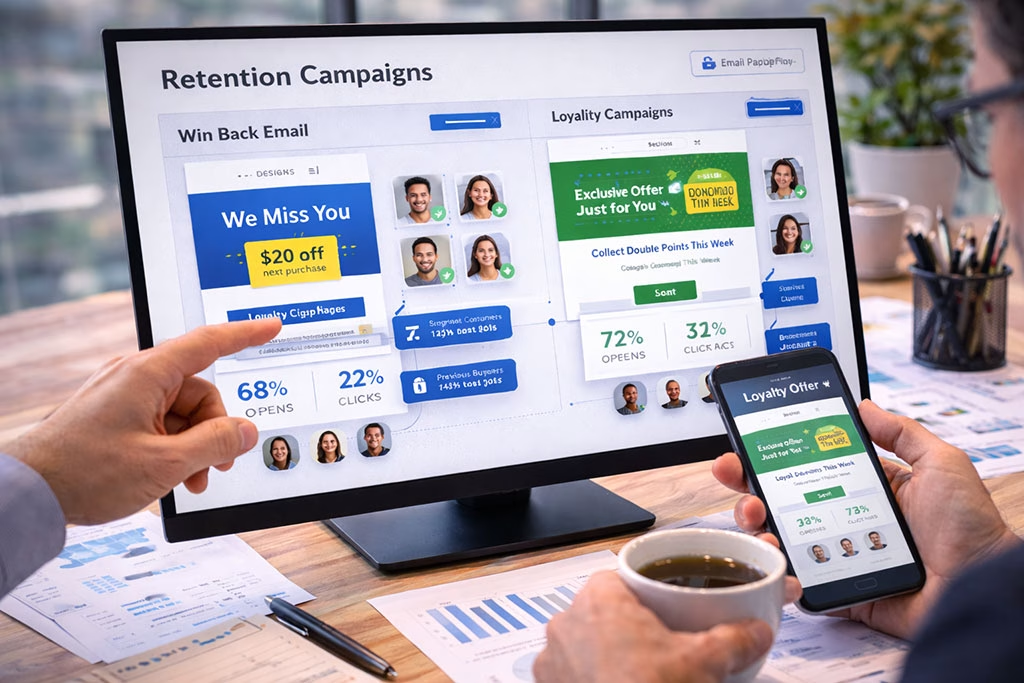
Acquiring a new customer is significantly more expensive than retaining an existing one. Therefore, your email strategy must include robust campaigns designed to keep your current customers engaged and prevent churn.
Nurturing Existing Customer Relationships
Beyond the initial onboarding, you need ongoing communication that demonstrates your continued commitment and offers ongoing value.
Regular Value-Driven Content
- Usage Tips and Tricks: Share advanced ways to use your product or service that they might not have discovered.
- Industry Insights and News: Position yourself as a trusted source of information within your niche.
- Exclusive Content: Offer subscribers access to content not available elsewhere, fostering a sense of privilege.
Encouraging Repeat Purchases and Upselling
Once a customer is happy and engaged, strategically present opportunities for them to spend more with your brand.
Repeat Purchase Incentives
- Loyalty Programs and Rewards: Communicate exclusive benefits and how to earn them.
- Personalized Product Recommendations: Based on past purchases and browsing history.
- Replenishment Reminders: For consumable products, trigger emails before they run out.
Upselling and Cross-selling Opportunities
- Bundled Offers: Present complementary products or services at a discounted rate.
- Upgrade Paths: Clearly outline the benefits of moving to a higher-tier product or service.
- “Customers Like You Also Bought…” Campaigns: Leverage social proof to suggest relevant add-ons.
Addressing Inactivity and Preventing Churn
It’s essential to identify when a customer’s engagement is waning and intervene before they become completely inactive or leave.
Re-engagement Campaigns
- “We Miss You” Emails: Gentle nudges with compelling offers or reminders of value.
- Feedback Surveys: Understand why they might be disengaging and use this information to improve.
- Special Offers for Inactive Customers: Targeted discounts to entice them back.
Leveraging Segmentation for Personalized Communication
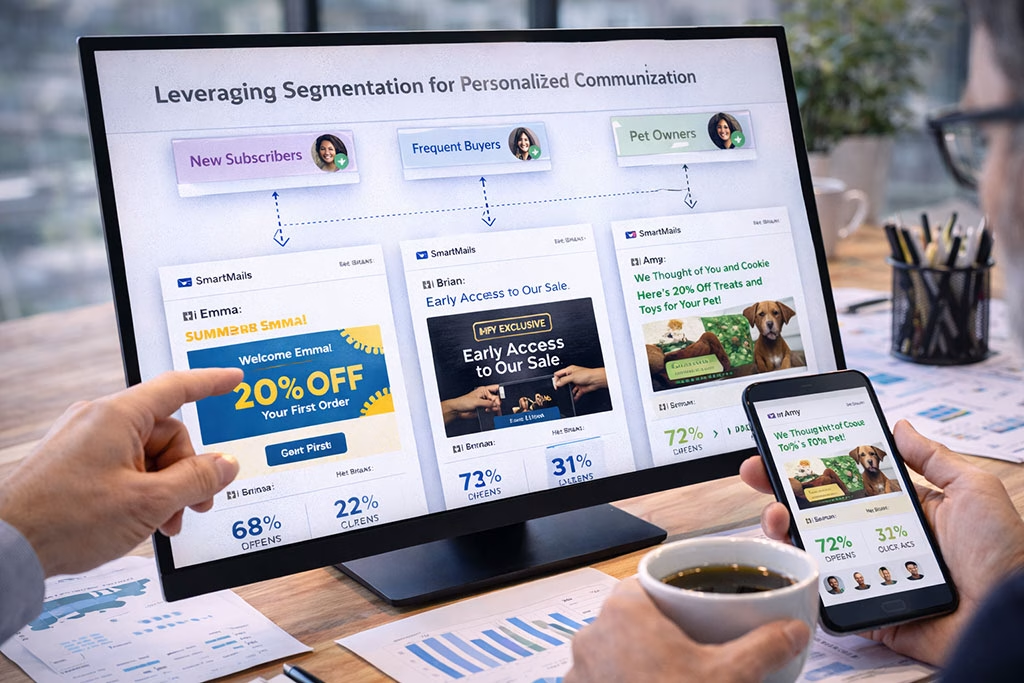
One of the most powerful aspects of email marketing is your ability to personalize your messages. Generic emails are easily ignored. Segmentation allows you to deliver highly relevant content to specific groups of customers, dramatically increasing engagement and conversion rates.
Defining Relevant Segments
Think critically about the different types of customers you have and what distinguishes them.
Key Segmentation Criteria
- Demographics: Age, location, gender, profession (if applicable).
- Behavioral Data: Purchase history, website activity, email engagement (opens, clicks), product usage.
- Psychographics: Interests, values, lifestyle.
- Stage in the Customer Lifecycle: As discussed earlier.
Tailoring Content and Offers
Once you have your segments, the next step is to create content and offers that resonate with each specific group.
Segment-Specific Email Content
- Product Recommendations: Tailored to their past purchases and stated interests.
- Promotional Offers: Discounts or bundles relevant to their purchasing habits.
- Educational Content: Focused on their specific needs and challenges.
Dynamic Content and Personalization Tokens
Go beyond simply using their first name. Dynamic content allows you to adapt entire email sections based on segment data.
Implementing Dynamic Content
- Product Images and Descriptions: Show only products relevant to the recipient.
- Call-to-Action Buttons: Direct them to the most appropriate next step for their segment.
- Seasonal or Location-Based Offers: Adapt promotions based on geographic or temporal relevance.
Customer lifecycle email campaigns are essential for fostering long-term business growth, as they allow companies to engage with customers at various stages of their journey. By tailoring messages to meet the specific needs and preferences of customers, businesses can enhance retention and drive sales. For those interested in exploring innovative strategies that complement these campaigns, a related article discusses the benefits of automating newsletters in the context of the curator economy. You can read more about it in this insightful piece on automating your news digest newsletter.
Driving Advocacy and Loyalty Through Email
| Stage | Objective | Metric |
|---|---|---|
| 1. Acquisition | Attract new customers | Conversion Rate |
| 2. Activation | Engage new customers | Open Rate |
| 3. Retention | Keep customers coming back | Click-Through Rate |
| 4. Revenue | Drive sales from existing customers | Revenue per Email |
| 5. Referral | Encourage customers to refer others | Referral Rate |
Your most valuable customers are those who not only stay but also actively promote your brand. Your email strategy should actively cultivate this advocacy.
Encouraging Reviews and Testimonials
Positive word-of-mouth is a powerful driver of new business. Make it easy for happy customers to share their experiences.
Review Request Campaigns
- Post-Purchase Follow-ups: Ask for a review after they’ve had time to experience the product/service.
- Incentivized Reviews: Offer a small discount or entry into a drawing for leaving a review.
- Targeted Requests: Only ask customers who have demonstrated high satisfaction.
Building a Referral Program
Turn your loyal customers into active sales agents by implementing a structured referral program.
Referral Program Emails
- Program Introduction: Clearly explain how the referral program works and the benefits for both the referrer and the referred.
- Referral Tracking and Rewards: Keep referrers updated on their rewards status.
- Easy Sharing Options: Provide pre-written social media posts or email templates.
Fostering a Community Around Your Brand
Creating a sense of belonging can significantly increase customer loyalty and encourage advocacy.
Community Engagement Emails
- Exclusive Community Access: Invite customers to private forums, Slack channels, or Facebook groups.
- User-Generated Content Showcases: Highlight customer stories, photos, or testimonials.
- Beta Program Invites: Offer loyal customers early access to new features or products for feedback.
Measuring and Optimizing Your Email Campaigns
The work isn’t done once you hit send. Continuous measurement and analysis are vital for refining your strategy and ensuring maximum impact on your long-term business growth.
Key Performance Indicators (KPIs) for Email Marketing
Understand which metrics truly reflect the health and effectiveness of your campaigns.
Essential Email Metrics
- Open Rate: The percentage of recipients who opened your email.
- Click-Through Rate (CTR): The percentage of recipients who clicked on a link within your email.
- Conversion Rate: The percentage of recipients who took a desired action after clicking through (e.g., made a purchase, signed up).
- Unsubscribe Rate: The percentage of recipients who opted out of your emails.
- Bounce Rate: The percentage of emails that couldn’t be delivered.
- Customer Lifetime Value (CLV): While not solely an email metric, email’s impact on CLV is significant and should be tracked.
A/B Testing for Continuous Improvement
Don’t guess what works best. Test different elements of your emails to identify what resonates most with your audience.
Elements to A/B Test
- Subject Lines: A/B test different phrasing, emojis, and personalization.
- Call-to-Action (CTA) Buttons: Experiment with different text, colors, and placement.
- Email Copy: Test different tones, lengths, and messaging.
- Images and Visuals: See what visual elements drive more engagement.
- Send Times and Days: Determine when your audience is most likely to engage.
Analyzing Data for Strategic Adjustments
Regularly review your KPIs and A/B test results to inform your future email strategy.
Data-Driven Decision Making
- Identify Top-Performing Campaigns: Understand why they succeeded and replicate those strategies.
- Address Underperforming Campaigns: Investigate the reasons for poor results and make necessary changes.
- Refine Segmentation: Use data to discover new opportunities for segmentation.
- Optimize Email Cadence: Adjust how frequently you send emails based on engagement patterns.
By implementing a robust customer lifecycle email strategy, you are not just sending emails; you are building a dynamic system that nurtures relationships, drives predictable revenue, and lays the foundation for sustainable long-term business growth. It’s a commitment to understanding your customers at every touchpoint and consistently delivering value that keeps them coming back.
FAQs
What are customer lifecycle email campaigns?
Customer lifecycle email campaigns are a series of targeted emails that are sent to customers at different stages of their relationship with a business. These stages typically include onboarding, engagement, retention, and re-engagement.
How do customer lifecycle email campaigns contribute to long-term business growth?
Customer lifecycle email campaigns contribute to long-term business growth by nurturing customer relationships, increasing customer retention, and driving repeat purchases. By delivering relevant and timely content, businesses can build trust and loyalty with their customers, ultimately leading to increased revenue and profitability.
What are some examples of customer lifecycle email campaigns?
Examples of customer lifecycle email campaigns include welcome emails for new customers, personalized product recommendations based on past purchases, anniversary or birthday emails, and win-back emails for inactive customers. These campaigns are designed to engage customers at different points in their journey with the business.
How can businesses create effective customer lifecycle email campaigns?
Businesses can create effective customer lifecycle email campaigns by segmenting their customer base, personalizing their content, and using automation to deliver the right message at the right time. It’s also important to track and analyze the performance of these campaigns to make data-driven improvements.
What are the key benefits of implementing customer lifecycle email campaigns?
The key benefits of implementing customer lifecycle email campaigns include increased customer engagement, improved customer retention, higher customer lifetime value, and a more predictable revenue stream. Additionally, these campaigns can help businesses gather valuable customer feedback and insights to inform their marketing and product development strategies.