


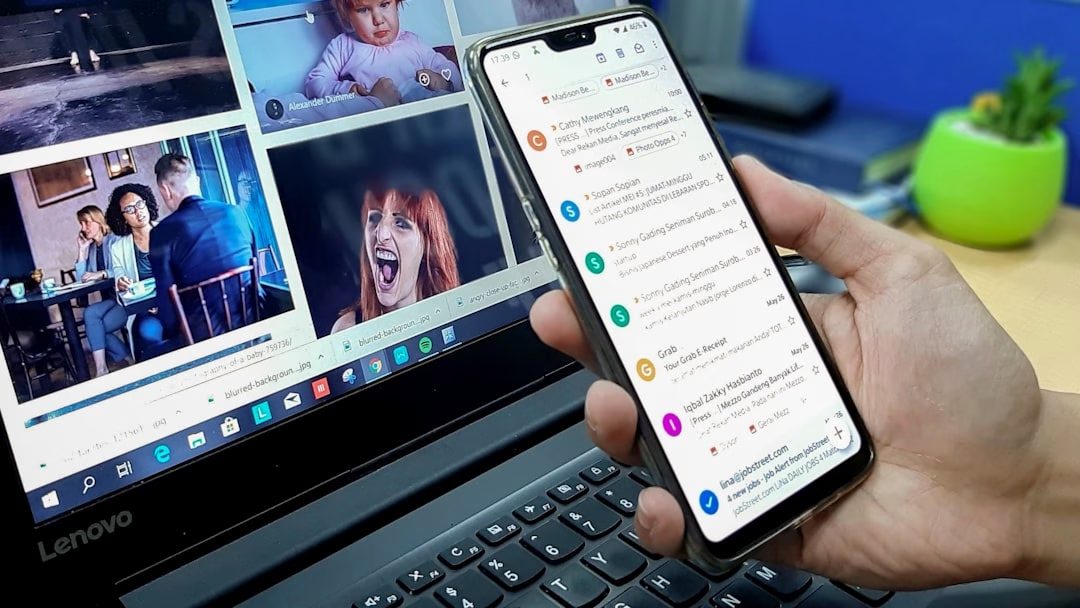
Email marketing is often overlooked in the hyper-growth chase of the SaaS world, seen by some as a relic of a bygone digital era. Yet, for businesses that understand its fundamental mechanics and strategic application, email remains one of the most reliable and cost-effective engines for sustainable growth. It’s not about sending generic blasts to a list; it’s about thoughtful, targeted communication that nurtures relationships, drives engagement, and ultimately, converts prospects into loyal customers.
Understanding the SaaS Customer Journey and Email’s Role
The SaaS customer journey is rarely linear. It’s a complex path that begins with awareness, progresses through consideration and decision, and ideally, extends into onboarding, adoption, retention, and advocacy. Email marketing, when deployed strategically, can touch and influence every stage of this journey.
Awareness and Discovery
At the initial stage, potential customers are identifying a problem they need to solve. Your content marketing efforts are likely attracting them. Email can play a role here in capturing interest and beginning the engagement process.
Capturing Leads from Content
You’ve invested time and resources into creating valuable content – blog posts, whitepapers, webinars. Your goal is to convert the readers and viewers of this content into leads. Email signup forms are the primary mechanism for this.
- Strategizing Signup Opportunities: Place clear and compelling calls to action (CTAs) strategically across your website. This includes within blog posts, on landing pages, and even in your website footer. The offer for an email address should be valuable, such as access to exclusive content, a free trial, or a discount.
- The Welcome Email Series: The moment a user subscribes is critical. A well-crafted welcome email series can set the tone for the entire relationship. It’s an opportunity to deliver on the promised value, introduce your brand, and guide the user towards their next logical step. This series should be automated and personalized as much as possible.
Consideration and Evaluation
Once a lead has entered your funnel, they are actively evaluating solutions. Email can provide the information and social proof they need to choose your product.
Nurturing Leads with Relevant Information
Leads at this stage are looking for solutions. Your email communication should focus on educating them about the problems they face and how your SaaS product specifically addresses those challenges.
- Segmenting Your Audience: Not all leads are the same. Segmenting your email list based on firmographics (company size, industry), psychographics (pain points, interests), or behavior (content downloaded, pages visited) allows you to send highly relevant messages. A lead who downloaded a guide on social media scheduling will respond differently to one who downloaded a guide on project management.
- Drip Campaigns for Education: Implement automated drip campaigns that deliver a series of emails over time. These campaigns can educate leads about specific features, share case studies of similar businesses, and address common objections. The cadence of these emails should be carefully considered to avoid overwhelming the recipient.
- Demonstrating Value Through Use Cases: Instead of just listing features, showcase how those features translate into tangible benefits. Use real-world examples and scenarios that resonate with your target audience’s daily challenges.
Offering Trials and Demos
For SaaS products, a free trial or a demo is often the most crucial step in moving a lead towards becoming a customer. Email can effectively facilitate this.
- Trial Conversion Emails: Once a user signs up for a trial, your email communication should be focused on driving engagement within the product. Send onboarding tips, feature highlights, and encouragement to explore key functionalities.
- Demo Scheduling and Follow-up: For leads that require a more hands-on approach, emails should facilitate the scheduling of demos and provide clear instructions on what to expect. Post-demo follow-up emails are essential for addressing any remaining questions and reinforcing the value proposition.
Email marketing has emerged as a vital growth engine for SaaS companies, allowing them to engage with customers effectively and drive conversions. A related article that delves into the evolution of landing pages, which play a crucial role in email marketing campaigns, can be found here: The Evolution of Landing Pages: The Squeeze Page is Dead – Here’s What High Converting Landing Pages Look Like in 2025. This article explores the latest trends in landing page design and functionality, emphasizing their importance in maximizing the effectiveness of email marketing strategies for SaaS businesses.
Driving Conversions and Customer Acquisition
Email marketing is a direct revenue generator. Through strategic campaigns, you can influence purchase decisions and acquire new paying customers.
The Art of the Sales Email
While nurturing is important, sometimes a direct approach is necessary to push a qualified lead towards making a purchase decision.
Crafting Effective Sales Emails
Generic sales pitches are easily ignored. Effective sales emails are personalized, problem-solution focused, and contain a clear call to action.
- Personalization Beyond the Name: Advanced personalization goes beyond inserting a first name. Reference their company, their industry, or a specific pain point you’ve identified through their engagement with your content. This shows you’ve done your homework.
- Highlighting Unique Selling Propositions (USPs): Clearly articulate what makes your SaaS solution stand out from the competition. Focus on the unique benefits that directly address the prospect’s needs.
- Urgency and Scarcity (Used Ethically): Limited-time offers or early-bird discounts can incentivize immediate action. However, these should be used genuinely and aligned with your business strategy, not as manipulative tactics.
- Compelling Call to Actions (CTAs): Make it overwhelmingly clear what you want the recipient to do next. Use action-oriented language and direct them to a specific landing page or signup form.
Leveraging Social Proof
No one wants to be the first to try something new without assurance. Social proof in your emails can significantly boost conversion rates.
- Customer Testimonials and Reviews: Integrate snippets of positive customer testimonials or links to review sites directly into your sales emails. This builds trust and credibility.
- Case Studies and Success Stories: Showcase how other businesses, similar to the prospect’s, have achieved measurable results with your product. This provides concrete evidence of value.
- Logos of Recognizable Clients: If you have well-known companies as clients, displaying their logos can be a powerful form of social proof, especially for B2B SaaS.
Onboarding and Customer Success: The Foundation of Retention
Acquiring a customer is just the beginning. Effective email marketing is crucial for ensuring they understand and utilize your product, leading to long-term retention.
Seamless Onboarding Experiences
The initial period after a customer signs up is critical for their long-term success. Email can guide them through this onboarding process.
Guiding New Users Through Initial Setup
A complex onboarding process can lead to churn. Email can break down the process into manageable steps.
- Step-by-Step Onboarding Guides: Deliver a series of emails that guide new users through essential setup tasks, feature discoveries, and best practices. Each email should focus on a specific action or concept.
- Highlighting Quick Wins: Identify the quickest path to value for new users and guide them towards achieving that “aha!” moment as soon as possible. This early success is a strong driver of retention.
- Introducing Key Features Gradually: Avoid overwhelming new users with too much information at once. Introduce features progressively as they become relevant to the user’s workflow.
- Providing Access to Support Resources: Clearly signpost where users can find help, whether it’s your knowledge base, FAQs, tutorials, or customer support contact information.
Proactive Customer Success Through Email
Customer success is not a reactive process. Email allows you to proactively support your customers and ensure they are extracting maximum value from your product.
Driving Product Adoption and Engagement
Your goal is to ensure customers are actively using your product and discovering its full potential.
- Feature Adoption Campaigns: Identify features that are underutilized or that offer significant value and create email campaigns to educate users about them. This could involve tutorials, use-case examples, or webinars.
- Usage Tips and Best Practices: Regularly share tips and best practices that help customers optimize their use of your software. This demonstrates your commitment to their success.
- Announcing New Features and Updates: Keep your existing customers informed about new features, product updates, and improvements. Explain the benefits and how they can leverage these changes.
- Gathering Feedback: Proactively solicit feedback from your customers through surveys or direct email requests. This not only provides valuable insights but also makes customers feel heard and valued.
Re-engagement and Retention Strategies
Reducing churn is paramount for sustainable SaaS growth. Email marketing plays a pivotal role in keeping customers engaged and preventing them from leaving.
Identifying and Addressing Churn Risks
Early detection of at-risk customers is key. Email can be used to identify and intervene.
Recognizing Signs of Decreased Engagement
Monitor user activity and identify patterns that indicate a decline in engagement.
- Usage Metrics Monitoring: Set up automated triggers based on declining login frequency, reduced feature usage, or decreased interaction with key functionalities.
- Inactivity Nudges: Send targeted emails to users who haven’t logged in or used certain features for a period. These emails can offer assistance, highlight new benefits, or remind them of the value they’re missing.
- Customer Health Scoring Integration: If you have a customer health scoring system, integrate it with your email platform to trigger automated re-engagement campaigns based on declining scores.
Win-Back Campaigns
For customers who have churned, strategic win-back campaigns can be highly effective in bringing them back into the fold.
- Targeted Win-Back Offers: Craft special offers, discounts, or exclusive content for churned customers. Personalize these offers based on their previous usage or reasons for leaving, if known.
- Highlighting Product Improvements: If there have been significant product updates or new features released since they left, highlight these in your win-back emails.
- Gathering Exit Feedback: Some win-back emails can also serve as an opportunity to gently request feedback on why they left, providing valuable insights for future improvements.
Fostering Loyalty and Advocacy
Turning happy customers into loyal advocates is a powerful growth strategy. Email provides the channels for this.
Encouraging Referrals and Reviews
Happy customers can be your best salespeople.
- Referral Program Promotion: Implement and consistently promote your customer referral program through email. Make it easy for customers to share their unique referral links.
- Review Request Campaigns: After a positive customer experience or milestone, send targeted emails requesting reviews on relevant platforms.
- Testimonial Gathering: Proactively reach out to satisfied customers and ask if they would be willing to provide a testimonial for your website or marketing materials.
Building a Community
A strong community around your product can enhance customer loyalty and provide ongoing value.
- Exclusive Customer Content: Share exclusive content, webinars, or early access to new features with your loyal customer base.
- Community Forum Promotion: If you have a community forum or user group, use email to encourage participation and highlight valuable discussions.
- Customer Spotlights: Feature loyal customers and their success stories in your newsletters or dedicated emails, celebrating their achievements.
Email marketing has emerged as a vital growth engine for SaaS companies, enabling them to engage with customers effectively and drive conversions. A recent article discusses how automating newsletters can enhance this strategy, providing insights into leveraging RSS feeds for seamless email communication. By implementing such automation, businesses can ensure their audience receives timely updates, ultimately fostering stronger relationships. For more information on this topic, you can read the full article on how to automate your newsletter with RSS to email.
Advanced Email Marketing Techniques for SaaS Growth
Beyond the basics, several advanced strategies can unlock further growth potential from your email marketing efforts.
Leveraging Automation and Personalization at Scale
Automation and personalization are not just buzzwords; they are essential for efficient and effective email marketing in a SaaS environment.
Implementing Marketing Automation Workflows
Marketing automation platforms allow you to set up complex sequences of emails triggered by specific user actions or inactions.
- Behavioral Triggered Emails: Automatically send emails based on user behavior within your product or on your website. Examples include cart abandonment emails, webinar attendance follow-ups, or emails triggered by completing a specific onboarding task.
- Lead Scoring Integration: Use lead scoring to trigger different email sequences based on a lead’s engagement level and likelihood to convert. High-scoring leads might receive more direct sales-oriented emails, while lower-scoring leads could be funneled into educational nurture sequences.
- Dynamic Content: Personalize email content in real-time based on recipient data. This could include displaying product recommendations relevant to their industry, showing different subject lines based on past opens, or even altering CTAs.
Advanced Segmentation Strategies
Deeper segmentation allows for more precise targeting and higher engagement rates.
- Lifecycle Stage Segmentation: Segment your audience based on where they are in the customer lifecycle (e.g., prospect, trial user, new customer, loyal customer, churned customer).
- Behavioral Segmentation: Group users based on their specific actions and interactions within your product or website (e.g., frequent users of feature X, users who have explored the pricing page).
- Predictive Segmentation: Utilize data analytics to predict future behavior and segment users accordingly. This could involve identifying users who are likely to upgrade soon or those at risk of churning.
Optimizing for Deliverability and Engagement
Even the most well-crafted emails will fail if they don’t reach the inbox or if recipients don’t interact with them.
Ensuring Inbox Placement
Deliverability is the foundation of any successful email campaign.
- Maintaining a Clean Email List: Regularly clean your email list by removing bounces, inactive subscribers, and spam traps. This signals to ISPs that you send valuable content.
- Authentication Protocols (SPF, DKIM, DMARC): Implement these technical measures to verify your sending domain and improve your sender reputation, which is crucial for deliverability.
- Avoiding Spam Triggers: Be mindful of language and formatting that can trigger spam filters. Avoid excessive exclamation points, all caps, and misleading subject lines.
- Sender Reputation Management: Monitor your sender reputation with tools provided by email service providers and ISPs. Address any issues promptly.
A/B Testing and Continuous Improvement
Email marketing is an iterative process. Continuous testing and refinement are essential.
- A/B Testing Subject Lines: Experiment with different subject line lengths, wording, and personalization to see what resonates best with your audience.
- A/B Testing CTAs: Test different CTA button colors, text, and placement to optimize click-through rates.
- A/B Testing Email Copy and Design: Experiment with different email copy lengths, tone of voice, and visual elements to improve engagement and conversion.
- Analyzing Performance Metrics: Regularly review key metrics such as open rates, click-through rates, conversion rates, and unsubscribe rates. Use this data to identify areas for improvement and inform future campaigns.
Email marketing for SaaS is not a set-it-and-forget-it tactic. It’s a dynamic, data-driven discipline that requires continuous learning, adaptation, and a deep understanding of your customer. By strategically leveraging email throughout the customer lifecycle, from initial awareness to long-term advocacy, you can build a robust and sustainable growth engine for your SaaS business. It’s the quiet workhorse that, when properly harnessed, consistently delivers significant returns.
FAQs
What is email marketing?
Email marketing is a digital marketing strategy that involves sending promotional messages, product updates, or educational content to a targeted audience via email.
How can email marketing benefit SaaS companies?
Email marketing can benefit SaaS companies by helping them acquire new customers, retain existing customers, and drive product adoption. It can also be used to nurture leads, upsell and cross-sell to existing customers, and gather valuable feedback.
What are some best practices for email marketing in SaaS companies?
Best practices for email marketing in SaaS companies include segmenting the email list, personalizing the content, optimizing for mobile devices, testing different subject lines and content, and adhering to email marketing regulations such as GDPR and CAN-SPAM.
What are some key metrics to track for email marketing in SaaS companies?
Key metrics to track for email marketing in SaaS companies include open rate, click-through rate, conversion rate, unsubscribe rate, and email deliverability. These metrics can provide insights into the effectiveness of email campaigns and help optimize future strategies.
How can SaaS companies build an effective email marketing strategy?
SaaS companies can build an effective email marketing strategy by defining their target audience, setting clear goals, creating valuable content, automating email workflows, and continuously analyzing and optimizing their campaigns based on data and feedback.