


You’re always striving to connect with your audience in a more meaningful way, to break through the noise and deliver your message directly to those who need to hear it. In the world of email marketing, this means moving beyond generic blasts and embracing the power of advanced segmentation. This isn’t just about dividing your list into a few broad categories; it’s about understanding the nuances of your subscribers, their behaviors, their preferences, and their journey with your brand. By diligently segmenting your audience, you can transform your email campaigns from a one-size-fits-all approach to a highly personalized experience that drives engagement, conversions, and ultimately, lasting customer relationships.
You’ve probably heard the adage: “The right message to the right person at the right time.” In email marketing, segmentation is the very mechanism that allows you to achieve this ideal. Without it, you’re essentially shouting into a crowded room, hoping someone hears. With it, you’re having targeted conversations that resonate deeply.
Beyond Basic Demographics: Deeper Insights
While basic demographic segmentation (age, gender, location) is a good starting point, it only scratches the surface. To truly maximize your email targeting, you need to delve into more sophisticated data points. Think about the rich tapestry of information you can gather about your subscribers through their interactions with your brand. This deeper insight allows you to create segments that are far more relevant and, consequently, far more effective.
Boosting Open Rates and Click-Through Rates
When your emails are relevant, your subscribers are more likely to open them. It’s a simple, yet powerful, correlation. If your “sale on pet supplies” email lands in the inbox of someone who doesn’t own a pet, they’re unlikely to open it. But if it goes to a segment of dog owners, their interest is piqued. The same principle applies to click-through rates. Relevant content naturally encourages action. You’ll see a noticeable improvement in these key metrics when you speak directly to the needs and interests of your segments.
Reducing Unsubscribes and Spam Complaints
Irrelevant emails are a fast track to unsubscribes and spam complaints. Your subscribers signed up because they were interested in something you offer. If your emails consistently miss the mark, they’ll disengage. By sending targeted content, you demonstrate that you understand and value their preferences, fostering a positive relationship and reducing the likelihood of them opting out. You want to be a welcome guest in their inbox, not an unwelcome intruder.
For those looking to enhance their email marketing strategies, exploring advanced email segmentation techniques can significantly improve targeting and engagement. A related article that delves into effective practices for specific industries is available at 10 Email Marketing Best Practices for Fashion Brands. This resource provides valuable insights tailored to fashion brands, making it a great complement to the discussion on segmentation.
Advanced Segmentation Techniques You Should Be Using
Now that you understand the “why,” let’s explore the “how.” You have a wealth of data at your fingertips, and the real power comes from how you organize and interpret that data to create highly specific and actionable segments.
Behavioral Segmentation: Understanding Actions, Not Just Demographics
This is where you move beyond who your subscribers are and focus on what they do. Behavioral segmentation is incredibly powerful because it reflects current interests and intent.
Website Browsing Behavior
- Pages Visited: Did they visit your product pages, your blog, your pricing page? This indicates their level of interest and what specific offerings they’re exploring. You can segment based on visitors who viewed a particular category of products, or those who read specific blog posts.
- Time Spent on Site: Longer engagement often signifies deeper interest. You could create a segment of “highly engaged browsers” who spend more than X minutes on your site.
- Exit Intent: Did they almost leave your site without making a purchase? This is a prime opportunity for a re-engagement email with a special offer.
Email Engagement Behavior
- Open and Click History: Which emails do they open? Which links do they click? This tells you a lot about their content preferences and what resonates with them. You can identify “super openers” who consistently engage, or “dormant subscribers” who haven’t opened an email in months.
- Unsubscribed from specific topics: If your email service allows, you can track which topics subscribers opt out of, further refining their preferences.
- Forwarded emails: While harder to track accurately, if you have a referral program or a “share with a friend” option, this can indicate a highly engaged and satisfied customer.
Purchase Behavior (for e-commerce)
- Purchase History: What have they bought in the past? This is gold for recommending complementary products or offering exclusive deals on their favorite brands.
- Average Order Value (AOV): Are they a high-value customer or a budget-conscious shopper? You can tailor your promotions accordingly.
- Frequency of Purchases: How often do they buy? This helps you identify loyal customers versus one-time buyers. You can create loyalty programs for frequent purchasers.
- Last Purchase Date: Customers who haven’t bought in a while might need a re-engagement campaign. “We miss you!” emails can work wonders here.
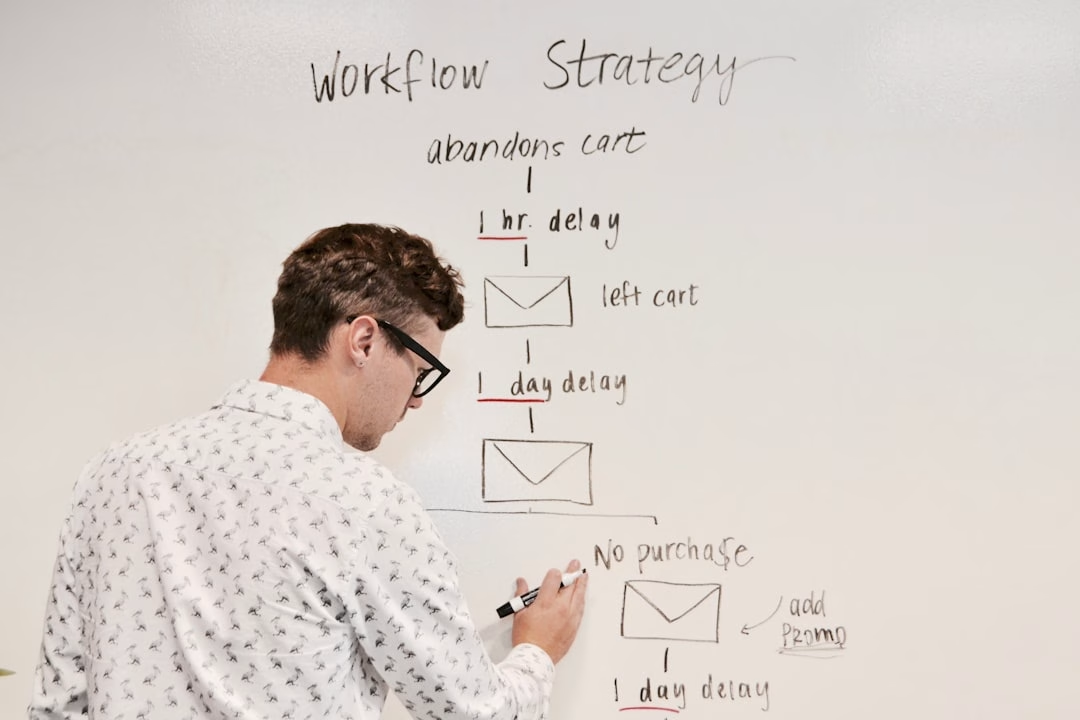
- Abandoned Carts: This is a classic segmentation strategy. Reminders for abandoned carts have incredibly high conversion rates.
Psychographic Segmentation: Uncovering Motivations and Lifestyles
This delves into the “why” behind your subscribers’ actions. What are their values, beliefs, interests, and lifestyle choices? This type of data often comes from surveys, preference centers, or inferences based on their interactions.
Interests and Hobbies
- Self-Declared Preferences: Allow subscribers to tell you what they’re interested in through a preference center. Do they want updates on specific product categories, blog topics, or events?
- Inferred Interests: Based on the type of content they consume (blog posts, social media engagement), you can make educated guesses about their broader interests.
Values and Beliefs
- Brand Affinity: Do they resonate with your brand’s mission or values (e.g., sustainability, ethical sourcing)? You can segment those who actively engage with your brand’s social impact initiatives.
- Lifestyle Choices: Are they health-conscious, tech-savvy, or adventure-seekers? This informs the tone and type of products you market to them.
Lifecycle Stage Segmentation: Guiding the Customer Journey
Every customer moves through different stages with your brand. Tailoring your emails to their current stage ensures you’re providing the most relevant information at the right time.
New Subscribers
- Welcome Series: This is a crucial segment for nurturing. Your welcome emails should introduce your brand, explain what they can expect, and guide them to their first desired action.
- Onboarding: If your product or service requires setup, onboarding emails are essential to ensure successful adoption.
Active Customers
- Post-Purchase Series: Thank you emails, order confirmations, shipping updates, and requests for reviews.
- Product Usage Tips: Help them get the most out of their purchase, which builds loyalty and reduces support tickets.
- Cross-sell and Upsell Opportunities: Based on their purchase history, recommend complementary products or higher-tier versions.
Lapsed Customers
- Re-engagement Campaigns: Win-back emails with special offers or new product announcements to entice them back.
- Feedback Requests: Understand why they disengaged to improve your future offerings.
High-Value Customers (VIPs)
- Exclusive Offers: Privileged access to sales, new products, or special events.
- Personalized Communications: Handwritten notes, early bird access, or dedicated support.
Implementing Advanced Segmentation: Tools and Tactics

You understand the different segmentation types, but how do you actually put them into practice? It involves a combination of your email service provider’s capabilities, data integration, and strategic planning.
Leveraging Your Email Service Provider (ESP)
Your ESP is the backbone of your email marketing efforts, and it should offer robust segmentation features.
Custom Fields and Tags
- Collecting Data: Utilize custom fields to store specific information about your subscribers (e.g., shoe size, preferred color, last purchase). You can populate these fields through forms, surveys, or integrations.
- Applying Tags: Apply tags based on actions or interests (e.g., “watched webinar,” “downloaded ebook,” “interested in shoes”). Tags are highly flexible and allow for dynamic grouping.
Segment Builders and Automation Workflows
- Rule-Based Segmentation: Most ESPs allow you to create segments based on a combination of rules (e.g., “Opened last 3 emails” AND “Purchased Product X” AND “Located in California”).
- Automated Triggers: Set up automation workflows that move subscribers between segments based on their actions (e.g., buying a product moves them from “interested” to “customer”).
Integrating with Other Data Sources
Your ESP alone might not hold all the data you need. Integrating it with other platforms can provide a holistic view of your subscribers.
CRM Systems
- Customer Profiles: Combine customer service data, sales interactions, and lead scores from your CRM with email engagement data. This creates a deeply personalized profile.
- Sales Pipeline Status: Segment leads based on their stage in the sales pipeline to send tailored nurturing emails.
E-commerce Platforms
- Seamless Purchase Data: Directly pull purchase history, abandoned cart data, and product preferences. This is crucial for precise behavioral segmentation.
- Product Recommendations: Use integrated data to power dynamic product recommendations in your emails.
Analytics Platforms (e.g., Google Analytics)
- Website Behavior Sync: While direct integration can be complex for small businesses, you can use insights from Google Analytics to inform your segmentation strategy (e.g., identifying popular content categories, high-converting pages).
- Audience Data: Understand demographic and interest data from GA to create more targeted segments within your ESP.
Creating and Refining Your Segments
Segmentation isn’t a one-and-done task. It’s an ongoing process of creation, testing, and refinement.
Start Small, Scale Up
- Focus on Key Segments: Don’t try to create 100 segments overnight. Identify your most impactful segments first (e.g., new subscribers, abandoned carts, VIP customers).
- Iterative Process: As you gather more data and see results, you can gradually add more nuanced segments.
Test and Measure
- A/B Testing: Test different email content to different segments. For example, test a promotional email with a discount versus one highlighting product features for a “lapsed customer” segment.
- Monitor Metrics: Constantly track open rates, click-through rates, conversion rates, and unsubscribe rates for each segment. This data will tell you what’s working and what needs adjustment.
Keep Segments Dynamic
- Automated Updates: Whenever possible, use automation to ensure subscribers move between segments automatically based on their latest actions.
- Regular Review: Periodically review your segment definitions. Are they still relevant? Is there new data you can incorporate?
Advanced Strategies for Maximizing Your Segmented Campaigns

You’re not just segmenting; you’re using those segments to power highly effective email strategies. Thinking strategically about how you leverage your segments will unlock truly remarkable results.
Personalized Content and Offers
This is the ultimate goal of segmentation. You’re not just sending the same email to a smaller group; you’re sending a different email.
Dynamic Content Blocks
- Tailored Images and Text: Use merge tags and dynamic content blocks to display different images, product recommendations, or calls-to-action based on a subscriber’s segment. For example, a sports brand could show running shoes to one segment and basketball gear to another within the same email template.
- Geo-Targeted Content: Display events, offers, or store locations relevant to the subscriber’s geographical location.
Exclusive Promotions and Early Access
- VIP Discounts: Offer special discounts to your high-value segments as a reward for their loyalty.
- Pre-Launch Access: Give early access to new products or services to your most engaged subscribers. This builds excitement and a sense of exclusivity.
Multi-Channel Integration
Email doesn’t operate in a vacuum. Your segmentation strategy should extend across all your marketing channels.
Retargeting Ads on Social Media
- Synced Audiences: Sync your email segments with Facebook Custom Audiences or Google Ads audiences. If someone abandoned a cart but didn’t open your email, you can target them with an ad.
- Consistent Messaging: Ensure the messaging in your retargeting ads aligns with the emails they’ve received from that specific segment.
SMS and Push Notifications
- Time-Sensitive Offers: Use SMS or push notifications for urgent, high-impact messages to highly engaged segments (e.g., “Flash sale ending soon!” for VIPs).
- Event Reminders: If a segment signed up for a webinar, send an SMS reminder an hour before it starts.
A/B Testing and Optimization for Each Segment
You’re not just testing one email; you’re testing multiple variations across multiple segments.
Headline and Subject Line Variations
- Segment-Specific Appeal: What resonates with a new subscriber might be different from what appeals to a long-term customer. Test different subject lines for each segment.
- Personalization Tokens: Use name personalization, but also try incorporating segment-specific phrases (e.g., “Your exclusive offer, John” vs. “An offer for our loyal tech enthusiasts”).
Call-to-Action (CTA) Optimization
- Clarity and Urgency: While general principles apply, specific segments might respond better to different CTAs. A lapsed customer might need a more direct and urgent CTA, while a new subscriber needs a softer introduction.
- Button Color and Placement: Test these elements within segments to see what drives the best engagement.
Advanced email segmentation techniques can significantly enhance your targeting efforts, allowing you to deliver more personalized content to your audience. For those looking to further improve their email marketing strategies, exploring the importance of data integrity in your e-commerce store can be invaluable. A related article discusses how syncing your e-commerce store with email can help maintain data accuracy and improve overall campaign effectiveness. You can read more about this topic in the article on syncing your e-commerce store with email for data integrity.
Common Mistakes to Avoid When Segmenting Your Emails
| Segmentation Technique | Benefits |
|---|---|
| Demographic Segmentation | Allows targeting based on age, gender, income, etc. |
| Behavioral Segmentation | Enables targeting based on past purchases, website interactions, etc. |
| Psychographic Segmentation | Helps in targeting based on lifestyle, values, interests, etc. |
| Geographic Segmentation | Allows targeting based on location, climate, culture, etc. |
While the benefits of advanced segmentation are clear, there are pitfalls you need to be aware of. Avoiding these common mistakes will ensure your efforts are effective and yield the desired results.
Over-Segmenting and Creating Too Many Micro-Segments
You might be tempted to create a segment for every single permutation of data you have. But you must resist this urge.
Management Complexity
- Too Many Campaigns: Managing hundreds of tiny segments can become overwhelming and unsustainable, leading to errors and overlooked opportunities.
- Lack of Resources: Your team might not have the capacity to create unique, high-quality content for an excessive number of segments.
Insufficient Segment Size
- Statistical Significance: If your segments are too small, the data you gather from A/B tests and performance metrics won’t be statistically significant, making it hard to draw reliable conclusions.
- Diminishing Returns: The effort required to create and manage very small segments often outweighs the potential gains. Aim for segments large enough to be meaningful but small enough to be targeted.
Neglecting Data Hygiene and Accuracy
Your segments are only as good as the data they’re built upon. Inaccurate or outdated data will lead to irrelevant emails, wasted effort, and potential damage to your sender reputation.
Outdated Information
- Regular Audits: Periodically review your subscriber data. Remove inactive subscribers, correct inaccurate addresses, and update preferences.
- Preference Centers: Empower subscribers to update their own information through accessible preference centers.
Incomplete Data
- Progressive Profiling: Don’t try to collect all information at once. Use progressive profiling through surveys or forms to gather more data over time as subscribers engage with your brand.
- Integrate Data Sources: Ensure your CRM and other platforms are correctly synced with your ESP to maintain a consistent and complete view of your subscribers.
Failing to Personalize Beyond the First Name
Personalization is more than just addressing someone by their first name. You need to go deeper to truly resonate.
Generic Content Within Segments
- Segment-Specific Value: Even within a segment, avoid sending generic content. Ensure the entire email is tailored to their specific needs, interests, or lifecycle stage.
- Contextual Relevance: Why are you sending this email to this person, now? The content should answer that question clearly.
Overuse of Personalization
- Be Natural: While personalization is good, force-feeding it can feel unnatural or even creepy. Use it genuinely and where it adds value, rather than just for the sake of it.
- Test and Refine: Monitor how your audience responds to different levels and types of personalization.
Ignoring Subscriber Feedback and Behavior Changes
Your audience is dynamic, and their preferences or needs can change over time. Your segmentation strategy must adapt accordingly.
Static Segments
- Dynamic Criteria: Build segments with dynamic criteria that automatically update as subscriber behavior changes (e.g., moving from “cart abandoner” to “customer” after a purchase).
- Automated Re-evaluation: Set up automation to re-evaluate segment membership periodically.
Lack of Feedback Mechanisms
- Preference Centers: Regularly promote your preference center and encourage subscribers to update their interests.
- Surveys and Polls: Use short surveys or polls within your emails to gather direct feedback on content preferences or product interests.
By mastering the art of advanced email segmentation, you’re not just sending more emails; you’re sending smarter emails. You’re building stronger relationships, driving higher conversions, and establishing your brand as a trusted authority that truly understands and caters to its audience. So, take the leap, dive into your data, and unleash the full potential of your email marketing efforts. Your subscribers, and your bottom line, will thank you for it.
FAQs
What is email segmentation?
Email segmentation is the process of dividing an email list into smaller, more targeted segments based on specific criteria such as demographics, behavior, or engagement with previous emails.
Why is email segmentation important?
Email segmentation allows marketers to send more personalized and relevant content to their subscribers, leading to higher open rates, click-through rates, and ultimately, better conversion rates.
What are some advanced email segmentation techniques?
Advanced email segmentation techniques include using predictive analytics to anticipate customer behavior, creating dynamic content based on subscriber preferences, and implementing RFM (Recency, Frequency, Monetary) analysis to target high-value customers.
How can advanced email segmentation improve targeting?
Advanced email segmentation allows marketers to target specific segments of their audience with highly relevant and personalized content, leading to better engagement and conversion rates.
What are the benefits of using advanced email segmentation techniques?
The benefits of using advanced email segmentation techniques include increased customer engagement, higher conversion rates, improved customer retention, and a better overall return on investment for email marketing efforts.