


We all know the power of email marketing. It’s a direct line to our audience, a flexible tool for communication, and, when done right, a significant driver of business growth. However, simply sending out emails isn’t enough. We’ve learned, through a lot of trial and error, that how we structure our campaigns – from the initial planning to the final analysis – is paramount to achieving real, impactful results. This isn’t about magic bullets; it’s about strategic, organized execution. We’ve honed our approach over time, and we’re excited to share what we’ve discovered about maximizing email campaign success by structuring for better results.
Before we even think about crafting a single subject line, we always start with a clear understanding of our objectives. This might seem obvious, but it’s a step that can easily be overlooked in the rush to get a campaign out the door. Without a well-defined goal, we’re essentially sailing without a compass.
Defining SMART Objectives
We’ve found the SMART framework to be invaluable. It forces us to be specific and accountable.
Specific
Our goals need to be laser-focused. Instead of saying “increase sales,” we aim for “increase sales of product X by 15% within the next quarter.” This specificity helps us tailor our messaging and track our progress much more effectively. We ask ourselves: what precisely do we want to achieve? Who is involved? Where will it happen? Why is it important?
Measurable
This is where the “SMART” really comes into play. We need to be able to quantify our success. If our goal is to “improve engagement,” we need to define what that looks like. Does it mean a higher open rate, a better click-through rate, or more replies? We establish key performance indicators (KPIs) upfront.
Achievable
While it’s good to be ambitious, our goals must be realistic within our resources and market conditions. An unachievable goal can lead to demotivation and a sense of failure. We consider our past performance, the competitive landscape, and any external factors that might impact our ability to succeed.
Relevant
Our email campaign goals must align with our broader business objectives. Is this campaign contributing to our overall marketing strategy? Is it helping us achieve our larger company vision? We ensure our email efforts are a strategic part of the bigger picture, not just isolated activities.
Time-Bound
Every goal needs a deadline. This creates a sense of urgency and helps us prioritize and plan our activities effectively. A “by the end of the month” or “within the next 90 days” deadline transforms a wish into a concrete plan.
Aligning Campaigns with Customer Journeys
We also consider where each email fits into the customer journey. Are we nurturing a new lead? Re-engaging a dormant customer? Driving a repeat purchase? Understanding the subscriber’s current stage allows us to craft more relevant and effective messaging.
Lead Nurturing Campaigns
For new subscribers who have just signed up for our newsletter or downloaded a resource, our goal isn’t immediate sales. It’s to build trust, educate them about our brand and offerings, and establish a relationship. Our structure here focuses on providing value, answering potential questions, and gradually introducing our solutions.
Customer Onboarding Campaigns
Once a customer makes a purchase, our focus shifts to ensuring they have a positive experience. These campaigns aim to welcome them, guide them through product usage, highlight key features, and offer support. The goal is to reduce churn and encourage early engagement with our product or service.
Re-engagement Campaigns
For customers who haven’t interacted with us in a while, our objective is to rekindle their interest. These campaigns are often framed around special offers, new product announcements, or surveys to understand why they might have disengaged. The structure here needs to be compelling and offer a clear reason to return.
To enhance your understanding of email campaigns, you may find it beneficial to explore the article on crafting effective triggered emails, which covers various strategies from welcome messages to post-purchase follow-ups. This resource provides valuable insights that can complement your efforts in structuring email campaigns for better results. You can read the article here: Crafting Effective Triggered Emails.
Crafting Compelling Content: The Heart of Our Emails
Once our goals are set, we dive into the content itself. This is where we have the opportunity to connect with our audience on a personal level and inspire action. We’ve learned that “content is king,” but its effectiveness is dramatically amplified when it’s well-structured and strategically planned.
The Power of a Strong Subject Line
This is the gatekeeper to our message. A poorly crafted subject line means our valuable content will never even be seen. We invest significant time in making ours impactful.
Clarity and Conciseness
We aim for subject lines that are clear about the email’s content. Ambiguity rarely works in our favor. We also keep them relatively short, as many email clients truncate longer lines, especially on mobile devices.
Personalization
Using the subscriber’s name or referencing their past behavior can significantly boost open rates. “John, your weekly update is here!” is more inviting than a generic greeting.
Urgency and Scarcity (Used Wisely)
When appropriate, phrases like “Limited time offer” or “Last chance to save” can motivate opens, but we use these sparingly to avoid desensitizing our audience.
Curiosity and Intrigue
Posing a question or hinting at a benefit can pique interest. “Did you know this secret to boosting productivity?” is more enticing than a factual statement.
Avoiding Spam Triggers
We are mindful of words and phrases that can flag our emails as spam. Excessive use of exclamation points, all caps, or salesy jargon is something we actively avoid.
Developing Engaging Email Body Copy
The subject line gets them in; the body copy keeps them engaged and drives them towards our desired action. We focus on delivering value and making it easy for them to understand what we want them to do.
Value-Driven Messaging
Every email we send needs to offer something to the recipient. Whether it’s information, entertainment, or a discount, the subscriber should feel they’ve gained something by opening it. We ask ourselves, “What’s in it for them?”
Clear and Concise Language
We avoid jargon and overly complex sentences. Our writing is direct, easy to understand, and accessible to a broad audience. We aim for a conversational tone that resonates with our brand personality.
Storytelling and Emotional Connection
Humans are wired for stories. We find that weaving narratives into our emails can create a stronger emotional connection and make our message more memorable. This could be a customer success story, the origin of a product, or a vision for the future.
Scannability and Formatting
No one wants to read a wall of text. We use short paragraphs, bullet points, bold text, and sufficient white space to make our emails easy to scan and digest. This allows readers to quickly grasp the key takeaways.
Incorporating Strong Calls to Action (CTAs)
This is the moment of truth. Our CTA needs to be clear, compelling, and guide the subscriber towards the intended outcome.
Visible and Prominent CTAs
Our buttons or links are hard to miss. We use contrasting colors and clear text to draw attention to them.
Action-Oriented Language
We use verbs that clearly indicate what we want the subscriber to do. “Shop Now,” “Learn More,” “Download Your Guide,” “Get Started” are examples of effective CTAs.
Single, Focused CTA (Ideally)
While we sometimes have secondary CTAs, we try to focus each email on one primary action. Too many options can lead to confusion and inaction.
Benefit-Oriented CTAs
We often frame our CTAs around the benefit the subscriber will receive. Instead of just “Click Here,” we might use “Discover Your Savings” or “Unlock Your Free Trial.”
Segmenting Our Audience: Delivering Relevance at Scale

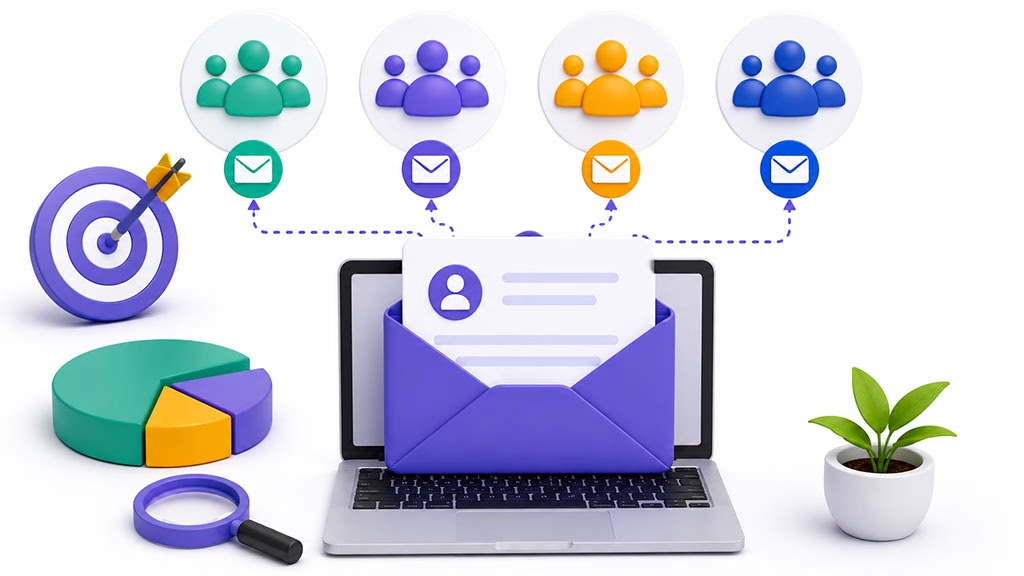
One of the most significant shifts we’ve made in our email strategy is a deep dive into audience segmentation. Sending the same generic message to everyone is a recipe for low engagement and missed opportunities. We’ve discovered that delivering personalized, relevant content to specific groups transforms our results.
The Why of Segmentation
The core principle behind segmentation is simple: people are individuals with unique needs, interests, and behaviors. By grouping our subscribers based on shared characteristics, we can speak directly to those needs and interests, making our communications far more impactful.
Increased Engagement Rates
When a subscriber receives an email that is highly relevant to them, they are far more likely to open it, click through, and take the desired action. This translates directly into higher open rates, click-through rates (CTRs), and conversion rates.
Improved Customer Relationships
Sending relevant content demonstrates that we understand our audience. This fosters trust and builds stronger, more loyal customer relationships. It shows we’re not just broadcasting; we’re conversing.
Reduced Unsubscribe Rates
When people feel inundated with irrelevant emails, they disengage. Segmentation helps us avoid this by ensuring that only the most pertinent messages reach each subscriber.
Higher ROI
By focusing our efforts on audiences most likely to respond, we optimize our marketing spend and achieve a better return on investment for our email campaigns.
Common Segmentation Strategies
We’ve experimented with various segmentation methods, and these have proven to be particularly effective:
Demographic Segmentation
This is a foundational approach, grouping subscribers based on characteristics like age, gender, location, income, or occupation.
Age and Gender
Understanding the age and gender of our audience can influence tone, imagery, and the types of products or services we highlight.
Location
For businesses with a physical presence or geographically specific offers, location-based segmentation is essential. This allows us to tailor promotions to local events or holidays.
Income and Occupation
For B2B or high-value consumer products, income and occupation can be crucial indicators of purchasing power and needs.
Behavioral Segmentation
This is where we see some of the most powerful results. We group subscribers based on their actions and interactions with our brand.
Purchase History
Segmenting by past purchases allows us to recommend related products, offer upsells, or nurture repeat business. A customer who bought product A might be an ideal candidate for an offer related to product B.
Website Activity
Tracking what subscribers do on our website – what pages they visit, what they search for, what items they add to their cart – provides invaluable insights for targeted emails. Abandoned cart emails are a prime example of behavioral segmentation.
Email Engagement
We segment based on how subscribers interact with our past emails: those who consistently open and click, those who rarely engage, and those who haven’t opened in a while. This allows us to tailor re-engagement strategies or refine our list hygiene.
Psychographic Segmentation
This involves understanding our subscribers’ values, attitudes, interests, and lifestyles.
Interests and Hobbies
If we know a subscriber is interested in a particular topic, we can send them content and offers related to that interest.
Values and Beliefs
For brands with strong ethical stances or social missions, aligning messaging with subscriber values can create very strong connections.
Lifecycle Stage Segmentation
As discussed earlier, grouping subscribers by where they are in their journey with our brand is critical for effective nurturing and conversion.
Implementing Segmentation Effectively
It’s not enough to have segments; we need to use them wisely.
Dynamic Content
We utilize dynamic content blocks that automatically adjust based on the subscriber’s segment. This allows a single email template to deliver personalized experiences to different groups.
List Hygiene and Pruning
Regularly cleaning our email lists and removing inactive or unengaged subscribers is crucial. This ensures we’re not wasting resources on people who aren’t interested and improves our sender reputation.
Testing and Iteration
We constantly test different segmentation approaches to see what yields the best results. What works for one campaign might not work for another, so continuous evaluation is key.
Designing for Deliverability and Engagement: Reaching the Inbox and Keeping Attention
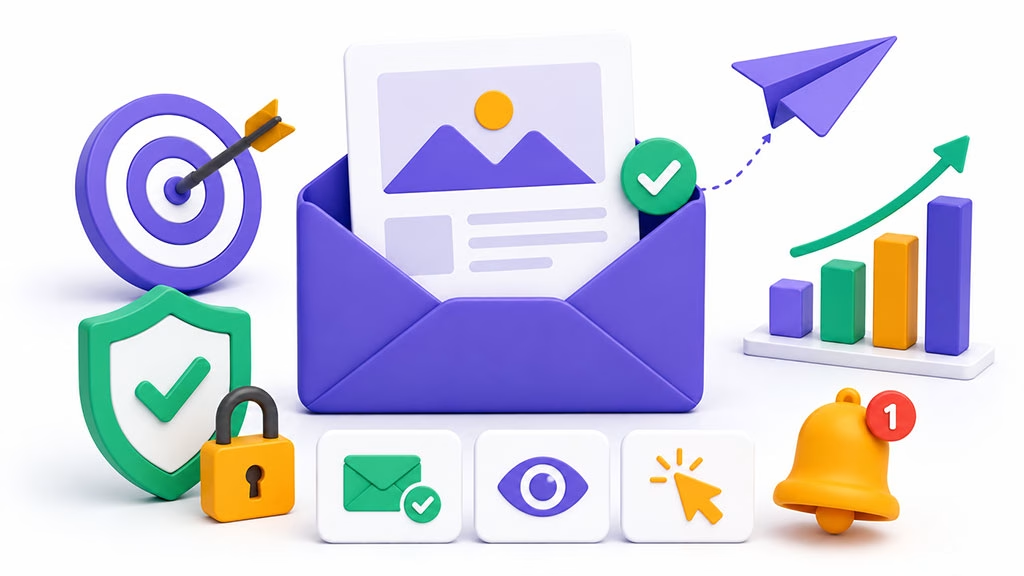
Even the most brilliantly crafted content is useless if it never reaches the inbox, or if it reaches the inbox and is immediately ignored. We’ve learned that deliverability and design are intertwined aspects of successful email campaigns.
Ensuring Inbox Placement
This is a technical but critical aspect of our email strategy. If our emails land in the spam folder, all our other efforts are in vain.
Maintaining a Clean Sender Reputation
Our sender reputation is built on consistent, positive engagement. We prioritize sending valuable content to opted-in subscribers and avoid practices that might be perceived negatively by ISPs (Internet Service Providers).
Avoiding Spam Triggers
As mentioned earlier, we are vigilant about avoiding words, phrases, and formatting that can trigger spam filters. This includes avoiding excessive punctuation, misleading subject lines, and certain common sales terms in the wrong context.
Authenticating Our Emails
Implementing email authentication protocols like SPF, DKIM, and DMARC is non-negotiable. These technical steps prove to ISPs that our emails are legitimate and not spoofed.
Managing Bounce Rates
High bounce rates, especially hard bounces (non-existent email addresses), signal to ISPs that our list may be outdated or improperly managed. We regularly clean our lists to address this.
Monitoring Engagement Metrics
ISPs look at open rates, click-through rates, and unsubscribe rates as indicators of our email quality. Consistently good engagement signals a healthy sending practice.
Optimizing for Mobile and Accessibility
The vast majority of emails are now opened on mobile devices. We design with this in mind, ensuring a seamless experience for all our subscribers.
Responsive Design
Our email templates are fully responsive, meaning they automatically adjust their layout to fit any screen size, from a large desktop monitor to a small smartphone.
Simplicity and Readability on Mobile
We use larger font sizes, ample white space, and clear, tappable buttons that are easy to use with a thumb. We avoid overly complex layouts or small text that requires zooming.
Image Optimization
Large image files can slow down loading times on mobile. We compress our images without sacrificing quality and use alternative text (alt text) for all images so the message can still be understood if images don’t load.
Accessibility Considerations
We aim to make our emails accessible to all users, including those with disabilities. This includes using proper semantic HTML, providing alt text for images, and ensuring sufficient color contrast.
Strategic Use of Visuals
While text is important, visuals can significantly enhance engagement and brand recall. We use them thoughtfully.
High-Quality Images and Graphics
We invest in good imagery that aligns with our brand and enhances our message. Blurry or unprofessional visuals detract from our credibility.
Infographics and Data Visualization
When presenting data or complex information, infographics can make it more digestible and engaging.
Videos and GIFs
Short, relevant videos or animated GIFs can capture attention and convey information quickly, but we use them judiciously, ensuring they complement, rather than overwhelm, the message.
To enhance the effectiveness of your email campaigns, it’s essential to not only focus on structure but also on how you integrate your data across platforms. A related article that delves into this topic is available at Syncing Smartmails Data with Your App: Beyond the Inbox, which explores strategies for optimizing your email marketing efforts through better data synchronization. By leveraging insights from both articles, you can create more targeted and impactful campaigns that resonate with your audience.
Analyzing and Iterating: The Cycle of Continuous Improvement
| Aspect | Metrics |
|---|---|
| Subject Line | Open Rate, Click-Through Rate |
| Content | Engagement Rate, Conversion Rate |
| Call to Action | Click-Through Rate, Conversion Rate |
| Segmentation | Open Rate, Conversion Rate |
| Timing | Open Rate, Click-Through Rate |
Our journey doesn’t end once the email is sent. In fact, that’s when a crucial phase of learning begins. We believe that rigorous analysis and a commitment to iteration are what truly elevate our email campaigns from good to great.
Key Performance Indicators (KPIs) to Track
We regularly monitor a suite of metrics to understand what’s working and what isn’t.
Open Rate
This tells us how many people are seeing our subject lines and deciding to open our emails. It’s an initial indicator of our subject line’s effectiveness and our sender reputation.
Click-Through Rate (CTR)
This measures the percentage of recipients who clicked on at least one link within our email. It’s a key indicator of our content’s engagement and the effectiveness of our CTAs.
Conversion Rate
This is the ultimate measure of success for many campaigns. It tracks how many recipients completed the desired action after clicking through from the email (e.g., making a purchase, filling out a form).
Bounce Rate
As discussed earlier, this indicates the percentage of emails that couldn’t be delivered. A high bounce rate needs immediate attention.
Unsubscribe Rate
While an occasional unsubscribe is natural, a consistently high unsubscribe rate signals that our content or targeting may be off.
Click-to-Open Rate (CTOR)
This is the percentage of people who opened the email and then clicked on a link. It’s a more nuanced measure of content engagement than CTR alone, as it focuses specifically on those who saw the message.
Forward/Share Rate
This indicates how many recipients forwarded our email to someone else or shared it on social media. It’s a sign of exceptional content that resonates so strongly it’s worth sharing.
A/B Testing Everything
We’ve moved beyond simple guesswork. A/B testing allows us to make data-driven decisions about our email components.
Subject Line Testing
We often test different subject line variations to see which performs best for open rates.
CTA Button Testing
We experiment with different wording, colors, and placement of our call-to-action buttons to see what drives the most clicks and conversions.
Content Variation Testing
We might test different introductions, body copy lengths, or even different offers to see what resonates most with our audience.
Send Time Optimization
We test different send times and days to determine when our audience is most likely to engage with our emails.
Learning from Data and Iterating
The insights we gain from our analysis and A/B testing are not just for reporting; they are the fuel for our continuous improvement cycle. We don’t just look at the numbers; we ask “why?”
Identifying Trends and Patterns
We look for recurring themes in what performs well and what consistently falls short. Are certain types of content always more engaging? Do specific segments respond better to certain offers?
Refining Our Strategy
Based on our learnings, we adjust our overall email marketing strategy, segmentation approaches, and content creation processes.
Optimizing for Future Campaigns
The lessons learned from one campaign directly inform the planning and execution of the next. We don’t start from scratch each time; we build upon our accumulated knowledge.
Celebrating Successes and Addressing Weaknesses
We acknowledge and celebrate what works, reinforcing those successful tactics. Equally important, we honestly assess what didn’t work and develop plans to address those weaknesses.
By adopting a structured, goal-oriented, and data-driven approach, we’ve witnessed a significant uplift in our email campaign performance. It’s a continuous process of refinement, but the rewards – stronger customer relationships, increased engagement, and measurable business growth – are well worth the effort. We encourage everyone to embrace this structured methodology, and we’re confident you’ll see your own email campaigns flourish.
FAQs
What are the key components of a well-structured email campaign?
The key components of a well-structured email campaign include a clear and compelling subject line, personalized content, a strong call-to-action, mobile responsiveness, and a well-designed layout.
How can segmentation improve the effectiveness of an email campaign?
Segmentation involves dividing your email list into smaller, targeted groups based on specific criteria such as demographics, behavior, or purchase history. This allows for more personalized and relevant content, leading to higher open and click-through rates.
What role does A/B testing play in optimizing email campaigns?
A/B testing, also known as split testing, involves sending out two different versions of an email to a small portion of your list to see which performs better. This allows you to make data-driven decisions and optimize your email campaigns for better results.
Why is it important to analyze the performance of email campaigns?
Analyzing the performance of email campaigns provides valuable insights into what is working and what can be improved. It helps in understanding subscriber behavior, identifying trends, and making informed decisions to optimize future campaigns.
How can automation be used to streamline and improve email campaigns?
Automation allows for the scheduling of emails based on specific triggers or actions, such as a subscriber joining a list or making a purchase. This helps in delivering timely and relevant content, nurturing leads, and improving overall campaign efficiency.