


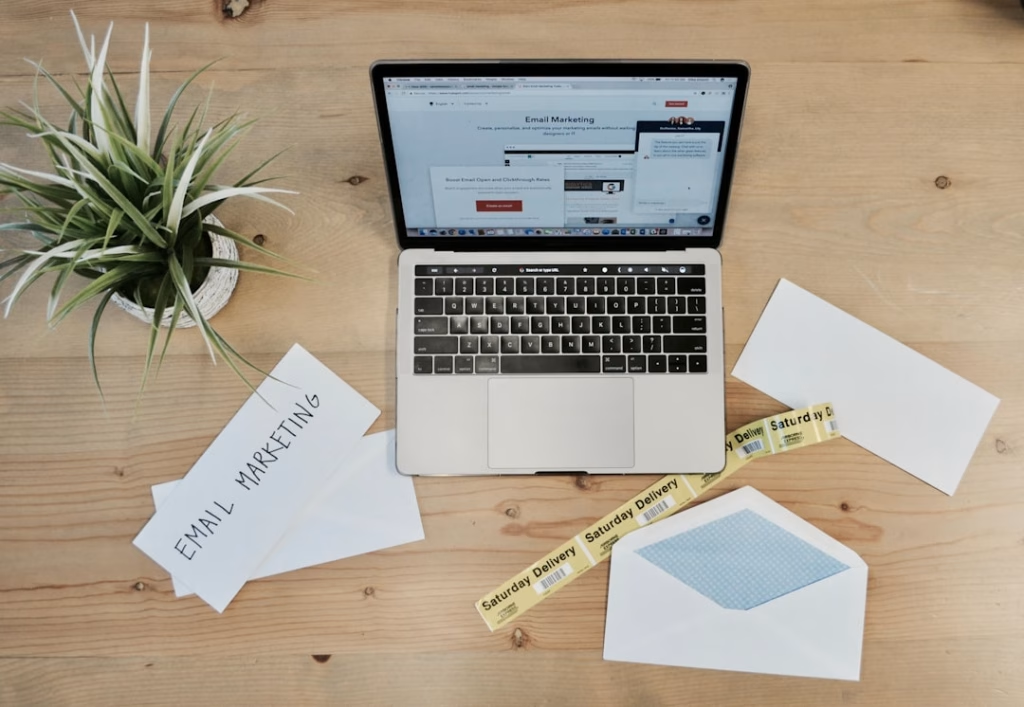
You’re sitting there, looking at your CRM, and you see them: your high-value customers. These aren’t just names on a list; they’re the lifeblood of your business, the individuals who consistently bring in substantial revenue, champion your brand, and deserve a level of attention that transcends the ordinary. Standard email marketing, while effective for broader audiences, simply won’t cut it for this elite group. You need to elevate your game, craft a strategy that speaks directly to their unique needs and aspirations, and solidify their loyalty for years to come. This isn’t about sending more emails; it’s about sending smarter, more impactful emails.
Understanding Your High-Value Customers
Before you even think about crafting a single subject line, you need to deeply understand who these high-value customers are. They aren’t a monolithic group, and treating them as such is a surefire way to miss the mark. Think of yourself as a detective, gathering clues and building a comprehensive profile for each segment within this crucial cohort.
Identifying Your High-Value Segments
How do you define “high-value” in your business? Is it purely based on lifetime value (LTV)? Or do other factors, like frequency of purchase, average order value (AOV), or even their engagement with your content, come into play?
- Define Your Metrics: Start by clearly outlining the specific metrics that characterize your high-value customers. This might include:
- High Lifetime Value (LTV): Customers who have spent a significant amount of money with your business over time.
- High Average Order Value (AOV): Customers who consistently make larger individual purchases.
- Frequent Purchasers: Customers who buy from you regularly, even if their individual purchases aren’t always the largest.
- High Engagement: Customers who actively open your emails, click through to your website, interact with your social media, and provide feedback.
- Referral Sources: Customers who bring in new business through word-of-mouth or referral programs.
- Brand Advocates: Customers who consistently praise your brand publicly and defend it against criticism.
- Segment Your Data: Once you have your metrics, use your CRM and analytics tools to segment your high-value customers into more specific groups. For example, you might have “LTV Champions,” “Frequent Flyers,” and “AOV Titans.” Each of these segments will likely have different needs and motivations.
Deep Diving into Their Behavior and Preferences
Knowing who they are is only the first step. You need to understand why they do what they do and what truly matters to them.
- Analyze Purchase History: Beyond just the amount spent, look at what they’re buying. Are there specific product categories they gravitate towards? Are they early adopters of new products? Do they frequently purchase bundles or premium items?
- Track Website Activity: What pages do they visit? What content do they consume? Do they spend more time on product pages, blog posts, or support documentation? This tells you about their interests and potential pain points.
- Monitor Email Engagement: Which of your previous emails did they open? What links did they click? What emails did they not open? This provides valuable intel on what resonates and what doesn’t.
- Gather Qualitative Feedback: Don’t underestimate the power of direct feedback. Conduct surveys, interviews, or even invite them to exclusive focus groups. Ask them what they love about your brand, what challenges they face, and what they’d like to see improved. This “voice of customer” data is invaluable.
- Leverage Demographic and Psychographic Data: If you have access to it, understanding their demographics (age, location, occupation) and psychographics (lifestyles, values, interests) can help you tailor your messaging even further. Are they busy professionals looking for convenience? Tech enthusiasts craving innovation? Environmentally conscious consumers prioritizing sustainability?
In the realm of email marketing, understanding how to effectively target high-value customer segments is crucial for maximizing engagement and conversion rates. A related article that delves into optimizing your email campaigns is titled “Automate List Management and Suppression Using the API,” which discusses innovative strategies for managing your email lists more efficiently. You can read it here: Automate List Management and Suppression Using the API. This resource provides valuable insights that can complement your email marketing tactics for reaching and nurturing your most valuable customers.
Crafting Hyper-Personalized Content
This is where the rubber meets the road. Generic “Dear Customer” emails simply won’t cut it. Your high-value customers expect and deserve an experience that feels tailor-made for them. You need to move beyond basic personalization and embrace hyper-personalization.
Beyond First Names: True Personalization
Forget simply inserting their first name. That’s table stakes. You need to demonstrate that you understand their individual journey with your brand.
- Reference Past Interactions: “Based on your recent purchase of [Product X]…” or “Since you showed interest in [Service Y] last month…” shows you’re paying attention.
- Acknowledge Loyalty: “As a valued member of our [Loyalty Program Name]…” or “We appreciate your continued support over the past [number] years…” makes them feel recognized and appreciated.
- Tailor Product Recommendations: Don’t just recommend bestsellers. Use their purchase history, browsing behavior, and even their stated preferences to suggest products or services they’re genuinely likely to be interested in. Think about complementary products or upgrades.
- Personalized Content Suggestions: If they primarily read your tech blog, send them links to your latest tech articles. If they’re interested in fashion, provide exclusive access to new fashion trends or collections.
- Dynamic Content Blocks: Utilize email marketing platforms that allow you to dynamically change content blocks based on customer segments or individual data points. This means different images, calls to action, or even entire sections of an email can be customized.
Exclusive Offers and Early Access
High-value customers enjoy feeling like they’re part of an inner circle. Give them privileges that others don’t have.
- VIP Discounts: Offer exclusive discounts that are not available to the general public. Make these time-sensitive to create urgency and encourage immediate action.
- Early Product Launches: Grant them early access to new products, services, or features before anyone else. This creates excitement and makes them feel special.
- Limited Edition Items: Notify them first about limited edition items or special collections. This leverages scarcity and desirability.
- Pre-Sale Access: Give them the opportunity to purchase tickets to events, book services, or enroll in courses before the general public.
- Beta Program Invitations: Invite them to participate in beta testing for new products or features, giving them a direct hand in shaping your offerings. This boosts engagement and fosters a sense of ownership.
Addressing Their Specific Needs and Pain Points
Your high-value customers likely have specific challenges or objectives that your products or services help them achieve. Your emails should directly address these.
- Solution-Oriented Content: If you know they’ve purchased a particular product, send them advanced tips, best practices, or troubleshooting guides to help them maximize its value.
- Proactive Support: Anticipate their needs. If a common issue arises with a product they own, send them a proactive email with solutions or updates before they even have to ask.
- Educational Resources: Provide exclusive access to webinars, workshops, or in-depth guides that help them solve problems or achieve their goals. Position yourself as a trusted advisor.
- Feedback Integration: If they’ve provided feedback in the past, follow up with how you’ve addressed their concerns or implemented their suggestions. This shows you listen.
- Customized Service Reminders: For service-based businesses, send personalized reminders for recurring appointments, renewals, or upgrades.
Strategic Segmentation and Automation
Manual personalization for every high-value customer is unsustainable. You need intelligent segmentation and robust automation to scale your efforts while maintaining that personal touch.
Advanced Segmentation Strategies
Go beyond basic demographics. Create segments based on behaviors, preferences, and engagement levels.
- Behavioral Segments: Group customers based on actions they’ve taken, such as:
- Abandoned Cart (High-Value Specific): Tailor reminders with exclusive offers or personalized assistance for high-value customers who abandoned a cart.
- Product Viewers: Customers who have repeatedly viewed a high-ticket item but haven’t purchased.
- Content Consumers: Segment based on the types of blog posts, videos, or whitepapers they engage with most.
- Feature Users: If you’re a SaaS company, track which features high-value customers use most frequently.
- Engagement Segments: Categorize based on how actively they interact with your emails:
- Highly Engaged: Open most of your emails, click regularly.
- Moderately Engaged: Open some, click occasionally.
- At-Risk/Lapsed: Historically high-value but their engagement has declined. These require specific re-engagement campaigns.
- Value-Based Tiers: Create distinct tiers within your high-value segment (e.g., “Gold,” “Platinum,” “Diamond”) and offer progressively more exclusive benefits and communications.
Sophisticated Automation Workflows
Automation doesn’t mean impersonal. It means delivering timely, relevant messages at scale.
- Welcome Series (High-Value Onboarding): For new high-value customers, create a specialized welcome series that goes beyond general information. Offer a dedicated account manager’s contact info, special setup guides, or an invitation to an exclusive onboarding webinar.
- Post-Purchase Journeys: After a high-value purchase, automate a series of emails that:
- Confirm the order and provide tracking information.
- Offer tips for getting started or maximizing the product/service.
- Suggest complementary products or services based on their purchase.
- Solicit feedback and offer support.
- Re-Engagement Campaigns: If a high-value customer’s activity declines, trigger an automated series designed to win them back. This might include:
- A personalized check-in from their account manager.
- An exclusive discount on a product they previously viewed.
- An invitation to provide feedback on why they’ve disengaged.
- A reminder of the benefits they’re missing out on.
- Milestone Celebrations: Automate emails for anniversaries (customer since X date), birthdays, or reaching specific loyalty program tiers. Offer a personalized gift or exclusive perk.
- Event-Triggered Communications: Respond immediately to specific actions. If a high-value customer views an upgrade page multiple times, trigger an email offering a consultation or special upgrade incentive.
Building Relationships Beyond the Inbox
Email is a powerful tool, but it should be part of a broader strategy to solidify your relationship with high-value customers. Think of it as the central nervous system connecting various touchpoints.
Dedicated Account Management and Support
High-value customers expect a higher level of service. Your emails can help facilitate this.
- Introduce Account Managers: If you have them, use email to formally introduce their dedicated account manager shortly after they become a high-value customer. Provide contact details and what to expect.
- Proactive Check-Ins: Account managers can use email to schedule regular check-ins, offer strategic advice, or provide updates on new relevant features.
- Prioritized Support Channels: Inform high-value customers via email about their access to prioritized support lines, dedicated chat, or faster response times. Emphasize their “fast pass” status.
- Feedback Loops: Use email to schedule calls or prompt feedback sessions after major interactions or product updates. Show that their input directly influences your offerings.
Exclusive Events and Community Building
Make them feel like part of something bigger – a privileged community.
- Invitations to VIP Events: Host exclusive webinars, Q&A sessions with company leadership, or even in-person meetups (if applicable) for your high-value segment.
- Private Forums or Groups: Create an exclusive online community (e.g., a private Slack channel, Facebook group, or forum) where high-value customers can connect with each other and with your team. Use email to promote and manage access to these.
- “Mastermind” Groups: For B2B clients, consider setting up small, curated groups for peer-to-peer learning and problem-solving, facilitated by your team.
- Sneak Peeks and Roundtables: Invite them to virtual roundtables to discuss upcoming product features or industry trends, giving them a voice and a sense of ownership.
- Ambassador Programs: Use email to invite your most loyal and enthusiastic high-value customers to participate in ambassador programs, offering them additional perks for advocating for your brand.
Soliciting and Acting on Feedback
High-value customers are often your most insightful critics and your most vocal champions. Encourage their feedback and, crucially, show them you act on it.
- Personalized Feedback Requests: Send targeted emails asking for specific feedback on recent purchases, interactions, or even new features. Make it easy for them to respond.
- Customer Advisory Boards: Invite a select group of your highest-value customers to join a formal Customer Advisory Board. Use email to manage communications, meeting invites, and shared resources.
- Showcase Their Testimonials: With their permission, use email to highlight how their feedback led to specific improvements or new features. Credit them openly; this breeds loyalty.
- Follow-Up on Concerns: If a high-value customer raises a concern, ensure your team provides a prompt and thorough resolution. Use email to communicate the steps taken and the outcome.
- Net Promoter Score (NPS) Campaigns: Regularly survey your high-value customers using NPS, but personalize the follow-up based on their score. For detractors, offer direct assistance; for promoters, encourage testimonials or referrals.
In the realm of email marketing, understanding how to effectively engage high-value customer segments is crucial for driving conversions and fostering loyalty. One insightful resource that delves into enhancing email personalization is an article that explores the use of spintags to create unique emails. By implementing these techniques, marketers can tailor their messages to resonate more deeply with their audience. For more information on this innovative approach, you can read about it in detail here.
Measuring Success and Continuous Optimization
You can’t improve what you don’t measure. Regularly analyze your email marketing performance for high-value customers and be prepared to adapt your strategy.
Key Performance Indicators (KPIs) for High-Value Email Campaigns
While general email metrics are important, you need to focus on KPIs that reflect the specific goals of your high-value strategy.
- Open Rate (OR): Are your subject lines and sender names compelling enough to get their attention? This indicates successful personalization and relevance.
- Click-Through Rate (CTR): Are your calls to action and content compelling enough to drive engagement? A high CTR indicates strong interest in your offers and content.
- Conversion Rate: Are your emails leading to desired actions, such as purchases, upgrades, bookings, or event registrations? This is a direct measure of ROI.
- Revenue Generated: Track the direct revenue attributable to your high-value email campaigns. This is crucial for demonstrating the value of your efforts.
- Average Order Value (AOV) from Email: Is email influencing high-value customers to make larger purchases or choose premium options?
- Churn Rate Reduction: For subscription-based businesses, are your high-value email efforts helping to retain these crucial customers?
- Lifetime Value (LTV) Growth: Is your email strategy contributing to an overall increase in the LTV of your high-value segments?
- Engagement Metrics (Beyond Clicks): Track replies to emails, forwards, and social media shares stemming from your email content.
- Sentiment Analysis (from Feedback): Monitor customer sentiment derived from surveys and direct interactions to gauge satisfaction.
A/B Testing and Iteration
Never assume you’ve found the perfect formula. High-value customer preferences can evolve, and competition is fierce.
- Subject Line Variations: Test different tones (e.g., formal vs. friendly), urgency, personalization levels, and intriguing questions.
- Call-to-Action (CTA) Placement and Wording: Experiment with different button colors, text, and placement within the email.
- Content Formats: Does your audience prefer short, punchy paragraphs, or more in-depth articles? Do they respond better to images, videos, or plain text?
- Offer Types: Test different types of exclusive offers (e.g., percentage discount vs. free shipping vs. bonus item) to see what resonates most.
- Send Times and Frequencies: While high-value customers might accept more emails, experiment to find their sweet spot. What days and times yield the best engagement?
- Personalization Levels: Compare emails with basic personalization to those with hyper-personalized elements to quantify the impact.
- Sender Name: Does sending from a recognized individual (e.g., their account manager, CEO) perform better than a generic company name?
- Segment-Specific Tests: Run A/B tests within different high-value segments, as what works for “LTV Champions” might not work for “Frequent Flyers.”
Leveraging Analytics and CRM Data
Your email marketing platform and CRM should work in tandem to provide a holistic view of your high-value customer interactions.
- Integrated Dashboards: Create custom dashboards that display high-value customer metrics from both your email platform and CRM, allowing for easy comparison and trend identification.
- Attribution Modeling: Understand which emails, in combination with other marketing channels, are contributing to high-value customer conversions and retention.
- Behavioral Triggers in CRM: Use email engagement (or lack thereof) to trigger actions within your CRM, such as notifying an account manager to reach out.
- RFM Analysis (Recency, Frequency, Monetary): Regularly conduct RFM analysis on your entire customer base to identify potential new high-value customers and understand the health of existing ones, then integrate these insights into your segmentation.
- Look for Patterns and Anomalies: Dive into the data regularly. Are there specific campaigns that consistently underperform or overperform for specific segments? Are there emerging trends in their preferences?
By diligently applying these strategies, you’re not just sending emails; you’re cultivating relationships, fostering loyalty, and ultimately, ensuring the sustained success of your most valuable asset: your high-value customers. This isn’t a one-time project; it’s an ongoing commitment to understanding, engaging, and delighting those who mean the most to your business.
FAQs
What are high value customer segments in email marketing?
High value customer segments in email marketing are groups of customers who have a higher potential for generating revenue for a business. These segments are typically identified based on factors such as purchase history, frequency of purchases, average order value, and customer lifetime value.
Why is it important to target high value customer segments in email marketing?
Targeting high value customer segments in email marketing allows businesses to focus their efforts on customers who are more likely to make repeat purchases and generate higher revenue. By tailoring email campaigns to these segments, businesses can increase customer engagement, loyalty, and ultimately, sales.
What are some effective email marketing tactics for high value customer segments?
Some effective email marketing tactics for high value customer segments include personalized product recommendations based on past purchases, exclusive offers and promotions, loyalty rewards programs, and targeted content that addresses the specific needs and interests of these customers.
How can businesses identify high value customer segments for email marketing?
Businesses can identify high value customer segments for email marketing by analyzing customer data such as purchase history, order frequency, average order value, and customer lifetime value. This data can be used to segment customers into groups based on their value to the business.
What are the benefits of using email marketing tactics for high value customer segments?
The benefits of using email marketing tactics for high value customer segments include increased customer engagement, higher conversion rates, improved customer retention, and ultimately, higher revenue for the business. By targeting these valuable segments, businesses can maximize the impact of their email marketing efforts.