


You’ve landed a lead. Fantastic! But that’s just the first step in a much longer journey. Imagine your sales funnel as a meticulously crafted garden. Leads are like nascent seeds, full of potential but needing consistent care, the right nutrients, and the perfect environment to blossom into flourishing sales. This “care” in the digital world is lead nurturing, and your primary tool? The humble, yet incredibly powerful, email.
Why Lead Nurturing Emails Are Your Secret Weapon
You might be thinking, “Don’t people get enough emails already?” And you’re right, they do. But there’s a crucial distinction between spam and genuinely helpful, well-timed communication. Lead nurturing emails aren’t about blasting your product pitch into the void; they’re about building relationships, providing value, and guiding your prospects through their buyer’s journey.
The Problem with One-Off Emails
Think about it. You meet someone at a networking event, exchange cards, and then immediately launch into a sales pitch via email the next day. How often does that work? Rarely. It feels transactional, pushy, and shows a lack of understanding of their needs. One-off emails, even if they contain valuable information, often get lost in the inbox noise because they lack context and continuity. They don’t build trust or demonstrate expertise over time.
In the context of understanding how lead nurturing emails can effectively shorten the buyer journey, it’s essential to also consider the importance of a well-managed email list. A related article that delves into this topic is titled “The Power of a Well-Managed Email List: Your Top Business Asset,” which explores how maintaining a clean and targeted email list can significantly enhance your marketing efforts. You can read more about this valuable insight by following this link: The Power of a Well-Managed Email List.
The Power of Consistent, Value-Driven Communication
Lead nurturing, through a series of emails, allows you to gradually educate your prospects, address their pain points, and position your solution as the ideal fit. It’s about demonstrating empathy and understanding their journey. Each email becomes a small stepping stone, moving them closer to a purchase decision. You’re not just selling; you’re informing, educating, and building a foundation of trust that is invaluable in the long run. This consistency ensures you stay top-of-mind without being intrusive.
Increased Engagement and Conversion Rates
Studies consistently show that nurtured leads convert at a significantly higher rate than non-nurtured leads. Why? Because you’ve invested in them. You’ve answered their unspoken questions, addressed their objections, and built a relationship. When they’re ready to buy, your brand is already a trusted resource. This translates directly to higher engagement with your content, more clicks, and ultimately, more sales.
Crafting Your Winning Nurturing Strategy
Before you even think about writing an email, you need a plan. A scattershot approach to lead nurturing is just as ineffective as no nurturing at all. Your strategy needs to be deliberate, thoughtful, and tailored to your specific audience.
Understanding Your Buyer Personas
Who are you trying to reach? What are their demographics? Their psychographics? What are their goals, challenges, and aspirations? Creating detailed buyer personas is not just a marketing exercise; it’s the bedrock of effective lead nurturing.
Identifying Pain Points and Motivations
Once you know who your personas are, delve deeper. What keeps them up at night? What problems are they trying to solve? What motivates their decisions? Your emails should directly address these pain points and offer solutions that resonate with their motivations. If you understand their struggle, you can present your product or service as the ultimate relief.
Mapping the Buyer’s Journey
Your buyer’s journey isn’t linear. It typically involves several stages: awareness, consideration, and decision. Each stage requires different types of information and a different tone.
- Awareness Stage: At this point, your lead is just becoming aware they have a problem. Your emails should focus on educational content, industry insights, and thought leadership. Don’t sell yet; inform.
- Consideration Stage: The lead is now actively researching solutions. Your emails should introduce your product or service as a potential solution, providing case studies, whitepapers, and feature comparisons.
- Decision Stage: The lead is ready to make a purchase. Your emails should focus on testimonials, free trials, demos, and clear calls to action (CTAs). Overcome any last-minute hesitations.
In the context of enhancing lead nurturing strategies, understanding how to optimize your web forms can significantly impact conversion rates. For insights on this topic, you can explore the article on optimizing web forms, which provides valuable tips to improve user experience and engagement. By implementing these strategies, businesses can create a more seamless journey for potential buyers, ultimately shortening the time it takes for them to make a purchase decision. To read more about this, check out the article on optimizing your web form for higher conversions.
Segmenting Your Leads
Not all leads are created equal. A lead who just downloaded a general industry report will have different needs and interests than a lead who attended a product-specific webinar. Segmenting your leads based on their behavior, demographics, and interests allows you to send highly relevant emails.
Behavioral Segmentation
This involves segmenting based on how leads interact with your website and content. Did they visit your pricing page? Did they download a specific e-book? Did they watch a product demo video? Each action provides a clue about their intent and where they are in their journey.
Demographic and Firmographic Segmentation
For B2B, this could include company size, industry, job title, or revenue. For B2C, it might be age, location, or previous purchase history. This ensures your messaging is tailored to their specific context.
Designing High-Impact Nurturing Email Sequences
Now that you have a strategy, it’s time to build your email sequences. These aren’t just random emails; they’re a carefully choreographed dance designed to move your prospects forward.
Crafting Compelling Subject Lines
Your subject line is the gatekeeper to your email. If it doesn’t grab attention, your beautifully crafted email will go unread.
Evoking Curiosity and Urgency
Phrases like “A quick question about [their pain point]” or “Don’t miss out on [limited-time offer]” can pique interest. Use emojis sparingly but effectively to stand out. Personalization (e.g., “[First Name], a solution for your [challenge]”) also dramatically improves open rates.
Setting Clear Expectations
While curiosity is good, misleading subject lines are not. Be clear about the value your email offers. “Your guide to boosting sales” is better than a vague “Important update.”
Writing Engaging Email Body Content
Once they open the email, you have precious seconds to engage them. Your content needs to be concise, valuable, and easy to digest.
Personalization Beyond the Name
Go beyond just using their first name. Reference their recent activity, their industry, or a specific problem they’re facing. This shows you’ve done your homework and aren’t just sending a generic blast. “Since you downloaded our whitepaper on X, you might find Y helpful…”
Focusing on Value, Not Just Features
Instead of listing features, explain the benefits of those features. How will your product make their life easier, save them money, or help them achieve their goals? Speak directly to their pain points and offer solutions. Use storytelling to make your points more relatable and memorable.
Using Clear and Concise Language
Avoid jargon and overly complex sentences. Get straight to the point. Most people scan emails, so use short paragraphs, bullet points, and bolded text to highlight key information.
Including a Single, Clear Call to Action (CTA)
Every email should have a purpose. What do you want them to do next? Visit a blog post? Watch a video? Schedule a demo? Make your CTA prominent, actionable, and singular. Too many CTAs create confusion and reduce conversion. Use compelling verbs like “Download Now,” “Learn More,” ” “Get Started,” or “Request a Demo.”
Timing and Frequency
Sending emails too often can lead to unsubscribes; sending them too infrequently can lead to forgotten leads. The sweet spot depends on your industry, your buyer’s journey, and your content.
Automated Drip Campaigns
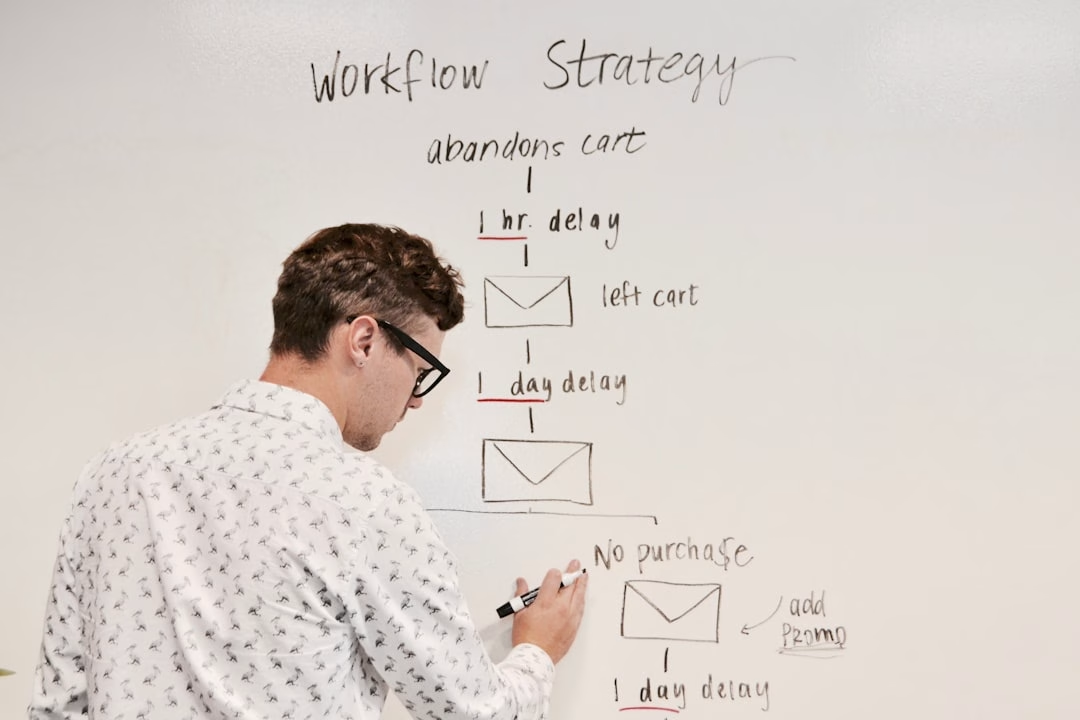
These are pre-written sequences of emails sent out at specific intervals based on triggers. For example, when a new lead signs up, they might receive a welcome email, followed by an educational email three days later, then a case study email five days after that.
Behavioral Triggers
Beyond scheduled drips, trigger emails based on specific actions (or inactions) your leads take. If they visit your pricing page but don’t convert, send an email offering a consultation or a limited-time discount. If they abandon a cart, send a reminder with a helpful link.
Measuring and Optimizing Your Nurturing Efforts
Lead nurturing isn’t a “set it and forget it” strategy. To truly maximize your sales, you need to continuously monitor, analyze, and refine your campaigns.
Key Metrics to Track
Understanding the performance of your emails is crucial for improvement. Several key metrics provide insights into what’s working and what’s not.
Open Rates
This tells you how many people are actually opening your emails. A low open rate might indicate a problem with your subject lines, sender reputation, or segmentation. Experiment with different subject lines, test various send times, and clean your email list regularly.
Click-Through Rates (CTR)
Once opened, are people clicking on your CTAs? A low CTR suggests your content isn’t compelling enough, your CTA isn’t clear, or your offer isn’t relevant to the recipient. Review your email body copy, CTA placement, and the value proposition of your links.
Conversion Rates
This is the ultimate metric. Are your nurtured leads turning into customers? If your conversion rates are low, revisit your entire strategy, from persona development to content relevance and CTA effectiveness. Track conversions from each email in your sequence to identify high-performing content.
Unsubscribe Rates
A high unsubscribe rate is a clear sign that your emails are either irrelevant, too frequent, or not providing enough value. Analyze which emails trigger unsubscribes and adjust your content or frequency accordingly. Always provide an easy way to unsubscribe to maintain compliance and a good sender reputation.
A/B Testing Your Elements
Never assume you know what will work best. A/B testing allows you to compare two versions of an email to see which performs better.
Subject Lines and CTAs
These are often the easiest and most impactful elements to A/B test. Try different wording, lengths, emojis, and calls to action. A small improvement in your open or click-through rate can have a significant impact on your overall sales.
Content and Offer Variations
Test different types of content (e.g., short vs. long form, video vs. text) and different offers (e.g., free trial vs. discount, webinar vs. e-book). Understand what resonates most with your audience at various stages of their journey.
Send Times and Frequencies
Experiment with sending emails on different days of the week and at various times of the day. Some audiences might be more receptive in the morning, others in the afternoon. Similarly, test different intervals between emails to find the optimal frequency that keeps leads engaged without overwhelming them.
Iterative Improvement
Lead nurturing is an ongoing process of learning and adaptation. Don’t be afraid to experiment, analyze your results, and make adjustments. The digital landscape and your audience’s preferences are constantly evolving, so your nurturing strategy should too. Regularly review your email content, update your automation rules, and integrate feedback from your sales team, who often have direct insights into what prospects are saying and asking. This continuous loop of improvement will ensure your lead nurturing emails remain a powerful engine for maximizing your sales.
FAQs
What is lead nurturing?
Lead nurturing is the process of building relationships with potential customers at every stage of the buyer’s journey. It involves understanding the needs of the leads and providing them with relevant information to move them closer to making a purchase.
What are lead nurturing emails?
Lead nurturing emails are personalized and targeted emails sent to leads to provide them with valuable content, information, and resources. These emails are designed to engage leads and move them through the sales funnel towards making a purchase.
How do lead nurturing emails help shorten the buyer journey?
Lead nurturing emails help shorten the buyer journey by providing leads with relevant and timely information that addresses their needs and concerns. By nurturing leads with targeted emails, businesses can guide them through the decision-making process more effectively, ultimately shortening the time it takes for leads to become customers.
What are the benefits of using lead nurturing emails?
The benefits of using lead nurturing emails include increased engagement with leads, improved conversion rates, better alignment between marketing and sales teams, and a more efficient and effective sales process. Lead nurturing emails also help businesses build trust and credibility with their leads.
How can businesses create effective lead nurturing emails?
To create effective lead nurturing emails, businesses should segment their leads based on their interests and behaviors, personalize the content of the emails, use automation to send timely and relevant messages, and continuously analyze and optimize their email campaigns based on performance metrics.