



Understanding Customer Intent: The Foundation of Effective Campaigns
In the ever-evolving landscape of digital marketing, simply broadcasting your message to the masses is a relic of the past. To truly resonate and drive conversions, you need to understand why your potential customers are searching, clicking, and interacting. This understanding is the bedrock of building campaigns around customer intent signals. Think of it this way: you wouldn’t offer a steak to a vegetarian, nor would you try to sell a winter coat in July. Similarly, your marketing efforts should be finely tuned to the specific needs, desires, and stages of the buying journey your audience is in.
Customer intent signals are the digital breadcrumbs people leave behind as they navigate the online world. These signals provide invaluable clues about their current motivations and what they’re hoping to achieve. They can be explicit, like a search query for “best budget laptops,” or more subtle, such as repeatedly visiting product comparison pages. By meticulously analyzing these signals, you can move beyond broad demographic targeting and craft highly personalized campaigns that speak directly to an individual’s immediate needs. This isn’t just about getting more clicks; it’s about getting meaningful clicks from people who are genuinely interested and ready to engage. Ignoring intent signals is akin to throwing darts in the dark; you might hit something occasionally, but a targeted approach dramatically increases your chances of success. Your goal is to be present and provide value at the precise moment a customer is most receptive, moving them seamlessly through their journey from awareness to conversion and beyond.
Deciphering the Nuances of Intent
Not all intent is created equal. Understanding the different categories of intent is crucial for building a sophisticated campaign strategy. You’ll encounter various forms, each requiring a tailored approach.
Navigational Intent
When someone exhibits navigational intent, they already know where they want to go. They’re using a search engine as a shortcut to a specific website or page. Think of queries like “Facebook login,” “Amazon,” or “Nike official site.” For these users, your primary goal isn’t to convince them about your brand but to ensure they can easily find what they’re looking for, especially if they’re navigating to your brand. If they’re navigating to a competitor, your strategy might involve brand bidding or providing compelling reasons why your solution is superior, even at this late stage of their journey.
Informational Intent
Informational intent is all about learning and gathering knowledge. Users with informational intent are typically at the early stages of their buying journey, seeking answers to questions, understanding concepts, or researching solutions to problems. Examples include “how to fix a leaky faucet,” “benefits of cloud computing,” or “best ways to save for retirement.” Your campaigns for these users should focus on providing valuable, unbiased, and comprehensive content. This means blog posts, guides, FAQs, videos, and infographics that address their pain points and position you as a trusted resource. The goal here is not an immediate sale, but to build trust and authority, establishing your brand as a go-to expert.
Commercial Investigation Intent
This stage sits between informational and transactional intent. Users with commercial investigation intent are actively researching products or services but haven’t yet made a final decision. They’re comparing options, reading reviews, looking for specifications, and evaluating features. Queries like “best CRM software 2023,” “iPhone 15 vs. Samsung Galaxy S24,” or “reviews of [product name]” fall into this category. Your campaigns should provide detailed product comparisons, testimonials, case studies, and clear explanations of your unique selling propositions. This is where you can start to subtly differentiate yourself from competitors and highlight your value proposition, nurturing them towards a purchase.
Transactional Intent
Transactional intent is the holy grail for many marketers. These users are ready to buy, subscribe, or sign up. They know what they want and are looking for the best place to get it. Examples include “buy running shoes online,” “discount codes for [brand],” “sign up for free trial,” or “price of [product].” Your campaigns here should be direct, clear, and facilitate an easy conversion. This means prominent calls to action, clear pricing, secure checkout processes, and perhaps limited-time offers or free shipping to incentivize immediate action. This is where your SEO efforts for product pages and your PPC ads targeting specific product keywords become critically important.
In the context of building effective campaigns around customer intent signals, it’s essential to consider the broader landscape of data utilization in marketing strategies. A related article that delves into this topic is “Are You Missing 90% of Your Data? Why Email-Only Metrics Aren’t Enough,” which discusses the importance of leveraging diverse data sources beyond just email metrics to enhance campaign effectiveness. You can read more about this insightful perspective by following this link: Are You Missing 90% of Your Data?.
Gathering and Analyzing Customer Intent Signals

Once you understand the different types of intent, the next crucial step is to effectively gather and analyze the signals your potential customers are emitting. This isn’t a one-time task but an ongoing process that fuels your campaign optimizations. The more data you collect and interpret, the more precise and impactful your marketing efforts will become.
Leveraging Search Query Data
Search engines are a goldmine of intent signals. What people type into Google, Bing, or other search platforms directly reflects their needs and questions.
Keyword Research Tools
Tools like Google Keyword Planner, Ahrefs, SEMrush, and Moz Keyword Explorer are indispensable. They allow you to discover not just high-volume keywords, but also long-tail keywords that often indicate more specific intent. Look for question-based queries (“how to…”, “what is…”) for informational intent, comparison queries (“best X for Y”) for commercial investigation, and direct purchase-oriented queries (“buy X online”) for transactional intent. Analyze search volume, competition, and suggested bids to understand the landscape.
Google Search Console Insights
This free tool from Google provides invaluable data on how users are finding your website through organic search. You can see the exact queries people are using that lead to impressions and clicks on your pages. This directly shows you the intent behind their search and allows you to optimize existing content or create new content to better serve those specific queries. Pay attention to queries with high impressions but low click-through rates (CTR) – these might indicate a mismatch between your content and user intent, or simply that your meta description isn’t compelling enough.
Website Behavior Analysis
Once users land on your website, their actions provide a rich tapestry of intent signals. Every click, scroll, and page view tells a story.
Google Analytics and Other Analytics Platforms
Platforms like Google Analytics 4 (GA4) offer deep insights into user behavior. Track metrics such as pages visited, time spent on page, bounce rate, exit pages, and conversion paths. A user spending a significant amount of time on a blog post about a problem they’re facing likely has informational intent. Someone repeatedly visiting product pages, adding items to a cart, or viewing pricing pages is exhibiting stronger commercial investigation or transactional intent. Event tracking can provide even more granular data, such as video plays, form submissions, or specific button clicks.
Heatmaps and Session Recordings
Tools like Hotjar or Crazy Egg allow you to visualize user behavior on your website. Heatmaps show you where users click, move their mouse, and how far they scroll. This can reveal areas of interest, confusion, or elements that are being ignored. Session recordings allow you to watch anonymized recordings of actual user sessions, giving you a firsthand look at their journey, stumbling blocks, and what captures their attention. This qualitative data is incredibly powerful for understanding the “why” behind quantitative metrics.
Social Media Listening and Engagement
Social media isn’t just for broadcasting; it’s a powerful tool for listening to your audience and understanding their concerns and desires.
Monitoring Brand Mentions and Keywords
Use social listening tools (e.g., Brandwatch, Sprout Social, Mention) to track mentions of your brand, products, competitors, and industry-related keywords. Analyze the sentiment and context of these conversations. Are people asking questions about your product features? Are they complaining about a common pain point your product addresses? Are they looking for recommendations? These conversations are raw, unfiltered expressions of intent.
Analyzing Customer Service Interactions
Your customer service team is on the front lines of understanding customer needs and frustrations. Analyze support tickets, live chat transcripts, and FAQ interactions. Common questions, recurring problems, or feature requests can highlight unmet needs or areas where your current marketing messaging might be unclear. This direct feedback is invaluable for refining your understanding of intent.
Crafting Intent-Driven Content Strategies
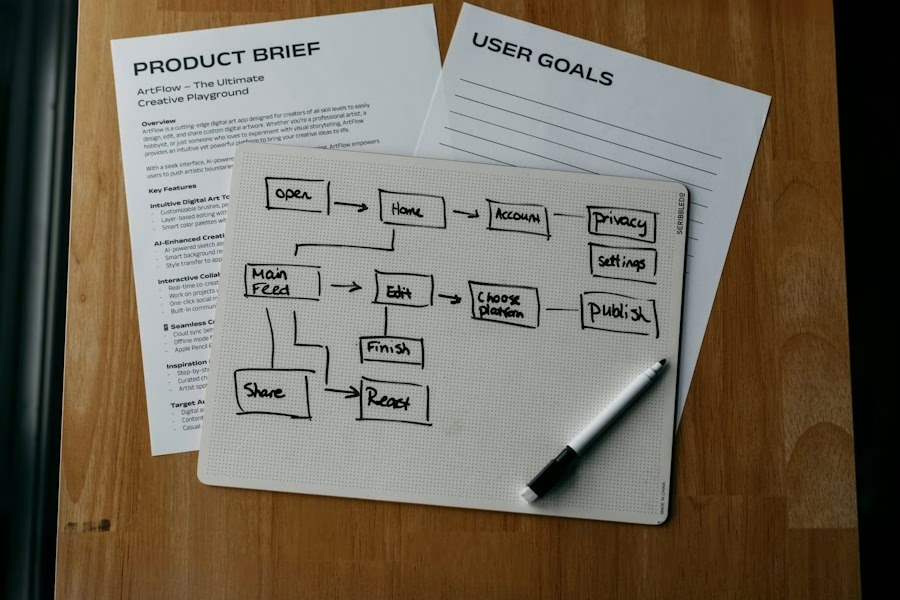
With a solid understanding of customer intent and the signals they provide, you can now move on to crafting content strategies that directly address those intentions. This involves creating the right type of content for the right stage of the customer journey and delivering it through appropriate channels.
Aligning Content with Each Intent Type
Each intent category demands a specific approach to content. A one-size-fits-all content strategy will fall flat.
Informational Content for Early Stage Awareness
For users with informational intent, your content should educate and inform. Focus on thought leadership, problem-solving, and providing value without immediately pushing a product. This includes blog posts explaining complex topics, how-to guides, comprehensive evergreen content, expert interviews, and detailed whitepapers. The goal is to establish your brand as a helpful and knowledgeable authority, building trust before a direct sales pitch. Optimize this content for broad, educational keywords and aim to answer common questions thoroughly.
Comparative and Solution-Oriented Content for Consideration
When customers are in the commercial investigation phase, they’re looking for solutions and making comparisons. Your content should facilitate this decision-making process. Create detailed product comparison guides (even comparing yourself to competitors, honestly), case studies showcasing success stories, in-depth product reviews, webinars demonstrating your solution, and feature breakdowns. Highlight your unique selling propositions and clearly articulate how your product or service solves their specific problems better than alternatives. Optimize for keywords like “best X for Y,” “X vs. Y,” and “[product name] reviews.”
Direct and Action-Oriented Content for Conversion
For users with transactional intent, your content needs to be direct, persuasive, and frictionless. This includes highly optimized product pages with clear pricing, compelling calls to action, customer testimonials, trust badges, clear shipping and return policies, and secure checkout processes. Landing pages for specific offers, free trials, or demos should be concise and focused solely on conversion. Use persuasive copy that emphasizes benefits and creates urgency where appropriate. Optimize for specific product keywords, “buy now” phrases, and discount-related terms.
Optimizing for Search and User Experience
Content creation is only half the battle; ensuring it’s discoverable and enjoyable to consume is equally vital.
SEO Best Practices for Intent-Based Content
For informational content, optimize for broad, question-based keywords. For commercial investigation, target comparison and solution-oriented keywords. For transactional content, focus on precise product and purchase-related keywords. Ensure your on-page SEO is flawless: compelling meta titles and descriptions, well-structured headings, internal linking, and high-quality backlinks. Google’s algorithms are increasingly sophisticated at understanding intent, so providing truly relevant and valuable content is paramount.
User Experience (UX) and Accessibility
Regardless of the intent, your content must be easy to read, navigate, and access. Use clear formatting, short paragraphs, bullet points, and visuals. Ensure your website is mobile-responsive and loads quickly. A poor user experience can deter even the most motivated buyer. Make sure your calls to action are clear and prominent, guiding users smoothly to the next step in their journey.
Implementing Intent-Driven Campaign Strategies
With your intent signals analyzed and your content crafted, it’s time to put these elements into action through targeted campaigns. This means selecting the right channels and tailoring your messaging to reach customers exactly where they are in their decision-making process.
Tailoring Advertising Channels to Intent
Different advertising platforms excel at reaching users with specific types of intent. A smart campaign utilizes a mix of channels.
Search Engine Marketing (SEM) for High Intent
Google Ads and Bing Ads are ideal for capturing users with immediate, explicit intent. For transactional intent, bid on highly specific product keywords and direct purchase queries. For commercial investigation, target comparison keywords and problem-solution phrases. For informational intent, target broader questions. Use ad copy that directly addresses the user’s query and pain points, leading them to the most relevant content on your site. Dynamic Search Ads can also be highly effective for capturing long-tail intent.
Social Media Advertising for Awareness and Nurturing
Social media platforms like Facebook, Instagram, LinkedIn, and TikTok are excellent for building awareness and nurturing leads, especially for users in the informational and commercial investigation phases. Use lookalike audiences and interest-based targeting to reach new potential customers who resemble your existing ideal audience. Retargeting campaigns on social media are powerful for bringing back users who have shown initial interest (e.g., visited a product page) but haven’t converted, presenting them with relevant content or offers.
Content Marketing and SEO for Long-Term Value
While not strictly an advertising channel, a robust content marketing strategy powered by SEO is fundamental for capturing informational and commercial investigation intent organically. By consistently producing high-quality, intent-aligned content, you build authority, trust, and a steady stream of qualified traffic over time. This organic visibility is incredibly valuable and often leads to higher-quality leads than purely paid channels.
Personalization and Retargeting Based on Intent
The real power of intent-driven campaigns lies in personalization. Treating every user as an individual makes your marketing far more effective.
Dynamic Content and Personalized Messaging
Use data from intent signals to dynamically alter website content, email marketing messages, and ad copy. If a user has repeatedly viewed product comparison pages, show them a banner ad for a free consultation or a demo, or send an email highlighting your product’s unique advantages. If they downloaded an informational whitepaper, follow up with related content that moves them further down the funnel. Tools like HubSpot, Marketo, or specific personalization engines can automate this.
Advanced Retargeting Strategies
Beyond basic site visitors, segment your retargeting audiences based on their demonstrated intent. Retarget users who:
- Visited specific product pages but didn’t add to cart with a discount code for that product.
- Abandoned a shopping cart with an email reminder and a clear path to complete the purchase.
- Read an educational blog post with a related case study or product offering.
- Interacted with a competitor’s ad or your brand’s social media content with a tailored follow-up.
This level of specificity dramatically increases the likelihood of conversion.
Understanding customer intent signals is crucial for creating effective marketing campaigns. For those looking to delve deeper into this topic, a related article discusses the concept of hyper-personalization and how it can be leveraged by small businesses to enhance customer engagement. You can read more about this innovative approach in the article on hyper-personalization, which complements the strategies outlined in “How to Build Campaigns Around Customer Intent Signals.”
Measuring and Optimizing Intent-Driven Campaigns
| Metric | Description | Example Value | Importance |
|---|---|---|---|
| Click-Through Rate (CTR) | Percentage of users who click on a campaign link after seeing it | 4.5% | High – Indicates engagement with intent-driven content |
| Conversion Rate | Percentage of users who complete a desired action after clicking | 12% | High – Measures effectiveness of campaign in driving intent-based actions |
| Intent Signal Types | Categories of customer intent signals used (e.g., search queries, page visits) | Search Queries, Product Page Visits, Cart Abandonment | Medium – Helps tailor campaign messaging |
| Time to Conversion | Average time from first intent signal to conversion | 3 days | Medium – Helps optimize campaign timing |
| Engagement Rate | Percentage of users interacting with campaign content (likes, shares, comments) | 8% | Medium – Reflects content relevance to customer intent |
| Customer Segmentation Accuracy | Percentage of customers correctly segmented based on intent signals | 85% | High – Critical for personalized campaign targeting |
| Return on Investment (ROI) | Revenue generated relative to campaign cost | 150% | High – Measures overall campaign success |
Building intent-driven campaigns is not a set-it-and-forget-it endeavor. Continuous measurement, analysis, and optimization are critical for sustained success. The digital landscape is always shifting, and so are customer needs and behaviors.
Key Performance Indicators (KPIs) for Intent-Based Campaigns
To understand if your campaigns are working, you need to track the right metrics, aligning them with the specific intent you’re targeting.
For Informational Intent
Focus on metrics that indicate engagement and content consumption:
- Time on page: Shows how engaging your educational content is.
- Bounce rate: A low bounce rate suggests users are finding what they’re looking for.
- Pages per session: Indicates exploration and interest in related content.
- Social shares and comments: Reflects content value and resonance.
- Organic traffic: Measures the effectiveness of your SEO for informational keywords.
- Micro-conversions: Such as newsletter sign-ups or content downloads.
For Commercial Investigation Intent
Track metrics that show users are moving towards a decision:
- Click-through rate (CTR) on comparison pages: Indicates interest in evaluating options.
- Engagement with product demo videos or webinars.
- Downloads of product spec sheets or whitepapers.
- Visits to pricing pages.
- Referral traffic from review sites.
For Transactional Intent
These KPIs are directly tied to revenue and conversion:
- Conversion rate: The percentage of visitors who complete a desired action (purchase, sign-up).
- Cost Per Acquisition (CPA): The cost to acquire a new customer or lead.
- Return on Ad Spend (ROAS): The revenue generated for every dollar spent on advertising.
- Average Order Value (AOV): For e-commerce, the average value of each transaction.
- Shopping cart abandonment rate: A key metric to optimize for, as it directly impacts lost revenue.
Iterative Optimization Based on Insights
Data is only valuable if it leads to action. Regularly review your performance data and make informed adjustments.
A/B Testing and Multivariate Testing
Continuously test different elements of your campaigns: ad copy, landing page headlines, calls to action, imagery, and content formats. For informational content, test different content structures. For transactional content, test button colors or checkout flows. Small changes, informed by data, can lead to significant improvements over time. Use A/B testing to understand which variations resonate best with different intent segments.
Refining Audience Segmentation and Targeting
As you gather more data, you’ll gain a deeper understanding of your audience’s behavior. Use these insights to refine your audience segments. Are certain demographics responding better to specific types of intent-driven ads? Are there new intent signals emerging that you can capitalize on? Continuously adjust your targeting parameters in your ad platforms to ensure you’re reaching the most receptive audiences.
Adapting to Evolving Customer Journeys
Customer journeys are rarely linear and are constantly evolving. New technologies, market trends, and competitive actions can shift how customers research and buy. Stay agile. Monitor industry news, competitor strategies, and emerging technologies. Regularly review your keyword research and customer feedback. By staying attuned to these changes and adapting your intent-driven campaigns accordingly, you ensure long-term success and maintain a competitive edge in capturing and converting your ideal customers.
FAQs
What are customer intent signals?
Customer intent signals are indicators that show the intentions or interests of a customer, such as search queries, website visits, social media interactions, and past purchase behavior.
How can businesses use customer intent signals to build campaigns?
Businesses can use customer intent signals to understand what their customers are looking for and tailor their marketing campaigns to meet those specific needs and preferences.
What are some common types of customer intent signals?
Common types of customer intent signals include keyword searches, website visits, email opens, social media engagement, and abandoned carts in e-commerce.
Why is it important to build campaigns around customer intent signals?
Building campaigns around customer intent signals allows businesses to create more targeted and personalized marketing strategies, leading to higher conversion rates and improved customer satisfaction.
How can businesses collect and analyze customer intent signals effectively?
Businesses can collect customer intent signals through various tools such as Google Analytics, social media monitoring platforms, and CRM systems. Analyzing these signals can help businesses gain insights into customer behavior and preferences to inform their campaign strategies.