


The Shift from Open Rates to ROI: A New Paradigm
You’ve likely spent countless hours optimizing your email campaigns. You’ve tweaked subject lines, A/B tested calls to action, and meticulously segmented your audience. For years, the North Star for many email marketers has been engagement metrics: open rates, click-through rates, and sometimes conversion rates. While these metrics certainly have their place in understanding audience behavior and campaign effectiveness, they often fall short when it comes to demonstrating tangible business impact. In today’s competitive landscape, where every marketing dollar is scrutinized, a fundamental shift in perspective is not just beneficial, it’s imperative. You need to move beyond vanity metrics and embrace a revenue-focused approach to your email marketing strategy. This isn’t about abandoning engagement; it’s about connecting engagement directly to the bottom line. It’s about understanding that a high open rate on an email that doesn’t generate sales is, ultimately, an expensive hobby.
You, as a marketer, are increasingly tasked with proving the financial efficacy of your efforts. Simply stating that an email campaign saw a 30% open rate won’t impress the CFO. What will impress them is showing that the campaign generated $50,000 in new sales or contributed to a 15% increase in average order value. This isn’t just about reporting; it’s about strategy from conception. Every email, every segment, every test, needs to be evaluated through the lens of its potential to drive revenue. This proactive, rather than reactive, approach transforms email marketing from a mere communication channel into a powerful growth engine. You become a strategic contributor to the business’s financial health, rather than just a sender of messages. This shift requires a deep understanding of your customer journey, a robust tracking infrastructure, and an unwavering commitment to data-driven decision making, all with the ultimate goal of maximizing monetary returns.
Beyond the Click: Understanding True Value
When you think about email marketing, it’s easy to get caught up in the immediate gratification of a strong click-through rate. You might celebrate when your latest product launch email achieves an enviable 5% CTR. And rightfully so – it indicates interest and engagement. However, the story doesn’t end there. What happens after the click? Did that click lead to a purchase? Did it contribute to a higher lifetime value for that customer? Or did the user click, browse for a few seconds, and then abandon their cart? True value in email marketing isn’t just about getting someone to your website; it’s about guiding them through the purchase funnel and ultimately securing a conversion that contributes to your revenue targets. You need to scrutinize the entire user journey post-click.
This means you must implement comprehensive tracking beyond the simple link click. UTM parameters are your best friend here, allowing you to trace the origin of traffic and, more importantly, conversions back to specific email campaigns, segments, and even individual sends. Integrate your email service provider (ESP) with your CRM and analytics platform to get a holistic view. By doing so, you can identify which types of emails—promotional offers, educational content, abandoned cart reminders, post-purchase follow-ups—are most effective at converting initial interest into tangible sales. You’re not just measuring clicks; you’re measuring the revenue attributed to those clicks. This level of granularity empowers you to optimize not just for engagement, but for profitable engagement.
Aligning Email Strategy with Business Goals
You wouldn’t launch a new product without a clear sales target, nor would you run a national advertising campaign without an expected ROI. Why, then, would you approach email marketing differently? A revenue-focused email strategy begins with a direct alignment to your overarching business goals. If your business objective for the quarter is to increase average order value by 10%, your email campaigns should be designed specifically to support that. This might involve emails promoting bundles, cross-selling complementary products, or offering tiered discounts for higher spending. If the goal is customer retention and reducing churn, your emails should focus on loyalty programs, exclusive content, or proactive customer service outreach.
This alignment isn’t merely theoretical; it dictates the content, frequency, and segmentation of your emails. You move away from generic “send an email every Tuesday” mandates and towards a strategic calendar driven by financial objectives. Your email team becomes an integral part of the sales and marketing leadership, actively contributing to revenue projections and being held accountable for their share of the growth. This elevates email marketing from a tactical execution role to a strategic business driver. You are no longer just sending emails; you are orchestrating revenue generation through a highly personalized and efficient channel.
In the realm of email marketing, understanding the intricacies of email deliverability is crucial for maximizing revenue potential. A related article that delves into a common challenge faced by marketers is titled “What is Bounced Email? How to Handle This Menace.” This piece provides valuable insights into the types of bounced emails and effective strategies to mitigate their impact, ensuring that your revenue-focused email campaigns reach their intended audience. For more information, you can read the article here: What is Bounced Email? How to Handle This Menace.
Data-Driven Segmentation for Maximum Impact
You understand that a “one size fits all” approach to email marketing is ineffective. Sending the same generic message to every subscriber in your database is akin to shouting into a void; some might hear you, but most will tune you out. This is where robust segmentation becomes not just important, but absolutely critical for revenue generation. When you segment your audience effectively, you’re not just grouping people; you’re creating distinct pathways to purchase based on their unique characteristics, behaviors, and preferences. This personalization drastically increases the relevance of your emails, which in turn drives engagement and, most importantly, conversions.
Think about it from your customer’s perspective. Are they more likely to respond to an email promoting a product they’ve already purchased, or one suggesting an item that perfectly complements their last buy? Are they more inclined to open an email offering a discount on a category they’ve frequently browsed, or a general promotion for products they’ve never shown interest in? The answer is clear. By delivering highly targeted messages, you significantly increase the probability of a positive response that leads to revenue. This isn’t just about demographic data; it’s about leveraging every piece of behavioral information you have to craft compelling, revenue-driving communications.
Behavioral Segmentation: Predicting Purchase Intent
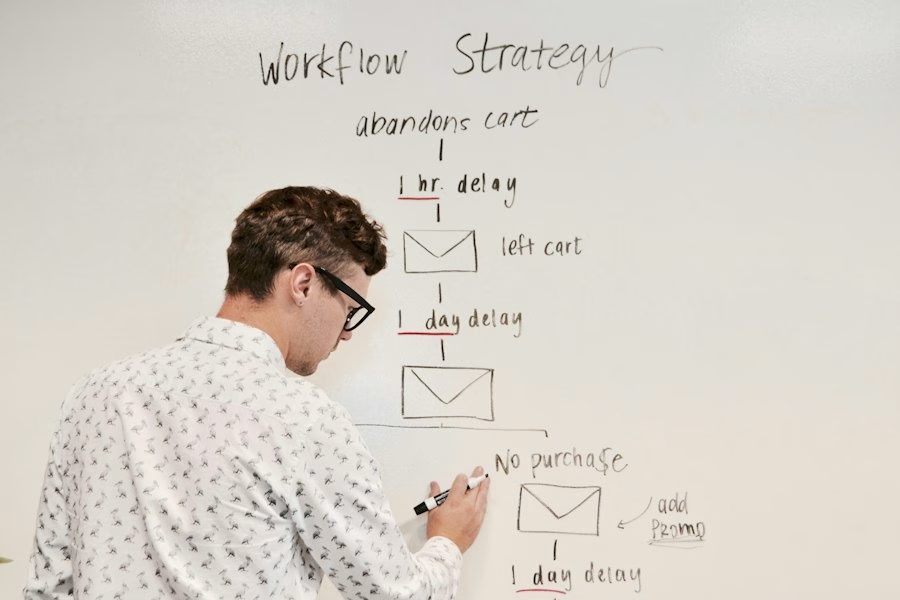
This is where you move beyond simple demographics and delve into the rich tapestry of your customers’ online actions. Behavioral segmentation allows you to identify patterns and predict future purchase intent, enabling you to send emails at precisely the right moment with precisely the right message. Consider the power of an abandoned cart email. You know this customer was interested enough to add items to their cart, indicating a high level of purchase intent. A timely reminder, perhaps with a small incentive, can often be the nudge they need to complete the transaction. This isn’t just good customer service; it’s direct revenue recovery.
Beyond abandoned carts, you can segment based on browsing history (products viewed, categories explored), past purchases (recency, frequency, monetary value), email engagement (opens, clicks on specific types of content), and even time spent on certain pages of your website. For example, if a customer has repeatedly viewed a specific product page but hasn’t added it to their cart, you could trigger an email showcasing customer reviews for that product, highlighting its benefits, or even offering a limited-time discount. These aren’t generic marketing messages; they are highly relevant interventions designed to move a customer closer to conversion, directly impacting your bottom line. You are essentially acting as a personal shopper, guiding them with relevant suggestions.
Lifecycle Segmentation: Nurturing Customers at Every Stage
Your relationship with a customer isn’t static; it evolves over time. A new subscriber has different needs and interests than a long-time loyal customer. Lifecycle segmentation recognizes these distinct stages and allows you to tailor your email communications to nurture customers through their entire journey, from initial awareness to repeat purchases and advocacy. This proactive approach ensures that you’re always delivering value, which builds trust and encourages continued engagement and spending.
For a new subscriber, your onboarding series might focus on introducing your brand, showcasing your value proposition, and perhaps offering a first-purchase incentive. For a customer who has made a single purchase, your emails might focus on cross-selling related products or encouraging a second purchase within a specific timeframe to build loyalty. For your most loyal customers, you might offer exclusive access to new products, VIP discounts, or early bird promotions. Conversely, for customers who haven’t purchased in a while (lapsed customers), you can deploy re-engagement campaigns with compelling offers designed to win them back. Each stage demands a unique strategy, and by segmenting by lifecycle, you ensure that every email serves a purpose in advancing the customer relationship and generating revenue over their entire journey with your brand.
The Power of Personalization in Driving Conversions

You already know that personalization makes your emails more appealing. But when you apply a revenue-focused lens, personalization transcends mere cosmetic changes like addressing a subscriber by their first name. It becomes a strategic tool to increase conversion rates, average order value, and ultimately, lifetime customer value. True personalization means delivering content, offers, and recommendations that are so relevant to the individual recipient that they feel specifically curated for them. This creates a stronger connection, builds trust, and makes the path to purchase feel natural and effortless for the customer.
Think about the sheer volume of marketing messages your customers receive daily. In this saturated environment, generic emails are easily overlooked or deleted. Your challenge is to cut through the noise, and deep personalization is your sharpest tool. When an email speaks directly to a customer’s known preferences, past behaviors, and current needs, it commands attention. This isn’t just about making them feel special; it’s about increasing the likelihood that they will engage with your content, click through to your site, and complete a purchase. The more relevant your email, the less friction there is in the conversion process, directly translating into higher revenue.
Dynamic Content: Tailoring Messages on the Fly
Imagine sending a single email template that, for each recipient, dynamically populates with different product recommendations, specific categories they’ve browsed, or even localized offers. This is the power of dynamic content. Instead of manually creating dozens of variations for different segments, you can set up rules within your ESP to pull in personalized blocks of content based on individual customer data. This automation saves you immense time and ensures that every subscriber receives an email that feels uniquely crafted for them.
For example, if you sell apparel, a single promotional email for a “Summer Sale” could dynamically display men’s clothing to male subscribers who have previously purchased men’s items, and women’s clothing to female subscribers with similar purchase history. Beyond gender, you could dynamically show items from categories they’ve recently viewed or products that are frequently bought together with their past purchases. This level of granular personalization makes the offer irresistible and highly relevant, significantly increasing the probability of a click-through and a subsequent sale. You’re effectively creating a personalized storefront within each email.
Product Recommendations: Guiding Customers to Purchase
One of the most effective forms of personalization for driving revenue is intelligent product recommendations. Leveraging AI and machine learning algorithms, you can analyze a customer’s browsing history, purchase history, and even the behavior of similar customers to suggest products they are most likely to buy. This moves beyond simple “customers who bought this also bought…” and delves into predictive analytics. These recommendations can be embedded directly into your email campaigns, providing a seamless path to discovery and purchase.
Think about post-purchase emails: “Thank you for your order! Based on your recent purchase, we think you’ll love these items…” or abandoned cart emails: “You left these items behind, but we also thought you might be interested in these complementary products.” These aren’t just guesses; they are data-driven suggestions designed to increase average order value (AOV) through cross-selling and up-selling, or to recover lost sales by reminding customers of their initial interest while also suggesting alternatives. By making it incredibly easy for customers to discover products they genuinely want, you’re not just enhancing their experience; you’re directly fueling your sales pipeline.
Optimizing the Email Conversion Funnel
You’ve done the hard work of building your list, segmenting your audience, and personalizing your messages. But the journey doesn’t end with a click. A revenue-focused email strategy demands meticulous optimization of the entire conversion funnel, from the moment a subscriber opens your email to the final checkout. Every step needs to be analyzed, refined, and improved to minimize friction and maximize the likelihood of a sale. You are, in essence, a digital architect, designing a seamless path from inbox to purchase confirmation.
This requires a holistic view, integrating your email marketing efforts with your website experience. You can’t just send a brilliant email and expect it to do all the heavy lifting. The landing page experience, the clarity of your product descriptions, the ease of your checkout process – all play a crucial role in whether that initial email interest translates into actual revenue. Your goal is to eliminate any potential roadblocks that might deter a motivated buyer, ensuring that the momentum generated by your email carries through to the final conversion.
Landing Page Cohesion and Clarity
When a subscriber clicks on a link in your email, their expectation is to land on a page that is directly relevant to the content of that email. This might seem obvious, but you’d be surprised how often brands send emails about a specific product or offer, only for the click to lead to a generic homepage or category page. This creates immediate friction and forces the user to navigate, which can lead to abandonment. Your landing page must be a direct extension of your email message.
Ensure that the landing page prominently features the product or offer highlighted in the email. The messaging, imagery, and call to action should be consistent with what was promised in the email. Minimize distractions on the landing page; its sole purpose should be to guide the user towards the desired conversion. Remove unnecessary navigation, pop-ups, or conflicting offers. A clean, focused, and cohesive landing page experience reinforces the value proposition presented in your email and makes it effortless for the customer to take the next step towards purchase.
Streamlining the Checkout Process
You’ve successfully guided a customer from their inbox, through a compelling email, and onto a highly relevant landing page. They’ve added items to their cart. This is the critical juncture where many potential sales are lost. A complicated, lengthy, or insecure checkout process can quickly lead to cart abandonment, negating all your previous marketing efforts. Your checkout process must be as smooth and intuitive as possible to convert those high-intent customers into actual buyers.
Focus on minimizing the number of steps required to complete a purchase. Offer guest checkout options, rather than forcing registration. Clearly display progress indicators (e.g., “Step 1 of 3”). Provide multiple secure payment options, including popular digital wallets. Be transparent about shipping costs and delivery times early in the process. Ensure that your checkout page is mobile-optimized, as many customers complete purchases on their smartphones. Finally, clearly highlight security seals and provide customer support options (e.g., a live chat widget) to build trust and address any last-minute concerns. Every optimization you make to your checkout process directly translates into higher conversion rates and, consequently, more revenue from your email campaigns.
In exploring the effectiveness of revenue-focused email marketing for growing brands, it’s essential to consider the foundational elements that contribute to its success. A well-curated contact list plays a pivotal role in ensuring that marketing efforts reach the right audience. For insights on how to build a strong contact list that enhances your email marketing strategy, you can refer to this informative article on building a strong contact list. By understanding the importance of targeting and segmentation, brands can significantly improve their engagement and conversion rates.
Measuring and Iterating for Continuous Revenue Growth
| Metric | Description | Typical Value for Revenue Focused Email Marketing | Impact on Growing Brands |
|---|---|---|---|
| Open Rate | Percentage of recipients who open the email | 20% – 30% | Higher engagement leads to more potential customers seeing offers |
| Click-Through Rate (CTR) | Percentage of recipients who click on links within the email | 2% – 5% | Drives traffic to product pages, increasing chances of conversion |
| Conversion Rate | Percentage of email recipients who complete a desired action (purchase, signup) | 1% – 3% | Directly contributes to revenue growth by turning leads into customers |
| Return on Investment (ROI) | Revenue generated compared to amount spent on email marketing | 300% – 400% | Shows cost-effectiveness and profitability of email campaigns |
| List Growth Rate | Rate at which the email subscriber list increases | 5% – 10% monthly | Expands audience reach and potential customer base |
| Customer Retention Rate | Percentage of customers retained through email marketing efforts | 60% – 80% | Maintains steady revenue by encouraging repeat purchases |
| Average Order Value (AOV) | Average amount spent per order from email campaigns | Varies by industry | Increasing AOV boosts overall revenue from email marketing |
You’ve implemented a revenue-focused strategy, segmented your audience, personalized your content, and optimized your conversion funnel. Now comes the crucial final step: measurement and continuous iteration. A truly effective revenue-focused email marketing program is never static. It’s an ongoing cycle of testing, analyzing, learning, and refining. You need to consistently monitor your performance, identify what’s working and what isn’t, and use those insights to continually optimize your campaigns for greater financial returns. This commitment to data-driven improvement is what differentiates a good email marketer from a truly exceptional one.
Without robust tracking and analytical capabilities, your efforts, no matter how well-intentioned, are largely guesswork. To prove and improve revenue impact, you must have the systems in place to attribute sales directly back to your email campaigns. This means moving beyond anecdotal evidence and embracing hard numbers that demonstrate your contribution to the business’s financial objectives. Your goal is not just to report revenue, but to actively influence its upward trajectory through intelligent, data-informed adjustments to your strategy.
Attributing Revenue to Email Campaigns
This is arguably the most critical component of a revenue-focused email strategy. You need to establish clear attribution models to accurately understand which email campaigns, segments, and even individual emails are driving sales. While the last-click attribution model is common (crediting the last touchpoint before conversion), you might explore multi-touch attribution models that give partial credit to earlier email interactions, providing a more holistic view of your campaigns’ influence. Integrate your ESP with your CRM, e-commerce platform, and analytics tools (like Google Analytics or Adobe Analytics) to create a unified view of the customer journey.
Utilize UTM parameters on every link in your emails to track traffic sources with precision. This allows you to see not just how much traffic an email generated, but how much revenue was directly associated with that traffic. Monitor key revenue metrics such as total revenue attributed to email, average order value (AOV) from email, revenue per recipient, and lifetime value (LTV) of customers acquired or nurtured through email. By meticulously tracking and attributing revenue, you can unequivocally demonstrate the financial impact of your email marketing efforts to stakeholders, justifying your budget and resources.
A/B Testing and Experimentation for Higher ROI
The only way to truly understand what drives more revenue for your brand is through systematic A/B testing and experimentation. Don’t assume; test. Every element of your email campaigns presents an opportunity for optimization. This isn’t just about tweaking subject lines for higher open rates; it’s about testing elements that directly impact conversion rates and average order value.
Consider A/B testing different types of offers (e.g., percentage discount vs. free shipping), different product recommendation algorithms, variations in call-to-action button copy and design, the placement of images, the length of your emails, and even the timing of your sends. Test different segmentation strategies to see which yields the highest conversion rates. For example, does segmenting by purchase history lead to higher revenue per recipient than segmenting by browsing behavior? Each test provides valuable insights that you can then implement across your broader strategy, leading to incremental but significant gains in your overall email revenue. Document your findings, learn from your failures, and relentlessly pursue the next opportunity for optimization. Your email marketing should be a constantly evolving, revenue-generating machine.
FAQs
What is revenue-focused email marketing?
Revenue-focused email marketing is a strategy that prioritizes generating sales and increasing revenue through targeted email campaigns. This approach involves segmenting audiences, personalizing content, and utilizing data analytics to optimize email performance, ultimately driving conversions and boosting overall revenue for brands.
How does segmentation improve email marketing effectiveness?
Segmentation allows brands to divide their email list into smaller, more targeted groups based on specific criteria such as demographics, purchase history, or engagement levels. This tailored approach ensures that recipients receive relevant content, which increases open rates, click-through rates, and ultimately, conversion rates, leading to higher revenue.
What role does personalization play in revenue-focused email marketing?
Personalization enhances the customer experience by delivering tailored content that resonates with individual preferences and behaviors. By using personalized subject lines, product recommendations, and targeted offers, brands can foster stronger connections with their audience, leading to increased engagement and higher sales conversions.
Why is data analytics important in email marketing?
Data analytics provides valuable insights into customer behavior, campaign performance, and overall marketing effectiveness. By analyzing metrics such as open rates, click-through rates, and conversion rates, brands can make informed decisions to refine their email strategies, optimize content, and ultimately drive more revenue.
What are some common metrics to measure the success of revenue-focused email campaigns?
Common metrics include open rates, click-through rates, conversion rates, revenue per email, and unsubscribe rates. These metrics help brands assess the effectiveness of their campaigns, understand customer engagement, and identify areas for improvement to maximize revenue generation.