



You’re staring at your email marketing reports, a mix of triumph and trepidation washing over you. Open rates are decent, click-throughs are respectable, but you know there’s more potential lurking in those inboxes. The days of simply blasting out generic newsletters are long gone, replaced by a sophisticated landscape where personalized communication is king. You understand that your email platform isn’t just a sending tool; it’s the central nervous system of your customer lifecycle. It’s time to stop just sending emails and start orchestrating experiences. This isn’t a subtle shift; it’s a fundamental re-engineering of how you interact with your audience, driven by platforms that are rapidly evolving to enable smarter, more impactful lifecycle marketing.
The Dawn of Hyper-Personalization and Dynamic Content
You’ve likely already dabbled in personalization, perhaps using a customer’s first name in the subject line or body. But that’s just the tip of the iceberg. Modern email platforms are moving far beyond simple merge tags, empowering you to create truly hyper-personalized experiences that resonate deeply with individual subscribers. This means understanding not just who your customer is, but what they’re interested in, where they are in their buying journey, and how they prefer to be communicated with.
Leveraging Data for Individualized Journeys
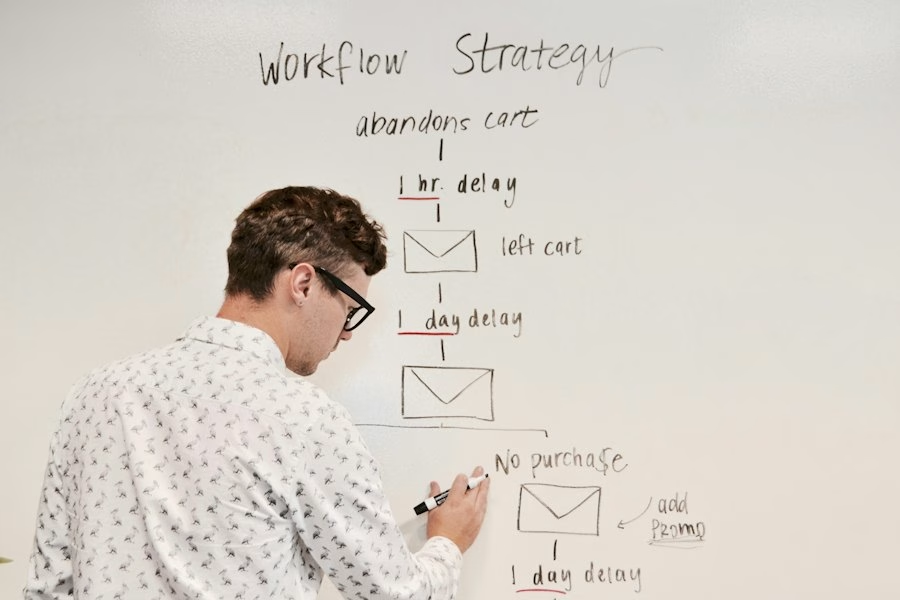
Your email platform is now a data powerhouse, capable of ingesting and analyzing vast amounts of information from various sources. This isn’t just about your email engagement data anymore; it’s about integrating with your CRM, your e-commerce platform, your customer support systems, and even your website analytics. Imagine a scenario where a customer browses a specific product category on your site, abandons their cart, then opens a customer support ticket about a related issue. Your email platform, armed with this integrated data, can trigger a highly relevant email sequence: a cart abandonment reminder, followed by a personalized recommendation based on their browsing history, and perhaps even a helpful guide related to their support query, all within hours. You’re no longer guessing what your customers want; the data is telling you, and your platform is acting on it.
Dynamic Content Blocks and AI-Driven Recommendations
The days of crafting dozens of unique email versions for different segments are becoming a relic of the past. Modern platforms offer dynamic content blocks that allow you to customize specific sections of an email based on recipient attributes or behaviors. Think about product recommendations: instead of static images, your platform can pull in real-time inventory and recommend items based on a user’s past purchases, browsing history, or even predictive analytics. If a customer typically buys athletic wear, your platform ensures they see the latest running shoes, not kitchen gadgets. Artificial intelligence and machine learning are playing an increasingly critical role here, powering sophisticated recommendation engines that learn and adapt over time, continuously improving the relevance and effectiveness of your email content. You’re essentially building one email template that intelligently transforms itself for each individual recipient, maximizing engagement and driving conversions without the manual effort of segmentation and versioning. This level of dynamic content allows you to deliver a truly 1:1 experience at scale.
As email platforms continue to evolve for lifecycle marketing, it’s essential to explore strategies that enhance customer engagement and retention. A related article that delves into effective tactics for nurturing leads is titled “The Ultimate Guide to Evergreen Campaigns: Nurturing Leads on Autopilot.” This resource provides valuable insights into creating automated email campaigns that maintain relevance over time, ensuring that your marketing efforts are both efficient and impactful. You can read more about it here: The Ultimate Guide to Evergreen Campaigns.
Orchestrating Multi-Channel Customer Journeys

Your customers don’t live in a siloed world of email. They interact with your brand across numerous touchpoints – your website, social media, mobile apps, even offline. The most advanced email platforms recognize this reality and are evolving into true multi-channel orchestration hubs. This means that email is no longer an isolated communication channel but an integral part of a broader, cohesive customer journey.
Integrating Email with Other Communication Channels
Consider the power of a unified customer profile that tracks interactions across all channels. If a customer engages with your brand on social media, visits your website, and then receives an email, your platform can ensure a seamless and consistent experience. For example, if a customer browses a particular product on your website but doesn’t make a purchase, your platform can trigger a personalized email reminder. If that email goes unread, it might then trigger a targeted ad on social media showing the same product. Conversely, if a customer completes a purchase, your email platform can send an order confirmation, while simultaneously updating your CRM and perhaps even triggering an SMS message for shipping updates. This interconnectedness prevents redundant or contradictory messaging, ensuring that every interaction builds upon the last, guiding the customer smoothly through their lifecycle. You’re not just sending emails; you’re conducting a symphony of customer interactions.
Event-Driven Triggers and Automation Workflows
The real magic happens with sophisticated automation workflows driven by specific customer actions or events. These aren’t just simple “welcome series” automations anymore. Modern platforms allow you to build intricate, branching logic that responds dynamically to customer behavior. If a customer clicks on a specific link in an email, they might be moved into a different segment and receive a follow-up email tailored to that interest. If they don’t open an email after a certain period, the system can automatically resend it with a different subject line or even try a different channel, like an SMS. Abandoned carts, product views, support ticket creation, wish list additions, loyalty program enrollments – virtually any discernible customer action can become a trigger for a personalized, automated response. You’re essentially creating intelligent agents that monitor customer behavior and respond in real-time, nurturing leads, driving conversions, and building stronger relationships without constant manual intervention. This moves you from reactive marketing to proactive engagement.
AI and Machine Learning: The Brains Behind Smarter Marketing


Artificial intelligence (AI) and machine learning (ML) are no longer futuristic concepts; they are embedded deeply within the fabric of modern email platforms, acting as the intelligent core that powers smarter lifecycle marketing. These technologies are revolutionizing everything from content creation to send-time optimization, allowing you to operate with unprecedented precision and effectiveness.
Predictive Analytics for Future Behavior
One of the most transformative applications of AI is predictive analytics. Your email platform can now analyze historical data to forecast future customer behavior. This means predicting which customers are most likely to churn, which are most likely to make a repeat purchase, or which segments are most receptive to a new product launch. Armed with this foresight, you can proactively intervene with targeted campaigns. For example, if the AI identifies a segment of customers at high risk of churning, you can trigger a re-engagement campaign offering special incentives or personalized content to win them back before they leave. Conversely, if it predicts a group of loyal customers is ripe for an upsell, you can tailor your messaging to introduce higher-value products or services. You’re no longer reacting to past behavior; you’re anticipating future actions and shaping them accordingly.
AI-Powered Content Generation and Optimization
The content creation process itself is being augmented by AI. Some advanced platforms are experimenting with AI-powered copywriting tools that can generate subject line ideas, email body snippets, or even entire email drafts based on your brand guidelines and campaign objectives. While still nascent, this capability promises to dramatically reduce the time and effort required for content creation, allowing your team to focus on strategic oversight and refinement. Beyond creation, AI is also optimizing your existing content. It can analyze past performance to identify which subject lines, calls-to-action, or image types perform best with different audience segments. This allows for continuous improvement and ensures your messages are always resonating with your audience. You’re leveraging intelligence to not only create content but to ensure it’s the most effective content possible.
Intelligent Send-Time and Frequency Optimization
One of the perpetual challenges in email marketing is determining the optimal time to send an email and how frequently to contact your subscribers. Send too often, and you risk annoyance and unsubscribes; send too infrequently, and you miss opportunities. AI solves this dilemma. Modern platforms use machine learning algorithms to analyze individual subscriber behavior – when they typically open emails, click links, and interact with your content. Based on this analysis, the AI can dynamically adjust the send time for each individual recipient to maximize engagement. Instead of sending a batch email at 9 AM EST to everyone, your platform might send it to one person at 7 AM, another at 1 PM, and a third at 8 PM, all optimized for their personal peak engagement windows. Similarly, AI can help determine the ideal frequency for each subscriber, preventing fatigue for some while ensuring consistent engagement for others. This level of individualized timing transforms batch sending into a series of perfectly timed personal deliveries.
Advanced Analytics and Attribution Modeling
Understanding the true impact of your email marketing efforts goes far beyond simple open and click rates. Modern email platforms are equipping you with sophisticated analytics and attribution modeling capabilities that provide a holistic view of your campaigns’ performance and their contribution to your overall business goals. You’re moving past vanity metrics to actionable insights.
Granular Performance Tracking and Reporting
You need to know more than just if an email was opened; you need to know who opened it, what they clicked on, and what action they took afterward. Email platforms now offer incredibly granular tracking, allowing you to segment your reports by various demographics, behaviors, and even customer lifecycle stages. You can track conversions not just on your website but potentially across different channels, gaining a clearer picture of the full customer journey. Were those initial emails crucial in nurturing a lead that eventually converted via a sales call? Your platform, with proper integration, can help trace that path. This detailed reporting empowers you to identify your most engaged segments, your best-performing content, and your most effective automation workflows, allowing you to continually refine your strategy. You’re getting a microscope on your marketing efforts, revealing opportunities you might otherwise miss.
Multi-Touch Attribution for Holistic Insights
One of the biggest challenges in marketing has always been understanding how different touchpoints contribute to a conversion. Was it the first email that introduced the product, the follow-up email with a discount, or the social media ad that finally sealed the deal? Traditional “last-click” attribution models often give all credit to the final interaction, overlooking the crucial role played by earlier touchpoints. Advanced email platforms are integrating multi-touch attribution models that assign partial credit to each interaction along the customer journey. Whether it’s linear, time decay, U-shaped, or W-shaped attribution, these models provide a more realistic and nuanced understanding of your email campaigns’ impact. This allows you to allocate your resources more effectively, understanding which parts of your lifecycle marketing strategy are truly driving results and where improvements can be made. You’re not just seeing the finish line; you’re understanding the entire race.
A/B/n Testing and Experimentation Frameworks
Optimization is a continuous process, and modern email platforms provide robust frameworks for rigorous experimentation. A/B testing (or even A/B/n testing, comparing multiple variations) is no longer limited to subject lines. You can test different calls-to-action, email layouts, image choices, sender names, content blocks, and even entire automation sequences. Platforms now offer statistical significance analysis, ensuring that your test results are reliable and not just random fluctuations. Beyond simple A/B tests, some platforms offer multivariate testing, allowing you to simultaneously test multiple variables within a single email. This constant experimentation, guided by data and statistical rigor, is how you continuously improve your lifecycle marketing efforts, ensuring that your emails are always evolving to be more effective and engaging. You’re transforming your email marketing from a guessing game into a scientific endeavor.
As email platforms continue to evolve for lifecycle marketing, businesses are increasingly focusing on data-driven strategies to enhance their campaigns. A related article discusses how leveraging data can lead to high-converting segments, providing valuable insights into customer behavior and preferences. For more information on this topic, you can read the article on leveraging data for high-converting segments. This approach not only improves engagement but also helps in crafting personalized experiences that resonate with the audience.
The Future: Beyond the Inbox and into the Metaverse
| Feature | Description | Impact on Lifecycle Marketing | Example Metrics |
|---|---|---|---|
| Advanced Segmentation | Ability to segment audiences based on behavior, demographics, and engagement. | Improves targeting and personalization, leading to higher engagement rates. | Click-through rate increase by 20% |
| Automation & Triggers | Automated email sequences triggered by user actions or lifecycle stages. | Enhances timely communication and nurtures leads effectively. | Conversion rate uplift of 15% |
| AI-Powered Personalization | Use of AI to tailor content, subject lines, and send times. | Boosts open rates and customer satisfaction through relevant messaging. | Open rate improvement by 25% |
| Integration with CRM & Analytics | Seamless data exchange between email platforms and customer relationship management tools. | Enables comprehensive customer insights and better campaign optimization. | Reduction in churn rate by 10% |
| Interactive Email Content | Inclusion of polls, carousels, and embedded forms within emails. | Increases engagement and collects real-time feedback. | Engagement rate increase by 18% |
| Mobile Optimization | Responsive design and mobile-friendly layouts. | Ensures accessibility and readability on all devices, improving user experience. | Mobile open rates exceed 60% |
| Privacy & Compliance Features | Tools to manage consent, GDPR, and CAN-SPAM compliance. | Builds trust and avoids legal penalties. | Decrease in unsubscribe rates by 8% |
As technology continues its relentless march forward, your email platform isn’t just catching up; it’s anticipating the future. The evolution will take it far beyond the confines of the traditional inbox, venturing into new realms of interaction and personalization that seem almost science fiction today but will be commonplace tomorrow. You are at the precipice of an exciting new era.
Seamless Integration with Emerging Technologies
Think about voice assistants. Imagine a future where your email platform can integrate with Siri, Alexa, or Google Assistant to deliver personalized audio summaries of your email newsletter or remind customers about an upcoming event. Or consider augmented reality (AR) and virtual reality (VR) – the nascent metaverse. While still in early stages, some platforms are exploring how email might trigger AR experiences (e.g., viewing a product in your own home) or deliver invitations to virtual events within a metaverse environment. The lines between communication channels are blurring, and your email platform will be a central hub, orchestrating messages and experiences across these diverse new frontiers. This is about meeting your customers wherever they are, even if “wherever they are” is a virtual world.
Proactive Customer Engagement and Self-Healing Journeys
The evolution of AI will lead to email platforms that are not just reactive but truly proactive. Imagine a system that doesn’t just respond to a customer leaving their cart but identifies subtle behavioral shifts indicating dissatisfaction before it leads to an abandoned cart or churn. The platform could then trigger a highly personalized “check-in” email or offer proactive support. Moreover, “self-healing” journeys will emerge. If an email campaign isn’t performing as expected, the AI might automatically adjust the content, timing, or even the channel of the next step in the workflow to optimize for better results. This intelligent autonomy will empower you to manage increasingly complex lifecycle marketing strategies with less manual oversight, ensuring optimal performance around the clock. You’ll move from managing campaigns to overseeing an intelligent marketing ecosystem.
Ethical AI and Privacy-First Marketing
As AI becomes more sophisticated and data integration more extensive, the focus on ethical AI and privacy-first marketing will intensify. Future email platforms will be built with privacy by design, offering robust tools for data governance, transparent consent management, and compliance with evolving regulations like GDPR and CCPA. AI algorithms will be designed to avoid bias and ensure fairness in personalization. You’ll have more control and visibility over how customer data is used, ensuring that your marketing efforts are not only effective but also trustworthy and respectful of individual privacy. This isn’t just about compliance; it’s about building long-term trust and fostering genuine relationships with your audience in an increasingly data-driven world. Your platform will be your ally in responsible and ethical marketing.
The evolution of email platforms for smarter lifecycle marketing isn’t just about new features; it’s about a fundamental shift in how you connect with your customers. You’re moving from mass communication to personalized conversations, from guesswork to data-driven insights, and from siloed campaigns to integrated, multi-channel experiences. The platform is becoming an intelligent, proactive partner, enabling you to build deeper relationships, drive greater value, and truly understand and serve your customers throughout their entire lifecycle. You’re not just sending emails; you’re engineering enduring customer relationships.
FAQs
What is lifecycle marketing in the context of email platforms?
Lifecycle marketing refers to the strategy of engaging customers at various stages of their journey with a brand, from awareness to retention. Email platforms are evolving to support this by providing tools that allow marketers to send targeted messages based on customer behavior, preferences, and lifecycle stages.
How are email platforms integrating automation for lifecycle marketing?
Email platforms are increasingly incorporating automation features that enable marketers to set up triggered campaigns. These campaigns can automatically send emails based on specific actions taken by customers, such as signing up for a newsletter, making a purchase, or abandoning a shopping cart, thereby enhancing the effectiveness of lifecycle marketing efforts.
What role does data analytics play in the evolution of email platforms for lifecycle marketing?
Data analytics is crucial for the evolution of email platforms as it allows marketers to gain insights into customer behavior and preferences. By analyzing data, marketers can segment their audience more effectively, personalize content, and optimize email campaigns to improve engagement and conversion rates throughout the customer lifecycle.
Are there any new features in email platforms that support personalized messaging?
Yes, many email platforms are introducing advanced features such as dynamic content, AI-driven recommendations, and predictive analytics. These features enable marketers to create highly personalized messages that resonate with individual customers based on their past interactions and predicted future behavior.
How do email platforms ensure compliance with regulations in lifecycle marketing?
Email platforms are evolving to include compliance tools that help marketers adhere to regulations such as GDPR and CAN-SPAM. These tools often include features for managing consent, providing easy opt-out options, and ensuring that customer data is handled securely, which is essential for maintaining trust and legality in lifecycle marketing efforts.