



Understanding Your Customers’ Queries
You’ve probably heard the adage, “The customer is always right.” While sometimes debatable in a literal sense, it holds immense power when applied to understanding your audience’s needs and challenges. Your customers, or prospective customers, are constantly asking questions, whether directly to your sales team, through social media, or even implicitly through their search queries. Building an email marketing strategy around these questions isn’t just smart; it’s a fundamental shift from broadcasting to truly engaging. Instead of guessing what might resonate, you’re directly addressing their pain points, curiosities, and desires. This approach transforms your email marketing from a generic sales tool into a valuable resource, fostering trust and demonstrating your expertise.
Identifying Common Customer Questions
The first step in this customer-centric approach is to gather and categorize the questions your audience is asking. This isn’t a one-time activity; it’s an ongoing process of listening and learning. Where do you find these questions? Look everywhere your customers interact with your brand or seek information related to your industry.
Analyzing Customer Service Interactions
Your customer service team is a goldmine of insights. They are on the front lines, directly responding to inquiries, complaints, and requests for information. Regularly review support tickets, chat logs, and call transcripts. Look for recurring themes, specific product or service questions, and common pain points. Are people frequently asking about your return policy, the features of a particular product, or how to troubleshoot a common issue? These are prime candidates for your email content.
Monitoring Social Media Conversations
Social media platforms are bustling hubs of conversation. Pay close attention to comments on your posts, direct messages, and mentions of your brand. Use social listening tools to track keywords related to your industry and competitors. What questions are people posing in industry groups? What problems are they discussing? This unfiltered feedback provides a raw, real-time look into your audience’s mind.
Reviewing Website FAQs and Search Queries
Your website’s FAQ section is a starting point, but don’t just stop there. Analyze your website’s internal search queries. What terms are people typing into your search bar? If many users are searching for “how to integrate X with Y,” that’s a clear signal for a content opportunity. Similarly, look at your Google Analytics data for common search terms that led users to your site. This reveals their initial intent and the questions they’re trying to answer.
Engaging with Sales Teams for Insights
Your sales team interacts with potential customers at a critical stage of their buying journey. They field questions about pricing, features, comparisons with competitors, and specific use cases. Schedule regular meetings with your sales team to discuss the most common objections and questions they encounter. Their insights can help you preemptively address concerns and educate prospects before they even speak with sales.
To effectively build an email marketing strategy around customer questions, it’s essential to understand how to leverage your marketing technology stack. A related article that provides valuable insights on this topic is “Unlock Your Martech Stack: A Simple Guide to Smartmails API Key.” This resource can help you integrate various tools and streamline your email marketing efforts, ensuring that you can respond to customer inquiries efficiently. For more details, check out the article here: Unlock Your Martech Stack.
Crafting Your Email Content Around Answers

Once you’ve meticulously gathered and categorized your customer questions, the real work of content creation begins. Each question represents an opportunity to deliver value, educate, and build a relationship. Your emails should be direct, helpful, and provide clear, actionable answers. Think of each email as a mini-consultation, addressing a specific concern your audience has.
Developing Educational Email Series
Instead of sending one-off emails, consider creating structured email series that address a cluster of related questions. This allows you to break down complex topics into digestible chunks and guide your subscribers through a learning journey.
Addressing “How-To” Questions with Step-by-Step Guides
Many customer questions revolve around “how to” do something. These are perfect for step-by-step guides within your emails. For example, if you sell software, an email series could address “How to Set Up Your First Project,” “How to Collaborate with Team Members,” and “How to Generate Reports.” Use clear headings, bullet points, and even embedded screenshots or short GIFs to illustrate each step. The goal is to make the process as easy to follow as possible.
Explaining Complex Concepts with Simplified Language
Some customer questions might delve into more technical or complex aspects of your product or service. Your challenge is to break down these concepts into simple, understandable language. Avoid jargon where possible, or if you must use it, provide clear definitions. Use analogies, metaphors, and real-world examples to make abstract ideas more concrete. An email explaining “The Benefits of Cloud Computing” could use the analogy of renting an apartment versus owning a house to illustrate the differences in ownership and maintenance.
Comparing Products or Services to Address “Which Is Best?”
Customers often struggle with choices, especially when you offer multiple products or services that seem similar. Questions like “Which product is right for me?” or “What’s the difference between X and Y?” are common. Create comparison emails that clearly outline the features, benefits, and ideal use cases for each option. Use tables or side-by-side comparisons to make the information easy to digest. Focus on helping the customer make an informed decision, rather than just pushing a sale.
Leveraging Different Email Formats
Don’t limit yourself to plain text or simple newsletters. Experiment with various email formats to keep your content engaging and effectively deliver your answers.
Utilizing Q&A Style Emails
A straightforward Q&A format can be highly effective. Pick one or two common questions per email and provide concise, direct answers. You can even frame it as “Your Top 3 Questions Answered This Week” to create a recurring segment. This format feels personal and directly addresses what’s on your subscribers’ minds.
Incorporating Video Tutorials and Explanations
For visual learners or complex processes, video can be incredibly powerful. Instead of just writing out instructions, embed short video tutorials directly into your emails (or link to them on YouTube/Vimeo). A quick, two-minute video demonstrating how to use a specific feature can be far more effective than a lengthy text explanation.
Directing to Blog Posts and Resource Pages
While emails should provide value directly, they can also serve as a gateway to more in-depth content. If a customer question requires a lengthy explanation, provide a summary or key takeaways in the email and then link to a comprehensive blog post, white paper, or dedicated resource page on your website. This allows you to keep your emails concise while still offering thorough information for those who want it.
Segmenting Your Audience for Targeted Answers
Not all customers have the same questions, and sending irrelevant information can quickly lead to unsubscribes. The power of a customer-question-driven strategy truly shines when combined with effective audience segmentation. By understanding who is asking what, you can deliver highly targeted and relevant answers, making your emails feel personalized and valuable.
Grouping Customers by Their Stage in the Buyer’s Journey
The questions a prospect asks are very different from the questions a long-term customer asks. Segmenting your audience based on their position in the sales funnel ensures you’re addressing their immediate needs and concerns.
Addressing Pre-Purchase Questions for Prospects
New leads and prospects are likely asking fundamental questions about your offerings, your company, and how you can solve their problems. Their questions might include “What does your product do?”, “How much does it cost?”, “How are you different from competitors?”, or “Is this right for me?” Your emails to this segment should focus on educational content that introduces your value proposition, builds trust, and helps them understand your solutions. This might involve case studies, introductory videos, or comparisons.
Supporting Current Customers with Post-Purchase Content
Once someone becomes a customer, their questions shift. They’ll be asking about onboarding, how to maximize product features, troubleshooting common issues, or integrating your solution with other tools. Your emails to this segment should focus on user guides, tips and tricks, advanced features, community support, and product updates. This helps them derive maximum value from their purchase, reduces churn, and fosters loyalty.
Engaging Loyal Customers with Advanced Solutions
Your most loyal customers are often interested in getting even more out of your product or service. They might be asking about advanced features, new integrations, beta programs, or thought leadership content related to their industry. Tailor content to this segment that showcases innovative uses, invites them to exclusive webinars, or shares insights from industry experts. This reinforces their loyalty and positions you as a valuable long-term partner.
Segmenting by Product/Service Interest
If you offer multiple products or services, it’s highly unlikely that all your customers are equally interested in all of them. Segmenting by specific product or service interest ensures you’re only sending information relevant to their unique needs.
Tailoring Content for Specific Product Users
If you have a diverse product catalog, a customer who purchased Product A will have very different questions than someone interested in Product B. Create segments for each product user base. Emails to Product A users should address common questions, tips, and updates specific to Product A, while Product B users receive content tailored to their product. This prevents overwhelming subscribers with irrelevant information and ensures your emails hit home.
Addressing Feature-Specific Questions
Within a single product, customers might be using different features or encountering different challenges. If your product has multiple modules, segment users by the modules they actively use or have expressed interest in. For example, if your software has an “analytics” module and a “reporting” module, send separate email campaigns to users of each module, addressing their specific questions and offering relevant tips.
Automating Your Email Workflows
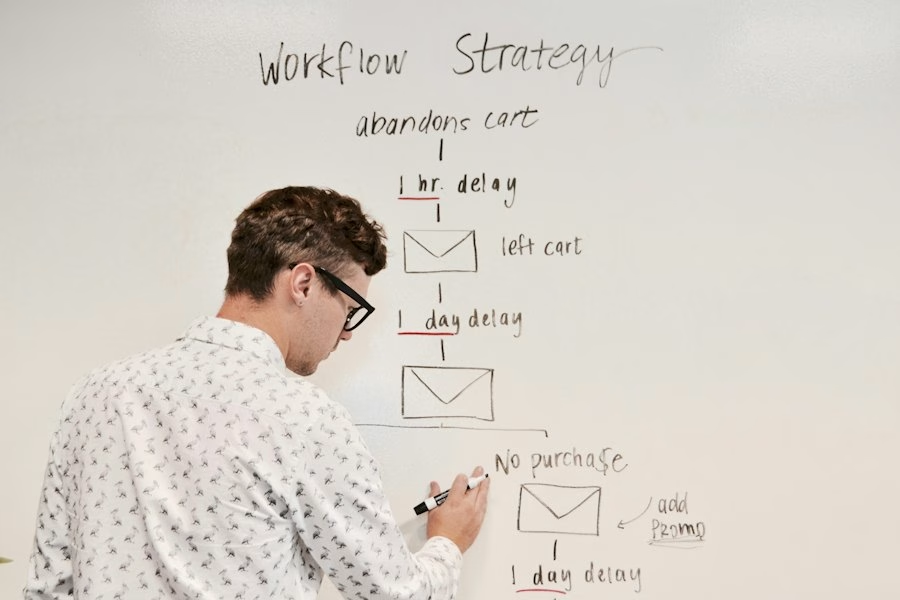
Manually sending emails in response to every customer question would be an impossible task. This is where the power of email marketing automation comes into play. By setting up intelligent workflows, you can ensure that the right answers reach the right people at the right time, without constant manual intervention.
Setting Up Triggered Email Sequences
Triggered email sequences are the backbone of an automated, question-driven strategy. These emails are automatically sent when a specific action or event occurs.
Onboarding Sequences Based on Initial Product Questions
When a new customer signs up, they invariably have foundational questions about getting started. Design an onboarding sequence that addresses the most common initial queries: “How do I set up my account?”, “Where do I find X feature?”, “What’s the first step to get results?” Trigger these emails immediately after signup, with subsequent emails spaced out over a few days or weeks, guiding them through the initial steps and providing solutions to anticipated hurdles.
Reactivation Campaigns for Inactive Users
If a user becomes inactive, it often indicates they encountered a problem or couldn’t find the answer to a question that prevented them from progressing. Trigger a reactivation campaign when a user hasn’t logged in or engaged with your product for a certain period. These emails can gently prompt them with common questions like “Are you stuck on something?”, “Did you need help with X feature?”, or “We noticed you haven’t been around, how can we help?” Offer quick tips, links to support, or even a direct invitation for a personal consultation.
Purchase-Specific Follow-Up Emails
After a customer makes a purchase, their questions shift to using and getting the most out of their new acquisition. Trigger follow-up emails that address post-purchase queries. For example, an e-commerce store selling clothing could send an email “How to Care for Your New Garment” or “Styling Tips for Your Recent Purchase.” A software company could send “Tips for Getting Started with Your New Software” or “Advanced Features You Might Miss.”
Integrating with CRM and Support Systems
For a truly seamless and responsive strategy, integrate your email marketing platform with your CRM and customer support systems. This allows for a holistic view of your customer and enables even more precise targeting.
Leveraging CRM Data for Personalized Content
Your CRM holds a wealth of information about your customers: their purchase history, interactions with sales, specific interests, and even demographic data. Use this data to further personalize your question-driven emails. If your CRM indicates a customer frequently uses a specific product feature, you can send them advanced tips related to that feature. If they’ve expressed interest in an upcoming product, you can put them on a list to receive updates.
Automating Responses to Support Ticket Categories
Certain types of support tickets might represent common questions that could be preemptively answered via email. If your support system categorizes tickets, you can set up automation. For example, if a customer submits a ticket categorized as “password reset,” your email system could automatically send them an email with clear instructions on how to reset their password, potentially resolving the issue before a support agent even needs to intervene. This frees up your support team for more complex issues.
When developing an effective email marketing strategy centered around customer questions, it’s also beneficial to explore how to optimize your email variants for better engagement. A related article discusses the importance of automating your email campaigns to ensure that the right messages reach the right audiences at the right time. You can read more about this approach in the article on automating email variants, which can significantly enhance your overall strategy by allowing for more personalized communication. For further insights, check out the article here.
Measuring and Optimizing Your Strategy
| Step | Action | Metric to Track | Purpose |
|---|---|---|---|
| 1 | Collect Customer Questions | Number of questions gathered | Identify common concerns and interests |
| 2 | Segment Audience Based on Questions | Number of segments created | Personalize email content effectively |
| 3 | Create Email Content Addressing Questions | Open rate (%) | Measure engagement with targeted content |
| 4 | Send Emails and Monitor Responses | Click-through rate (CTR %) | Track interest in specific answers or offers |
| 5 | Analyze Feedback and Adjust Strategy | Unsubscribe rate (%) | Understand content relevance and improve |
| 6 | Repeat and Optimize | Conversion rate (%) | Measure effectiveness in driving desired actions |
Building an email marketing strategy around customer questions isn’t a “set it and forget it” endeavor. To ensure its ongoing effectiveness, you must continuously measure its performance, analyze the results, and make data-driven adjustments. This iterative process of refinement will ensure your emails remain highly relevant and valuable to your audience.
Tracking Key Performance Indicators (KPIs)
To understand if your strategy is working, you need to monitor specific metrics that indicate engagement and effectiveness.
Monitoring Open Rates and Click-Through Rates
These are fundamental metrics. A high open rate suggests your subject lines are compelling and relevant to the recipient’s perceived questions. A strong click-through rate (CTR) indicates that the content within your email effectively answers their initial question or provides a clear path to more information. If your open rates are low, your subject lines might not be hitting the mark. If your CTR is low, your content might not be engaging or effectively leading to the next step.
Analyzing Conversion Rates from Question-Based Emails
Ultimately, your email marketing strategy should contribute to your business goals. Track how many recipients convert after interacting with your question-based emails. This could mean making a purchase, signing up for a demo, downloading a resource, or completing a key action on your website. Attribute conversions directly to the specific email campaigns that addressed customer questions to understand their impact on your bottom line.
Tracking Unsubscribe Rates and Feedback
While high unsubscribe rates are generally undesirable, they can also provide valuable feedback. If a particular email or series sees a spike in unsubscribes, it’s a strong indicator that the content wasn’t relevant or helpful to that segment. Pay attention to any direct feedback customers provide when unsubscribing, as it can offer explicit insights into what went wrong. A customer feedback loop in your unsubscribe process can gather invaluable data.
Conducting A/B Testing for Continuous Improvement
A/B testing (or split testing) is crucial for refining your question-driven emails. It allows you to test different elements and determine what resonates best with your audience.
Experimenting with Subject Lines and Preheader Text
The subject line and preheader text are your first opportunity to capture attention and communicate that you’re addressing a key question. A/B test different formulations:
- Direct questions (“How to solve X problem?”) vs. implied answers (“Solve X problem with this guide”).
- Using emojis vs. no emojis.
- Personalization (e.g., “[Name], Your Question About X Answered”) vs. generic.
- Focusing on the problem vs. focusing on the solution.
Testing Different Email Body Formats and Calls-to-Action
Once they open the email, the content and layout matter. A/B test variations in your email body:
- Longer explanations vs. shorter, punchier answers.
- Using more visuals (images, GIFs) vs. primarily text.
- Different ways of presenting information (bullet points, numbered lists, paragraphs).
- Varying calls-to-action (CTAs): “Learn More,” “Get Your Answer,” “Watch the Video,” “Shop Now.” Test placement, wording, and button design to see what drives the most engagement and conversions.
Optimizing Send Times and Frequency
The timing and frequency of your emails can significantly impact engagement. A/B test different send days and times to determine when your audience is most receptive. Similarly, experiment with the frequency of your emails. Sending too often can lead to fatigue and unsubscribes, while sending too infrequently might mean your messages get lost. Find the sweet spot where you provide consistent value without overwhelming your subscribers. Your ideal frequency will depend heavily on the nature of your content and your audience’s expectations.
FAQs
What is the importance of customer questions in email marketing?
Customer questions provide valuable insights into the needs and concerns of your audience. By addressing these questions in your email marketing strategy, you can create more relevant content, improve engagement, and build trust with your subscribers. This approach helps ensure that your emails resonate with your audience and encourage them to take action.
How can I collect customer questions for my email marketing strategy?
You can collect customer questions through various methods, including surveys, feedback forms, social media interactions, and customer service inquiries. Additionally, monitoring online forums and community discussions related to your industry can help you identify common questions and topics of interest among your target audience.
What types of content can I create based on customer questions?
Based on customer questions, you can create a variety of content types, such as FAQs, how-to guides, blog posts, video tutorials, and infographics. Additionally, you can develop targeted email campaigns that address specific questions, providing valuable information and solutions that cater to your audience’s needs.
How often should I update my email marketing content based on customer questions?
It’s essential to regularly update your email marketing content to reflect new customer questions and trends. Aim to review and refresh your content at least quarterly, or more frequently if you notice significant changes in customer inquiries or industry developments. This ensures that your emails remain relevant and valuable to your audience.
What metrics should I track to evaluate the effectiveness of my email marketing strategy focused on customer questions?
To evaluate the effectiveness of your email marketing strategy, track metrics such as open rates, click-through rates, conversion rates, and unsubscribe rates. Additionally, monitor engagement metrics like replies and social shares, as well as customer feedback on the content you provide. Analyzing these metrics will help you understand how well your strategy is resonating with your audience and where improvements may be needed.