



You’re standing on the precipice of a revolution in how you connect with your audience. For years, email marketing has been your reliable workhorse, a channel for broadcasting messages and hoping for the best. But soon, you’ll realize that “hoping” is an outdated strategy. The future of email marketing platforms is being redefined by predictive analytics, and understanding its potential is paramount to staying ahead. You’re not just sending emails anymore; you’re anticipating needs, personalizing experiences at an unprecedented level, and ultimately, forging deeper, more profitable relationships with every subscriber.
This isn’t a distant fantasy. The tools are evolving, the data is becoming richer, and the algorithms are growing exponentially more sophisticated. You, as a marketer, will be empowered with a level of insight that was once unimaginable. This article will guide you through what this future looks like, how it will reshape your daily workflow, and the strategic advantages you’ll gain by embracing it.
To understand the future, you must first appreciate the present and the evolution that led us here. Predictive analytics in email marketing platforms isn’t some magical black box; it’s built upon a robust understanding and utilization of your data. Your current email marketing platform likely collects basic subscriber information – names, email addresses, perhaps some demographic data if you’ve actively gathered it. It tracks opens, clicks, and unsubscribes. But the future demands a far more comprehensive and integrated approach.
Beyond the Basics: Holistic Customer Data Silos Shattered
The first hurdle to predictive power lies in breaking down data silos. You’re likely sitting on a goldmine of information scattered across various platforms.
CRM Integration: The Central Nervous System
Your Customer Relationship Management (CRM) system is the logical starting point for a unified view of your customer. Predictive analytics will seamlessly integrate with your CRM, drawing not just contact details but also purchase history, support interactions, preferred communication channels, and even sentiment analysis from past customer service calls. This integration will allow you to move beyond simply sending a promotional email to your entire list. Instead, you’ll be able to segment and target based on a customer’s entire journey with your brand.
- Understanding the Customer Lifecycle: Your platform will analyze where a customer is in their journey – a new lead, an active buyer, a lapsed customer – and tailor predictions accordingly. Is this customer likely to churn? Are they ready for an upsell? Your platform will provide these insights.
- Lifetime Value (LTV) Prediction: Imagine predicting the potential lifetime value of individual subscribers. This data will inform your acquisition strategies, your retention efforts, and your overall marketing budget allocation.
Website and App Behavior: The Digital Footprint
Your subscribers aren’t just interacting with your emails; they’re browsing your website, using your app, and engaging with your content. Predictive analytics will harness this digital footprint.
- Behavioral Scoring: By tracking page views, time spent on site, product interest, cart abandonment, and feature usage within your app, your platform will assign dynamic behavioral scores. These scores will be key indicators of intent and readiness for specific communications.
- Personalized Content Recommendations: Based on browsing history and viewed products, your platform will be able to predict what content or products a subscriber is most likely to be interested in next, enabling highly relevant recommendations within your emails.
Purchase History and Transactional Data: The Ultimate Indicator
Past purchases are incredibly powerful predictors of future behavior. Your email marketing platform will go beyond simply acknowledging a past purchase.
- Predictive Replenishment: For consumable products, your platform will predict when a customer might be running low and send a timely reminder for reordering. This proactive approach drives repeat business and enhances customer convenience.
- Cross-selling and Upselling Opportunities: By analyzing past purchase patterns and identifying related products, your platform will intelligently suggest relevant add-ons or upgrades, increasing average order value.
Social Media and Third-Party Data: Broadening the Context
While privacy considerations are paramount, the future may see a more nuanced integration of anonymized or permission-based third-party data to enrich subscriber profiles.
- Interest Profiling: Understanding broader interests cultivated on social media (with user consent or through aggregated, anonymized data) can help inform content selection and campaign themes.
- Lookalike Audience Expansion: Predictive models can identify characteristics of your ideal customers and then help you find similar individuals across broader datasets for targeted acquisition campaigns.
Data Quality and Governance: The Unsung Heroes
All this advanced prediction relies on clean, accurate, and ethically sourced data. The future platforms will place a much greater emphasis on ensuring data integrity.
- Automated Data Cleansing: Expect your platform to proactively identify and rectify errors, duplicates, and outdated information, ensuring that your predictive models are fed with reliable data.
- Consent Management and Privacy Compliance: Robust built-in tools for managing subscriber consent and ensuring compliance with regulations like GDPR and CCPA will be non-negotiable, building trust and ethical practices into the core of your operations.
In exploring the future of predictive analytics in email marketing platforms, it is essential to consider how content creation strategies can enhance engagement and effectiveness. A related article, which delves into the nuances of creating compelling content, can be found at Crafting Engaging Content: The Art of Smart Spinning. This article discusses innovative techniques that can be integrated with predictive analytics to optimize email campaigns and drive better results.
Predictive Personalization: Beyond “Hi [First Name]”
The cliché of email personalization has always been the dynamic insertion of a subscriber’s first name. The future of predictive analytics elevates this to an entirely new dimension, transforming your emails from generic broadcasts into hyper-personalized, one-to-one conversations.
Dynamic Content Tailoring: The Right Message, Every Time
Predictive models will analyze individual subscriber profiles to determine the most relevant content to display in real-time.
Content Affinity Prediction: What Will They Click?
Your platform will predict which articles, blog posts, product categories, or even specific product pages a subscriber is most likely to engage with based on their past behavior and declared interests.
- Personalized Content Blocks: Imagine an email where the editorial content automatically adjusts based on the subscriber’s predicted interests. One subscriber might see a featured article on sustainable living, while another sees a piece on the latest tech gadgets.
- Product Showcase Optimization: Not only will product recommendations be personalized, but the order and prominence of those products within an email will be dynamically adjusted based on predictive purchasing intent.
Offer and Promotion Personalization: The Perfect Incentive
Predictive analytics will go beyond simply knowing what a customer likes; it will anticipate what will motivate them to act.
- Discount Sensitivity Analysis: Your platform will learn which subscribers are most likely to respond to discounts, which ones prefer free shipping, and who might be impervious to price-based incentives. This prevents unnecessary margin erosion.
- Personalized Incentive Delivery: Instead of a blanket “10% off” email, you’ll send tailored offers. Subscriber A might receive a “free gift with purchase,” while Subscriber B gets early access to a new collection.
Behavioral Trigger Optimization: The Art of Timeliness
The timing of your emails is as crucial as their content. Predictive analytics will refine your trigger-based campaigns to near perfection.
Predictive Send-Time Optimization (STO): When They Are Most Receptive
This is already emerging, but it will become far more sophisticated. Your platform will not just guess; it will learn the optimal time to send an email to each individual subscriber based on their past engagement patterns.
- Individualized Engagement Windows: Some subscribers might be morning readers, while others check emails before bed. Your platform will predict these windows and schedule sends accordingly, maximizing the likelihood of an open.
- Cross-Device Synchronization: STO will likely become more intelligent, considering the device a subscriber is most likely to be using at a given time.
Predictive Churn Prevention Triggers: Proactive Retention
Losing a customer is far more expensive than retaining one. Predictive analytics will empower you to act before a customer disengages.
- Inactivity Pattern Detection: The platform will identify subtle shifts in behavior that often precede churn – a decline in open rates, reduced website visits, or a lack of recent purchases.
- Proactive Re-engagement Campaigns: As soon as these patterns are detected, your platform can automatically trigger a personalized re-engagement campaign, offering incentives or valuable content to reignite interest and prevent churn.
Predictive Upsell and Cross-sell Triggers: Seizing the Moment
Timing is everything when it comes to increasing customer value.
- Readiness Signals: Your platform will identify signals indicating a customer is ready for an upgrade or a complementary product, such as researching higher-tier offerings or frequently viewing related items.
- Contextual Offers: Triggers will be designed to deliver the right offer at the opportune moment, such as a post-purchase email suggesting an accessory or a series of emails for a customer nearing the end of their contract.
Advanced Segmentation and AI-Powered Audiences: Precision at Scale

Traditional segmentation relies on manually defined rules based on demographics or basic purchase history. The future, fueled by predictive analytics and AI, will unlock far more dynamic, nuanced, and powerful audience creation.
Dynamic Micro-Segmentation: Beyond Broad Categories
Predictive models will enable you to create hyper-specific segments based on predicted behaviors and attributes that you may not have even thought to define manually.
Propensity Modeling: Who is Likely to Do What?
This is a core predictive capability. Your platform will be able to identify segments of subscribers who have a high propensity for specific actions.
- Propensity to Purchase a Specific Product: Identify subscribers most likely to buy your new flagship product.
- Propensity to Respond to Loyalty Programs: Target those who are likely to engage with your rewards scheme.
- Propensity to Refer a Friend: Identify your potential brand advocates.
Predictive Customer Lifetime Value (CLV) Segmentation: Prioritizing Your Efforts
Your CLV predictions will directly translate into sophisticated segmentation.
- High-Value Prospect Identification: Focus acquisition and nurturing efforts on individuals predicted to have the highest long-term value.
- Loyalty Tier Refinement: Understand and segment your most loyal customers beyond simple purchase frequency, based on their overall predicted value and engagement.
AI-Generated Audiences: The Power of Machine Learning
Artificial intelligence will actively help you discover and build optimal audience segments, reducing the manual burden and uncovering hidden opportunities.
Lookalike Audience Optimization: Finding More of Your Best
Building on existing segments, AI will find new audiences that share similar predicted characteristics to your most valuable customers.
- Predictive Trait Matching: AI will analyze the predicted traits of your high-CLV customers and identify new prospects who exhibit those same predictive traits, even if they haven’t directly interacted with your brand yet.
- Dynamic Audience Expansion: As your customer base evolves, AI will continuously refine and expand these lookalike audiences to ensure you’re always reaching the most promising new leads.
Unsupervised Learning for Discovery: Uncovering the Unexpected
AI can analyze your data without predefined rules, uncovering non-obvious patterns and segmentations that humans might miss.
- Identification of Niche Segments: AI might identify a surprisingly engaged group of subscribers with a unique combination of interests or behaviors that you can then target with specialized campaigns.
- Behavioral Clusters: AI can group subscribers into distinct behavioral clusters based on complex interactions, leading to more strategic campaign design.
Optimizing Campaigns with Predictive Insights: Smarter, Faster, More Effective
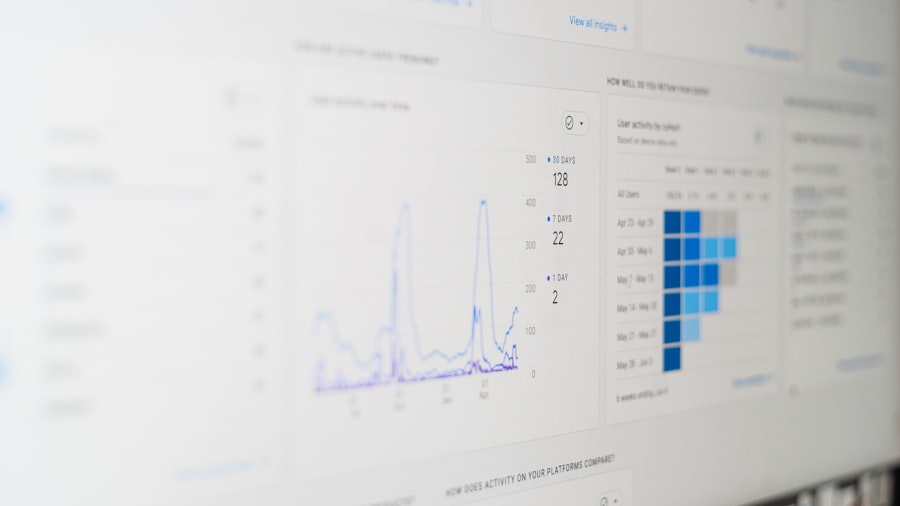
The true power of predictive analytics lies in its ability to inform and optimize every facet of your email marketing campaigns, making them more efficient and impactful.
Content and Creative Optimization: What Resonates and Why
Predictive models will help you understand not just what to say, but how to say it and with what visual elements.
Subject Line and Preview Text Prediction: Maximizing Open Rates
The first impression matters, and predictive analytics will help you nail it.
- A/B/n Testing Automation: Your platform will learn which subject line and preview text combinations are most likely to drive opens for different segments, and even individual subscribers.
- Personalized Subject Line Generation: In the future, AI might even generate hyper-personalized subject lines, drawing from predicted interests and current trends.
Image and Call-to-Action (CTA) Optimization: Driving Engagement
Beyond text, visuals and calls to action are critical.
- Image Resonance Prediction: Your platform could analyze which types of imagery or visual styles resonate most with specific subscriber segments, leading to higher click-through rates.
- CTA Performance Forecasting: Predict which phrasing or placement of CTAs will be most effective for triggering desired actions.
Budget Allocation and ROI Enhancement: Making Every Dollar Count
Predictive analytics will move you from guesswork to data-driven decision-making for your marketing spend.
Predictive Campaign Performance Forecasting: Anticipating Success
Before you even launch a campaign, you’ll have a clearer picture of its potential success.
- Revenue Prediction: Your platform can forecast the likely revenue generated by specific campaigns targeting particular segments.
- ROI Modeling: Understand the anticipated return on investment for different campaign strategies based on predictive engagement and conversion rates.
Automated Budget Optimization: Smarter Resource Allocation
Predictive insights will guide your budget allocation in real-time.
- Budget Shifting: If a campaign targeting a specific segment is predicted to overperform or underperform, your platform can suggest or even automatically reallocate budget to more promising initiatives.
- Channel Optimization: While focused on email, predictive insights can inform budget allocation across marketing channels by highlighting the predicted effectiveness of email campaigns in driving overall customer acquisition and retention.
A/B Testing and Multivariate Testing Reinvented: Faster Learning, Greater Impact
The traditional A/B test will be enhanced by predictive capabilities, leading to more efficient learning and optimization cycles.
- Predictive Test Design: AI will suggest the most impactful variables to test based on your data and past campaign performance, ensuring that your tests are designed for maximum learning.
- Automated Iteration: Your platform will be able to automatically run tests, interpret results with statistical significance, and implement the winning variations, creating a continuous optimization loop.
As businesses increasingly rely on data-driven strategies, the role of predictive analytics in email marketing platforms is becoming more crucial. A related article discusses the significance of mastering trigger-based emails, highlighting the impact of sending messages at the right time to enhance customer engagement. For insights on this topic, you can read more in the article on trigger-based emails. This approach not only complements predictive analytics but also helps marketers tailor their campaigns for maximum effectiveness.
The Evolution of the Email Marketer: From Operator to Strategist
| Metrics | Data |
|---|---|
| Open Rate | 25% |
| Click-Through Rate | 5% |
| Conversion Rate | 2% |
| Subscriber Engagement | High |
| Personalization | Customized content |
The advent of sophisticated predictive analytics doesn’t render you obsolete; it elevates your role. You will transition from being an operator of tools to a true strategist, leveraging powerful insights to drive impactful business outcomes.
Focus on Strategy and Creativity: Unleashing Your True Potential
With much of the manual grunt work automated, you’ll have more time and mental bandwidth for higher-level strategic thinking.
Strategic Campaign Design: Architecting Customer Journeys
You’ll be designing more intricate, personalized customer journeys that are informed by predictive insights rather than broad assumptions.
- Proactive Customer Engagement Planning: Instead of reacting to customer behavior, you’ll proactively design campaigns based on predicted future needs and interactions.
- Cross-Channel Strategy Integration: Predictive insights from email will be integrated with broader marketing strategies, ensuring a cohesive and powerful customer experience across all touchpoints.
Content Strategy and Brand Voice: The Human Element
While AI will assist in content personalization, the overarching creative direction, brand storytelling, and innovative campaign concepts will remain firmly within your purview.
- Developing Unique Value Propositions: You’ll focus on crafting compelling narratives that resonate with your audience, informed by the deep understanding predictive analytics provides.
- Brand Personality Cultivation: Ensuring your brand’s authentic voice shines through, even in highly personalized communications.
Data Interpretation and Insight Generation: Becoming a Detective
You will become an expert at interpreting the complex data and insights generated by predictive models, translating them into actionable strategies.
Understanding the “Why” Behind the Predictions: Beyond the Black Box
While the algorithms may be complex, your role will be to understand the underlying drivers of the predictions and how they align with your business goals.
- Investigating Anomaly Detection: Identifying and understanding unusual patterns or deviations in predictive model output.
- Connecting Predictive Insights to Business Outcomes: Clearly articulating how predictive analytics directly impacts key performance indicators (KPIs) such as conversion rates, customer retention, and revenue.
Ethical Considerations and Data Privacy Advocacy: Championing Trust
As predictive capabilities grow, so does the responsibility to use this power ethically and transparently.
- Championing Data Privacy: You will be at the forefront of ensuring that data is used responsibly and with the subscriber’s best interests in mind.
- Building Trust Through Transparency: Communicating clearly with your audience about how their data is used to enhance their experience.
Collaboration and Cross-Functional Influence: Driving Business Impact
Your role will also expand to influencing other departments as you demonstrate the tangible business impact of predictive email marketing.
Influencing Product Development: Customer Needs as a Driving Force
The insights gained from predictive analytics can directly inform product roadmaps and customer feature requests.
- Sharing Predictively Identified Needs: Communicating to product teams the features or improvements that subscribers are predicted to desire or benefit from.
Guiding Sales and Customer Service Strategies: A Unified Approach
Your understanding of customer behavior and predicted needs will be invaluable to sales and customer service teams.
- Providing Insights for Sales Outreach: Informing sales teams about which leads are most “sales-ready” based on their digital engagement and predictive scores.
- Enhancing Customer Support: Empowering support teams with context about a customer’s predicted needs and potential issues.
The future of predictive analytics in email marketing platforms is not just about sending smarter emails; it’s about building stronger, more enduring relationships with your audience, driven by an unparalleled understanding of their needs and desires. You are about to enter a new era of email marketing, where anticipation replaces guesswork, personalization becomes the norm, and strategic insight becomes your greatest asset. Embrace this evolution, and watch your connections – and your business – flourish.
FAQs
What is predictive analytics in email marketing platforms?
Predictive analytics in email marketing platforms is the use of data, statistical algorithms, and machine learning techniques to identify the likelihood of future outcomes based on historical data. In the context of email marketing, predictive analytics can be used to forecast customer behavior, personalize content, and optimize email campaigns.
How does predictive analytics benefit email marketing platforms?
Predictive analytics can benefit email marketing platforms by enabling more targeted and personalized communication with customers. By analyzing past behavior and preferences, email marketers can better understand their audience and deliver more relevant content, leading to higher engagement and conversion rates.
What are some common applications of predictive analytics in email marketing platforms?
Common applications of predictive analytics in email marketing platforms include predicting customer churn, identifying high-value customers, personalizing email content and offers, optimizing send times, and forecasting campaign performance.
What are the challenges of implementing predictive analytics in email marketing platforms?
Challenges of implementing predictive analytics in email marketing platforms include the need for high-quality data, the complexity of algorithms and models, the requirement for skilled data analysts or data scientists, and the potential for privacy and data security concerns.
What is the future outlook for predictive analytics in email marketing platforms?
The future of predictive analytics in email marketing platforms is expected to involve more advanced machine learning techniques, greater integration with other marketing technologies, and a focus on real-time, dynamic personalization. As data collection and analysis capabilities continue to improve, predictive analytics will play an increasingly important role in driving email marketing success.