



In today’s fast-paced digital landscape, the concept of hyper-targeted segments has emerged as a game-changer for marketers. You may find that traditional marketing strategies, which often cast a wide net, are no longer effective in reaching your audience. Instead, hyper-targeting allows you to focus on specific groups within your broader market, tailoring your messages and offers to meet their unique needs and preferences.
This approach not only enhances engagement but also increases the likelihood of conversion, as you are speaking directly to the interests and pain points of your audience. To fully grasp the significance of hyper-targeted segments, consider the vast array of data available at your fingertips. With advancements in technology and analytics, you can now dissect your audience into smaller, more manageable groups based on various criteria such as demographics, behaviors, and purchasing patterns.
By understanding these segments, you can create more relevant marketing strategies that resonate with each group. This level of precision not only improves customer satisfaction but also fosters brand loyalty, as customers feel understood and valued.
Key Takeaways
- Hyper-targeted segments allow precise marketing by focusing on specific customer profiles and behaviors.
- Data utilization and behavioral insights are crucial for creating and refining these segments effectively.
- Personalization through tailored messages, offers, and dynamic content enhances engagement and conversion.
- A/B testing and optimized landing pages help determine the best strategies for each segment.
- Continuous analysis and refinement of segments improve marketing performance over time.
Identifying Your Ideal Customer Profile
The first step in creating hyper-targeted segments is identifying your ideal customer profile (ICP). This involves analyzing your existing customer base to determine the characteristics that define your most valuable customers. You should consider factors such as age, gender, income level, geographic location, and interests.
By compiling this information, you can create a detailed portrait of who your ideal customer is, which will serve as a foundation for your segmentation efforts. Once you have established your ICP, it’s essential to validate this profile through research and data analysis. You might conduct surveys or interviews with current customers to gain deeper insights into their motivations and preferences.
Additionally, leveraging social media analytics can provide valuable information about how your audience interacts with your brand online. By continuously refining your ICP based on real-world feedback and data, you can ensure that your marketing efforts remain aligned with the needs of your target audience.
Utilizing Data to Create Hyper-Targeted Segments

Data is the backbone of effective hyper-targeting. You have access to a wealth of information that can help you segment your audience more accurately than ever before. By utilizing customer relationship management (CRM) systems, website analytics, and social media insights, you can gather data on customer behaviors and preferences.
This information allows you to identify patterns and trends that can inform your segmentation strategy. For instance, you might discover that certain demographics are more likely to engage with specific types of content or products. By analyzing this data, you can create segments based on these insights, ensuring that your marketing messages are tailored to resonate with each group.
Moreover, the use of predictive analytics can help you anticipate future behaviors based on historical data, allowing you to stay one step ahead in your marketing efforts.
Personalizing Marketing Messages for Each Segment
Once you have established hyper-targeted segments, the next step is to personalize your marketing messages for each group. Personalization goes beyond simply addressing customers by their first names; it involves crafting messages that speak directly to their interests and needs. You should consider the unique pain points and desires of each segment when developing your content and offers.
For example, if one of your segments consists of young professionals seeking career advancement, your messaging could focus on how your product or service can help them achieve their goals. On the other hand, if another segment includes parents looking for family-friendly solutions, your messaging should highlight safety features and convenience. By tailoring your marketing messages in this way, you create a more meaningful connection with each segment, increasing the likelihood of engagement and conversion.
Leveraging Behavioral Data for Segmentation
| Conversion Rate | 2.5% | 7.8% | 212% |
| Click-Through Rate (CTR) | 1.8% | 5.4% | 200% |
| Cost Per Acquisition (CPA) | 50 | 18 | -64% |
| Return on Investment (ROI) | 120 | 350 | 192% |
| Engagement Rate | 10% | 28% | 180% |
Behavioral data is a powerful tool for refining your hyper-targeted segments. This type of data provides insights into how customers interact with your brand across various touchpoints, including website visits, email opens, and social media engagement. By analyzing this information, you can identify specific behaviors that indicate a customer’s readiness to purchase or their level of interest in certain products.
For instance, if you notice that a particular segment frequently visits a specific product page but has not yet made a purchase, you can tailor your marketing efforts to address their hesitations. Perhaps they need more information or reassurance about the product’s benefits. By leveraging behavioral data in this way, you can create targeted campaigns that guide customers through the buying process and ultimately drive conversions.
Implementing A/B Testing for Different Segments
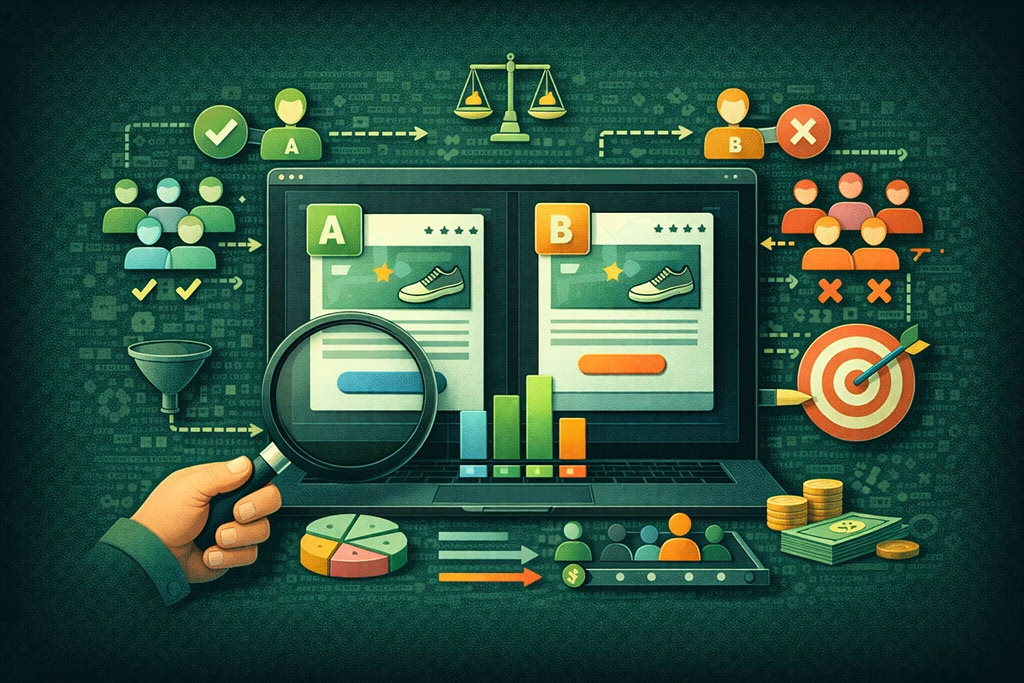
A/B testing is an invaluable method for optimizing your marketing strategies across different segments. By creating two variations of a marketing message or campaign and testing them with distinct segments, you can determine which approach resonates better with each group. This process allows you to make data-driven decisions that enhance the effectiveness of your marketing efforts.
When implementing A/B testing, it’s crucial to define clear objectives for each test. You might want to measure metrics such as click-through rates, conversion rates, or engagement levels. By analyzing the results of these tests, you can gain insights into what works best for each segment and refine your strategies accordingly.
This iterative process not only improves your marketing effectiveness but also ensures that you are continually adapting to the evolving preferences of your audience.
Optimizing Landing Pages for Specific Segments
Your landing pages play a critical role in converting visitors into customers, making it essential to optimize them for specific segments. A well-designed landing page should align with the interests and needs of the target audience it serves. This means customizing elements such as headlines, images, and calls-to-action based on the characteristics of each segment.
For example, if one segment is primarily interested in eco-friendly products, your landing page should prominently feature sustainability messaging and visuals that resonate with their values.
Conversely, if another segment is focused on luxury and exclusivity, you should highlight premium features and benefits. By creating landing pages tailored to each segment’s preferences, you enhance the user experience and increase the likelihood of conversion.
Creating Tailored Offers for Different Segments
Tailored offers are another effective way to engage hyper-targeted segments. By understanding the unique needs and motivations of each group, you can create offers that are specifically designed to appeal to them. This could include discounts, bundled products, or exclusive access to new releases that align with their interests.
For instance, if one segment consists of budget-conscious consumers, offering a limited-time discount may be an effective way to drive conversions. On the other hand, if another segment values exclusivity and premium experiences, consider creating an invitation-only event or a loyalty program that rewards repeat purchases. By crafting tailored offers for each segment, you not only increase engagement but also foster a sense of loyalty among your customers.
Using Dynamic Content to Appeal to Specific Segments
Dynamic content is a powerful tool for personalizing the user experience across different segments. By utilizing technology that allows for real-time content customization based on user behavior or preferences, you can create a more engaging experience for each visitor. This could include personalized product recommendations or tailored messaging that reflects their interests.
For example, if a visitor from a specific segment has previously shown interest in outdoor gear, dynamic content can display related products or promotions when they visit your website. This level of personalization not only enhances user experience but also increases the likelihood of conversion by presenting relevant options at the right moment.
Analyzing Conversion Metrics for Each Segment
To measure the success of your hyper-targeted segmentation efforts, it’s essential to analyze conversion metrics for each segment regularly. By tracking key performance indicators (KPIs) such as conversion rates, average order value, and customer lifetime value for each group, you can gain insights into how well your strategies are performing. This analysis will help you identify which segments are responding positively to your marketing efforts and which may require further refinement.
For instance, if one segment shows a high conversion rate but low average order value, you might consider upselling or cross-selling strategies to increase revenue from that group. Conversely, if another segment has low engagement rates despite targeted messaging, it may be time to revisit your approach and make necessary adjustments.
Continuous Refinement of Hyper-Targeted Segments
The process of creating hyper-targeted segments is not a one-time effort; it requires continuous refinement based on evolving customer behaviors and market trends. As you gather more data and insights over time, it’s crucial to revisit and adjust your segments accordingly. This iterative approach ensures that your marketing strategies remain relevant and effective in meeting the needs of your audience.
You should regularly review customer feedback and performance metrics to identify areas for improvement within each segment. Additionally, staying informed about industry trends and shifts in consumer behavior will allow you to adapt your segmentation strategy proactively. By committing to continuous refinement of hyper-targeted segments, you position yourself for long-term success in an ever-changing marketplace.
In conclusion, embracing hyper-targeted segmentation is essential for modern marketers seeking to connect with their audiences meaningfully. By understanding your ideal customer profile and leveraging data-driven insights, you can create personalized marketing messages that resonate with specific groups. Through A/B testing and ongoing analysis of conversion metrics, you can refine your strategies continuously and optimize engagement across all segments.
Ultimately, this approach not only enhances customer satisfaction but also drives business growth in today’s competitive landscape.
In the quest to enhance marketing effectiveness, understanding the nuances of audience segmentation is crucial. For those interested in exploring how targeted marketing strategies can significantly improve conversion rates, the article “Boost Your ROI: How Hyper-Targeted Segments Lead to Higher Conversions” provides valuable insights. Additionally, you may find the article on the DualSense Edge Wireless Controller for PS5 particularly relevant, as it discusses how tailored marketing approaches can drive sales in the competitive gaming industry.
FAQs
What is hyper-targeted segmentation?
Hyper-targeted segmentation is the process of dividing a broad audience into very specific groups based on detailed criteria such as demographics, behaviors, interests, and purchasing patterns to deliver highly personalized marketing messages.
How does hyper-targeted segmentation improve ROI?
By focusing marketing efforts on well-defined audience segments, hyper-targeted segmentation increases the relevance of campaigns, leading to higher engagement, better conversion rates, and ultimately a greater return on investment (ROI).
What types of data are used for creating hyper-targeted segments?
Data used includes demographic information, browsing behavior, purchase history, geographic location, psychographics, and interaction with previous marketing campaigns.
Can hyper-targeted segments be used across different marketing channels?
Yes, hyper-targeted segments can be applied across various channels such as email marketing, social media advertising, search engine marketing, and direct mail to ensure consistent and relevant messaging.
Is hyper-targeted segmentation suitable for all businesses?
While beneficial for many, hyper-targeted segmentation is especially effective for businesses with diverse customer bases and sufficient data. Smaller businesses with limited data may need to start with broader segments.
What tools can help implement hyper-targeted segmentation?
Customer Relationship Management (CRM) systems, marketing automation platforms, data analytics tools, and audience segmentation software are commonly used to create and manage hyper-targeted segments.
How often should hyper-targeted segments be updated?
Segments should be reviewed and updated regularly, typically monthly or quarterly, to reflect changes in customer behavior, market trends, and campaign performance.
Are there any privacy concerns with hyper-targeted segmentation?
Yes, businesses must ensure compliance with data protection regulations such as GDPR and CCPA by obtaining proper consent and handling customer data responsibly when creating hyper-targeted segments.