



When you embark on the journey of sending transactional, marketing, or notification emails, one of the most critical decisions you face is choosing your email sending infrastructure. This choice directly impacts your deliverability, scalability, and ultimately, the effectiveness of your communication. Two primary contenders emerge in this arena: Cloud SMTP and Dedicated SMTP services. Each offers a distinct approach to email delivery, akin to choosing between renting an apartment in a bustling city (Cloud SMTP) or owning a secluded, custom-built home (Dedicated SMTP). This article will provide a comprehensive comparison, enabling you to make an informed decision tailored to your specific requirements.
What is SMTP and Why Does it Matter?
Before delving into the specifics of cloud and dedicated services, it’s crucial to understand the foundational technology at play: SMTP.
The Role of SMTP in Email Communication
SMTP, or Simple Mail Transfer Protocol, is the industry standard for sending email. It’s the set of rules that computers use to exchange email messages over the internet. Imagine it as the postal service for your digital letters. When you hit “send” on an email, your email client (like Outlook or Gmail) communicates with an SMTP server, which then takes on the responsibility of routing your message to the recipient’s inbox. Without a functioning SMTP server, your emails simply wouldn’t go anywhere.
The Importance of Reliable Email Delivery
In the digital age, email remains a cornerstone of communication. From order confirmations and password resets to marketing campaigns and personalized outreach, reliable email delivery is paramount. A high bounce rate, emails landing in spam folders, or delayed delivery can have significant negative consequences for your business, impacting customer satisfaction, revenue, and brand reputation. Therefore, the choice of your SMTP service provider is far more than a technical detail; it’s a strategic decision.
When considering the differences between Cloud SMTP and Dedicated SMTP, it’s essential to understand how email deliverability can be impacted by various factors, including lead management strategies. For insights on maintaining deliverability by effectively managing inactive leads, you can refer to this informative article on the subject: The Sunset Policy: How to Automatically Suppress Inactive Leads to Save Deliverability. This resource provides valuable tips that can complement your SMTP service choice by ensuring your email campaigns remain effective.
Cloud SMTP: The Shared Infrastructure Solution
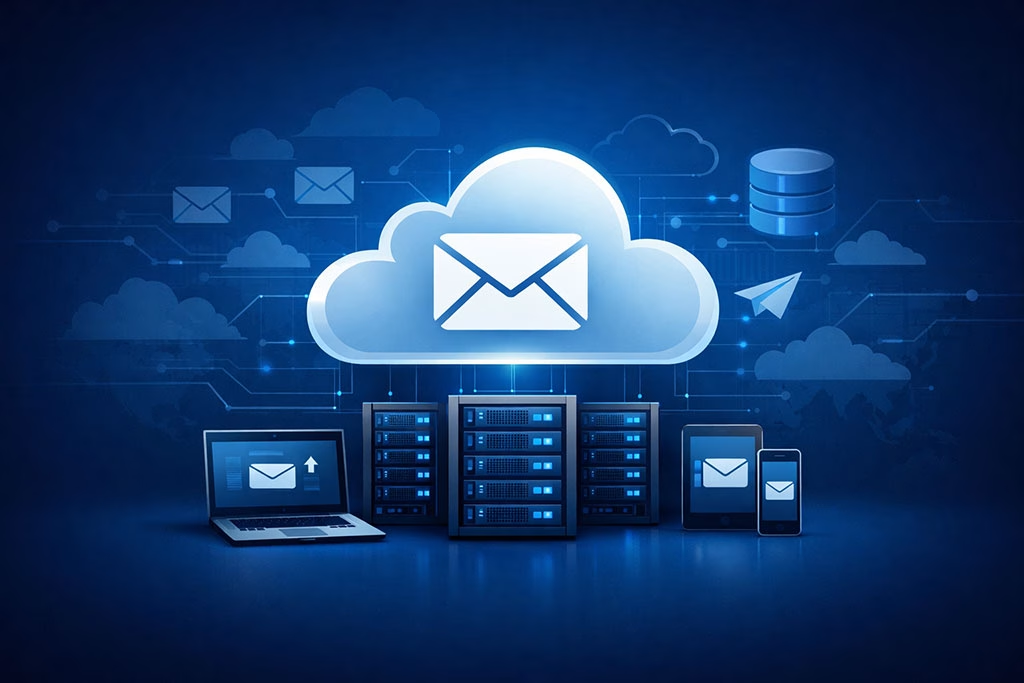
Cloud SMTP services, often referred to as transactional email providers, offer a managed, shared infrastructure for sending emails. Think of it as a large, meticulously maintained apartment complex where many individuals and businesses reside, benefiting from shared amenities and professional management.
How Cloud SMTP Operates
With Cloud SMTP, you connect your application or system to a provider’s (e.g., SendGrid, Mailgun, AWS SES) API or SMTP relay. You then send your emails through their large network of shared IP addresses and servers. The provider handles all the underlying complexities: server management, IP reputation monitoring, bounce handling, spam filtering, and often, advanced analytics. You essentially “rent” access to their robust email sending engine.
Advantages of Cloud SMTP
The shared nature of Cloud SMTP brings with it several compelling benefits, particularly for businesses seeking agility and scalability.
- Ease of Setup and Management: For many users, the primary appeal of Cloud SMTP lies in its simplicity. You don’t need to procure hardware, configure servers, or manage complex software. Integration often involves a few lines of code or a plugin for your existing platform. This dramatically reduces the technical overhead and time to market.
- Scalability: Cloud SMTP services are designed for massive scalability. Whether you’re sending a few dozen emails a day or millions, the infrastructure is built to handle fluctuating volumes without requiring manual intervention from your side. This elasticity is crucial for businesses with unpredictable email sending patterns.
- Cost-Effectiveness for Lower Volumes: For businesses with moderate email sending volumes, Cloud SMTP is typically more cost-effective. You pay based on your usage, often with tiered pricing models, meaning you only pay for what you send. This avoids the significant upfront investment and ongoing maintenance costs associated with dedicated infrastructure.
- Strong Deliverability Features: Reputable Cloud SMTP providers invest heavily in maintaining high deliverability rates. They employ sophisticated algorithms, participate in feedback loops with major ISPs (Internet Service Providers), manage IP reputation actively, and provide tools for authentication (SPF, DKIM, DMARC). This collective effort often translates to better inbox placement than what an individual user might achieve on their own without significant expertise.
- Analytics and Reporting: Most Cloud SMTP providers offer comprehensive dashboards and APIs that provide detailed insights into your email performance. You can track open rates, click-through rates, bounces, complaints, and delivery delays, enabling you to optimize your email campaigns effectively.
Potential Drawbacks of Cloud SMTP
While beneficial, the shared environment of Cloud SMTP also presents certain limitations and potential challenges.
- Shared IP Reputation Risks: Since you are sharing IP addresses with other users, your deliverability can be indirectly affected by the sending practices of others. If a few bad actors on a shared IP address send spam, it can negatively impact the reputation of that IP, potentially affecting your legitimate emails. While providers work diligently to mitigate this, the risk is inherent.
- Less Control Over Infrastructure: You surrender a degree of control over the underlying infrastructure. You cannot customize server configurations, choose specific network routes, or implement highly specialized security protocols directly on the sending servers. You are bound by the provider’s capabilities and policies.
- Potential for Rate Limiting: To protect their shared infrastructure and maintain reputation, cloud providers may implement temporary sending limits or throttles if they detect suspicious activity or a sudden, unexplained surge in your email volume. While usually temporary, this can be an inconvenience if not anticipated.
Dedicated SMTP: Your Private Email Highway
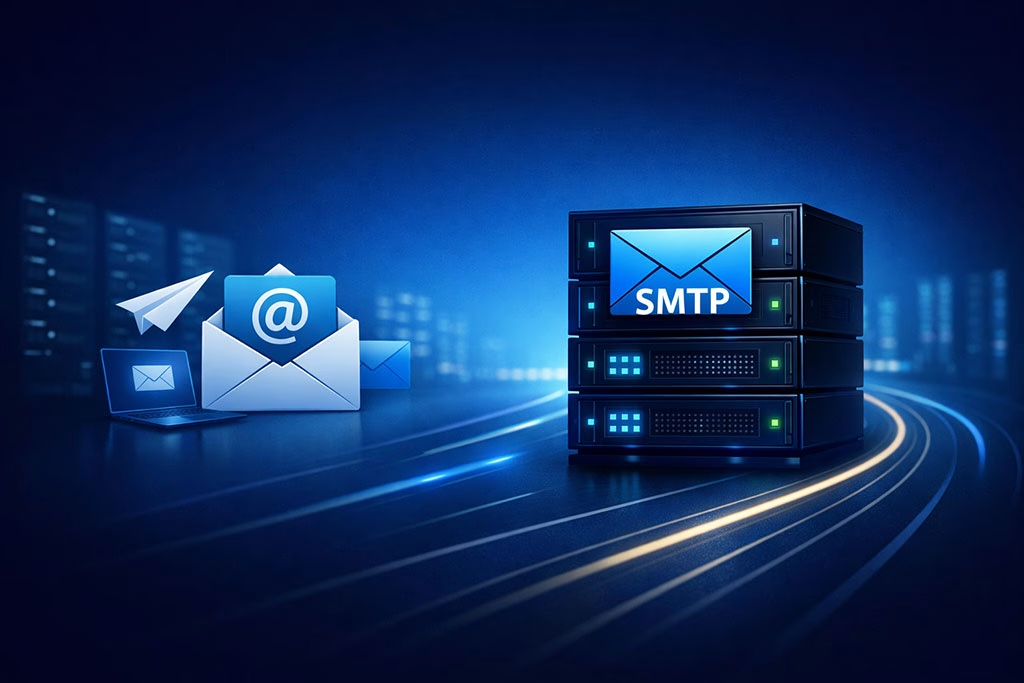
Dedicated SMTP, in contrast, involves using a server or a set of IP addresses exclusively allocated to your organization for sending emails. This is akin to owning your private postal service, complete with your own vehicles and processing centers.
How Dedicated SMTP Operates
With a dedicated SMTP server, you lease or own the server hardware and software, or a portion of it, and configure it specifically for email delivery. This can range from a self-hosted server in your data center to a dedicated server rented from a hosting provider, or dedicated IP addresses within a managed service provider’s infrastructure. The key differentiator is that your sending environment is isolated from other users.
Advantages of Dedicated SMTP
Opting for a dedicated solution often stems from a need for greater control, predictability, and reputation management.
- Exclusive IP Reputation: This is perhaps the most significant advantage. Your IP reputation is entirely your own. Your sending practices directly and solely influence your deliverability. If you maintain good sending hygiene, you can cultivate a pristine sending reputation over time, leading to consistently high inbox placement.
- Full Control Over Configuration: You have complete control over server settings, software configurations, security protocols, and even network routing. This level of customization allows you to tailor the environment precisely to your unique needs, integrating with your existing systems in a highly specific manner.
- Predictable Performance: Without the interference of other users, your email sending performance tends to be more predictable. You are not subject to the sending patterns or potential abuses of others, leading to more stable delivery speeds and fewer unexpected throttles.
- Enhanced Security: For highly sensitive communications or industries with stringent compliance requirements, dedicated SMTP offers enhanced security. You can implement custom firewall rules, encryption protocols, and access controls that might not be available or configurable on a shared cloud platform.
- Potential for Long-Term Cost Savings (High Volumes): For organizations sending extremely high volumes of email (millions per day), the cumulative costs of a cloud SMTP service can eventually surpass the cost of managing a dedicated infrastructure. While upfront investment and ongoing maintenance are higher, the per-email cost can become more favorable at scale.
Potential Drawbacks of Dedicated SMTP
The independence and control offered by dedicated SMTP come with their own set of responsibilities and potential hurdles.
- Complexity and Management Overhead: Setting up, configuring, and maintaining a dedicated SMTP server requires significant technical expertise. You are responsible for software installation, security patching, monitoring, blacklisting removal, bounce processing, and ensuring server uptime. This necessitates dedicated IT resources or highly skilled personnel.
- Higher Upfront and Ongoing Costs: The initial investment for hardware, software licenses, or dedicated server rental can be substantial. Furthermore, there are ongoing costs for maintenance, power, data transfer, and potentially expert staff.
- Initial IP Warming Process: When you acquire new dedicated IP addresses, they have no sending history, meaning they have a neutral reputation. You must engage in a process known as “IP warming,” gradually increasing your sending volume over several weeks or months. Sending too much too soon from a new IP can trigger spam filters and lead to poor deliverability.
- Scalability Challenges: While you have control, scaling a dedicated SMTP infrastructure up or down can be more complex and time-consuming than with cloud services. It often involves procuring new hardware, reconfiguring servers, or expanding your network.
- Risk of Self-Inflicted Deliverability Issues: Since you are solely responsible for your IP reputation, any missteps in your sending practices (e.g., poor list hygiene, sending unsolicited emails) will directly and severely impact your deliverability. There’s no shared “buffer” to absorb some of the impact.
Key Factors to Consider When Choosing
The decision between Cloud SMTP and Dedicated SMTP is not a one-size-fits-all answer. It hinges on several crucial factors unique to your organization.
Email Volume and Frequency
Your daily, weekly, and monthly email sending volume is a primary determinant.
- Low to Moderate Volume: For businesses sending up to a few hundred thousand emails per month, Cloud SMTP is almost always the more practical and cost-effective choice.
- High Volume: For millions of emails per month and beyond, the cost-effectiveness of dedicated solutions starts to become apparent, though the management burden increases significantly.
Technical Expertise and Resources
Assess the availability of in-house technical talent and time.
- Limited Internal Expertise: If your team lacks specialized knowledge in server administration, network protocols, and email deliverability best practices, Cloud SMTP provides a managed solution, freeing up your resources.
- Dedicated IT/DevOps Team: Organizations with a robust IT or DevOps team capable of handling complex server management and troubleshooting might find Dedicated SMTP an attractive option.
Budget Constraints
Consider both immediate and long-term financial implications.
- Limited Budget / Pay-as-you-go: Cloud SMTP typically offers flexible, usage-based pricing models that align well with fluctuating budgets or smaller initial investments.
- Larger Budget / Long-term Investment: Dedicated SMTP requires a larger upfront investment and ongoing operational costs, but can yield lower per-email costs at very high volumes.
Deliverability Control and Predictability
How critical is absolute control over your email sending environment and reputation?
- Prioritize Predictability and Control: If predictable deliverability and direct control over your IP reputation are paramount for your business-critical communications, Dedicated SMTP is the stronger choice.
- Value Convenience and Managed Deliverability: If you prefer to offload the complexities of maintaining deliverability to a specialized provider and can tolerate the shared IP risks, Cloud SMTP is suitable.
Security and Compliance Requirements
Some industries or applications have very specific security and compliance needs.
- Standard Security Requirements: Cloud SMTP providers typically adhere to industry-standard security practices and certifications.
- Niche Compliance or Heightened Security: For highly regulated industries (e.g., healthcare, finance) or applications requiring very specific security configurations (e.g., on-premise data residency, highly customized encryption), a dedicated solution provides the necessary control.
When considering the differences between Cloud SMTP and Dedicated SMTP, it’s essential to explore various aspects of email delivery and performance. A related article that delves into enhancing your email strategy is available at Unlock Audience Insights with Real-Time Reporting, which discusses how real-time analytics can transform your understanding of audience engagement. By leveraging these insights, you can make informed decisions that complement your choice between Cloud and Dedicated SMTP solutions.
Hybrid Approaches: Blending the Best of Both Worlds
It’s also worth noting that the choice isn’t always binary. Many organizations employ a hybrid approach, leveraging the strengths of both solutions.
Combining Cloud with Dedicated IPs
Some Cloud SMTP providers offer the option to purchase dedicated IP addresses within their shared infrastructure. This allows you to benefit from the provider’s managed services and infrastructure, while maintaining your own dedicated sending reputation. It’s a popular middle ground, offering more control than fully shared IPs without the full overhead of managing a dedicated server.
Using Cloud for Bulk, Dedicated for Transactional
Another common strategy is to use a Cloud SMTP service for marketing emails or newsletters (where deliverability might be slightly less critical and volumes are high) and a dedicated SMTP server for highly critical transactional emails (like password resets, order confirmations, and security alerts) where immediate and guaranteed inbox placement is absolutely essential.
Conclusion: Making Your Informed Decision
In the intricate landscape of email delivery, your choice between Cloud SMTP and Dedicated SMTP serves as the bedrock of your communication strategy. Cloud SMTP offers unparalleled ease of use, scalability, and cost-effectiveness for most businesses, acting as a powerful, shared infrastructure that manages the complexities of email delivery on your behalf. It’s the agile choice, allowing you to grow and adapt without significant technical overhead.
Conversely, Dedicated SMTP provides a secluded, custom-built pathway for your emails, offering maximum control, predictable performance, and an exclusive reputation that you nurture and protect. It is the choice for organizations with higher technical resources, critical deliverability requirements, and the willingness to invest in managing their own high-volume email infrastructure.
By carefully evaluating your email volume, technical capabilities, budget, and the criticality of deliverability, you can confidently navigate this decision. Whether you opt for the efficiency of the shared cloud or the bespoke control of a dedicated system, understanding the nuances of each will empower you to establish a robust and reliable email sending foundation for your business.
FAQs
What is the main difference between Cloud SMTP and Dedicated SMTP?
Cloud SMTP is a shared email sending service hosted on the cloud, where multiple users share the same SMTP server resources. Dedicated SMTP, on the other hand, provides a private SMTP server exclusively for one user or organization, offering more control and customization.
Which option is better for high-volume email sending?
Dedicated SMTP is generally better suited for high-volume email sending because it offers dedicated resources, higher sending limits, and better deliverability control. Cloud SMTP may have restrictions due to shared usage and can be less reliable for large-scale campaigns.
How does deliverability compare between Cloud SMTP and Dedicated SMTP?
Dedicated SMTP typically provides better deliverability since the IP address reputation is controlled solely by the user. Cloud SMTP services share IP addresses among multiple users, which can affect deliverability if other users engage in poor sending practices.
Are there cost differences between Cloud SMTP and Dedicated SMTP?
Yes, Cloud SMTP services are usually more cost-effective and have lower upfront costs because resources are shared. Dedicated SMTP often involves higher costs due to exclusive server usage and additional management requirements.
Can both Cloud SMTP and Dedicated SMTP be integrated with email marketing platforms?
Yes, both Cloud SMTP and Dedicated SMTP can be integrated with most email marketing platforms. The choice depends on the user’s needs for control, volume, and deliverability rather than compatibility.