



We all know the thrill of seeing our hard work pay off, especially when it comes to marketing. In the digital age, few tools offer the direct line to our audience quite like email. But simply sending emails isn’t enough; we need to craft campaigns that truly perform, reaching our goals whether they be sales, engagement, or community building. For those of us just stepping into the world of email marketing, the landscape can seem daunting. Fear not, for we’ve gathered our collective wisdom to bring you this beginner’s guide to creating high-performing email campaigns. We’ll walk you through the essential steps, from laying the groundwork to fine-tuning your messages, ensuring every email we send resonates and delivers.
Before we even think about crafting a subject line, we need to understand who we’re talking to and what we want them to do. This foundational work is crucial for any campaign’s success. Without it, we’re essentially throwing darts in the dark, hoping something sticks.
Defining Our Target Audience
Who are we trying to reach? This isn’t a vague question; it requires meticulous thought. We need to go beyond demographics and delve into psychographics. What are their pain points? What are their aspirations? What kind of language do they use?
- Demographics: Let’s consider age, gender, location, income, and occupation. While these are basic, they provide a broad understanding.
- Psychographics: This is where we get specific. What are their interests, values, lifestyles, and attitudes? Do they prioritize convenience, sustainability, or luxury? Are they early adopters or more reserved?
- Behavioral Data: How do they interact with our website or previous communications? What content do they consume? What products have they viewed or purchased? This data is invaluable for segmentation later on.
By creating detailed buyer personas, we can visualize our ideal subscriber. We give them names, backstories, and motivations. This helps us write directly to them, making our emails feel personalized and relevant.
Setting Clear Campaign Objectives
What do we hope to achieve with this email campaign? Vague goals lead to vague results. We need SMART goals: Specific, Measurable, Achievable, Relevant, and Time-bound.
- Specific: Instead of “increase sales,” aim for “increase sales of Product X by 15%.”
- Measurable: How will we track success? We’ll define our key performance indicators (KPIs) upfront, such as open rates, click-through rates (CTR), conversion rates, or unsubscribe rates.
- Achievable: Are our goals realistic given our resources and audience?
- Relevant: Does this campaign align with our broader marketing and business objectives?
- Time-bound: When do we expect to achieve these results? A campaign lasting three weeks will have different objectives than an ongoing newsletter.
Common email campaign objectives include driving traffic to our website, promoting a new product or service, nurturing leads, building brand loyalty, or re-engaging inactive subscribers. Each objective will influence the content, call to action, and overall strategy of our emails.
For those looking to enhance their email marketing strategies, the article “What is Bounced Email: How to Handle This Menace” provides valuable insights that complement the “Beginner Guide to Creating High Performing Email Campaigns.” Understanding how to manage bounced emails is crucial for maintaining a healthy email list and ensuring the success of your campaigns. You can read more about it by following this link: What is Bounced Email: How to Handle This Menace.
Crafting Compelling Content: From Subject Line to Call to Action
Once we understand our audience and objectives, we can turn our attention to the heart of the email: the content. This is where we grab attention, provide value, and inspire action.
The Power of the Subject Line and Preheader Text
The subject line is our first impression, our gateway to the inbox. It determines whether our email gets opened or languishes unread. We aim for clarity, intrigue, and relevance.
- Keep it Concise: Most email clients display only a limited number of characters. We strive for 40-50 characters for optimal visibility across devices.
- Create Urgency or Scarcity (Sparingly): Phrases like “Limited Time Offer” or “Don’t Miss Out” can be effective, but overuse can lead to subscriber fatigue.
- Offer a Benefit: What’s in it for them? “Learn How to Double Your Productivity” is more compelling than “Our New Productivity Tool.”
- Personalize When Possible: Using the subscriber’s name can increase open rates significantly.
- Avoid Spam Triggers: Excessive capitalization, exclamation marks, or certain keywords can land our emails in the spam folder. We need to be careful and test.
The preheader text, the short snippet of text that appears after the subject line in many inboxes, is a valuable, often underutilized, asset. We use it to expand on the subject line, adding more detail or a compelling hook. Think of it as a sneak peek into our email’s content.
Designing Engaging Email Body Content
Once our email is opened, we have a brief window to capture our reader’s attention. Our body content needs to be well-structured, visually appealing, and valuable.
- Personalization Beyond the Name: We use first names, but let’s go further. Based on their past interactions or preferences, we can tailor product recommendations or content suggestions.
- Clear and Concise Language: We avoid jargon and get straight to the point. Our readers are busy, so we respect their time. Short paragraphs and bullet points improve readability.
- Visual Appeal: We use high-quality images and videos (where appropriate) to break up text and convey our message quickly. Ensure images are optimized for fast loading.
- Strong Storytelling: People connect with stories. Whether it’s a customer success story or the journey behind our product, storytelling can make our emails more memorable.
- Single-Minded Focus: Each email should have one primary message or goal. Trying to cram too much in can overwhelm the reader and dilute our call to action.
Crafting an Irresistible Call to Action (CTA)
The CTA is the pivot point of our email. It tells our readers exactly what we want them to do next. A strong CTA is clear, concise, and compelling.
- Prominent Placement: Our CTA should be easy to spot, ideally above the fold and repeated further down if the email is long.
- Action-Oriented Language: We use strong verbs. Instead of “Click Here,” try “Shop Now,” “Download Our Guide,” or “Get Your Free Trial.”
- Sense of Urgency/Benefit: What will they gain by clicking now? “Save 20% Today” or “Unlock Exclusive Content.”
- Visually Distinct: We use contrasting colors, larger fonts, or button styles to make our CTA stand out from the rest of the email content.
- Singular Focus: While we might have secondary links, our main CTA should be undeniably the most prominent and lead to our primary objective.
Building and Managing Our Email List: The Heart of Our Operations
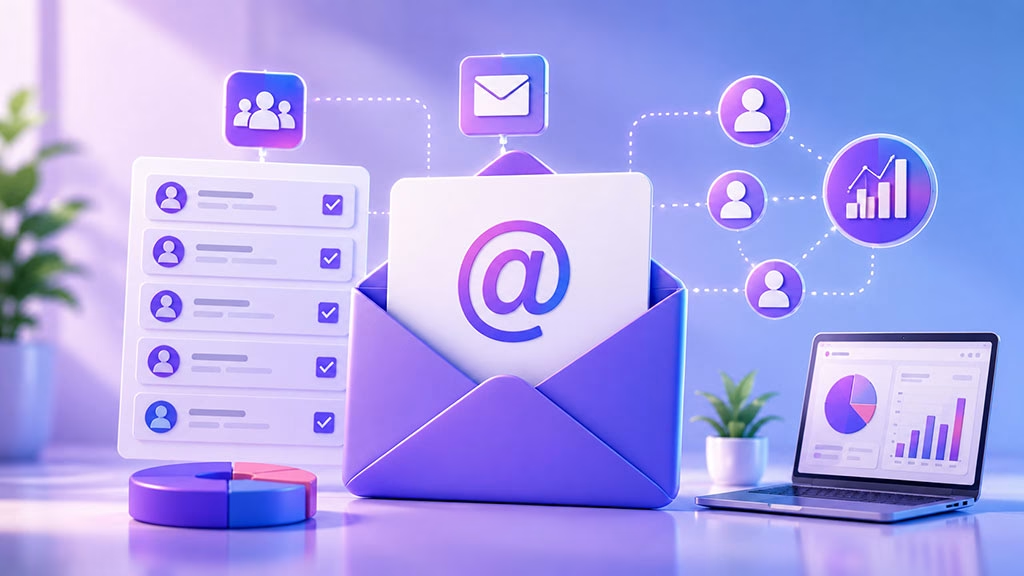
Our email list is our most valuable asset. It represents permission-based communication with a receptive audience. Building and maintaining this list is an ongoing process that requires strategy and diligence.
Ethical List Building Strategies
We must always prioritize ethical list building. This means obtaining explicit consent from every subscriber. We never purchase email lists or add people without their permission.
- Opt-in Forms on Our Website: Prominently place sign-up forms on our homepage, blog posts, and relevant landing pages.
- Lead Magnets: Offer something valuable in exchange for an email address – an e-book, a free template, a discount code, a webinar. This incentivizes sign-ups.
- Pop-ups and Exit-Intent Forms: These can be effective when used thoughtfully and without becoming overly intrusive. We test different timings and offers.
- Social Media Promotion: Share links to our sign-up form or lead magnet on our social media channels.
- In-person Events: If we attend or host events, we can collect email addresses with permission, perhaps offering a special discount for signing up on the spot.
We always use double opt-in, where subscribers confirm their subscription via a link in an email. This verifies their email address and ensures they genuinely want to receive our communications, leading to higher engagement and fewer spam complaints.
Segmenting Our Subscribers for Better Targeting
Not all subscribers are created equal, and treating them as such is a common pitfall. Segmentation allows us to send more relevant, personalized emails, which drastically improves performance.
- Demographic Segmentation: Based on age, location, gender, etc. (e.g., promoting local events to subscribers in a specific city).
- Behavioral Segmentation: Based on how subscribers interact with our products or content.
- New Subscribers: Welcome series.
- Engaged Subscribers: Those who frequently open and click.
- Inactive Subscribers: Those who haven’t opened in a while (needing re-engagement campaigns).
- Past Purchasers: Targeting based on products bought (e.g., complementary product suggestions).
- Cart Abandoners: Automated emails reminding them of items left in their cart.
- Interest-Based Segmentation: Based on preferences they’ve indicated or content they’ve consumed (e.g., if we run a blog, segmenting by topics they frequently read).
By segmenting our list, we ensure that our messages resonate more deeply with each group, leading to higher open rates, CTRs, and conversion rates. We avoid sending irrelevant content that leads to unsubscribes.
Automating and Optimizing: Working Smarter, Not Harder

Email marketing isn’t just about sending one-off campaigns. It’s about creating a dynamic, responsive system that delivers the right message at the right time. Automation and continuous optimization are key to achieving this.
Setting Up Essential Email Automations
Automated email sequences (also known as drip campaigns or autoresponders) allow us to deliver timely, targeted messages without manual intervention, saving us valuable time and ensuring consistency.
- Welcome Series: This is perhaps the most crucial automation. When someone signs up, we send a series of emails introducing ourselves, our brand, and what they can expect. This helps build rapport and set expectations.
- Onboarding Series: For new customers, this series can guide them through using our product or service, providing tips and resources to ensure their success.
- Abandoned Cart Flows: For e-commerce, this is a powerful conversion tool. Reminding users of items left in their cart can significantly recover lost sales.
- Re-engagement Campaigns: If a subscriber hasn’t opened an email in a certain period, we can send a series of emails to try and win them back before archiving or removing them from our active list.
- Post-Purchase Follow-ups: Thank you emails, requests for reviews, or suggestions for complementary products can enhance customer loyalty and encourage repeat business.
Each automation should have a clear goal and be designed to move the subscriber closer to our desired outcome.
A/B Testing for Continuous Improvement
We never assume we know what works best. A/B testing (or split testing) allows us to compare different versions of our emails to see which performs better with a small segment of our audience before rolling out the winner to the rest.
- Subject Lines: Test different lengths, emojis, personalization, benefit-driven vs. curiosity-driven.
- Call to Action (CTA): Experiment with different button text, colors, and placement.
- Email Content: Test variations in body copy, headlines, image choices, or the overall structure.
- Send Times: Determine the optimal day and time to send emails for our specific audience.
- Personalization Levels: Does including a first name increase engagement more than a full name or no personalization?
We test one variable at a time to accurately identify what’s making the difference. Start with high-impact elements like subject lines and CTAs. Over time, these small optimizations can lead to significant improvements in our campaign performance.
If you’re looking to enhance your email marketing strategy, you might find the article on creating a master template for automated RSS campaigns particularly insightful. This resource complements the Beginner Guide to Creating High Performing Email Campaigns by offering practical tips on how to streamline your email design process. By utilizing a master template, you can ensure consistency and efficiency in your campaigns, which can ultimately lead to better engagement rates. To explore this further, check out the article here.
Analyzing and Adapting: Learning from Our Data
| Metrics | Data |
|---|---|
| Open Rate | 25% |
| Click-Through Rate | 10% |
| Conversion Rate | 5% |
| Bounce Rate | 2% |
| Unsubscribe Rate | 1% |
The work doesn’t stop once our campaigns are sent. In fact, some of our most valuable learning happens after the fact, when we dive into the data. We use analytics to understand what’s working, what isn’t, and how we can do better next time.
Key Email Marketing Metrics to Track
Understanding these metrics is vital for gauging the health and effectiveness of our campaigns.
- Open Rate: The percentage of people who opened our email. A low open rate might indicate issues with our subject line, sender name, or list quality.
- Click-Through Rate (CTR): The percentage of people who clicked on a link within our email. A low CTR could suggest our content isn’t engaging or our CTA isn’t compelling enough.
- Conversion Rate: The percentage of people who completed our desired action (e.g., made a purchase, downloaded an e-book) after clicking through from the email. This is often the ultimate measure of success for many campaigns.
- Unsubscribe Rate: The percentage of people who opted out of our email list. A high unsubscribe rate indicates dissatisfaction with our content, frequency, or relevance.
- Bounce Rate: The percentage of emails that couldn’t be delivered.
- Hard Bounces: Permanent delivery failures (e.g., invalid email address). We remove these immediately to protect our sender reputation.
- Soft Bounces: Temporary delivery failures (e.g., full inbox). Our email service provider (ESP) will usually retry sending these.
- Spam Complaint Rate: The percentage of recipients who marked our email as spam. A high rate is a serious red flag and can damage our sender reputation, leading to more emails landing in spam folders for everyone.
We need to regularly review these metrics, not just for individual campaigns, but also over time, to spot trends and identify areas for improvement.
Iteration and Refinement Based on Insights
Data is not just for reporting; it’s for action. We use our findings to adapt our strategy and refine our future campaigns.
- If Open Rates are Low: We experiment with different subject lines, test different send times, or segment our list more effectively to ensure relevance. Perhaps our sender name isn’t clear.
- If CTR is Low: We re-evaluate our email content: Is it engaging? Is the offer compelling? Is the CTA clear and prominent? We might need to improve our email design or simplify our message.
- If Conversion Rates are Low: This might indicate an issue beyond the email itself—perhaps the landing page experience, product pricing, or the offer’s perceived value needs adjustment. We also check if our email content aligns perfectly with what’s on the landing page.
- If Unsubscribe Rates are High: We need to critically assess our email frequency, the value we’re providing, and whether our content truly matches subscriber expectations. It might be time to survey our subscribers to understand their preferences better.
Email marketing is an iterative process. We learn, we adapt, we test, and we improve. By consistently analyzing our performance and making data-driven decisions, we can transform our email campaigns from mere messages into powerful engines for growth and engagement. We’re all in this together, constantly striving to connect better with our audience and achieve our shared goals.
FAQs
What is an email campaign?
An email campaign is a coordinated set of individual email messages that are sent out to a targeted group of recipients with the goal of achieving a specific outcome, such as promoting a product, driving traffic to a website, or increasing brand awareness.
What are the key components of a high-performing email campaign?
Key components of a high-performing email campaign include a well-defined target audience, compelling and relevant content, attention-grabbing subject lines, clear call-to-action, and mobile-friendly design.
How can I create an effective email campaign as a beginner?
As a beginner, you can create an effective email campaign by defining your goals, understanding your audience, creating valuable content, testing different elements, and analyzing the results to make improvements.
What are some best practices for creating high-performing email campaigns?
Best practices for creating high-performing email campaigns include personalizing the content, segmenting your audience, optimizing for mobile devices, testing different elements, and adhering to email marketing regulations such as GDPR and CAN-SPAM.
How can I measure the success of my email campaigns?
You can measure the success of your email campaigns by tracking metrics such as open rates, click-through rates, conversion rates, and overall ROI. Additionally, you can use A/B testing to compare different elements and determine which ones are most effective.