



You’re sitting there, staring at your analytics dashboard, pretty sure you’re leaving money on the table. You’ve got a decent email list, you send out newsletters, maybe a few sales announcements. But are you really maximizing your revenue? Targeted email campaigns aren’t just a “nice-to-have”; they are a powerful engine for boosting your bottom line. This isn’t about blasting the same message to everyone and hoping for the best. This is about understanding who you’re talking to, what they want, and giving it to them in a way that makes them want to buy. Let’s break down how you can transform your email strategy from a general shout into a laser-focused revenue generator.
Before you even think about writing an email, you need to know who you’re talking to. This isn’t the time for guesswork. You’ve spent time and effort building your subscriber list; now it’s time to truly understand them. This deep dive into your audience will inform every decision you make, from segmentation to content creation, and ultimately, to revenue generation.
The Power of Data: Your Subscriber Insights
Your email list is a treasure trove of data. Don’t let it sit idle. You need to actively collect and analyze information about your subscribers.
Demographic Information
This is your starting point. Who are they? What’s their age range, gender, location? While you might not be able to get this for every subscriber, even general insights can be incredibly valuable. If you run an e-commerce store selling fitness gear, knowing you have a significant segment of users in colder climates might inform promotions for indoor workout equipment later in the year.
Behavioral Data
This is where things get really interesting. What have your subscribers done on your website?
- Purchase History: What have they bought before? How often? What’s their average order value? This is arguably the most crucial piece of data for revenue-focused targeting.
- Website Activity: Have they browsed specific product categories? Looked at particular product pages? Abandoned their cart? Spent time reading blog posts about a certain topic? This tells you about their interests and intent.
- Email Engagement: Which emails do they open? Which links do they click? Do they engage with surveys or polls? This reveals what kind of content resonates with them.
Psychographic Information
Beyond demographics and behavior, understanding your subscribers’ attitudes, values, interests, and lifestyles can help you craft messaging that truly speaks to them. This might come from surveys, preference centers, or even observing the language they use in any direct feedback.
Creating Detailed Buyer Personas
Once you’ve gathered your data, it’s time to bring it to life. Buyer personas are semi-fictional representations of your ideal customers, based on your research.
Developing Persona Archetypes
Don’t create a persona for every single subscriber. Instead, identify recurring patterns and create archetypes. For an online clothing retailer, you might have:
- “The Trendy Millennial”: Interested in the latest fashion, active on social media, price-conscious but willing to spend on unique items.
- “The Practical Professional”: Looking for classic, durable, and versatile pieces for work and casual wear, values quality and longevity.
- “The Eco-Conscious Shopper”: Prioritizes sustainable materials and ethical production, willing to pay a premium for eco-friendly options.
Giving Your Personas Names and Stories
Make them feel real. Give each persona a name, an age, a job, hobbies, and pain points. This helps you empathize with them and craft more effective messaging. Imagine you’re writing to “Sarah, the busy working mom” versus “David, the tech enthusiast.” The language, tone, and offers will change significantly.
In the pursuit of enhancing revenue growth through targeted email campaigns, it’s essential to recognize the significance of creating a dedicated landing page for each campaign. A well-designed landing page can significantly improve conversion rates by providing a focused experience for recipients. For more insights on this topic, you can read the article on the importance of a dedicated landing page for email campaign success at this link.
Segmenting Your Email List: The Key to Relevance
With a solid understanding of your audience and your buyer personas in hand, the next crucial step is to segment your email list. This is where you divide your broad audience into smaller, more focused groups based on shared characteristics or behaviors. Sending the same email to everyone is like throwing a dart blindfolded – you might hit something, but it’s unlikely to be your target.
The Benefits of Granular Segmentation
Why go through the effort of segmenting? The benefits are substantial and directly impact your revenue.
Increased Open and Click-Through Rates
When an email arrives in someone’s inbox, and it’s directly relevant to their interests or needs right now, they are far more likely to open it and to click on the links within. This is the most immediate impact you’ll see.
Improved Conversion Rates
Higher engagement naturally leads to higher conversion rates. If you’re sending a promotion for running shoes to someone who recently bought a pair of hiking boots and has browsed your trail running section, they’re much more likely to make a purchase than someone who hasn’t shown any interest in athletic footwear.
Reduced Unsubscribe Rates
Nobody likes getting irrelevant emails. When your communications are targeted and valuable, subscribers feel understood and appreciated, leading to them staying on your list rather than opting out.
Enhanced Customer Loyalty
Consistent delivery of relevant content and offers builds trust and strengthens customer relationships. This fosters loyalty, leading to repeat purchases and higher lifetime value.
Common Segmentation Strategies
There are numerous ways you can segment your list, and the best approach will depend on your business and your data.
Based on Purchase History
This is a goldmine for revenue generation.
- New Customers: Welcome them, provide resources, and suggest complementary products to their first purchase.
- Repeat Customers: Reward their loyalty with exclusive offers, early access to new products, or a loyalty program.
- High-Value Customers: Identify your VIPs and treat them with exceptional offers and personalized experiences.
- Customers Who Haven’t Purchased in a While (Lapsed Customers): Win them back with special reactivation campaigns – a “we miss you” discount or a preview of what’s new.
- Customers by Product Category: If you sell multiple product lines, segment based on what they’ve bought within each. For example, send fishing gear promotions to fishing enthusiasts.
Based on Engagement Level
How actively are people interacting with your emails?
- Highly Engaged Subscribers: Open and click on most of your emails. These are your most valuable email assets and can be targeted with more advanced offers or requests for feedback.
- Moderately Engaged Subscribers: Open some emails, click occasionally. Keep them warm with consistent, valuable content.
- Less Engaged Subscribers: Open very few emails, rarely click. You might try a re-engagement campaign or consider moving them to a separate, lower-frequency list.
Based on Website Behavior
What are they doing even before they open an email?
- Cart Abandoners: This is a critical segment. Send a series of timed emails reminding them of their abandoned items, perhaps with a small incentive.
- Browse Abandoners: They looked at products but didn’t add to cart. Send them tailored recommendations based on what they viewed.
- Content Consumers: Those who frequently read your blog posts on specific topics. Send them related product offers or deeper dives into those subjects.
Based on Demographics and Psychographics
As discussed in the previous section, use the data you’ve collected.
- Location-Based: Promote seasonal items relevant to their region or local events.
- Interest-Based: If you’ve captured preferences through a preference center, use that to send highly relevant content.
Crafting Compelling Content for Each Segment
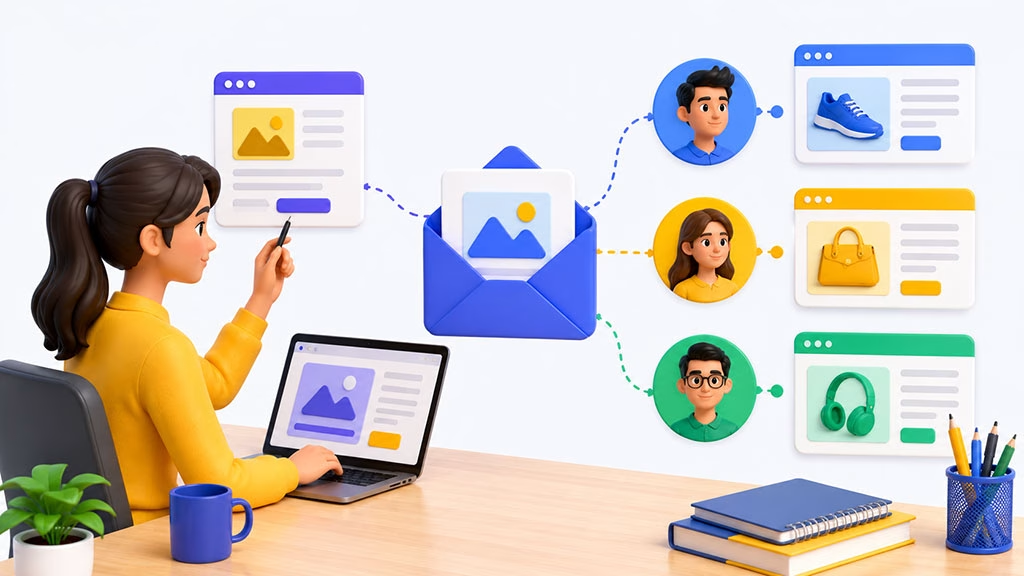
Segmentation is the roadmap; compelling content is the vehicle that drives revenue. Your emails need to speak directly to the needs, desires, and pain points of each specific segment you’re targeting. Generic content will always underperform.
The Art of Personalization Beyond the Name
Personalization goes far beyond simply using a subscriber’s first name. It’s about making them feel like the email was written just for them.
Dynamic Content Blocks
Many email marketing platforms allow you to insert dynamic content. This means you can have one core email template, but different product recommendations, images, or promotional calls-to-action can appear based on the recipient’s segment. For example, if you have a newsletter about fashion trends, you can show women’s new arrivals to female subscribers and men’s new arrivals to male subscribers within the same email send.
Personalized Product Recommendations
Leveraging purchase history and browsing data, you can recommend products that are highly likely to appeal to an individual. This can be done through AI-powered recommendation engines or by simply referencing past purchases. “Since you loved our ‘Mountain Explorer Backpack,’ you might also like these durable hiking boots!”
Tailored Messaging and Tone
Adjust your language and tone to match the persona of your segment. A message to a “Young Professional” might be more upbeat and trend-focused, while a message to a “Seasoned Investor” might be more data-driven and benefit-oriented.
Developing Segment-Specific Campaigns
Instead of one-off emails, think about multi-email campaign sequences designed for specific goals and segments.
Welcome Series for New Subscribers
Don’t just send a welcome email. Create a series that introduces your brand, highlights key benefits, showcases popular products, and perhaps offers a first-purchase discount. This nurtures new leads and encourages them to become paying customers.
Re-engagement Campaigns for Lapsed Customers
These campaigns are designed to win back subscribers who haven’t interacted with your emails or made a purchase in a while. They often involve a compelling offer – a “win-back” discount, a free gift with purchase, or an exclusive look at new arrivals. The key is to create a sense of urgency and value to encourage them to return.
Upselling and Cross-selling Campaigns
Once a customer has purchased, this is your opportunity to increase their lifetime value.
- Upselling: Encourage them to upgrade to a more premium version of a product they’ve shown interest in, or a higher-tier service.
- Cross-selling: Recommend complementary products. If someone buys a laptop, you can cross-sell a mouse, a laptop bag, or an extended warranty.
Post-Purchase Campaigns
The relationship doesn’t end at checkout.
- Thank You and Confirmation: Essential, but can be enhanced with suggestions of related items.
- Product Usage Tips: Help customers get the most out of their purchase, reducing returns and building satisfaction.
- Review Requests: Encourage satisfied customers to leave reviews, which can boost social proof and future sales.
Loyalty Programs and VIP Offers
Nurture your most valuable customers. Exclusive early access to sales, special discounts, birthday treats, or invites to exclusive events can significantly increase their loyalty and spending.
The Importance of the Call to Action (CTA)
Even the most personalized and compelling content needs a clear directive.
Crafting Clear and Actionable CTAs
Your CTA should leave no doubt about what you want the reader to do. Use active verbs.
- “Shop Now”
- “Discover More”
- “Get Your Discount”
- “Learn How”
Designing Visually Appealing CTAs
Make your CTAs stand out. Use contrasting colors, and ensure they are large enough to be easily clickable on any device. Buttons are generally more effective than text links.
Optimizing Email Campaigns for Maximum Revenue
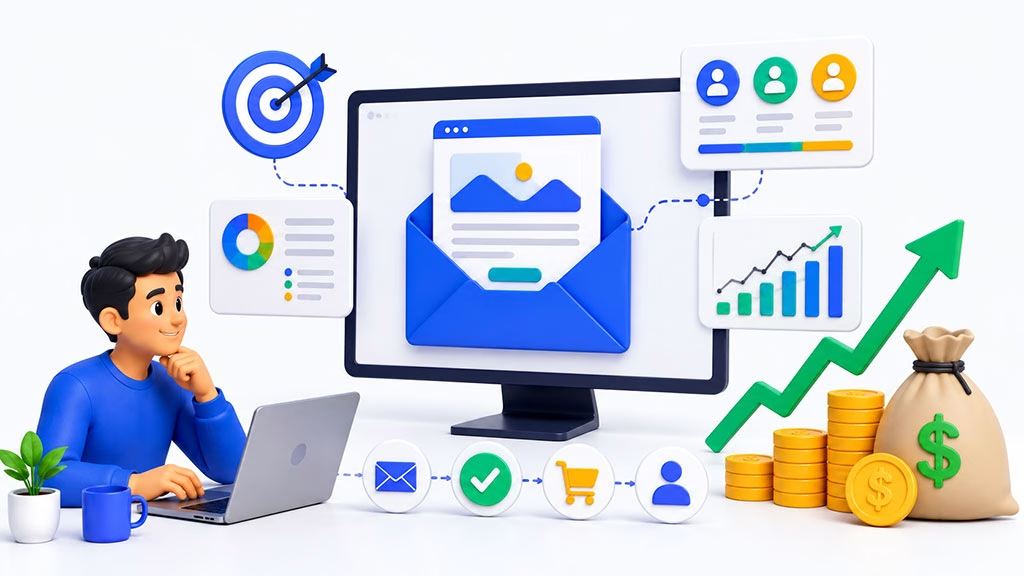
You’ve segmented, you’ve personalized, you’ve crafted your messages. Now, it’s time to refine your approach and ensure every email is working as hard as possible to generate revenue. This involves continuous testing and a strategic approach to your sending schedule.
A/B Testing Your Way to Better Results
You can’t know what works best for your audience without testing. A/B testing allows you to compare two versions of an email element to see which performs better.
Testing Subject Lines
This is often the first impression, and a compelling subject line can drastically increase open rates. Test different lengths, the use of emojis, personalization, and benefit-driven hooks.
Testing Email Body Content
Experiment with different headlines, copy lengths, urgency triggers, and even the order of your content.
Testing Call to Action (CTA) Buttons
Test different wording, colors, button sizes, and placement. You might find that a bright orange button performs better than a blue one, or that placing the CTA higher in the email increases clicks.
Testing Send Times and Frequency
When do your subscribers tend to open emails? Are you overwhelming them with too many emails per week, or not sending often enough to stay top-of-mind?
Strategic Timing and Frequency
Sending the right email at the right time can be a game-changer.
Understanding Peak Engagement Times
Analyze your email analytics to identify the days and times when your subscribers are most likely to open and engage with your emails. This will vary by industry and audience.
Balancing Frequency and Value
While you want to stay visible, bombarding your subscribers with emails can lead to fatigue and unsubscribes. Find a sweet spot where you’re providing consistent value without being overwhelming. Consider different frequencies for different segments – highly engaged subscribers might tolerate more frequent emails than less engaged ones.
Leveraging Urgency and Scarcity Tactfully
Limited-time offers, flash sales, and low-stock notifications can create a sense of urgency that prompts immediate action. However, use these sparingly and genuinely. Overusing them can lead to your audience becoming desensitized.
Tracking and Analyzing Key Performance Indicators (KPIs)
You can’t improve what you don’t measure. Keep a close eye on the metrics that matter most for revenue.
Key Metrics for Revenue Optimization
- Conversion Rate: The percentage of recipients who complete a desired action (e.g., making a purchase). This is your ultimate revenue metric.
- Revenue Per Email Sent: The total revenue generated from an email campaign divided by the number of emails sent.
- Average Order Value (AOV) from Email Campaigns: The average amount spent by customers who made a purchase originating from an email.
- Click-Through Rate (CTR) to Conversion: The percentage of people who clicked a link in your email and then went on to convert. This shows the effectiveness of your landing pages and the journey from email to purchase.
- Return on Investment (ROI) of Email Campaigns: The profit generated from your email campaigns minus the cost of running them, divided by the cost.
Iterative Improvement Based on Data
Use your KPI analysis to inform your future strategies. If a particular type of email consistently underperforms, investigate why. If a specific segment is showing high conversion rates, explore how you can replicate that success with other segments or further nurture that group.
In the ever-evolving landscape of digital marketing, businesses are constantly seeking innovative strategies to enhance their revenue growth. One effective approach is through targeted email campaigns, which can significantly boost customer engagement and conversion rates. For those interested in exploring how technology can further enhance marketing efforts, a related article discusses the importance of custom API integrations in unlocking competitive advantages. You can read more about this insightful topic by visiting this article.
Automating for Efficiency and Scale
| Time Period | Revenue Growth | Email Campaign Type |
|---|---|---|
| Q1 2020 | 15% | Segmented Email Campaign |
| Q2 2020 | 20% | Personalized Email Campaign |
| Q3 2020 | 25% | Behavioral Targeted Email Campaign |
To truly maximize revenue, you need to be efficient and scalable. Manual sending of dozens of segmented campaigns simply isn’t feasible. This is where email automation becomes your best friend.
Setting Up Automated Workflows
Automation allows you to trigger specific email sequences based on subscriber actions or inactions. This ensures timely and relevant communication without requiring manual intervention for every send.
Triggering Welcome Series Automatically
When someone subscribes to your list, an automated welcome series can kick in immediately, nurturing them from the outset.
Automating Cart Abandonment Reminders
This is one of the most powerful uses of automation for revenue. A series of emails can be automatically sent to customers who leave items in their cart, reminding them and potentially offering incentives.
Implementing Post-Purchase Follow-Ups
Automate thank you emails, review requests, and delivery confirmations, ensuring a consistent and positive customer experience.
Building Birthday and Anniversary Campaigns
Celebrate your customers. Automated emails with special discount codes or birthday wishes can foster goodwill and encourage purchases.
The Role of an Email Marketing Platform
A robust email marketing platform (ESP) is essential for implementing these strategies, especially automation.
Choosing the Right Platform for Your Needs
Consider features such as:
- Segmentation Capabilities: How sophisticated are their segmentation tools?
- Automation & Workflow Builders: How intuitive and powerful are their automation features?
- Personalization Options: Can you easily implement dynamic content and personalized recommendations?
- Analytics & Reporting: Do they provide the deep insights you need?
- Integration: Does it integrate with your CRM, e-commerce platform, or other essential tools?
Leveraging Advanced Automation Features
Beyond basic triggers, explore more advanced automation.
- Behavioral Triggers: Send emails based on specific actions a user takes on your website (e.g., viewing a product multiple times).
- Conditional Logic: Create complex workflows where emails are sent or skipped based on a series of conditions.
- A/B Testing within Automations: Test different elements within your automated workflows to continuously optimize them.
By implementing these targeted email campaigns, you’re not just sending emails; you’re building relationships, understanding your customers at a deeper level, and strategically guiding them towards making purchases. This results in a significantly higher return on your marketing investment and a more sustainable revenue stream for your business. Start small, test, learn, and scale. Your inbox, and your bank account, will thank you.
FAQs
What are targeted email campaigns?
Targeted email campaigns are marketing strategies that involve sending personalized and relevant emails to a specific group of recipients based on their demographics, behavior, or preferences. These campaigns aim to increase engagement and drive revenue by delivering tailored content to the right audience.
How can targeted email campaigns contribute to revenue growth?
Targeted email campaigns can contribute to revenue growth by effectively reaching and engaging with the right audience. By delivering personalized content and offers, businesses can increase conversion rates and drive sales. Additionally, targeted email campaigns can help in building customer loyalty and repeat purchases, further contributing to revenue growth.
What are the key components of a successful targeted email campaign?
Key components of a successful targeted email campaign include a well-defined target audience, personalized and relevant content, compelling subject lines, clear call-to-action, and effective tracking and analysis. It’s important to segment the audience, tailor the content to their interests, and continuously optimize the campaign based on performance metrics.
How can businesses effectively target their email campaigns?
Businesses can effectively target their email campaigns by leveraging customer data and segmentation. This can include factors such as demographics, purchase history, browsing behavior, and engagement with previous emails. By understanding their audience and tailoring the content accordingly, businesses can increase the effectiveness of their email campaigns.
What are some best practices for optimizing targeted email campaigns for revenue growth?
Some best practices for optimizing targeted email campaigns for revenue growth include A/B testing subject lines and content, personalizing the emails based on recipient data, optimizing for mobile devices, automating follow-up emails, and analyzing performance metrics to make data-driven decisions. Additionally, maintaining a clean and updated email list is crucial for successful targeting and deliverability.