



Welcome, astute business leader, to a deep dive into one of the most powerful – and underutilized – tools in your marketing arsenal: behavioral email marketing. You’ve likely experienced the tantalizing promise of email marketing, but also its often-frustrating reality. Generic blasts, low open rates, and even lower conversion rates can leave you wondering if it’s truly worth the effort. But what if you could transcend the ordinary and connect with your audience on a profoundly personal level, delivering precisely the right message at precisely the right moment? That’s the magic of behavioral email marketing, and in this comprehensive guide, you’ll discover how to harness its immense power to skyrocket your business growth.
Understanding Behavioral Email Marketing: Beyond the Broadcast
Before you can maximize its potential, you need to firmly grasp what behavioral email marketing truly is. It’s not just about sending emails; it’s about sending smart emails. Imagine this: instead of a blanket email to your entire customer base, you’re sending an email to a customer who just abandoned their shopping cart, reminding them of the items they loved. Or an email to a long-time subscriber, offering them an exclusive discount on a product category they’ve repeatedly browsed. This isn’t guesswork; it’s strategy based on data.
The Core Principle: Action Triggers Reaction
At its heart, behavioral email marketing operates on a simple yet profound principle: your customers’ actions dictate your email responses. Every click, every page view, every purchase, and even every inaction provides valuable clues about their interests, needs, and position in their customer journey. You, as the savvy marketer, then leverage these clues to deliver relevant, timely, and impactful communications. This moves beyond the old paradigm of “batch and blast” and enters the realm of intelligent, automated, and highly personalized communication.
Why It’s More Than Just Personalization
While personalization is a key component, behavioral email marketing goes far beyond simply inserting a customer’s first name. True behavioral email tailors the content, offer, and timing of the email based on specific actions. It’s the difference between saying “Hello [First Name]” and saying “We noticed you were interested in our new [Product Category] collection. Here are some exclusive items we think you’ll love, based on your recent browsing.” The latter demonstrates a deep understanding of your customer’s current engagement with your brand.
You can’t send intelligent emails without intelligent data. The bedrock of any successful behavioral email strategy is a robust system for collecting, storing, and analyzing your customers’ interactions with your brand. Think of your customers’ digital footprints as a treasure map leading to increased engagement and sales.
Identifying Key Behavioral Triggers
This is where you begin to dissect your customer journey and pinpoint the moments that matter most. What actions signal intent, interest, or a potential roadblock? These become your triggers.
Website Activity
Every click, every page view, every product zoom holds a story. Are customers repeatedly visiting certain product pages? Are they spending a long time on your ‘About Us’ page? Are they suddenly comparing different product versions? These are all powerful signals. For instance, if a customer views a specific product page three times within a week but doesn’t add it to their cart, that’s a prime trigger for a follow-up email.
Purchase History
Your past sales are a goldmine of information. What have your customers bought before? How frequently do they purchase? What’s their average order value? This data allows you to recommend complementary products, anticipate replenishment needs, or identify loyal customers for exclusive offers. Think cross-sells, upsells, and loyalty programs.
Email Engagement
How do your subscribers interact with your existing emails? Do they open every email but rarely click? Do they consistently click on certain types of content? This engagement data helps you refine your content strategy and segment your audience further. A subscriber who consistently opens emails about new arrivals might appreciate early access to upcoming collections.
Cart Activity
The abandoned cart is perhaps the most famous and effective behavioral trigger. A customer has shown intent, gone through the selection process, but for some reason, hasn’t completed the purchase. This is a critical point to intervene with a reminder, an incentive, or even an offer of assistance.
Inactivity and Churn Risk
Just as positive actions are triggers, so too is a lack of action. When a customer hasn’t engaged with your brand or made a purchase in a while, it signals potential churn. You need a strategy to re-engage them before they’re gone for good.
Leveraging the Right Tools for Data Collection
You don’t need to be a data scientist to implement this, but you do need the right technology. Your Email Service Provider (ESP) is your primary ally here.
CRM Integration
Your Customer Relationship Management (CRM) system should ideally integrate seamlessly with your ESP. This allows for a holistic view of your customer, combining their communication history with their purchase and interaction data. The more unified your data, the more intelligent your emails can be.
Website Tracking (Pixels and Analytics)
Implement tracking pixels (like Facebook Pixel or Google Analytics) on your website. These snippets of code provide invaluable insights into user behavior, allowing you to track page views, time on site, product views, and more. This data feeds directly into your ESP to trigger emails.
Event-Based Tracking
Beyond simple page views, consider tracking specific “events” on your website or app. Did a user wish-list an item? Did they download a white paper? Did they start a demo? These custom events offer precise triggers for highly targeted follow-up.
In exploring the topic of business growth through behavioral email marketing strategies, it’s essential to consider the impact of effective A/B testing on your campaigns. A related article that delves into this subject is titled “The Set-It-and-Forget-It A/B Test: How to Automatically Send the Winning Version,” which provides insights on automating the process of determining the most effective email variations. You can read more about it here: The Set-It-and-Forget-It A/B Test. This resource can help you refine your email marketing efforts and drive better engagement and conversions.
Crafting Compelling Behavioral Email Campaigns
Once you’ve collected your data and identified your triggers, the real work of crafting effective emails begins. This isn’t about generic templates; it’s about thoughtful, strategic communication designed to move your customers through their journey.
Strategic Segmentation for Hyper-Personalization
Your data allows you to group your audience not just by demographics, but by their behavior. This is the core of effective segmentation in behavioral email.
Segmentation by Engagement Level
Divide your audience into highly engaged, moderately engaged, and unengaged segments. Your emails to each group should differ significantly in tone, frequency, and call to action. Engaged customers might receive early access to new products, while unengaged customers might receive a win-back campaign with a strong incentive.
Segmentation by Purchase History & Value
Separate first-time buyers from repeat customers, high-value customers from casual shoppers. You can then tailor offers, loyalty programs, and product recommendations accordingly. A high-value customer might receive a personalized thank you note from your CEO, while a first-time buyer receives onboarding tips.
Segmentation by Content Consumption
If you offer various content types (blog posts, videos, webinars), segment your audience by what they consume. A customer who frequently reads your blog posts about SEO strategies might be interested in a webinar on advanced SEO techniques.
In exploring innovative approaches to enhance business growth, one effective method is leveraging behavioral email marketing strategies. These strategies allow businesses to tailor their communications based on customer interactions, leading to increased engagement and conversions. For those interested in further optimizing their e-commerce efforts, a related article discusses the importance of syncing your e-commerce store with email for data integrity, which can significantly improve the effectiveness of your marketing campaigns. You can read more about this topic here.
Developing Triggered Email Workflows
This is where automation shines. You define the trigger, and your ESP sends the pre-designed email sequence without manual intervention. This ensures timeliness and consistency.
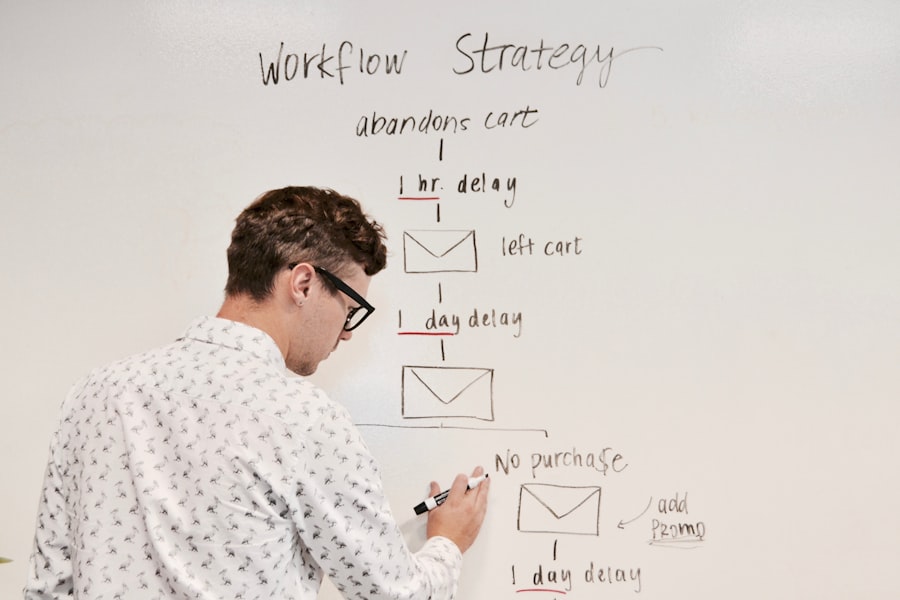
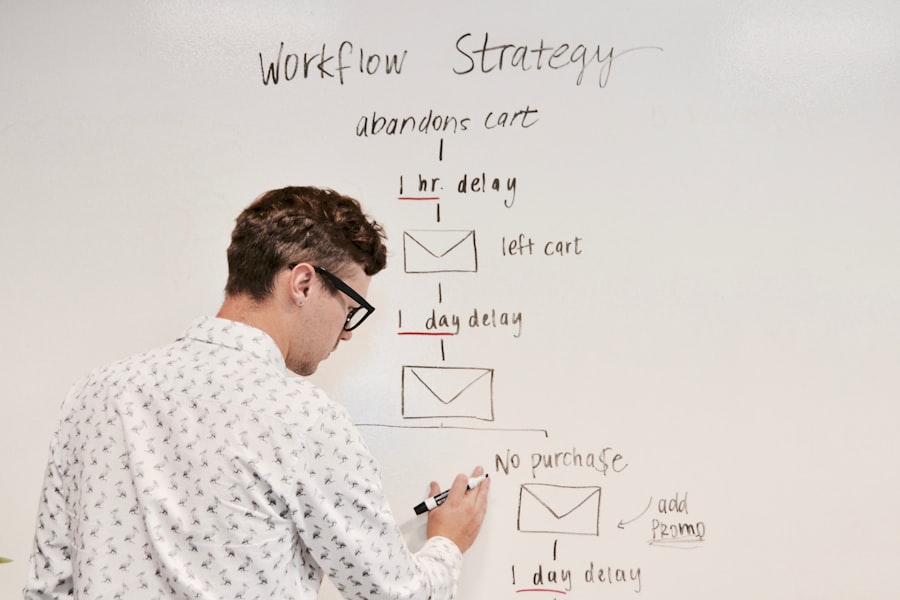
The Abandoned Cart Sequence
This infamous sequence is a must-have.
- Email 1 (30-60 mins after abandonment): A gentle reminder of the items left behind, perhaps with images of the products. Keep it helpful and low-pressure.
- Email 2 (24-48 hours later): A follow-up, potentially addressing common objections (shipping costs, product questions), or offering social proof (reviews of the abandoned items).
- Email 3 (3-5 days later): A final nudge, potentially with a small incentive (e.g., free shipping or a small discount) to overcome the final hurdle.
Welcome Series for New Subscribers/Customers
This isn’t just one email; it’s a journey to onboard and engage.
- Email 1 (Immediately): A warm welcome, setting expectations, offering a clear next step (e.g., explore your best-selling products, read our guide).
- Email 2 (Day 2-3): Introduce your brand story, values, or unique selling proposition. Build trust and connection.
- Email 3 (Day 5-7): Showcase popular products or valuable content related to their initial interest. Encourage first purchase or deeper engagement.
Post-Purchase Follow-Ups
Your relationship doesn’t end at the sale; it’s just beginning.
- Confirmation & Thank You (Immediately): Order details, estimated delivery, and a heartfelt thank you.
- Shipping & Delivery Updates (As needed): Keep them informed, reducing anxiety.
- Product Usage Tips/Tutorials (1-3 days after delivery): Help them get the most out of their purchase, reducing buyer’s remorse and increasing satisfaction.
- Request for Review/Feedback (7-14 days after delivery): Gather valuable social proof and identify areas for improvement.
- Cross-Sell/Upsell Opportunities (2-4 weeks after delivery): Based on their purchase, recommend complementary products or upgrades.
Re-engagement Campaigns
Win back customers who have gone dormant.
- Email 1 (After defined inactivity period): “We Miss You!” – A friendly check-in, perhaps highlighting recent changes or new products.
- Email 2 (If no response): A stronger incentive (e.g., a significant discount, exclusive offer) to re-ignite interest.
- Email 3 (Final attempt): A “last chance” offer or a subtle survey to understand why they became inactive.
Crafting High-Converting Email Content
Even the most perfectly timed email will fail if the content isn’t compelling.
Personalization Beyond the Name
Use dynamic content to display products, offers, or content directly relevant to the recipient’s behavior. If they viewed a specific shoe, show them that shoe with similar options.
Clear and Compelling Calls to Action (CTAs)
What do you want them to do next? Make it unequivocally clear. Use strong verbs like “Shop Now,” “Learn More,” “Get Your Discount,” “Complete Your Order.” Ensure CTAs are prominent and easy to click.
Value-Driven Messaging
Every email should offer value. Is it a solution to a problem? An exclusive deal? Helpful information? Don’t just sell; solve and serve. Emphasize benefits over features.
Scarcity and Urgency
When appropriate, use gentle scarcity (e.g., “limited stock”) or urgency (e.g., “offer ends soon”) to encourage immediate action. Use these sparingly and authentically to maintain trust.
Mobile Optimization
A significant portion of your audience will open emails on their mobile devices. Ensure your emails are responsive, easy to read, and your CTAs are clickable on smaller screens.
Optimizing and Scaling Your Behavioral Email Strategy
Behavioral email marketing is not a “set it and forget it” endeavor. It requires continuous monitoring, testing, and refinement to maximize its impact.
A/B Testing for Continuous Improvement
You absolutely must test every element of your emails to understand what resonates with your audience.
Subject Lines
These are your gatekeepers. Test different lengths, emojis, personalized elements, and urgency signals. A strong subject line significantly impacts open rates.
Call to Action (CTA)
Experiment with different CTA text, button colors, and placement. Does “Shop Now” outperform “Explore Collection”? You won’t know until you test.
Email Content and Offers
Test different visuals, body copy lengths, and offer types. Does a percentage discount work better than a dollar amount off? Do testimonials work better than product features?
Send Times and Frequency
While triggered emails are time-sensitive, for batch emails or re-engagement sequences, experiment with different send times and the gap between emails in a sequence.
Analyzing Key Performance Indicators (KPIs)
Your data will tell you what’s working and what isn’t. Focus on these key metrics:
Open Rate
Indicates the effectiveness of your subject line, sender name, and preheader text. A low open rate suggests your emails aren’t compelling enough to be opened.
Click-Through Rate (CTR)
Measures how many recipients clicked on a link in your email. This reflects the relevance and appeal of your email’s content and CTAs.
Conversion Rate
The ultimate metric. How many recipients completed the desired action (e.g., made a purchase, filled out a form) after clicking through from your email? This directly ties to your ROI.
Bounce Rate
Indicates how many emails couldn’t be delivered. A high bounce rate suggests issues with your list quality.
Unsubscribe Rate
While some unsubscribes are normal, a high rate signals that your emails might be irrelevant, too frequent, or not providing enough value.
Revenue per Email
A powerful metric that quantifies the financial return of your email marketing efforts. This measures the total revenue generated by a campaign divided by the number of emails sent.
Scaling Your Behavioral Email Efforts
As your business grows, so too should your email marketing sophistication.
Integrating with Other Marketing Channels
Connect your email marketing with your social media, CRM, and even offline interactions. Use email data to inform your ad targeting, and vice-versa. For example, if a customer opened an abandoned cart email but didn’t click, you might target them with a retargeting ad on social media.
Advanced Personalization with AI/Machine Learning
Explore ESPs that leverage AI and machine learning to predict customer needs, optimize send times, and recommend products with greater accuracy. This moves beyond rule-based triggers to more predictive, data-driven automation.
Multichannel Behavioral Marketing
Eventually, extend your behavioral strategy beyond email. Use customer actions to trigger personalized messages on other channels like SMS, push notifications, or even personalized website experiences. Imagine a customer browsing a product on your site and then receiving a targeted SMS with a direct link and a limited-time offer.
Avoiding Common Pitfalls and Ensuring Success
Even with the best intentions, mistakes can derail your behavioral email strategy. Be mindful of these common traps.
Over-Communicating and Annoying Your Audience
Just because you can send an email for every action doesn’t mean you should. Too many emails, even personalized ones, can lead to unsubscribe fatigue. Set reasonable limits on the number of emails a single recipient can receive within a certain timeframe.
Frequency Caps
Implement rules within your ESP to cap the number of emails a user receives in a day or week. Prioritize the most important messages.
Respect Opt-Outs
Always make it easy for users to unsubscribe, and respect their choices immediately. Forcing emails on unwilling recipients only damages your brand.
Failing to Deliver Value
Every email should have a purpose and offer something beneficial to the recipient. Don’t send emails just for the sake of sending them. If your emails consistently lack value, they will be ignored or marked as spam.
Focus on Customer Needs
Always ask yourself: “What problem does this email solve for my customer?” or “How does this email simplify their life or make it better?”
Beyond the Sale
While conversions are key, don’t neglect emails that build relationships, offer expert advice, or simply entertain. These emails build long-term loyalty.
Neglecting List Hygiene
A clean email list is a healthy email list. Regularly remove inactive subscribers, bounced addresses, and spam traps.
Regular List Cleaning
Segment out subscribers who haven’t opened or clicked an email in a long time (e.g., 6-12 months). Attempt a re-engagement campaign, and if unsuccessful, consider removing them. This improves your deliverability and overall email performance.
Double Opt-In
For new subscribers, use a double opt-in process. This ensures that only genuinely interested individuals are added to your list, reducing spam complaints and improving engagement from the outset.
Ignoring Legal and Ethical Considerations
Stay compliant with data privacy regulations like GDPR, CCPA, and CAN-SPAM. Transparency and consent are paramount.
Clear Consent
Ensure you have explicit consent to email your subscribers, especially with behavioral triggers. Inform them about how their data will be used.
Unsubscribe Mechanism
Always include a clear, one-click unsubscribe link in every email. It’s not just legally required; it’s a sign of respect for your audience.
By embracing behavioral email marketing, you’re not just sending emails; you’re initiating intelligent, personalized conversations that nurture leads, deepen customer relationships, and, ultimately, drive significant and sustainable growth for your business. The journey may require data, testing, and continuous refinement, but the rewards—in engagement, loyalty, and revenue—are truly immeasurable. Start today, and watch your business thrive.
FAQs
What is behavioral email marketing?
Behavioral email marketing is a strategy that involves sending targeted and personalized emails to customers based on their behavior, interactions, and preferences. This can include actions such as website visits, email opens, clicks, purchases, and more.
How can behavioral email marketing contribute to business growth?
Behavioral email marketing can contribute to business growth by increasing customer engagement, driving sales, and improving customer retention. By sending relevant and timely emails based on customer behavior, businesses can build stronger relationships with their customers and ultimately increase their revenue.
What are some examples of behavioral email marketing strategies?
Examples of behavioral email marketing strategies include abandoned cart emails, personalized product recommendations based on past purchases, re-engagement emails for inactive customers, and targeted promotions based on customer preferences and behavior.
What are the key benefits of using behavioral email marketing?
The key benefits of using behavioral email marketing include higher open and click-through rates, increased customer engagement, improved customer satisfaction, better segmentation and targeting, and ultimately, higher conversion rates and revenue for the business.
How can businesses implement behavioral email marketing effectively?
Businesses can implement behavioral email marketing effectively by using marketing automation tools to track and analyze customer behavior, segmenting their email lists based on behavior and preferences, creating personalized and relevant content, and continuously testing and optimizing their email campaigns for better results.