



To effectively engage with your audience, you must first understand who they are. This involves delving into their demographics, interests, and behaviors. By gaining insights into their preferences and pain points, you can tailor your marketing strategies to resonate with them.
Start by creating detailed buyer personas that encapsulate the characteristics of your ideal customers. These personas should include information such as age, gender, income level, and lifestyle choices. The more specific you are, the better you can address their needs and desires.
Moreover, understanding your target audience goes beyond mere demographics. It requires an exploration of their motivations and aspirations. What drives them to make purchasing decisions?
What challenges do they face that your product or service can solve? Engaging with your audience through surveys, social media interactions, and feedback forms can provide invaluable insights. By actively listening to their voices, you can refine your marketing messages to ensure they resonate deeply with your audience.
Key Takeaways
- Know your target audience deeply to tailor marketing efforts effectively.
- Use data collection and analysis to identify segments with the highest conversion potential.
- Personalize campaigns based on segment insights to boost engagement and conversions.
- Implement A/B testing and predictive analytics to refine segmentation strategies continuously.
- Measure conversion rates and optimize customer experience to improve ROI through data-driven segmentation.
Collecting and Analyzing Relevant Data
Once you have a clear understanding of your target audience, the next step is to collect and analyze relevant data. This data can come from various sources, including website analytics, social media insights, and customer feedback. Utilizing tools like Google Analytics can help you track user behavior on your website, revealing which pages attract the most traffic and where users tend to drop off.
This information is crucial for identifying areas that need improvement. In addition to quantitative data, qualitative data is equally important. Customer reviews and testimonials can provide insights into what your audience values most about your offerings.
By combining both types of data, you can create a comprehensive picture of your audience’s preferences and behaviors.
Analyzing this data allows you to identify trends and patterns that can inform your marketing strategies moving forward.
Identifying High-Converting Segments

With a wealth of data at your disposal, the next step is to identify high-converting segments within your audience.
Not all customers are created equal; some are more likely to convert than others based on their behaviors and characteristics.
By segmenting your audience into distinct groups, you can focus your marketing efforts on those most likely to yield positive results.
To identify these high-converting segments, look for commonalities among your best customers. Are they primarily from a specific demographic group? Do they share similar purchasing behaviors?
By analyzing these factors, you can create targeted campaigns that speak directly to these segments. This not only increases the likelihood of conversion but also enhances the overall efficiency of your marketing efforts.
Creating Personalized Marketing Campaigns
| Open Rate | Percentage of recipients who open the marketing email | 20% – 30% | High |
| Click-Through Rate (CTR) | Percentage of recipients who click on links within the campaign | 2% – 5% | High |
| Conversion Rate | Percentage of users who complete a desired action (purchase, signup) | 1% – 3% | Very High |
| Personalization Impact | Increase in engagement due to personalized content | Up to 20% uplift | Very High |
| Unsubscribe Rate | Percentage of recipients who opt out of future communications | 0.1% – 0.5% | Medium |
| Customer Segmentation Accuracy | Percentage of customers correctly segmented for targeted campaigns | 70% – 90% | High |
| Return on Investment (ROI) | Revenue generated relative to campaign cost | 3x – 5x | Very High |
| Time to Launch | Average time taken to create and deploy a personalized campaign | 1 – 3 days | Medium |
Once you’ve identified high-converting segments, it’s time to create personalized marketing campaigns that cater to their specific needs and preferences. Personalization is no longer just a trend; it’s an expectation among consumers. They want to feel valued and understood by brands.
By leveraging the insights you’ve gathered about your audience, you can craft messages that resonate on a personal level. Consider using dynamic content in your email marketing campaigns that changes based on the recipient’s preferences or past interactions with your brand. For instance, if a customer frequently purchases fitness products, tailor your emails to highlight new arrivals in that category or offer exclusive discounts.
This level of personalization not only increases engagement but also fosters brand loyalty as customers feel a stronger connection to your brand.
Utilizing Data-Driven Insights
Data-driven insights are the backbone of effective marketing strategies. By leveraging analytics tools, you can gain a deeper understanding of how your campaigns are performing and where adjustments may be necessary. Regularly reviewing key performance indicators (KPIs) such as click-through rates, conversion rates, and customer acquisition costs will help you gauge the effectiveness of your efforts.
Furthermore, data-driven insights allow you to make informed decisions rather than relying on gut feelings or assumptions. For example, if you notice that a particular campaign is underperforming, you can analyze the data to identify potential issues—be it the messaging, targeting, or timing—and make necessary adjustments. This iterative approach ensures that your marketing strategies remain agile and responsive to changing consumer behaviors.
Implementing A/B Testing for Segmentation
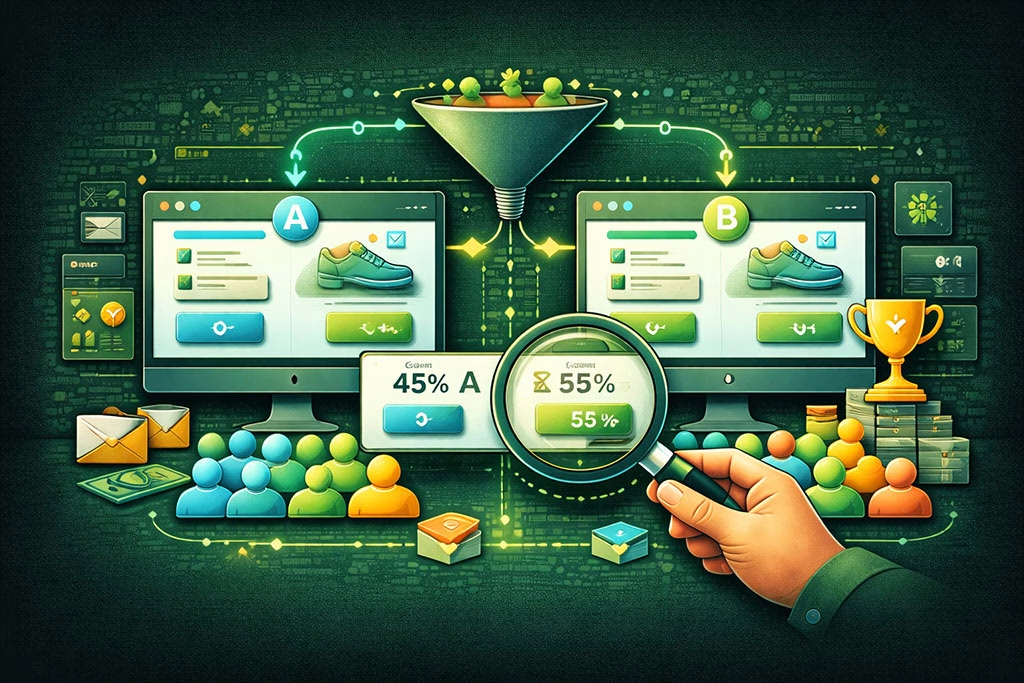
A/B testing is a powerful method for refining your marketing strategies based on real-world performance data. By creating two variations of a campaign—such as different subject lines for an email or distinct landing page designs—you can test which version resonates more with your audience. This process allows you to gather concrete evidence about what works best for each segment of your audience.
When implementing A/B testing for segmentation, it’s essential to focus on one variable at a time to accurately measure its impact. For instance, if you’re testing email subject lines, keep the content consistent across both versions. Once you’ve identified which variation performs better, you can apply those insights to future campaigns, continually optimizing your approach based on what resonates most with each segment.
Optimizing Customer Experience
Optimizing the customer experience is crucial for driving conversions and fostering long-term loyalty. Every touchpoint in the customer journey should be seamless and enjoyable. From the moment a potential customer lands on your website to the post-purchase follow-up, each interaction should reflect your brand’s commitment to quality and service.
To enhance the customer experience, consider implementing user-friendly website design elements that facilitate easy navigation and quick access to information. Additionally, ensure that your customer service channels are responsive and helpful. By prioritizing customer satisfaction at every stage of the journey, you create an environment where customers feel valued and are more likely to return for future purchases.
Measuring and Tracking Conversion Rates
Measuring and tracking conversion rates is essential for evaluating the success of your marketing efforts. Conversion rates indicate how effectively you’re turning potential customers into actual buyers. By closely monitoring these rates across different campaigns and segments, you can identify which strategies are yielding the best results.
Utilize analytics tools to set up conversion tracking on your website. This will allow you to see how many visitors complete desired actions—such as making a purchase or signing up for a newsletter—after engaging with your marketing materials. Regularly reviewing these metrics will enable you to make data-driven decisions about where to allocate resources and how to refine your strategies for maximum impact.
Leveraging Predictive Analytics
Predictive analytics is an advanced technique that allows you to forecast future trends based on historical data. By analyzing past customer behaviors and interactions, you can gain insights into what actions are likely to lead to conversions in the future. This proactive approach enables you to anticipate customer needs and tailor your marketing strategies accordingly.
For instance, if predictive analytics indicates that certain segments are likely to respond positively to specific promotions during particular times of the year, you can plan targeted campaigns in advance. This not only enhances efficiency but also positions your brand as one that understands its customers’ needs before they even express them.
Segmenting Based on Behavioral Patterns
Behavioral segmentation is another effective strategy for refining your marketing efforts. By categorizing customers based on their interactions with your brand—such as purchase history, website visits, or engagement with emails—you can create highly targeted campaigns that speak directly to their interests. For example, if a segment of customers frequently browses but rarely makes purchases, consider implementing retargeting ads that remind them of products they viewed or offering incentives like discounts for first-time buyers.
By addressing specific behaviors with tailored messaging, you increase the likelihood of converting hesitant customers into loyal ones.
Improving ROI through Data-Driven Segmentation
Ultimately, the goal of all these strategies is to improve return on investment (ROI) through data-driven segmentation. By understanding your audience better and tailoring your marketing efforts accordingly, you can maximize the effectiveness of every dollar spent on advertising and outreach. Data-driven segmentation allows you to allocate resources more efficiently by focusing on high-converting segments rather than casting a wide net that may yield minimal returns.
As you refine your strategies based on insights gained from data analysis and testing, you’ll find that not only do conversion rates improve but also overall customer satisfaction increases—leading to long-term loyalty and advocacy for your brand. In conclusion, mastering the art of segmentation through data-driven strategies is essential for any marketer looking to thrive in today’s competitive landscape. By understanding your target audience, collecting relevant data, creating personalized campaigns, and continuously optimizing based on insights gained from testing and analysis, you position yourself for success in driving conversions and enhancing customer experiences.
In the quest to enhance marketing strategies, understanding how to effectively combine purchase history and engagement data is crucial for creating segments that convert. For further insights on optimizing your marketing efforts, you might find the article on A/B testing particularly useful, as it discusses common pitfalls and how to ensure your tests yield actionable results.
FAQs
What is purchase history data?
Purchase history data refers to the record of all past transactions made by a customer, including details such as products bought, purchase dates, quantities, and amounts spent. This data helps businesses understand customer buying behavior.
What is engagement data?
Engagement data tracks how customers interact with a brand across various channels, such as website visits, email opens, clicks, social media interactions, and app usage. It provides insights into customer interests and activity levels.
Why combine purchase history and engagement data for segmentation?
Combining purchase history and engagement data allows businesses to create more accurate and actionable customer segments. This integrated approach helps identify not only who has bought products but also how actively customers engage with marketing efforts, leading to higher conversion rates.
How can combined data improve marketing campaigns?
Using both purchase and engagement data enables marketers to tailor messages and offers based on customers’ buying patterns and current interests. This personalization increases relevance, boosts customer response, and ultimately improves campaign performance.
What tools are commonly used to combine and analyze these data types?
Customer Relationship Management (CRM) systems, marketing automation platforms, and data analytics tools are commonly used to integrate and analyze purchase history and engagement data. These tools help segment customers and automate targeted marketing efforts.
Are there privacy concerns when using purchase and engagement data?
Yes, businesses must comply with data protection regulations such as GDPR and CCPA when collecting and using customer data. It is important to obtain proper consent, secure data storage, and provide transparency about data usage.
How often should purchase and engagement data be updated for segmentation?
Data should be updated regularly, ideally in real-time or at least daily, to ensure segments reflect the most current customer behavior. Frequent updates help maintain the accuracy and effectiveness of marketing campaigns.
Can combining these data types help identify high-value customers?
Yes, integrating purchase history with engagement data helps identify customers who not only spend more but also actively engage with the brand. These high-value customers can be targeted with exclusive offers to increase loyalty and lifetime value.
What challenges might businesses face when combining purchase and engagement data?
Challenges include data integration from multiple sources, ensuring data quality and consistency, managing large datasets, and interpreting complex customer behaviors. Overcoming these requires robust data management strategies and analytical expertise.
Is it necessary to have technical expertise to combine purchase and engagement data?
While some technical knowledge is helpful, many modern marketing platforms offer user-friendly interfaces and automation features that simplify data integration and segmentation. However, understanding data analytics principles can enhance the effectiveness of these efforts.