


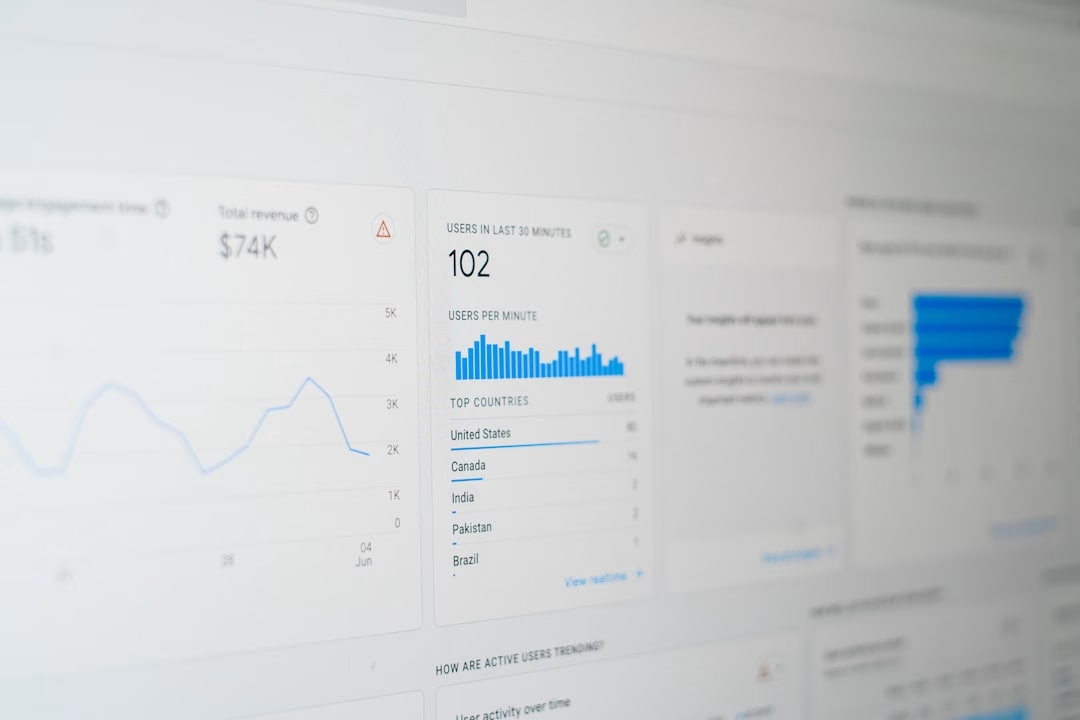
You, the astute marketer, the visionary campaign manager, the one who craves actionable insights and measurable success – you understand that in today’s cutthroat digital landscape, time is not just money; it’s opportunity. Waiting days or even hours for campaign reports is like driving with a blindfold on. What you need is the clarity of real-time, the precision of instant data, and the power to pivot before the market even knows it’s turned. That’s why you’re here, ready to explore how real-time analytics isn’t just a buzzword; it’s your secret weapon for campaign domination.
1. You Gain Instant Customer Understanding
You’ve launched your campaign, and the clock is ticking. Are your target customers resonating with your message? Are they clicking where you want them to click, converting as you’d hoped, or are they abandoning their carts like ships in a storm? With real-time analytics, you don’t have to guess. You see the immediate impact of every creative, every headline, every call to action from the moment your campaign goes live.
1.1 You See Behavior as It Happens
Imagine releasing a new ad creative. Instead of waiting until the end of the day or week for performance metrics, you’re observing user interactions minute-by-minute. You see the immediate spike in clicks, or the sudden drop in engagement, associated with that specific change. This isn’t just about raw numbers; it’s about understanding the flow of customer interaction.
1.2 You Uncover Micro-Trends and Anomalies
Real-time data lets you spot micro-trends forming before they become significant issues or lost opportunities. Perhaps a specific demographic is engaging with your ad at an unexpectedly high rate on Tuesdays, or a particular landing page element is causing friction for mobile users right now. These are the kinds of immediate insights that traditional, delayed reporting often buries under aggregated data.
1.3 You Pinpoint Pain Points in the User Journey
When you map the customer journey through a real-time analytics dashboard, you can visually track users as they move from ad impression to conversion – or, more importantly, to abandonment. Where are they dropping off? Is it the product page, the checkout form, or a specific step in the signup process? You see these roadblocks instantly, allowing you to prioritize fixes and deploy solutions before significant revenue is lost. You’re not just reacting; you’re proactively optimizing the customer experience on the fly.
In the realm of digital marketing, understanding the nuances between different types of email communications can significantly enhance campaign effectiveness. A related article that delves into this topic is “Email Marketing vs. Transactional Emails: Understanding the Key Differences,” which explores how these two email types serve distinct purposes and can be optimized for better engagement. You can read more about it here: Email Marketing vs. Transactional Emails. By integrating insights from real-time analytics engines, marketers can refine their strategies and make informed decisions that drive better results across both email categories.
2. You Optimize Ad Spend with Unprecedented Agility
Every dollar in your marketing budget is precious, and you’re constantly striving for maximum ROI. Real-time analytics transforms your budget allocation from an educated guess into a data-driven strategy, allowing you to shift spend and optimize bids with surgical precision.
2.1 You Maximize Budget Efficiency
With real-time visibility into campaign performance, you immediately know which ads, keywords, and channels are underperforming. Why wait until the end of the day to discover that a particular keyword is consuming 30% of your budget but delivering zero conversions? You can pause, adjust, or reallocate ad spend instantly, preventing further waste and freeing up resources for more effective channels. You’re not just stopping the bleed; you’re redirecting the flow to where it counts.
2.2 You Capitalize on Emerging Opportunities
Conversely, real-time data also highlights unexpectedly high-performing elements. Perhaps a newly tested demographic is converting at an incredible rate, or a specific ad variant is generating significantly lower cost-per-acquisition. You can immediately increase bids, allocate more budget, or even duplicate successful ad sets to scale promising avenues before your competitors even register the trend. This is about being first to the prime fishing spot, not just showing up after everyone else has packed up.
2.3 You Conduct A/B Testing with Rapid Iteration
Traditional A/B testing often involves running experiments for days or weeks to achieve statistical significance. With real-time analytics, you can accelerate this process dramatically. You monitor the performance of your A/B variants as they accrue data. If one variant demonstrates clear superiority very early on, you can confidently declare a winner, pause the losing variant, and shift all traffic to the top performer almost instantly. This means you learn faster, optimize quicker, and achieve better results in a fraction of the time. You’re not just testing; you’re constantly evolving your winning formula.
3. You Deliver Hyper-Personalized Experiences Immediately
In an age where customers expect brands to understand their individual needs and preferences, generic messaging falls flat. Real-time analytics empowers you to move beyond broad segmentation and deliver dynamic, personalized experiences that resonate at a deeply individual level, precisely when it matters most.
3.1 You Tailor Content Based on Current Behavior
Imagine a prospect browsing your e-commerce site, looking at running shoes. With real-time analytics, you immediately know their product interest. As they navigate to another page, you can dynamically adjust the banner ad they see, the product recommendations they receive, or even the pop-up offer that appears, making it specifically relevant to running shoes. This isn’t just about retargeting; it’s about anticipating needs and serving relevant content in the moment.
3.2 You Personalize Offers in Real-Time
A customer adds several items to their cart but hesitates at checkout. Real-time analytics can detect this abandonment signal. You can then instantly trigger a personalized offer – a small discount, free shipping, or a complimentary gift – specifically designed to overcome their current hesitation and nudge them towards completing the purchase. You’re not just segmenting; you’re addressing individual user friction points the instant they arise.
3.3 You Customize User Journeys Dynamically
Beyond individual offers, real-time data allows you to dynamically adjust entire user journeys. If a user arrives from a particular social media campaign, you can automatically route them to a specialized landing page tailored to that campaign’s messaging, rather than a generic homepage. If they’ve interacted with your brand before – perhaps filled out a form or downloaded an asset – you can serve them content that continues their journey from their last point of interaction, rather than making them start from scratch. You’re building a unique, optimized path for every individual user, in the moment they interact with your brand.
4. You Enable Swift Crisis Management and Anomaly Detection
Not every campaign goes perfectly. Technical glitches, unexpected viral trends (positive or negative), or sudden shifts in market sentiment can derail even the most meticulously planned initiatives. Real-time analytics acts as your early warning system, allowing you to detect and address issues before they escalate into full-blown crises.
4.1 You Detect Technical Glitches Instantly
A broken link, a non-loading image, a dysfunctional payment gateway – these silent killers can cripple campaign performance. Real-time analytics constantly monitors your website and campaign assets. If a crucial page receives visits but no clicks on the CTA, or if conversion rates suddenly plummet to zero, you’ll see it immediately. This allows your technical team to jump in and fix the problem within minutes, minimizing lost sales and frustrated customers. You’re not just finding bugs; you’re preventing revenue erosion.
4.2 You Respond to Negative Feedback Proactively
Social media mentions, brand sentiment, and customer service inquiries can explode in an instant. Real-time analytics platforms can integrate with social listening tools, alerting you to sudden spikes in negative sentiment or specific complaints related to your campaign. This empowers you to address the issue head-on, issue clarifications, or even pause problematic ads before they cause lasting brand damage. You’re not just reacting; you’re controlling the narrative.
4.3 You Identify Fraudulent Activity and Bot Traffic
A sudden surge in ad clicks from an unusual geographic location with zero conversions, or a massive influx of suspicious traffic to your landing page – these could be signs of click fraud or bot activity, wasting your ad budget. Real-time analysis can flag these anomalies as they happen, allowing you to block problematic IP addresses, adjust targeting, and protect your budget from malicious actors. You’re not just observing traffic; you’re safeguarding your investment.
Real-time analytics engines play a crucial role in enhancing campaign decisions by providing immediate insights into consumer behavior and preferences. For a deeper understanding of how optimizing your web forms can significantly impact subscriber conversion rates, you might find the article on improving your web forms particularly insightful. It discusses practical strategies that can complement the data-driven approaches enabled by real-time analytics. You can read more about it in this related article.
5. You Foster a Culture of Continuous Experimentation and Learning
The best marketers are perpetual learners and fearless experimenters. Real-time analytics removes the fear of making a wrong move and replaces it with the confidence to test, iterate, and discover new pathways to success, all while maximizing your learning velocity.
5.1 You Make Data-Driven Decisions, Not Guesswork
With instant access to performance metrics, every decision you make is backed by current, verifiable data. Should you increase bids on keyword X? Real-time data tells you its current conversion rate and cost-per-acquisition. Should you deploy a new landing page variant? You’ll see its immediate impact on user behavior. This fosters a mindset where assumptions are replaced by verifiable facts, leading to consistently better outcomes. You’re not just deciding; you’re proving.
5.2 You Empower Your Team with Immediate Feedback
Imagine your content team brainstorming new ad copy. Instead of waiting days to see the results of their creative efforts, they can roll out new variants and observe their impact almost instantly. This immediate feedback loop is incredibly empowering; it motivates teams, encourages rapid iteration, and accelerates collective learning. They see what works, what doesn’t, and why, fostering a more effective and agile marketing operation. You’re not just guiding your team; you’re equipping them with immediate insights to refine their craft.
5.3 You Turn Every Campaign into a Learning Opportunity
Even campaigns that don’t meet initial expectations become invaluable learning experiences when viewed through a real-time lens. You can dissect precisely where the campaign went off track, which elements underperformed, and how user behavior diverged from your predictions. This granular understanding allows you to systematically refine your strategies, build more accurate customer profiles, and inform future campaigns with insights that are rooted in immediate, observed reality. You’re not just running campaigns; you’re building an ever-growing repository of actionable market intelligence.
You, the astute marketer, the visionary campaign manager, are now equipped with the compelling case for integrating real-time analytics into every facet of your campaign strategy. Stop merely reporting on the past; start actively shaping your future. Embrace the power of NOW, and watch your campaign decisions become sharper, your optimizations more precise, and your overall success metrics ascend to new heights.
FAQs
What are real-time analytics engines?
Real-time analytics engines are software platforms that process and analyze data as it is generated, providing immediate insights and enabling quick decision-making.
How do real-time analytics engines improve campaign decisions?
Real-time analytics engines allow marketers to monitor campaign performance in real time, enabling them to make data-driven decisions and adjustments on the fly to optimize their campaigns for better results.
What are the benefits of using real-time analytics engines for campaign decisions?
Some benefits of using real-time analytics engines for campaign decisions include improved targeting, better understanding of customer behavior, faster response to market changes, and the ability to capitalize on emerging trends.
What types of data can real-time analytics engines process?
Real-time analytics engines can process various types of data, including website traffic, social media interactions, customer transactions, and other real-time data sources to provide actionable insights for campaign decisions.
What are some popular real-time analytics engines used in the industry?
Some popular real-time analytics engines used in the industry include Google Analytics, Adobe Analytics, IBM Watson Analytics, and Salesforce Einstein Analytics. These platforms offer real-time data processing and analysis capabilities to support campaign decision-making.