



You know the drill. You launch a new marketing campaign, brimming with confidence, only to watch engagement numbers trickle in, lukewarm at best. You’ve sliced and diced your audience data, created personas, and still, it feels like you’re throwing darts in the dark. The problem isn’t necessarily your marketing efforts; it’s often the precision of your audience segmentation. In today’s hyper-personalized digital landscape, generic messaging is a death knell. You need to speak directly to your audience’s needs, desires, and pain points, and to do that effectively, you need accurate segmentation. This is where machine learning comes in, revolutionizing how you understand and engage with your customers.
Before you dive into the power of machine learning, it’s crucial to acknowledge where traditional segmentation methods often fall short. You’ve likely invested time and resources into these approaches, and while they offer a foundational understanding, they frequently lack the granular detail and adaptive capabilities needed for true personalization.
Static and Rule-Based Constraints
Think about your current segmentation. Is it based on predefined rules like “females aged 25-34 interested in fashion” or “B2B clients in the finance sector with over 50 employees”? While these categories seem logical on the surface, they’re inherently static. Your customers are dynamic; their preferences evolve, their life stages change, and their needs shift. These rule-based segments don’t capture that fluidity. You’re essentially putting people into fixed boxes, often missing nuanced behaviors that don’t neatly fit the mold.
Reliance on Explicit Data
You primarily rely on data explicitly provided by your customers, such as demographic information from forms, survey responses, or purchase history. While valuable, this explicit data often tells only part of the story. What about the implicit signals – their browsing behavior, their sentiment in reviews, their interaction patterns on your social media? Traditional methods struggle to incorporate these subtle yet powerful indicators of intent and preference. You’re operating with a limited perspective, akin to trying to understand a book by only reading the chapter titles.
Manual and Time-Consuming Processes
Creating and refining segments traditionally involves significant manual effort. You gather data, analyze spreadsheets, and painstakingly define criteria. When you need to update segments or add new ones, it’s a time-consuming process that divert valuable resources. This manual burden often means your segmentation lags behind the real-time evolution of your customer base, leaving you constantly playing catch-up. You’re effectively relying on manual labor for a task that demands algorithmic efficiency.
Inability to Uncover Hidden Patterns
The human mind, while adept at pattern recognition, is limited when faced with massive datasets. You might spot obvious correlations, but complex, multi-dimensional patterns often remain hidden in the noise. Traditional methods struggle to uncover these subtle connections between various data points that machine learning algorithms excel at identifying. You’re missing out on ‘aha!’ moments that could unlock entirely new segments and marketing opportunities.
In the quest for enhanced marketing strategies, understanding how machine learning can refine audience segmentation accuracy is crucial. A related article that delves deeper into this topic is titled “Discover Your Email Variant: Send Automatically,” which explores the automation of email marketing through advanced segmentation techniques. By leveraging machine learning, marketers can tailor their messages more effectively, ensuring that the right content reaches the right audience at the right time. For more insights, you can read the article here: Discover Your Email Variant: Send Automatically.
The Machine Learning Advantage: A New Paradigm for Segmentation
Now, let’s turn your attention to the transformative power of machine learning. You’ll quickly realize that it transcends the limitations of traditional approaches by bringing unprecedented depth, adaptability, and efficiency to your segmentation efforts.
Unsupervised Learning for Discovery
One of the most powerful applications of machine learning in segmentation is unsupervised learning. Unlike supervised learning, where you provide labeled data (e.g., “this customer is ‘high-value'”), unsupervised algorithms discover patterns and structures within your data without explicit guidance.
Clustering Algorithms for Natural Groupings
You’ll leverage algorithms like K-Means, DBSCAN, or hierarchical clustering to automatically group your customers based on their similarities across a multitude of features. Imagine feeding these algorithms all your customer data – purchase history, website visits, email opens, social media interactions, demographic information, and more. The machine learning model will then identify natural groupings of customers who exhibit similar behaviors and characteristics, even if you hadn’t explicitly defined those groups before. This allows you to uncover emergent segments that you might never have conceived of through manual analysis. You’re letting the data speak for itself, revealing inherent structures.
Anomaly Detection for Niche Segments
Beyond grouping similar customers, machine learning can also pinpoint outliers. These aren’t necessarily “bad” customers; they could be a highly niche, incredibly valuable segment whose behavior deviates significantly from the norm. Anomaly detection algorithms can identify these unique individuals or small groups, allowing you to tailor highly specific, high-impact strategies for them. You might discover a tiny segment of early adopters of a new product feature, or a group of highly engaged customers with unique interests that your mainstream segments overlook.
Supervised Learning for Predictive Segmentation
While unsupervised learning excels at discovery, supervised learning allows you to predict segment membership or behavior based on historical data. This is where you can proactively target customers with personalized messages before they even realize their need.
Classification Models for Predicting Behavior
You can train classification models (e.g., logistic regression, decision trees, support vector machines) to predict various customer behaviors. For instance, you could predict which customers are likely to churn, which are most likely to respond to a particular offer, or which fit into a “high value potential” segment. By feeding these models historical data with known outcomes, they learn to identify the characteristics that lead to those outcomes. This means you can identify and target customers who are likely to exhibit a certain behavior, rather than just those who have already shown it. You’re moving from reactive to proactive marketing.
Regression Models for Quantifying Value
Regression models allow you to predict continuous values, such as Customer Lifetime Value (CLTV). By predicting CLTV, you can segment your customers not just by their past purchases, but by their potential future worth to your business. This allows you to allocate resources more effectively, focusing your high-touch marketing efforts on those with the highest predicted CLTV. You’re not just segmenting by what they’ve done, but by what they will do.
Enhancing Dynamic Segmentation
Machine learning enables your segmentation to be truly dynamic, adapting in real time to changing customer behaviors and market conditions. You’re no longer working with static snapshots but with constantly evolving insights.
Real-time Data Processing
With the ability to process vast amounts of data in real-time, machine learning models can continuously monitor customer interactions. If a customer’s browsing habits suddenly shift, or their engagement with a particular product category spikes, the models can instantly recognize these changes and reassign them to a more appropriate segment or trigger a specific personalized action. You’re reacting to your customers as they evolve, not days or weeks later.
Recommendation Engines and Personalization
The insights gleaned from machine learning-driven segmentation feed directly into recommendation engines. If a customer is identified as belonging to a “tech enthusiast” segment, your system can automatically suggest new gadgets, relevant articles, or events tailored to that interest. This creates a highly personalized experience across all touchpoints, from website content to email campaigns. You’re making every interaction feel like a one-on-one conversation.
Implementing Machine Learning Segmentation: Your Blueprint
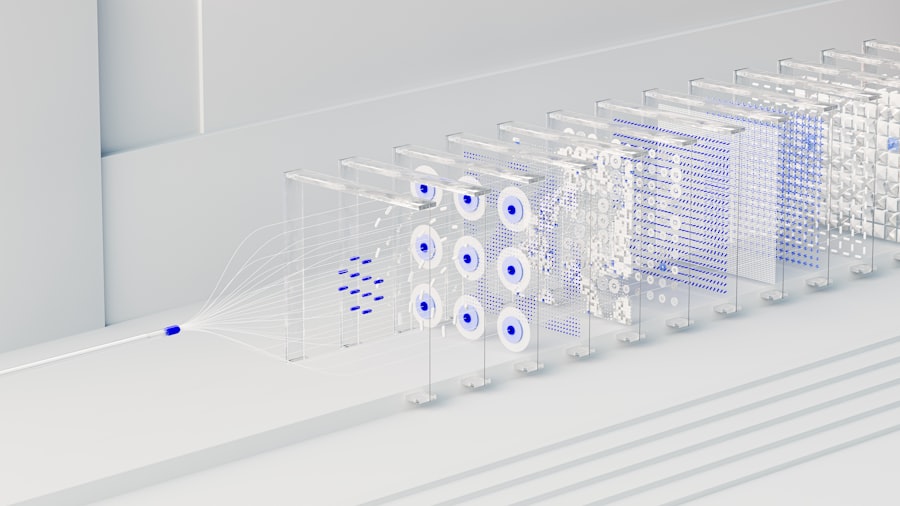
Ready to leverage machine learning for superior audience segmentation? Here’s a practical blueprint to guide your implementation, ensuring you’re setting yourself up for success.
Data Collection and Preparation: The Foundation
Your machine learning models are only as good as the data you feed them. This is arguably the most crucial step, demanding careful attention and a robust infrastructure.
Consolidating Data Sources
Begin by identifying and consolidating all relevant customer data. This includes your CRM, website analytics, marketing automation platforms, social media, customer support interactions, and even offline purchase records. You need a unified view of your customer across all channels. Remember, the more comprehensive your data, the richer the insights your models can generate. You’re building a 360-degree view of your customer.
Feature Engineering
This is where you transform raw data into features that machine learning models can understand and learn from. For example, instead of just “purchase date,” you might create features like “days since last purchase,” “average order value,” “number of distinct product categories purchased,” or “frequency of website visits in the last 30 days.” You’re extracting meaningful attributes that describe customer behavior and characteristics. You’re giving the algorithms something tangible to work with.
Data Cleaning and Preprocessing
Real-world data is messy. You’ll encounter missing values, inconsistencies, outliers, and duplicates. You need to meticulously clean and preprocess your data to ensure its quality. This might involve imputation for missing values, standardization or normalization of numerical features, and encoding categorical variables. Without clean data, your models will learn from garbage, leading to inaccurate segments. You’re polishing the raw material before it goes into the machine.
Model Selection and Training: Choosing the Right Tools
With your data prepared, you’re ready to select and train the appropriate machine learning models. This involves understanding your objectives and the nature of your data.
Clustering Algorithm Choice
For unsupervised segmentation, you’ll need to choose the right clustering algorithm. K-Means is a popular starting point due to its simplicity and efficiency, but you might explore others like DBSCAN for density-based clusters or hierarchical clustering for nested groupings. Your choice depends on the structure of your data and the type of segments you hope to uncover. You might even experiment with several algorithms to see which produces the most meaningful segments.
Supervised Model Selection
If your goal is predictive segmentation, you’ll select a supervised learning model. Decision trees or random forests are often good for interpretability, while more complex models like gradient boosting machines or neural networks can offer higher accuracy for intricate patterns. The key here is to select a model that aligns with the complexity of the prediction you’re trying to make and the size of your dataset.
Model Training and Evaluation
Once you’ve chosen your models, you’ll train them on your prepared data. For supervised learning, you’ll split your data into training and validation sets to ensure your model generalizes well to new, unseen data. For clustering, you’ll evaluate the quality of your clusters using metrics like silhouette score or by examining the interpretability of the segments generated. You’re essentially teaching the machine to understand your customer base.
Iteration and Refinement: A Continuous Process
Machine learning segmentation isn’t a one-and-done project. It’s an iterative process that requires continuous monitoring, evaluation, and refinement.
Segment Interpretation and Validation
After your models generate segments, you must interpret them. What defines each segment? What are their common characteristics, behaviors, and needs? This often involves a human in the loop, bringing domain expertise to validate the statistical groupings. Are these segments actionable and meaningful from a business perspective? You need to give these statistically derived groups a narrative.
A/B Testing and Performance Monitoring
Deploy your new, ML-driven segments in A/B tests against your traditional segments. Track key performance indicators (KPIs) like conversion rates, engagement, open rates, and customer lifetime value. Continuously monitor the performance of your segments and the efficacy of your personalized campaigns. This feedback loop is crucial for identifying areas for improvement. You’re proving the value of your new system.
Regular Model Retraining and Updating
Customer behavior is dynamic. Your machine learning models will need to be regularly retrained with new data to stay relevant and accurate. As new products are launched, market trends shift, or customer preferences evolve, your models must adapt. This ensures your segments remain up-to-date and your personalization efforts continue to hit the mark. You’re treating your segmentation as a living, breathing entity.
Benefits Beyond Precision: The Ripple Effect

The advantages of machine learning segmentation extend far beyond simply having more accurate customer groups. You’ll experience a cascading effect throughout your marketing and business operations.
Hyper-Personalized Customer Experiences
This is the most direct and impactful benefit. By truly understanding individual customer needs and preferences at a granular level, you can deliver marketing messages, product recommendations, and customer service interactions that feel uniquely tailored. This boosts satisfaction, builds loyalty, and significantly improves conversion rates. You’re creating an experience where every customer feels seen and understood.
Optimized Resource Allocation
With precise knowledge of your most valuable segments and their potential, you can allocate your marketing budget and effort more strategically. You can focus high-touch resources on high-potential customers and automate interactions for others, ensuring maximum ROI from your marketing spend. You’re no longer guessing where to invest; you’re operating with data-driven certainty.
Improved Product Development
Segments based on deep behavioral insights can provide invaluable feedback for product development. You’ll identify unmet needs, popular features within specific groups, and pain points that can guide your product roadmap. This ensures you’re building products and features that truly resonate with your target audiences. You’re leveraging customer data to build better products.
Enhanced Customer Lifetime Value (CLTV)
By fostering stronger relationships through personalization and anticipating customer needs, you naturally increase CLTV. Satisfied customers are more likely to make repeat purchases, try new offerings, and become brand advocates. Machine learning helps you nurture these relationships over the long term. You’re investing in long-term customer relationships, not just transactional gains.
Competitive Advantage
In a crowded marketplace, superior customer understanding is a significant differentiator. Companies that leverage machine learning for advanced segmentation will outpace competitors relying on generic, one-size-fits-all approaches. This technological edge translates directly into market share and brand loyalty. You’re positioning yourself at the forefront of customer understanding.
In the ever-evolving landscape of digital marketing, understanding your audience is crucial for success. A recent article discusses how automation can enhance marketing strategies, providing valuable insights into audience engagement. By leveraging advanced techniques, businesses can not only improve their audience segmentation accuracy but also streamline their operations. For more information on this topic, you can read about the various API tricks that can unlock automation in your marketing efforts by visiting this article.
Navigating Challenges and Ethical Considerations
| Metrics | Description |
|---|---|
| Precision | The proportion of true positive predictions among all positive predictions, indicating the accuracy of identifying the correct audience segment. |
| Recall | The proportion of true positive predictions among all actual positive instances, measuring the ability to capture all relevant audience segments. |
| F1 Score | The harmonic mean of precision and recall, providing a balance between the two metrics and overall accuracy of audience segmentation. |
| Confusion Matrix | A table showing the true positive, false positive, true negative, and false negative predictions, offering a comprehensive view of segmentation accuracy. |
| Area Under the ROC Curve (AUC-ROC) | A graphical representation of the trade-off between true positive rate and false positive rate, indicating the model’s ability to distinguish between audience segments. |
While the benefits are compelling, you must also be aware of the challenges and ethical responsibilities that come with sophisticated machine learning segmentation.
Data Privacy and Security
Working with vast amounts of customer data demands strict adherence to data privacy regulations (e.g., GDPR, CCPA). You must ensure robust security measures are in place to protect sensitive information and maintain customer trust. Transparency about data usage is paramount. You need to be a responsible steward of your customers’ data.
Model Interpretability and Explainability
Some advanced machine learning models, like deep neural networks, can be “black boxes,” making it difficult to understand why they made certain predictions or grouped customers in a particular way. For stakeholders, understanding the rationale behind segment definitions can be crucial. You should strive for models that balance accuracy with a degree of interpretability, especially when high-stakes decisions are involved. You need to be able to explain the “why” behind the segmentation.
Avoiding Bias and Discrimination
Machine learning models learn from the data they are fed. If your historical data contains biases (e.g., reflecting historical discrimination, or under-representation of certain groups), your models can perpetuate and even amplify these biases in new segments. You must actively work to identify and mitigate bias in your data and models to ensure fair and equitable treatment of all customers. You have a responsibility to ensure your algorithms are fair and unbiased.
Resource Requirements (Skills and Infrastructure)
Implementing and maintaining machine learning solutions requires specialized skills in data science, machine learning engineering, and data infrastructure. You’ll need access to computational resources and potentially new tools. This can be a significant investment, but one that offers substantial returns. You’re investing in cutting-edge talent and technology.
By embracing machine learning, you’re not just refining your segmentation; you’re fundamentally transforming your approach to customer understanding and engagement. You’re moving beyond guesswork to data-driven precision, building a future where every customer interaction is relevant, impactful, and deeply personalized. The journey might require investment and expertise, but the destination—a loyal, highly engaged customer base and a significantly stronger bottom line—is undeniably worth it.
FAQs
What is audience segmentation?
Audience segmentation is the process of dividing a target audience into smaller, more defined groups based on specific characteristics such as demographics, behavior, or preferences.
What is machine learning?
Machine learning is a subset of artificial intelligence that enables systems to automatically learn and improve from experience without being explicitly programmed. It uses algorithms to analyze data, learn from it, and make predictions or decisions.
How does machine learning improve audience segmentation accuracy?
Machine learning improves audience segmentation accuracy by analyzing large volumes of data to identify patterns and trends that may not be apparent to human analysts. This allows for more precise and targeted segmentation based on actual behavior and preferences.
What are the benefits of using machine learning for audience segmentation?
Using machine learning for audience segmentation can lead to more accurate and effective targeting, personalized marketing strategies, improved customer satisfaction, and increased ROI on marketing efforts.
What are some common machine learning techniques used for audience segmentation?
Common machine learning techniques used for audience segmentation include clustering algorithms, decision trees, neural networks, and predictive modeling. These techniques help identify distinct audience segments and predict future behavior.