



In today’s fast-paced digital landscape, understanding the real-time customer is more crucial than ever. You, as a marketer or business owner, must recognize that your customers are not just passive recipients of information; they are active participants in a dynamic marketplace. They expect immediate responses and personalized interactions that cater to their specific needs and preferences.
This shift in consumer behavior has been driven by advancements in technology, particularly mobile devices and social media, which have made information and communication instantaneous. As a result, you need to adapt your strategies to meet these evolving expectations. To effectively engage with real-time customers, you must first understand their behaviors and motivations.
They are often influenced by various factors, including social proof, urgency, and relevance. For instance, when a customer browses your website and leaves without making a purchase, they may be influenced by a sense of urgency created by limited-time offers or by seeing others engage with your brand on social media. By leveraging data analytics and customer insights, you can gain a deeper understanding of these behaviors and tailor your marketing efforts accordingly.
This understanding will empower you to create more meaningful interactions that resonate with your audience.
Key Takeaways
- Real-time customer engagement is enhanced by using API triggers to send instant, personalized emails.
- API triggers work by automatically initiating email sends based on specific customer actions or events.
- Implementing API triggers improves customer experience, boosts open rates, and increases conversion.
- Best practices include selecting relevant triggers, seamless integration, and continuous performance tracking.
- Future trends point to more advanced, AI-driven API triggers for even more precise real-time marketing.
The Power of API Triggers in Email Marketing
API triggers have emerged as a powerful tool in the realm of email marketing, allowing you to automate and personalize your communications in real-time. By utilizing Application Programming Interfaces (APIs), you can connect various software applications and systems to streamline your marketing efforts. This means that when a specific action occurs—such as a customer signing up for your newsletter or abandoning their shopping cart—you can trigger an immediate email response tailored to that action.
This level of automation not only saves you time but also enhances the customer experience by providing timely and relevant information. The power of API triggers lies in their ability to facilitate seamless communication between different platforms. For example, if a customer interacts with your website or mobile app, an API can capture that data and trigger an email campaign that addresses their specific interests or concerns.
This real-time responsiveness can significantly increase engagement rates and conversion opportunities. As you harness the potential of API triggers, you’ll find that your email marketing becomes more agile and effective, allowing you to stay ahead of the competition.
How API Triggers Work in Real-Time
Understanding how API triggers work in real-time is essential for maximizing their potential in your email marketing strategy.
When a customer takes a specific action—such as making a purchase or signing up for an event—an API can detect this event and send a signal to your email marketing platform.
This signal acts as a trigger that initiates a pre-defined response, such as sending a confirmation email or a personalized follow-up message.
The beauty of this process is its immediacy; the moment an action occurs, the corresponding email is dispatched without any manual intervention on your part. The real-time nature of API triggers allows you to create highly relevant and timely communications.
For instance, if a customer abandons their shopping cart, an API can trigger an email reminding them of the items left behind, possibly even including a discount code to encourage completion of the purchase.
This level of personalization not only enhances the customer experience but also increases the likelihood of conversion. By understanding the mechanics behind API triggers, you can design more effective campaigns that resonate with your audience and drive results.
Benefits of Using API Triggers for Instant Emails
| Real-Time Communication | Emails are sent instantly based on user actions or system events. | 99.9% delivery within seconds |
| Improved User Engagement | Timely emails increase open and click-through rates. | Open rates up to 45% higher than batch emails |
| Automation Efficiency | Reduces manual intervention by automating email triggers. | Up to 70% reduction in manual email tasks |
| Personalization | Dynamic content based on user behavior enhances relevance. | Click-through rates improved by 30% |
| Scalability | Handles large volumes of triggered emails without delay. | Supports millions of emails per day seamlessly |
| Cost Efficiency | Reduces costs by sending only relevant emails when needed. | Up to 40% reduction in email marketing costs |
| Enhanced Analytics | Provides detailed tracking of triggered email performance. | Real-time reporting with 95% accuracy |
The benefits of using API triggers for instant emails are manifold, particularly in enhancing customer engagement and driving conversions. One of the most significant advantages is the ability to deliver timely messages that align with customer actions. When you send an email immediately after a customer interacts with your brand, you capitalize on their interest while it’s still fresh in their mind.
This immediacy can lead to higher open rates and engagement levels compared to traditional email campaigns that lack real-time responsiveness. Moreover, API triggers enable you to personalize your communications at scale. By leveraging data collected from various touchpoints, you can tailor your messages based on individual preferences and behaviors.
For example, if a customer frequently browses specific product categories, you can send them targeted emails featuring those products or related promotions. This level of personalization not only fosters a stronger connection between you and your customers but also enhances their overall experience with your brand.
Best Practices for Implementing API Triggers
Implementing API triggers effectively requires careful planning and execution. One best practice is to clearly define the events that will serve as triggers for your email campaigns. By identifying key customer actions—such as sign-ups, purchases, or abandoned carts—you can create targeted responses that resonate with your audience.
Additionally, it’s essential to map out the customer journey to ensure that your triggers align with their expectations at each stage. Another important consideration is testing and optimization. As you implement API triggers, continuously monitor their performance and make adjustments as needed.
A/B testing different email formats, subject lines, and content can provide valuable insights into what resonates best with your audience. By refining your approach based on data-driven insights, you can enhance the effectiveness of your campaigns over time.
Examples of Successful Real-Time Email Marketing Campaigns
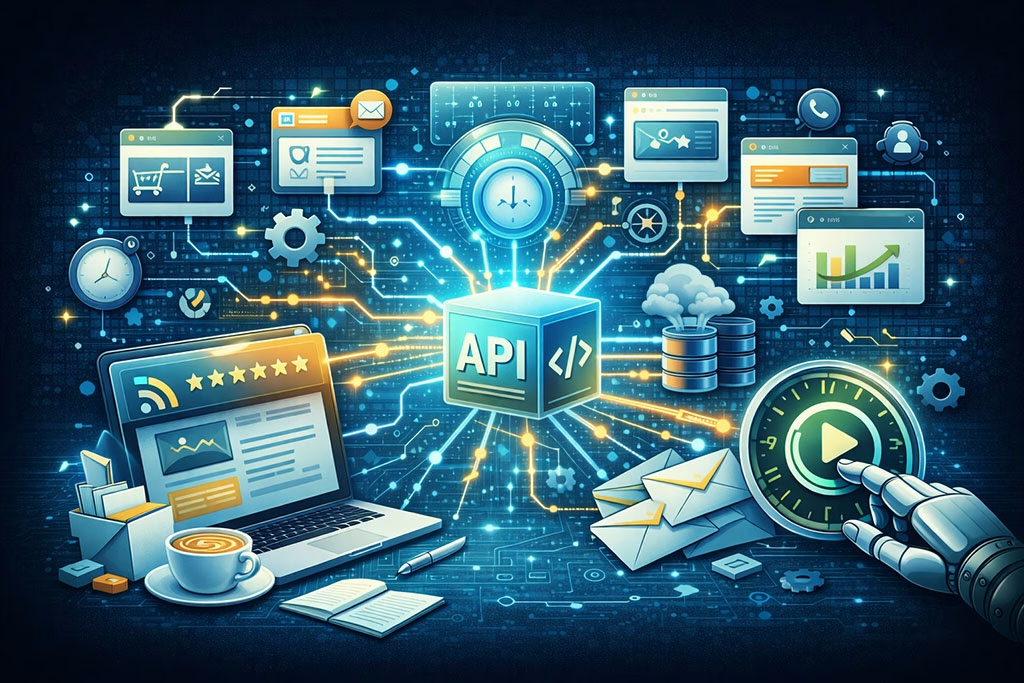
Real-time email marketing campaigns powered by API triggers have proven successful across various industries. For instance, e-commerce brands often utilize abandoned cart emails triggered by API events to recover lost sales. When a customer leaves items in their cart without completing the purchase, an automated email can be sent within hours, reminding them of their selections and offering incentives to finalize the transaction.
This strategy has been shown to significantly reduce cart abandonment rates and boost revenue. Another compelling example comes from travel companies that send real-time updates to customers regarding flight changes or booking confirmations. By leveraging API triggers, these companies can ensure that travelers receive timely notifications about their itineraries, enhancing customer satisfaction and trust in the brand.
Such proactive communication not only keeps customers informed but also demonstrates a commitment to exceptional service.
Overcoming Challenges in Real-Time Customer Engagement
While the benefits of real-time customer engagement through API triggers are clear, there are challenges that you may encounter along the way. One common hurdle is ensuring data accuracy and consistency across different platforms. If your systems are not properly integrated or if there are discrepancies in customer data, it can lead to miscommunication or irrelevant messaging.
To overcome this challenge, invest in robust data management practices and ensure that all systems are synchronized. Another challenge lies in maintaining the balance between automation and personalization. While automated emails can save time and enhance efficiency, it’s crucial to ensure that they still feel personal and relevant to the recipient.
Strive to create messages that reflect individual preferences and behaviors rather than generic templates. By focusing on personalization within your automated processes, you can foster stronger connections with your customers while still benefiting from the efficiency of API triggers.
Choosing the Right API Triggers for Your Business
Selecting the right API triggers for your business is essential for maximizing the effectiveness of your email marketing strategy. Start by analyzing your customer journey to identify key touchpoints where triggers could be beneficial. Consider actions such as sign-ups, purchases, product views, or engagement with previous emails as potential trigger events.
By aligning your triggers with significant customer interactions, you can create timely and relevant communications that resonate with your audience. Additionally, evaluate the capabilities of your existing email marketing platform to ensure compatibility with various APIs. Some platforms may offer built-in integrations with popular APIs, while others may require custom development work.
Take the time to research available options and choose triggers that align with both your business goals and technical capabilities.
Integrating API Triggers with Your Email Marketing Platform
Integrating API triggers with your email marketing platform is a critical step in harnessing their full potential. Begin by reviewing the documentation provided by both your email marketing service and any APIs you plan to use. This documentation will guide you through the integration process and help you understand how data flows between systems.
Once integration is complete, it’s essential to test the functionality thoroughly before launching any campaigns. Conduct tests to ensure that triggers are firing correctly based on specific actions and that emails are being sent as intended. Monitoring performance metrics post-launch will also provide insights into how well your integration is working and whether any adjustments are necessary.
Measuring Success: Tracking Real-Time Customer Engagement
To gauge the success of your real-time email marketing efforts powered by API triggers, it’s vital to track key performance indicators (KPIs). Metrics such as open rates, click-through rates, conversion rates, and overall engagement levels will provide valuable insights into how well your campaigns are resonating with customers. By analyzing these metrics regularly, you can identify trends and make data-driven decisions to optimize future campaigns.
Additionally, consider implementing feedback mechanisms within your emails to gather insights directly from customers. Surveys or quick polls can provide qualitative data on customer satisfaction and preferences, allowing you to refine your approach further. By combining quantitative metrics with qualitative feedback, you’ll gain a comprehensive understanding of how effectively you’re engaging with real-time customers.
The Future of Real-Time Customer Engagement with API Triggers
As technology continues to evolve, the future of real-time customer engagement through API triggers looks promising. With advancements in artificial intelligence and machine learning, you’ll have even greater opportunities to personalize communications based on predictive analytics and behavioral insights. Imagine being able to anticipate customer needs before they even express them—this level of foresight will revolutionize how businesses interact with their audiences.
Moreover, as more businesses recognize the importance of real-time engagement, competition will drive innovation in this space. You’ll need to stay ahead by continuously exploring new tools and strategies that enhance your ability to connect with customers instantly. Embracing emerging technologies will not only improve your marketing efforts but also position your brand as a leader in delivering exceptional customer experiences in an increasingly dynamic marketplace.
In conclusion, understanding real-time customers and leveraging API triggers for instant emails is essential for modern marketing success. By implementing best practices and continuously optimizing your strategies based on data-driven insights, you can create meaningful connections with your audience while driving conversions and enhancing overall engagement.
In the ever-evolving landscape of customer engagement, understanding the importance of timely communication is crucial. The article “The ‘Real-Time’ Customer: How to Use API Triggers for Instant, Behavioral Emails” delves into the significance of leveraging API triggers to enhance customer interactions. For those interested in further exploring effective communication strategies, you might find the article on revamping your welcome series particularly insightful. It discusses how to build a nurturing drip campaign that can complement the real-time strategies outlined in the original piece. Check it out here: Revamp Your Welcome Series: Build a Nurturing Drip Campaign.
FAQs
What is a “real-time” customer in the context of email marketing?
A “real-time” customer refers to an individual whose interactions and behaviors are tracked instantly, allowing marketers to send timely and relevant emails based on their most recent actions.
What are API triggers in email marketing?
API triggers are automated signals sent from one software application to another via an Application Programming Interface (API). In email marketing, these triggers initiate the sending of emails immediately after a specific customer behavior or event occurs.
How do API triggers improve email marketing campaigns?
API triggers enable marketers to send instant, behavior-based emails that are highly relevant to the recipient’s current actions, increasing engagement rates, improving customer experience, and boosting conversion rates.
What types of customer behaviors can activate API-triggered emails?
Common behaviors include website visits, product views, cart abandonment, purchases, account sign-ups, and other interactions that indicate customer intent or interest.
Are API-triggered emails different from traditional email campaigns?
Yes, API-triggered emails are sent immediately in response to specific customer actions, whereas traditional campaigns are often scheduled and sent to broader segments without real-time personalization.
What are the technical requirements for implementing API-triggered emails?
Implementing API-triggered emails requires integration between the email marketing platform and other systems (such as websites or apps) via APIs, real-time data tracking, and the ability to process and respond to events instantly.
Can API-triggered emails be personalized?
Yes, these emails can be highly personalized using data collected from the customer’s behavior, preferences, and past interactions to deliver relevant content and offers.
What industries benefit most from using API-triggered, real-time emails?
E-commerce, retail, travel, finance, and SaaS industries often benefit significantly due to the dynamic nature of customer interactions and the need for timely communication.
Is it possible to measure the effectiveness of API-triggered emails?
Yes, marketers can track metrics such as open rates, click-through rates, conversion rates, and revenue generated to evaluate the performance of real-time, behavior-based email campaigns.
Are there any privacy concerns with using real-time behavioral data for email triggers?
Yes, marketers must ensure compliance with data protection regulations like GDPR and CCPA by obtaining proper consent, securing data, and providing transparency about data usage.