


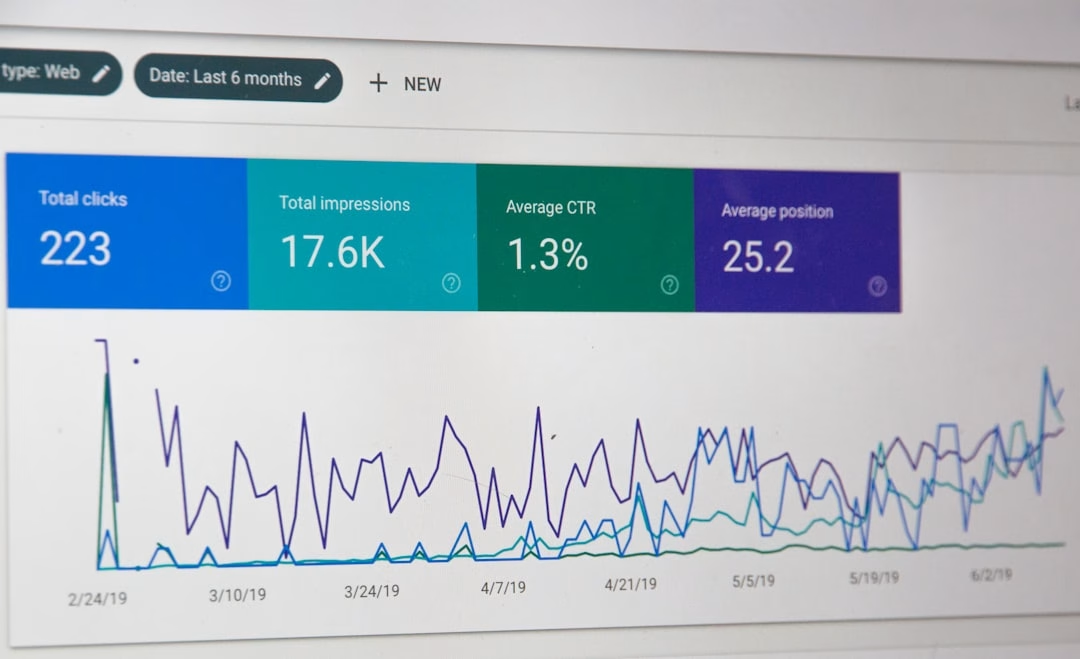
When you craft an email campaign, your goal is to achieve specific objectives. Whether you aim to drive sales, generate leads, or foster brand loyalty, the success of your efforts hinges on your ability to understand what’s working and what isn’t. This understanding doesn’t come from guesswork; it’s built upon careful analysis of the metrics your email platform provides. For you, mastering these metrics is not an optional extra, but a fundamental requirement for optimizing your campaigns and maximizing your return on investment.
Your email campaigns generate a wealth of data. However, not all data points hold equal significance. Identifying and focusing on the Key Performance Indicators (KPIs) is crucial for gaining actionable insights. These are the metrics that directly reflect the health and effectiveness of your campaigns in relation to your predefined goals. When you track the right KPIs, you gain a clear picture of your audience’s engagement and the overall impact of your messaging.
Open Rate
The open rate tells you the percentage of recipients who opened your email. While seemingly straightforward, its interpretation requires nuance. A high open rate indicates that your subject line and sender name are compelling enough to capture attention in a crowded inbox. Conversely, a low open rate suggests potential issues with your subject line’s effectiveness, sender reputation, or even the relevance of your recipient list.
Factors Influencing Open Rates
Several elements contribute to your email’s open rate. Understanding these allows you to make targeted improvements.
Subject Line Effectiveness
Your subject line is the gateway to your email. It needs to be concise, intriguing, and relevant to the recipient. You should experiment with different approaches, from benefit-driven statements to curiosity-provoking questions. Personalization in the subject line can also significantly boost opens.
Sender Name Recognition
The name that appears in the “from” field is as important as the subject line. A recognizable and trusted sender name encourages opens. If your brand is new or your sender name is obscure, recipients may be hesitant to open your messages, mistaking them for spam or irrelevant communication.
Email Deliverability
Even the most compelling subject line is useless if your email never reaches the inbox. Poor deliverability, often due to spam filters or incorrect email addresses, directly impacts your open rate. You must prioritize maintaining a clean email list and adhering to best practices to ensure your emails land in the intended inboxes.
Timing of Sends
The time of day or week you send your emails can influence open rates. Consider your audience’s habits and preferences. Are they more likely to check emails during their morning commute, at lunchtime, or after work? A/B testing different send times can reveal optimal windows for engagement.
Click-Through Rate (CTR)
The click-through rate measures the percentage of recipients who clicked on at least one link within your email. This metric is a strong indicator of how effectively your email content persuades recipients to take a desired action. A high CTR suggests your call to action (CTA) is clear, your content is engaging, and the offer or information within the email is compelling.
Components of a High CTR
Achieving a strong CTR involves more than just including a link. You need to carefully consider the elements that drive recipient action.
Call to Action (CTA) Clarity and Prominence
Your CTA is the directive you provide to your audience. It needs to be crystal clear, stating exactly what you want them to do. Furthermore, it must be visually prominent within your email, making it easy to find and click. Buttons often perform better than text links for CTAs.
Content Relevance and Value
The content surrounding your CTA must be relevant and offer genuine value to the recipient. If the email’s body fails to engage or convince them, they are unlikely to click through, regardless of how well-crafted the CTA is. Ensure your content supports the action you want them to take.
Link Placement and Design
Where you place your links and how they are presented matters. Strategically place links where they are most likely to be seen and clicked. Use visually distinct links, such as buttons or underlined text, that clearly signal interactivity.
Mobile Responsiveness
A significant portion of emails are opened on mobile devices. If your email is not mobile-responsive, links may be difficult to tap, leading to a lower CTR. Ensure your emails render correctly and links are easily accessible on all screen sizes.
Conversion Rate
The conversion rate takes things a step further than CTR. It measures the percentage of recipients who complete a specific, desired action after clicking a link in your email. This action could be making a purchase, filling out a form, downloading a resource, or signing up for a webinar. For you, this is often the ultimate measure of your campaign’s success, as it directly ties to your business objectives.
Optimizing for Conversions
Your focus for conversion rate optimization should be on the entire user journey from email open to the desired outcome.
Landing Page Optimization
The landing page is where your CTA directs recipients. This page must be consistent with your email’s message and offer a seamless experience. It should be designed to facilitate the conversion, with clear forms, compelling copy, and minimal distractions.
Offer and Incentive Effectiveness
The offer or incentive presented in your email and on your landing page plays a significant role in driving conversions. It needs to be attractive and compelling enough to overcome any hesitations a recipient might have. Test different offers to see what resonates best with your audience.
User Experience (UX) on Landing Page
A clunky or confusing landing page experience will kill conversions. Ensure your landing page is easy to navigate, loads quickly, and provides all the necessary information in an organized manner. Any friction in the user journey can lead to abandonment.
Tracking and Attribution
Accurate tracking is essential for understanding which campaigns are driving conversions. Implementing proper UTM parameters and conversion tracking on your website allows you to attribute sales or leads directly to your email marketing efforts.
To effectively analyze email campaign performance metrics, it’s essential to understand the broader context of email marketing strategies. A related article that delves into optimizing email deliverability and performance is “Unlocking the Power of Exclusivity: Dedicated IP for High-Volume Senders.” This piece discusses how dedicated IP addresses can enhance the reputation of high-volume senders, ultimately impacting their campaign metrics. You can read the article here: Unlocking the Power of Exclusivity: Dedicated IP for High-Volume Senders.
Analyzing Engagement Metrics
Beyond the core KPIs, a deeper dive into engagement metrics can reveal nuanced insights into your audience’s interaction with your emails and brand. These metrics help you understand not just if they’re opening and clicking, but how they’re interacting and what that signifies.
Unsubscribe Rate
The unsubscribe rate is the percentage of recipients who opt out of your email list. While a part of your list will inevitably churn, a consistently high unsubscribe rate indicates significant problems. It suggests that your content is not meeting expectations, you’re sending too frequently, or your audience no longer finds value in your communications.
Strategies for Reducing Unsubscribes
Minimizing unsubscribes is crucial for maintaining a healthy and engaged email list.
Content Relevance and Personalization
Sending content that is genuinely relevant to your subscribers’ interests is paramount. If emails feel generic or off-topic, recipients are more likely to unsubscribe. Utilize segmentation and personalization to tailor your messages.
Frequency Management
Bombarding your subscribers with emails can lead to fatigue and unsubscribes. Determine an optimal sending frequency that provides value without overwhelming your audience. Experiment with different cadences and allow subscribers to set their preferences.
Easy Unsubscribe Process
While counterintuitive, making the unsubscribe process easy can actually be beneficial. A difficult unsubscribe process can lead to recipients marking your emails as spam, which is far more damaging to your sender reputation. Ensure your unsubscribe link is visible and functional.
Forwarding and Sharing Rate
The forwarding and sharing rate indicates how many recipients forward your email to others or share it on social media. This is a powerful indicator of your content’s value and resonance. A high forwarding rate suggests your content is so compelling that recipients feel compelled to share it with their network, acting as organic brand advocates.
Encouraging Amplification
You can actively encourage your audience to share your content.
High-Value Content Creation
The most effective way to get your emails forwarded and shared is to consistently produce high-value, insightful, or entertaining content. If your emails are consistently useful or interesting, people will want to share them.
Social Sharing Buttons
Include prominent social sharing buttons within your email templates. This makes it easy for recipients to share your content across their preferred social platforms with a single click.
Referral Programs and Incentives
Consider implementing referral programs that reward subscribers for sharing your emails or referring new subscribers. This can significantly boost your reach and engagement.
Benchmarking and Industry Comparisons

Understanding your own campaign performance is essential, but it’s equally important to contextualize that performance against industry benchmarks and your own historical data. This helps you identify areas of strength and areas ripe for improvement.
Understanding Your Baseline Performance
Before you can improve, you need to know where you stand.
Analyzing Historical Data
Regularly review your past campaign performance. Look for trends, identify campaigns that performed exceptionally well or poorly, and understand the contributing factors. This historical data serves as your baseline.
Segmenting Performance
Don’t just look at your overall performance. Analyze metrics by different segments of your audience (e.g., new subscribers, loyal customers, specific demographics). This reveals how different groups engage with your campaigns.
Industry Averages
Familiarize yourself with typical performance metrics within your industry.
Resources for Benchmarks
Various marketing analytics firms and industry publications provide benchmark data for email marketing. These resources can offer a general idea of what constitutes good or average performance for open rates, CTRs, and conversion rates.
Limitations of Benchmarks
Remember that industry benchmarks are averages and may not perfectly reflect your unique audience, offerings, or industry niche. Use them as a guide, not as an absolute standard.
Technical Metrics and Deliverability

Your campaign’s success is fundamentally dependent on its ability to reach the inbox. Technical metrics and deliverability focus on the factors that ensure your emails arrive where they’re intended.
Email Bounce Rate
The bounce rate represents the percentage of emails that could not be delivered to the recipient’s inbox. There are two primary types of bounces: hard bounces and soft bounces.
Hard Bounces vs. Soft Bounces
- Hard Bounces: These are permanent delivery failures, typically due to invalid email addresses (e.g., typos, non-existent domains). You should immediately remove hard-bouncing addresses from your list.
- Soft Bounces: These are temporary delivery issues, such as a full inbox, a server overload, or an overly aggressive spam filter. Repeated soft bounces can eventually lead to a hard bounce.
Maintaining a Clean List
A low bounce rate is critical for sender reputation.
List Hygiene Practices
Regularly clean your email list by removing inactive subscribers and hard bounces. Use tools to validate email addresses before adding them to your list.
Opt-in vs. Opt-out
Implement a double opt-in process for new subscribers. This ensures that recipients actively confirm their desire to receive your emails, leading to a higher quality, more engaged list and fewer bounces.
Spam Complaint Rate
The spam complaint rate is the percentage of recipients who mark your email as spam. This is a particularly damaging metric, as it directly impacts your sender reputation and can lead to your emails being filtered as spam by major email service providers (ESPs).
Minimizing Spam Complaints
Preventing spam complaints is a proactive effort.
Delivering Value and Relevance
As mentioned before, consistently providing value and relevance is the best defense against spam complaints. If your content is welcomed and anticipated, recipients won’t feel the need to mark it as spam.
Clear Unsubscribe Options
Ensure your unsubscribe link is easy to find and use. This gives recipients a clear alternative to marking your email as spam.
Managing Expectations
Be transparent about what subscribers can expect to receive from you and how often. If you over-promise or consistently send off-topic content, you risk alienating your audience.
When evaluating the effectiveness of your email campaigns, it’s essential to consider various performance metrics that can provide insights into your audience’s engagement. A valuable resource that complements this analysis is an article discussing how your email templates might influence deliverability. This guide offers a deeper understanding of the technical aspects that can affect your campaigns’ success. For more information, you can read the article here: Are Your Email Templates Affecting Deliverability? A Marketer’s Technical Guide.
A/B Testing and Iterative Improvement
| Metric | Description |
|---|---|
| Open Rate | The percentage of recipients who opened the email |
| Click-Through Rate (CTR) | The percentage of recipients who clicked on a link within the email |
| Conversion Rate | The percentage of recipients who completed a desired action, such as making a purchase |
| Bounce Rate | The percentage of emails that were not delivered to recipients’ inboxes |
| Unsubscribe Rate | The percentage of recipients who opted out of receiving future emails |
The analysis of your metrics should not be a one-time event. It should form the basis of a continuous cycle of testing, refinement, and improvement. A/B testing is your most powerful tool in this iterative process.
Designing Effective A/B Tests
To get meaningful results from your tests, you need a strategic approach.
Isolating Variables
When A/B testing, you should only change one element at a time. This allows you to definitively attribute any performance differences to that single change. Testing too many variables simultaneously will yield inconclusive results.
Defining Your Goals for Each Test
What specific metric are you trying to improve with this test? Is it open rates, CTR, or conversion rates? Clearly defining your goal will guide your testing strategy and help you measure success.
Analyzing Test Results and Implementing Changes
The true value of A/B testing lies in your ability to interpret the data and act upon it.
Statistical Significance
Ensure your test results are statistically significant. This means the difference you observe is unlikely to be due to random chance. Many email platforms provide built-in tools to help you determine statistical significance.
Iterative Optimization
Once a test concludes, and you have a clear winner, implement that winning variation across your future campaigns. Then, use the insights gained to inform your next A/B test. This continuous cycle of optimization is how you truly maximize your email campaign performance. You are not just sending emails; you are actively refining your approach based on real audience behavior.
FAQs
What are email campaign performance metrics?
Email campaign performance metrics are the measurable data points that indicate the success or effectiveness of an email marketing campaign. These metrics include open rates, click-through rates, conversion rates, bounce rates, and more.
Why is it important to analyze email campaign performance metrics?
Analyzing email campaign performance metrics is important because it provides valuable insights into the effectiveness of an email marketing campaign. By understanding these metrics, marketers can make data-driven decisions to improve future campaigns and achieve better results.
What are some key email campaign performance metrics to analyze?
Some key email campaign performance metrics to analyze include open rates, click-through rates, conversion rates, bounce rates, unsubscribe rates, delivery rates, and engagement rates. These metrics provide valuable insights into the success of an email marketing campaign.
How can I analyze email campaign performance metrics?
Email campaign performance metrics can be analyzed using email marketing software or platforms that provide detailed analytics and reporting. Marketers can also use A/B testing to compare different campaign elements and measure their impact on performance metrics.
What are some best practices for interpreting email campaign performance metrics?
Some best practices for interpreting email campaign performance metrics include comparing metrics to industry benchmarks, tracking trends over time, segmenting data to understand different audience behaviors, and using metrics to inform future campaign strategies and optimizations.