



You understand the competitive landscape of e-commerce. Standing out requires more than just a good product; it demands a strategic approach to customer engagement. Personalized email campaigns offer a robust method to achieve this, moving beyond generic blasts to deliver messages that resonate directly with individual customer needs and behaviors. This article will guide you through the process of implementing and optimizing such campaigns, establishing their value in fostering customer loyalty and driving sales.
Before you can build effective personalized email campaigns, you need a clear grasp of what personalization truly entails and the data that underpins it. Generic emails, sent to a mass audience without regard for their individual characteristics, often fall flat. Your customers are bombarded with hundreds, if not thousands, of messages daily. To capture their attention, your emails must offer clear, relevant value.
What is Personalization in Email Marketing?
Personalization in email marketing involves tailoring your messages based on individual subscriber data, behaviors, and preferences. It goes beyond simply using a customer’s first name. True personalization creates a unique experience for each recipient, making them feel understood and valued, which in turn leads to higher engagement rates and improved conversion metrics. You are, in essence, having a conversation with one person, even if you are sending thousands of emails.
Key Data Points for Effective Personalization
The quality of your personalization hinges on the quality and breadth of the data you collect. You need a robust customer relationship management (CRM) system or an email service provider (ESP) with strong data integration capabilities.
- Demographic Data: This includes basic information you collect during sign-up or purchase, such as name, location, age range (if relevant), and gender. While fundamental, it forms the basis for initial segmentation.
- Transaction History: This is a goldmine. You can track past purchases, average order value, frequency of purchases, and specific products bought. This data informs product recommendations, reorder reminders, and loyalty program offers.
- Browse Behavior: Understanding what customers view on your website, even if they don’t buy, provides insight into their interests. Track pages visited, products viewed, categories explored, and items added to carts (and subsequently abandoned).
- Email Engagement: Analyze how customers interact with your previous emails. Open rates, click-through rates, and unsubscribes offer clues about what content resonates and what falls flat.
- Customer Preferences: Allow customers to explicitly state their preferences through preference centers. This could include preferred product categories, frequency of communication, or types of offers they are interested in.
In the ever-evolving landscape of eCommerce, personalization-driven email campaigns have emerged as a crucial strategy for driving growth and enhancing customer engagement. For those looking to deepen their understanding of how personalized communication can transform customer interactions, a related article on conversational marketing provides valuable insights. You can explore the key elements of this approach in the article found here: What is Conversational Marketing? Find Key Elements Inside. This resource complements the discussion on personalization in email campaigns by highlighting the importance of real-time, two-way communication with customers.
Segmenting Your Audience for Targeted Campaigns
Once you have gathered the necessary data, the next critical step is to segment your audience. Segmentation allows you to group customers with similar characteristics or behaviors, enabling you to send highly relevant and targeted messages. Sending a single email to your entire list is a missed opportunity; it dilutes your message and reduces its impact.
Basic Segmentation Strategies
You can begin with straightforward segmentation before moving to more complex models. Even simple segmentation yields significant improvements in campaign performance.
- New Subscribers: These are individuals who have just joined your mailing list but haven’t made a purchase. Your goal here is to introduce them to your brand, highlight popular products, and offer a first-purchase incentive.
- First-Time Buyers: These customers have taken the initial step. Your focus should be on nurturing their relationship with your brand, encouraging repeat purchases, and potentially cross-selling or upselling.
- Repeat Buyers: These are your loyal customers. Acknowledge their loyalty, reward them, and keep them informed about new arrivals or exclusive offers.
- Lapsed Customers: These individuals have purchased from you previously but have not engaged recently. Your strategy here is re-engagement, perhaps with a compelling offer or a reminder of the value you provide.
- Cart Abandoners: These customers showed high intent but didn’t complete their purchase. A polite reminder, possibly with a small incentive, can often re-capture these sales.
Advanced Segmentation Techniques
As you accumulate more data and become more adept at basic segmentation, you can refine your approach with more sophisticated methods. These techniques leverage behavioral data to create highly specific and effective segments.
- Behavioral Segmentation: Group customers based on their actions on your website or within your emails. This could include customers who viewed a specific product category multiple times, clicked on certain types of offers, or frequently visit your blog.
- Lifecycle Segmentation: Categorize customers based on where they are in their journey with your brand. This moves beyond simply “new” or “repeat” and considers their engagement level, recency of purchase, and projected future value.
- RFM Segmentation (Recency, Frequency, Monetary Value): This is a powerful model that ranks customers based on how recently they purchased, how often they purchase, and how much they spend. You can then tailor offers to your high-value, recent, and frequent buyers, while also identifying customers at risk of churning.
Crafting Compelling Personalized Content
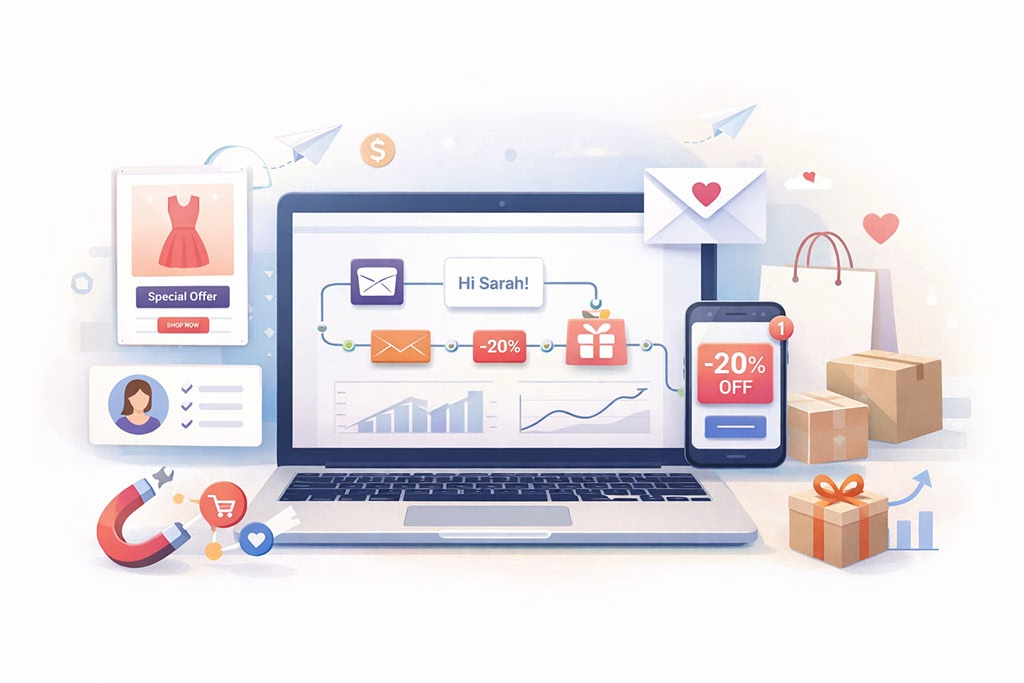
Once you have your segments defined, the next task is to create email content that speaks directly to each group. Generic content will not suffice; the message must align with the segment’s specific needs, interests, and stage in their customer journey.
Dynamic Content and Merge Tags
These tools allow you to insert personalized elements into your email templates automatically. You can use merge tags to:
- Address Customers by Name: Simple yet effective, this basic personalization immediately makes the email feel more individual.
- Reference Past Purchases: “Since you enjoyed [Product X], you might also like [Product Y].” This demonstrates you remember their preferences.
- Display Location-Specific Information: If you have brick-and-mortar stores, you can highlight nearby locations or local promotions.
- Show Account Information: For service-based businesses, displaying subscription details, next billing date, or recent activity adds value.
Product Recommendations Based on Behavior
Your email campaigns can become a powerful recommendation engine. This goes beyond displaying “customers also bought” suggestions.
- Viewed But Not Purchased: Send reminders about items they viewed on your website but didn’t add to their cart. This is a subtle nudge that can lead to conversions.
- Complementary Products: If a customer bought a new camera, suggest lenses, bags, or tripods. If they bought a dress, suggest matching accessories.
- Replenishment Reminders: For consumable products, alert customers when they might be running low and offer a convenient way to reorder.
- Trend-Based Recommendations: Use data to identify what similar customers are buying and suggest those items.
Personalizing Subject Lines and Preheaders
The subject line and preheader are your first impression. A personalized subject line significantly increases open rates.
- Include Customer Name: “[Customer Name], a special offer awaits!”
- Reference Recent Actions: “Did you forget something in your cart, [Customer Name]?”
- Highlight Specific Interests: “New arrivals for [Favorite Product Category].”
The preheader text acts as an extension of your subject line, offering more context and encouraging opens. Use it to reinforce the personalized nature of your email.
Automating Your Personalized Email Journeys
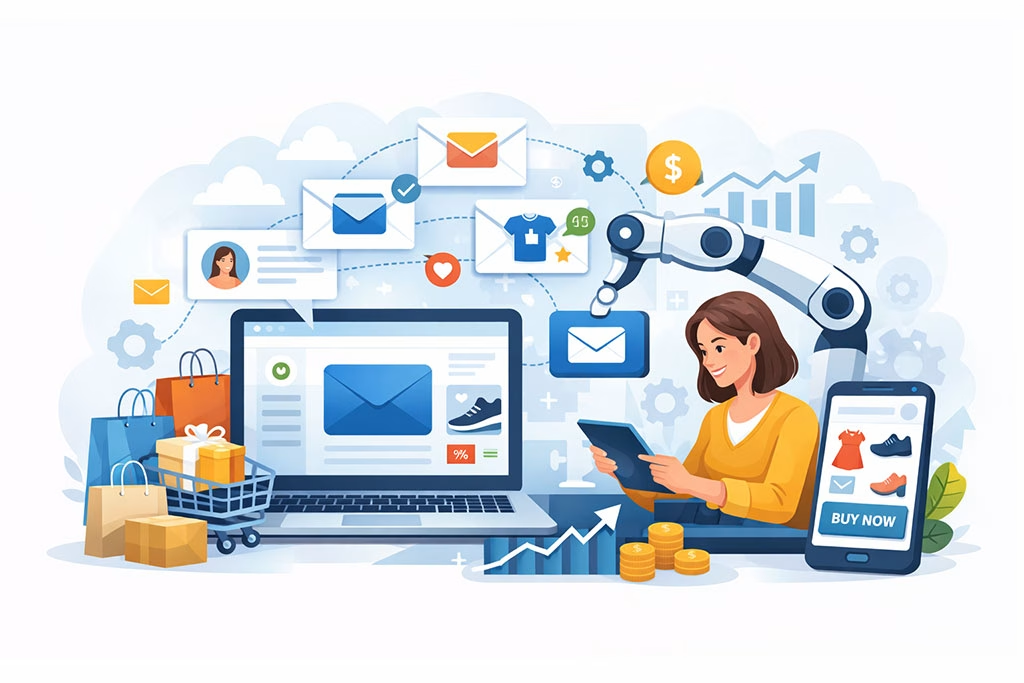
Manual email sending for every segment and every personal trigger is inefficient and impractical. Automation is key to scaling your personalized campaigns and ensuring timely, relevant communication. Your email service provider (ESP) should offer robust automation capabilities, often referred to as “workflows” or “customer journeys.”
Welcome Series for New Subscribers
This is your first opportunity to make a lasting impression. A well-designed welcome series nurtures new subscribers, introduces them to your brand, and encourages their first purchase.
- Email 1: Immediate Welcome & Brand Introduction: Thank them for subscribing, briefly tell your brand story, and highlight your unique selling propositions.
- Email 2: Product Showcase & Value Proposition: Introduce them to your best-selling products or categories, explaining the benefits.
- Email 3: Customer Testimonials or FAQs: Build trust by showcasing positive reviews or addressing common questions. Consider including a special offer.
Abandoned Cart Reminders
This is one of the most effective automated campaigns. Customers who added items to their cart but did not complete the purchase have demonstrated clear intent.
- Email 1 (1-2 hours later): Gentle Reminder: Acknowledge the abandoned cart, show the items, and offer a direct link back to checkout.
- Email 2 (24-48 hours later): Overcome Objections/Offer Incentive: Address common reasons for abandonment (shipping costs, hesitation) and consider offering a small discount or free shipping.
- Email 3 (3-5 days later): Last Chance/Alternative Products: A final reminder, perhaps suggesting similar items if they’re no longer interested in the original products.
Post-Purchase Follow-Ups
The relationship doesn’t end after a sale; it’s just beginning. Post-purchase emails build loyalty and encourage repeat business.
- Order Confirmation & Shipping Updates: Essential for customer satisfaction, providing peace of mind.
- Product Usage Tips/Care Instructions: Add value and ensure product satisfaction.
- Soliciting Reviews: Encourage customers to leave reviews, which builds social proof for future buyers. Personalize this by referencing the specific product they bought.
- Cross-sell/Upsell Opportunities: Based on their purchase, suggest complementary products or upgrades a few days or weeks later.
Re-engagement Campaigns for Lapsed Customers
You need a strategy to bring back inactive customers before they are truly lost.
- Identify Inactive Segments: Define “inactive” based on your business cycle (e.g., no purchases or email engagement in 90 days, 6 months, 1 year).
- Personalized Offers: Entice them back with a special discount, exclusive access to new products, or a reminder of their last purchase.
- “We Miss You” Messages: Acknowledge their inactivity in a friendly tone without being accusatory.
- Preference Update: Offer a chance to update their email preferences or opt-down to fewer emails, providing an alternative to unsubscribing.
Personalization driven email campaigns are essential for ecommerce growth, as they help businesses connect with their customers on a deeper level. To further explore effective strategies for engaging potential customers, you might find it useful to read about how to convert cold leads into loyal customers through a well-crafted email drip sequence. This insightful article provides valuable tips and techniques that can enhance your email marketing efforts. For more information, check out the article here.
Measuring and Optimizing Your Campaigns
| Metrics | Value |
|---|---|
| Open Rate | 25% |
| Click-Through Rate | 10% |
| Conversion Rate | 5% |
| Revenue Generated | 100,000 |
| Customer Engagement | High |
Implementing personalized email campaigns is an ongoing process. You must continuously monitor their performance, analyze data, and make adjustments to improve effectiveness. What works today might not work tomorrow; customer behavior and market conditions constantly evolve.
Key Performance Indicators (KPIs)
Focus on metrics that directly indicate the success of your personalization efforts.
- Open Rate: A personalized subject line and relevant content greatly impact opens. Compare personalized campaign open rates to generic ones.
- Click-Through Rate (CTR): This measures how many recipients clicked on a link within your email. A high CTR indicates that your content is engaging and relevant.
- Conversion Rate: The ultimate metric, measuring how many email recipients completed a desired action (e.g., made a purchase, signed up for an event).
- Revenue Per Email Sent: This metric directly links your email efforts to your bottom line, showing the financial value of each email.
- Unsubscribe Rate: While some unsubscribes are normal, a sudden spike in a personalized campaign could indicate that your personalization missed the mark or felt intrusive.
A/B Testing for Continuous Improvement
Never assume you know what will perform best. A/B testing allows you to test different elements of your emails to identify what resonates most with your audience.
- Subject Lines: Test different lengths, inclusion of emojis, personalization (e.g., with name vs. without), and value propositions.
- Call-to-Action (CTA): Experiment with different button colors, text, and placement.
- Email Body Content: Test different product recommendations, visual layouts, and content lengths.
- Send Times: Experiment with sending emails at different times of the day or days of the week.
- Personalization Elements: Test whether including a customer’s name universally increases engagement, or if there are instances where it might be less effective.
Iteration and Refinement
Your analysis of KPIs and A/B test results should lead directly to changes and improvements in your campaigns. This iterative process is crucial for long-term success.
- Data-Driven Decisions: Every modification you make should be based on concrete data, not just intuition.
- Holistic View: Look at the entire customer journey, not just individual emails. How does one email impact the next?
- Stay Updated: The world of e-commerce and email marketing is dynamic. Keep abreast of new trends, technologies, and best practices.
By systematically applying these strategies, from understanding your data to continuously optimizing your campaigns, you can transform your email marketing into a powerful engine for e-commerce growth. Personalized email is not a luxury; it is a necessity for cultivating lasting customer relationships and securing sustained sales in a crowded digital marketplace.
FAQs
What are personalization driven email campaigns for ecommerce growth?
Personalization driven email campaigns for ecommerce growth are marketing strategies that use customer data to create targeted and personalized email content. These campaigns aim to increase customer engagement, drive sales, and foster brand loyalty by delivering relevant and tailored messages to individual recipients.
How do personalization driven email campaigns benefit ecommerce businesses?
Personalization driven email campaigns benefit ecommerce businesses by improving customer engagement, increasing conversion rates, and driving sales. By delivering personalized content based on customer behavior, preferences, and purchase history, businesses can create more meaningful interactions with their audience, leading to higher customer satisfaction and loyalty.
What types of personalization can be used in email campaigns for ecommerce growth?
Personalization in email campaigns for ecommerce growth can include dynamic content based on customer demographics, behavior, and purchase history, personalized product recommendations, targeted promotions and offers, personalized subject lines and email copy, and personalized send times based on recipient behavior.
How can ecommerce businesses collect and utilize customer data for personalization driven email campaigns?
Ecommerce businesses can collect customer data through various channels such as website interactions, purchase history, email engagement, and social media interactions. This data can be utilized to segment customers into targeted groups, create personalized content, and automate email campaigns based on customer behavior and preferences.
What are some best practices for implementing personalization driven email campaigns for ecommerce growth?
Best practices for implementing personalization driven email campaigns for ecommerce growth include using a customer relationship management (CRM) system to collect and manage customer data, segmenting email lists based on customer behavior and preferences, testing and optimizing email content and design, and measuring the performance of email campaigns to continuously improve personalization strategies.