



You’re the architect of engagement, the maestro of marketing, and the undisputed champion of listicles. Your mission, should you choose to accept it (and you will, because you’re that good), is to craft a listicle that demystifies SmartMail’s Engagement Reports. You’re not just writing; you’re guiding. You’re not just informing; you’re empowering. Your readers, from seasoned marketers to curious newcomers, will come away not just understanding these reports, but itching to dive in and put them to work. You’re going to explain how these insights are the secret sauce, the hidden treasure, the undeniable key to turning lukewarm campaigns into roaring successes. Let’s get started.
You know that a listicle needs to start with the fundamentals. Before you can sculpt a masterpiece, you need to understand your materials. SmartMail’s Engagement Reports are your clay, and your readers need to know what they’re made of. This section is about establishing that foundational knowledge, making sure everyone is on the same page before you start building the more complex strategies.
Unpacking the Open Rate: More Than Just a Number
You’ve seen it a million times: “Open Rate.” But what does it really mean? It’s not just about whether someone clicked that little envelope icon. You need to articulate the nuances, the interpretations, the possibilities.
The Basic Definition: A Starting Point, Not an Endpoint
This is where you lay the groundwork. Define open rate clearly and concisely. Explain the mechanics – how it’s calculated (impressions vs. unique opens). Emphasize that it’s a leading indicator, a first step in the customer journey.
Beyond the Obvious: What a High Open Rate Signals
A high open rate isn’t just good; it’s a symphony of successful elements. You need to paint a picture for your readers.
Subject Line Prowess: The Hook That Captures Attention
This is your chance to talk about the art of the subject line. How does a compelling subject line translate into a higher open rate? Think curiosity, personalization, urgency, benefit-driven language. You can even offer a mini-tip within this point about A/B testing subject lines because that’s just good practice.
Sender Reputation: The Foundation of Trust
A good sender reputation is like a warm handshake in the inbox. Explain how consistent, valuable content builds trust, leading to more opens. Conversely, a spammy reputation tanks open rates. You understand the weight of this.
List Segmentation: Speaking Directly to the Right Person
When you send the right message to the right person, they’re naturally more inclined to open it. This is where segmentation shines. You can hint at how engagement reports can inform segmentation later on.
Interpreting a Low Open Rate: Diagnosing the Problem
A low open rate is not a death sentence, it’s a diagnostic tool. You’re going to teach your readers how to read it like a doctor reads an X-ray.
Subject Line Stagnation: Is It Time for a Refresh?
Here, you encourage a critical look at subject lines. Are they generic? Outdated? Repetitive? You can suggest analyzing past underperforming subject lines in the report.
Inbox Overcrowding: Standing Out in a Sea of Emails
Your readers know their audience is bombarded. A low open rate might simply mean their message isn’t cutting through the noise. Discuss strategies to combat this, like timing and unique value propositions.
Poor List Hygiene: Are You Sending to Engaged Subscribers?
This is a crucial point. You need to stress the importance of clean lists. Sending to inactive subscribers drags down your open rate and can harm your sender reputation. Engagement reports can highlight which segments are less engaged.
Decoding Click-Through Rate (CTR): The Real Measure of Interest
Opens are good, but clicks are where the magic truly happens. This is the actionable part of the engagement cycle. You need to guide your readers toward understanding what a click signifies and how to improve it.
The Click-Through Definition: From Interest to Action
Define CTR clearly and explain its calculation. Emphasize that it’s a stronger indicator of genuine interest than an open because it requires a conscious action.
What a High CTR Reveals: Content That Resonates
A strong CTR is a testament to compelling content. You’ll elaborate on this.
Compelling Calls to Action (CTAs): The Driving Force
This is where you break down the anatomy of a great CTA. What makes a CTA irresistible? Action verbs? Clear benefit? Scarcity? You can mention how analyzing which links get clicked the most in the report informs CTA placement and wording.
Relevant Content: Delivering on the Subject Line’s Promise
If the subject line promises one thing and the email delivers another, the click-through rate will suffer. You’ll explain the importance of alignment between the subject line and the email body content.
Personalization and Targeting: The “For Me” Factor
When your content feels tailored to the reader’s needs and interests, they’re far more likely to click. Discuss how engagement reports can show if certain personalized elements are driving more clicks.
When CTR Falters: Identifying the Bottlenecks
A low CTR can be frustrating, but it’s a goldmine for improvement. You’ll guide your readers through the diagnostic process.
Weak or Unclear CTAs: The Silent Inhibitors
Are your CTAs buried? Vague? Or absent altogether? You can encourage your readers to audit their email CTAs, pointing them back to the engagement reports to see which CTAs are underperforming.
Irrelevant or Uninteresting Content: The Missed Connection
Is the content in your email falling flat? Is it failing to address the subscriber’s needs or interests? You’ll explain how to use engagement reports to identify which email types or content themes are generating fewer clicks.
Poor User Experience: Friction in the Path to Click
This is a more advanced point. Think about landing page experience, mobile responsiveness of the email itself. If clicking is difficult, they won’t.
Understanding Conversion Rate: The Ultimate Goal
You know that for most campaigns, the ultimate goal isn’t just an open or a click; it’s a conversion. This is where you connect engagement metrics to tangible business outcomes.
The Conversion Definition: Turning Engagement into Results
Define conversion rate and explain its calculation in the context of email marketing. This could be a sale, a lead submission, a download, or any defined goal.
What a High Conversion Rate Signifies: The Synergy of Engagement
A strong conversion rate means all the preceding steps worked in harmony.
Seamless User Journey: From Email to Action
This is about the end-to-end experience. The email needs to lead smoothly to the desired action. You’ll talk about how engagement reports can help identify where users are dropping off in the journey.
Valuable Offers and Landing Pages: The Payoff
The offer in the email needs to be enticing, and the landing page needs to deliver on that promise. You’ll explain how to analyze conversion rates for different offers and campaign types.
Trust and Credibility: The Underlying Foundation
A high conversion rate often stems from a brand the subscriber trusts. You’ll reinforce the idea that consistent engagement builds this trust.
Addressing a Low Conversion Rate: Pinpointing the Weak Links
This is the final frontier of diagnostics.
Unrealistic Expectations: Is the Offer Too Much?
Sometimes, the email itself is effective, but the offer isn’t compelling enough to warrant a conversion. You can suggest examining the offer itself and comparing it to industry benchmarks.
Friction in the Conversion Process: The Final Hurdle
This is critical. Are there too many steps to complete the desired action? Is the checkout process confusing? You’ll guide readers on how to identify these friction points using engagement data.
Mismatched Expectations: Did the Email Set the Right Stage?
Ensure that the email accurately represents what the subscriber will find on the landing page. Any deception, however unintentional, will kill conversion rates.
To further enhance your understanding of optimizing email campaigns, you may find it beneficial to explore the article on the evolution of landing pages. This piece discusses how high-converting landing pages have transformed and what strategies are effective in 2025. By integrating insights from both articles, you can create a more cohesive marketing strategy. You can read the related article here: The Evolution of Landing Pages: The Squeeze Page is Dead.
2. Beyond the Basics: Advanced Insights from SmartMail’s Engagement Reports
Now that you’ve laid the foundation, it’s time to build. You’re going to show your readers how SmartMail’s Engagement Reports go beyond the standard metrics, offering deeper, more actionable insights that can truly elevate their campaigns.
Unpacking Engagement Over Time: The Trendspotter’s Secret Weapon
You understand that static metrics are only part of the story. Trends reveal the evolving relationship between a brand and its audience.
Identifying Peaks and Troughs: The Rhythm of Your Audience
You’ll teach your readers to look for patterns. Are open rates spiking on certain days? Are click-through rates declining after a specific campaign? This is about understanding the “when” of engagement.
Day of the Week and Time of Day Analysis: Optimizing Send Schedules
This is a practical, hands-on insight. You’ll explain how to use the reports to pinpoint the optimal send times for different audience segments, maximizing the chances of opens and clicks.
Campaign Performance Over Time: Was it a One-Hit Wonder?
You’ll guide them to look at how individual campaigns perform over their lifecycle. Did initial engagement wane after the first few days? Why? This helps in understanding the long-term impact of content.
Recognizing Shifts in Audience Behavior: Staying Ahead of the Curve
The marketing landscape is dynamic. Engagement reports help you adapt.
Seasonal Trends: Riding the Wave of Consumer Interest
You can highlight how engagement reports can reveal seasonal patterns in subscriber behavior, allowing for timely and relevant campaign planning. Think holidays, back-to-school, or specific industry events.
Impact of Content Changes: Did That New Strategy Work?
When you make a significant change to your content strategy, your engagement reports will tell you if it’s hitting the mark. You’ll encourage your readers to correlate content updates with changes in engagement metrics.
Exploring Device and Platform Engagement: Where is Your Audience Connecting?
In today’s multi-device world, understanding how your audience is interacting with your emails is crucial. SmartMail’s reports offer this granular detail, and you’re going to highlight its importance.
Desktop vs. Mobile: The Mobile-First Imperative
You know that mobile is king. You’ll explain how to analyze engagement based on device type.
Optimizing for Mobile Experience: The Key to Higher Clicks
If your reports show a significant portion of your audience engaging on mobile, you’ll stress the importance of mobile-responsive design, concise content, and easy-to-tap CTAs.
Identifying Desktop-Specific Opportunities: Niche Strategies
While mobile is dominant, there might be segments that still prefer desktop. You can touch on how this might influence the type of content or CTAs used for those specific groups.
Browser and Operating System Insights: Technical Nuances for Technical Marketers
This is where you can add a layer of depth for those who want to go the extra mile.
Ensuring Cross-Browser Compatibility: Avoiding Technical Glitches
You’ll explain how to use reports to identify if certain browsers are leading to lower engagement, suggesting potential rendering issues that need to be addressed.
Understanding User Software Preferences: Tailoring for the Tech-Savvy
This might be less critical for some, but for certain industries, understanding the prevalence of specific operating systems can inform technical considerations for email design and functionality.
Segmentation Performance Analysis: Precision Targeting in Action
You know that one-size-fits-all rarely works. Engagement reports allow you to see which segments are truly responding, empowering you to refine your targeting.
Identifying Your Most Engaged Segments: Who Are Your Champions?
This is about celebrating success and learning from it.
High Open and Click Rates by Segment: The Ideal Audience
You’ll guide your readers to identify the segments that consistently show the highest open and click-through rates. This is valuable for understanding what resonates with your most receptive audience.
Conversion Performance by Segment: Where are the Sales Coming From?
This is where you link engagement directly to business impact. Which segments are not only clicking but also converting? You’ll encourage a focus on nurturing these high-value segments.
Understanding Underperforming Segments: Opportunities for Improvement
Just as important as identifying high performers is understanding those who are lagging.
Low Engagement Metrics by Segment: The Warning Signs
You’ll teach your readers to look for segments with consistently low open or click rates. This signals a potential disconnect in messaging, offers, or even the relevance of the segment itself.
Re-engagement Strategies: Rekindling Dormant Interest
Based on the engagement reports, you’ll suggest strategies for re-engaging inactive segments. This could involve re-segmentation, tailored re-engagement campaigns, or even a win-back strategy.
Click Mapping and Link Performance: The Heart of Interaction
Clicks are where the action really begins. SmartMail’s reports provide granular data on what is being clicked, offering invaluable insights into content effectiveness.
Identifying Top-Performing Links: What Captures Attention?
You’ll explain how to use the reports to see which specific links within an email are getting the most clicks.
Content Popularity Ranking: What do they want to see?
This is a direct indicator of reader interest in specific topics or products. Your readers can use this to inform future content creation.
CTA Effectiveness Analysis: Is Your Call to Action Working?
By analyzing which CTAs are performing best, you can refine your messaging and placement for maximum impact.
Understanding Link Behavior Across Campaigns: Consistency and Variation
You’ll guide your readers on how to compare link performance across different campaigns.
Measuring the Impact of Link Placement: Where Does it Perform Best?
Does a link perform better in the introduction, the body, or the footer? This data helps in optimizing email structure.
Evaluating the Effectiveness of Different Link Text: Wording Matters
Small changes in link text can lead to significant differences in click-through rates. You’ll encourage experimentation and analysis.
Unsubscribe and Complaint Analysis: Listening to Your Audience’s Feedback
Even negative feedback is valuable. SmartMail’s reports provide critical data on unsubscribes and complaints, offering insights into areas of improvement.
The Root Causes of Unsubscribes: Why Are They Leaving?
You’ll explain how to analyze unsubscribe rates and, if possible, identify patterns.
Content Irrelevance: Sending Too Much, Too Little, or the Wrong Thing?
Are your unsubscribes linked to a specific type of content or a perceived change in frequency? You’ll encourage your readers to look for correlations.
Sending Frequency: Overwhelming or Underwhelming?
This is a common culprit. You’ll show how engagement reports can help determine the optimal sending frequency for different audience segments.
Understanding Complaint Flags: The Red Flags of Engagement Failure
Complaints are a serious indicator of potential issues.
Identifying Spam Traps and Malicious Reporting: Protecting Your Reputation
You’ll explain how to differentiate between genuine feedback and potential abuse, and the importance of acting quickly on any identified issues.
Improving Content Quality and Targeting: The Ultimate Prevention
The best way to reduce complaints is to consistently deliver value. You’ll reinforce that engagement reports are a tool to achieve this.
3. Strategizing with SmartMail’s Engagement Reports: From Data to Decisions

You’ve shown them the metrics, you’ve explained the advanced insights. Now, you’re going to demonstrate how to translate all that data into actionable strategies that drive real results. This is where you empower them to use the reports, not just read them.
Segmenting for Success: Refining Your Audience Targeting
You know that effective segmentation is the bedrock of personalized marketing. Engagement reports are the compass that guides this refinement.
Identifying “High-Value” vs. “At-Risk” Segments
You’ll teach your readers how to use engagement data to categorize their audience.
Nurturing Your Champions: Double Down on What Works
Your most engaged subscribers are your biggest asset. You’ll explain how to identify these segments and tailor campaigns to further solidify their loyalty, perhaps with exclusive offers or early access.
Revitalizing the Dormant: Re-engagement Campaigns and Offers
For segments showing declining engagement, you’ll outline strategies for re-activation. This might involve targeted win-back offers, surveys to understand their current needs, or a temporary reduction in send frequency to avoid further fatigue.
Creating Hyper-Personalized Experiences: Beyond Basic Personalization
You’re going to show them how to move beyond inserting a name.
Dynamic Content Based on Engagement History: Tailoring the Message in Real-Time
Imagine sending one email that dynamically changes its content based on whether a subscriber has historically clicked on product links, blog posts, or promotional offers. You’ll explain how engagement reports provide the insights to build these real-time personalization rules.
Targeted Offerings Based on Past Click Behavior: Offering What They Want
If a subscriber consistently clicks on articles about “advanced SEO techniques,” you can use that data to ensure your next campaign features similar content or related product offers, rather than generic marketing messages.
Optimizing Campaign Cadence and Timing: When to Strike
The right message at the wrong time can be as ineffective as the wrong message at the right time. You’re going to show them how to use engagement reports to master timing.
Finding the Sweet Spot for Your Audience: Researching Peak Engagement Times
You’ll guide your readers to analyze when their emails are most likely to be opened and clicked.
A/B Testing Send Times: Empirical Evidence for Optimal Delivery
You’ll encourage them to experiment with different send days and times, using the engagement reports to measure the success of each iteration and scientifically determine the sweet spot.
Segment-Specific Timing: Recognizing Diverse Schedules
You’ll explain that different segments within their audience might have distinct daily or weekly routines. Engagement reports can reveal these differences, allowing for highly targeted send times for each group.
Balancing Frequency and Fatigue: The Art of Not Annoying
Too many emails can lead to unsubscribes, but too few can lead to being forgotten.
Monitoring Unsubscribe Rates Against Send Frequency: The Danger Zone
You’ll teach them to watch for spikes in unsubscribes that correlate with increased sending frequency, signaling that they might be pushing too hard.
Utilizing Engagement Reports to Gauge Subscriber Tolerance: Data-Driven Frequency Adjustments
By observing sustained engagement levels (opens, clicks) over time alongside send frequency, your readers can infer how much communication their audience can comfortably handle.
Crafting More Effective Calls to Action (CTAs): The Click Magnet
You know that a weak CTA is a missed opportunity. Engagement reports are your secret weapon for CTAs that convert.
Analyzing CTA Performance: Which Ones Are Working, Which Aren’t?
You’ll detail how to use click mapping and link performance data to identify top-performing CTAs.
Identifying High-Click CTAs: What Language and Design Resonate?
By pinpointing the CTAs that consistently earn clicks, your readers can extract valuable lessons about persuasive language, clear benefit articulation, and effective button design.
Deconstructing Underperforming CTAs: Where is the Friction?
Conversely, you’ll help them analyze CTAs that are being ignored. Is the wording unclear? Is the button hard to find? Is the promised action misaligned with the content? This is where they can identify and eliminate friction.
The Power of Contextual CTAs: Placing the Right Call at the Right Moment
You’ll illustrate how to strategically place CTAs based on anticipated user needs and the flow of the email content.
Trigger-Based CTAs: Responding to User Behavior
If a subscriber clicks on a specific product category in an email, the next email in the sequence can feature a CTA directly related to that category, demonstrating an understanding of their immediate interest. Engagement reports provide the historical data to build these triggers.
Progressive CTAs: Leading Users Through a Journey
For complex offers or sales funnels, you can use engagement reports to guide users through a series of smaller, more manageable CTAs, gradually leading them towards the ultimate conversion goal.
Improving Content Relevance and Value: Delivering What They Want
Ultimately, engagement is about delivering value. SmartMail’s reports offer empirical evidence of what your audience finds valuable.
Identifying Content Gaps and Opportunities: What’s Missing?
You’ll show your readers how to use engagement data to understand what topics or types of content their audience is actively seeking.
Analyzing Click-Through Patterns on Informational Content: What are they Learning?
If subscribers consistently click on articles or guides related to a specific problem, it indicates a demand for that type of information. You can then create more content around those themes.
Monitoring Interest in Product-Related Content: What are they Buying?
Conversely, tracking clicks on product pages or feature highlights reveals what aspects of your offerings are garnering the most attention, informing product marketing and development.
Personalizing Content Recommendations: The Curator’s Role
You’ll empower them to act as expert curators of relevant content for their audience.
Recommending Relevant Blog Posts or Articles: Driving Traffic and Thought Leadership
If engagement reports show a high interest in a particular subject, you can strategically recommend related blog posts or articles, positioning yourself as a valuable resource.
Suggesting Complementary Products or Services: Cross-Selling and Upselling Smartly
Based on purchase history and click behavior, you can recommend complementary products or services that are genuinely relevant to the subscriber’s interests, increasing the likelihood of a successful cross-sell or upsell.
4. A/B Testing and Experimentation: The Engine of Continuous Improvement
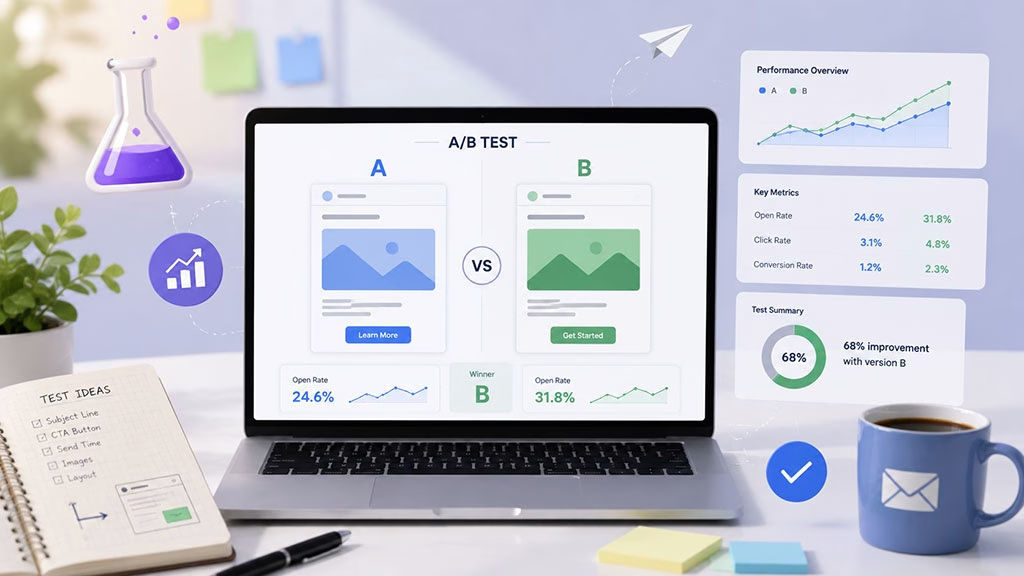
You understand that the best marketers are always learning. SmartMail’s Engagement Reports are not just for reporting; they are the fuel for a robust A/B testing and experimentation program. This is where you show your readers how to actively use the data to drive iterative improvements.
Designing Effective A/B Tests with Engagement Data in Mind
You’ll explain how to move beyond random testing and create experiments that are informed by what the engagement reports are already telling you.
Hypothesis Generation: Informed Guesses Lead to Better Results
You’ll guide your readers to formulate hypotheses based on their current engagement data.
“If we change X, we expect Y to increase because of Z.”
For example: “If we make our CTA button more prominent and use action-oriented language, we expect a 10% increase in click-through rates because our past analysis shows that less prominent, passive CTAs underperform.”
Focusing on Key Engagement Metrics: A/B Testing for Specific Goals
You’ll emphasize that each test should have a primary metric it aims to move, whether it’s open rate, click-through rate, or conversion rate.
Identifying Test Variables: What to Tweak and Why
You’ll provide concrete examples of what can be tested, directly linking it back to the engagement metrics.
Subject Line Variations: The Gateway to Opens
This is a classic. You’ll explain how to test different tones, lengths, personalization elements, and even emojis based on past open rate performance. If subject lines are consistently underperforming for a specific segment, that’s a prime candidate for testing.
CTA Button Design and Wording: The Click Drivers
You’ll show how to test button colors, shapes, sizes, and most importantly, the wording to see what prompts more clicks. Are shorter, punchier CTAs better? Or more descriptive ones? The reports show what’s being clicked now, informing what to test for future clicks.
Email Copy and Layout: The Substance and Structure
You’ll advise on testing different opening hooks, body content lengths, the presence of images, and the overall flow of the email to see how it impacts engagement and conversions. If your reports show a drop-off in clicks after a certain point in longer emails, this is a variable worth testing.
Interpreting A/B Test Results: Drawing Actionable Conclusions
Running a test is only half the battle. You’ll ensure your readers know how to confidently interpret the results from their tests, guided by the same engagement principles.
Statistical Significance: Knowing When a Difference is Real
You’ll explain the importance of statistical significance without getting bogged down in jargon. The goal is to empower them to trust their results.
Avoiding Random Fluctuations: Is it a genuine win or just luck?
You’ll stress that a small difference might not be a true indicator of success and that a properly run A/B test accounts for randomness.
Making Data-Driven Decisions: Trusting the Numbers
Once statistical significance is achieved, they can confidently make decisions, knowing the data supports them.
Analyzing Beyond the Primary Metric: Uncovering Unexpected Insights
Sometimes, tests reveal more than you initially anticipated.
Secondary Metric Analysis: What Else Moved?
If a test on subject lines improved open rates, did it also impact click-through rates or even conversions? You’ll encourage them to look at the broader impact. This can reveal that a slightly lower open rate for a more engaging subject line might actually lead to better overall campaign performance.
Qualitative Observations: Notes and Anecdotes from the Data
You’ll remind them to look for any qualitative data that might accompany the quantitative results, such as user feedback or changes in unsubscribe rates.
Iterative Improvement: The Cycle of Growth
You’ll impress upon your readers that A/B testing is not a one-off activity but a continuous process.
Implementing Winning Variations: Rolling Out Success
Once a test proves successful, the winning variation should be implemented across relevant campaigns.
Systemizing the Rollout: Ensuring Consistency
You’ll advise on how to integrate successful learnings into their standard campaign templates and workflows.
Learning from Losing Variations: What Not to Do
Even losing variations offer valuable lessons.
Understanding Why it Failed: The Learning Opportunity
You’ll explain how to analyze why a particular variation didn’t perform as expected, which can be just as informative as understanding a success. Perhaps a more visually complex design didn’t translate well on mobile, despite looking great on desktop.
Refining Future Tests: Building on Past Experiments
Each A/B test, successful or not, provides data that can inform the hypotheses and design of future experiments, creating a virtuous cycle of improvement.
To enhance your understanding of how to leverage data for better marketing outcomes, you might find the article on maximizing efficiency through the ROI of automating drip campaigns particularly insightful. By exploring the strategies outlined in this article, you can gain valuable perspectives on optimizing your email marketing efforts and improving future campaigns.
5. Leveraging SmartMail’s Engagement Reports for Predictive and Proactive Marketing
| Metrics | Description |
|---|---|
| Open Rate | The percentage of recipients who opened the email |
| Click-Through Rate (CTR) | The percentage of recipients who clicked on a link in the email |
| Bounce Rate | The percentage of emails that could not be delivered to the recipient’s inbox |
| Conversion Rate | The percentage of recipients who completed a desired action after clicking on a link in the email |
| Unsubscribe Rate | The percentage of recipients who unsubscribed from the email list after receiving the email |
You’re not just teaching survival skills; you’re teaching how to thrive. This section is about moving beyond reactively analyzing data to using SmartMail’s Engagement Reports to anticipate future trends and act proactively to maximize campaign impact.
Predicting Subscriber Behavior: Anticipating the Next Move
You’ll show how historical engagement data can be a powerful predictor of future actions.
Identifying Churn Predictors: Who is Likely to Leave?
You’ll explain how to use patterns in engagement reports to identify subscribers who are showing signs of disengagement and are at risk of churning.
Declining Open and Click Rates: The Early Warning Signs
You’ll teach them to monitor specific segments for consistent drops in their engagement metrics, flagging them for proactive attention.
Increased Unsubscribes in Specific Segments: A Clear Signal
You’ll explain how to correlate an uptick in unsubscribes with specific campaign types or content, helping to identify potential causes for churn.
Predicting Future Purchase Intent: Who is Ready to Buy?
You’ll demonstrate how engagement data can be a strong indicator of purchasing readiness.
High Engagement with Product-Focused Content: Interest is High
If subscribers are consistently clicking on product pages, reviews, or promotional materials, it’s a strong signal of interest. You’ll explain how to use this data to time specific offers.
Past Purchase Behavior Combined with Current Engagement: The Ultimate Predictor
You’ll explain how to combine historical purchase data with recent engagement patterns to identify subscribers who are most likely to convert on a new offer.
Proactive Campaign Adjustments: Staying Ahead of the Curve
You’re not just analyzing data; you’re using it to make real-time, intelligent adjustments to ongoing campaigns.
Real-Time Performance Monitoring: Catching Issues Early
You’ll emphasize the importance of not just looking at reports at the end of a campaign, but actively monitoring them as a campaign is live.
Identifying Underperforming Segments Mid-Campaign: A course correction
If a particular segment is showing significantly lower engagement than expected for a live campaign, you can immediately adjust the messaging, offer, or even the send time for that segment.
Detecting Technical Glitches Affecting Engagement: Promptly Resolving Issues
If the reports suddenly show a sharp drop in clicks across all devices or browsers, it could indicate a technical issue that needs immediate attention.
Dynamic Campaign Optimization: Adapting on the Fly
You’ll show how engagement reports can be used to dynamically adjust campaign elements for maximum impact.
Triggering Follow-Up Campaigns Based on Engagement: Nurturing Interest
If a subscriber clicks on a specific link but doesn’t convert, you can automatically trigger a follow-up email with additional information or a more targeted offer based on their initial interest, all informed by engagement data.
Adjusting Offer Strength Based on Conversion Rates: Data-Informed Incentives
If an initial offer is not yielding the desired conversion rates, you can use real-time engagement data to justify increasing the offer’s attractiveness or adding a sense of urgency.
Personalization at Scale: Delivering Individualized Experiences to Many
You’ll demonstrate how SmartMail’s Engagement Reports are the key to delivering highly personalized experiences to a large audience, making each subscriber feel individually addressed.
Building Sophisticated Audience Personas: Data-Driven Insights
You’ll explain how to use aggregated engagement data to create rich, nuanced audience personas that go beyond basic demographics.
Understanding Motivations and Pain Points: What Drives Them?
By analyzing what content resonates, what promotions they respond to, and what channels they prefer, you can build a deep understanding of your audience’s motivations and pain points.
Mapping the Customer Journey: Where Are They in the Process?
Engagement reports can help illustrate different stages of the customer journey for various segments, allowing you to tailor your messaging accordingly.
Automating Personalized Workflows: Maximizing Efficiency and Impact
You’ll show how to leverage this understanding to create automated workflows that deliver the right message at the right time.
Personalized Product Recommendations: Showing Them What They’ll Love
Using past engagement and purchase data, you can set up automated workflows that recommend products a subscriber is likely to be interested in, increasing the chances of a sale.
Tailored Content Streams: Keeping Them Engaged with Relevant Information
Based on their demonstrated interests, you can automate the delivery of personalized content streams, ensuring subscribers consistently receive valuable information that keeps them engaged with your brand.
Forecasting Future Performance: Strategic Planning with Confidence
You’ll conclude by emphasizing how SmartMail’s Engagement Reports can elevate strategic planning from guesswork to informed forecasting.
Setting Realistic Goals and Benchmarks: Data-Informed Targets
By analyzing historical engagement data, you can set realistic, data-backed goals for future campaigns.
Understanding Past Performance Trends: Setting Achievable Targets
You’ll show how to use trends in open rates, click-through rates, and conversion rates to forecast expected outcomes for similar campaigns.
Identifying Opportunities for Growth and Innovation: Planning for the Future
You’ll inspire your readers to look beyond current performance and use the data to identify areas for future growth and innovation.
Highlighting Untapped Potential in Specific Segments: New Markets to Explore
Engagement reports might reveal segments that are currently less engaged but show potential for growth with a different approach, opening up new strategic avenues.
Informing New Product or Service Development: Listening to Audience Demand
By identifying consistent interest in certain online resources or product features, you can inform the development of new products or services that directly address audience demand.
FAQs
What is SmartMails Engagement Reports?
SmartMails Engagement Reports is a feature within the SmartMails email marketing platform that provides detailed insights into the performance of email campaigns. It includes metrics such as open rates, click-through rates, and engagement over time.
How can SmartMails Engagement Reports help improve future campaigns?
By analyzing the data provided in the Engagement Reports, marketers can gain valuable insights into the effectiveness of their email campaigns. This information can be used to identify areas for improvement, such as subject lines, content, and timing, to optimize future campaigns for better results.
What specific metrics are included in SmartMails Engagement Reports?
SmartMails Engagement Reports include metrics such as open rates, click-through rates, bounce rates, unsubscribe rates, and engagement over time. These metrics provide a comprehensive view of how recipients are interacting with the email campaigns.
Can SmartMails Engagement Reports be customized to track specific KPIs?
Yes, SmartMails Engagement Reports can be customized to track specific key performance indicators (KPIs) based on the goals and objectives of the email campaigns. This allows marketers to focus on the metrics that are most relevant to their specific needs.
How often are SmartMails Engagement Reports updated?
SmartMails Engagement Reports are updated in real-time, providing marketers with up-to-date insights into the performance of their email campaigns. This allows for quick and informed decision-making when it comes to optimizing future campaigns.