


You have a treasure trove of potential within your email list. It’s not just a collection of addresses; it’s a landscape filled with individuals, each with their own habits, preferences, and triggers. Unlocking the power of behavioral email marketing means learning to read this landscape and sending the right message, to the right person, at the right time, based on their actions. This isn’t about sending generic blasts hoping something sticks. It’s about precision, relevance, and building deeper connections by understanding what your subscribers do and responding accordingly.
The Foundational Pillars: Data and Segmentation
Before you can effectively navigate the realm of behavioral email marketing, you need a solid understanding of your data and how to segment your audience. Think of data as the soil from which your marketing garden grows. Without fertile, well-tended soil, your efforts will yield meager results. Segmentation is then the act of carefully dividing that soil into distinct plots, each suited for a specific type of plant, ensuring each receives the nourishment it needs to thrive.
Understanding What Constitutes Behavioral Data
Behavioral data is the raw material you’ll work with. It’s the digital footprint your subscribers leave as they interact with your brand. This data can be collected through various touchpoints, both online and offline, although in the context of email marketing, the focus is predominantly on digital interactions.
Website Activity
Your website is a bustling marketplace, and every click, every page view, every second spent on a product page is a piece of information. You can track:
- Page Views: Which pages a subscriber visits can indicate their interests. A visitor repeatedly viewing specific product categories suggests a strong preference.
- Time on Page: Longer dwell times on certain pages can signify engagement or potential confusion.
- Product Views: Direct interest in specific items.
- Add to Cart: A strong signal of purchase intent.
- Wishlist Additions: Another indicator of desire, even if immediate purchase isn’t possible.
- Form Submissions: While not strictly behavioral, a completed form signifies a desire for more information or engagement.
- Search Queries: What a subscriber is actively looking for on your site is a direct window into their needs.
Email Engagement
The interaction with your emails themselves provides crucial behavioral insights.
- Opens: A basic but important metric, indicating initial interest.
- Clicks: Signals deeper engagement and interest in the content or offers within the email.
- Click-Through Rate (CTR): The percentage of subscribers who open an email and then click a link.
- Unsubscribes: A clear signal that your content is no longer relevant or valuable to that subscriber.
- Spam Complaints: A critical indicator of dissatisfaction and potential issues with your sending practices.
- Forwarding/Sharing: Indicates high engagement and a desire to share content with others.
Purchase History
For e-commerce businesses, past purchases are a goldmine of behavioral data.
- Products Purchased: Identifies brand loyalty and specific product preferences.
- Purchase Frequency: How often a subscriber buys from you.
- Average Order Value (AOV): The typical amount spent per transaction.
- Last Purchase Date: Helps identify active versus lapsed customers.
- Product Categories Purchased: Reveals broader buying habits.
In-App Activity (if applicable)
For businesses with applications, in-app actions provide rich behavioral data.
- Feature Usage: Which features a subscriber engages with the most.
- Session Length and Frequency: How often and for how long they use the app.
- In-App Purchases: Direct transactions within the application.
- Completion of Goals: Whether they’ve achieved specific milestones within the app.
The Art of Segmentation: Dividing Your Audience
Segmentation is the process of dividing your subscriber list into smaller, more manageable groups based on shared characteristics or behaviors. It’s like a gardener specializing plants per plot, ensuring optimal conditions for growth. Accurate segmentation allows you to tailor your messages for maximum impact.
Demographic Segmentation
While not strictly behavioral, demographics can inform behavioral segmentation.
- Age: Different age groups may have different online behaviors and product preferences.
- Location: Geographic location can influence purchasing habits and event attendance.
- Gender: May correlate with specific product interests.
- Income Level: Can impact price sensitivity and purchasing power.
Psychographic Segmentation
Understanding your subscribers’ lifestyles, values, and attitudes can reveal their motivations.
- Interests and Hobbies: Tailoring content to align with their passions.
- Values and Beliefs: Connecting your brand with their core principles.
- Lifestyle Choices: Reaching them with relevant products or services for their way of life.
Behavioral Segmentation: The Core of the Strategy
This is where you leverage the data you’ve collected to create truly personalized campaigns.
- Purchase History Segmentation:
- First-time buyers: Welcome emails, suggestions for complementary products, loyalty program introductions.
- Repeat customers: Exclusive offers, early access to new products, appreciation campaigns.
- High-value customers: VIP treatment, personalized recommendations based on past purchases.
- Lapsed customers: Win-back campaigns with special discounts or incentives.
- Engagement Level Segmentation:
- Highly engaged subscribers: Those who consistently open and click your emails. Send them priority content and exclusive offers.
- Moderately engaged subscribers: Those who open but don’t always click. Test different subject lines or content formats.
- Low engagement subscribers: Those who rarely open or click. Consider re-engagement campaigns or attrition.
- Website Activity Segmentation:
- Cart abandoners: Reminder emails with products left in their cart, perhaps with a small discount.
- Browse abandoners: Emails suggesting similar products or content related to what they viewed.
- Product page viewers: Emails highlighting features or benefits of those specific products.
- Customers who viewed specific content: Emails offering more in-depth information on that topic.
- Lifecycle Stage Segmentation:
- New subscribers: Onboarding sequences to educate them about your brand and offerings.
- Active customers: Ongoing engagement with product updates, promotions, and valuable content.
- Former customers: Win-back strategies to re-establish relationships.
If you’re interested in enhancing your understanding of behavioral email marketing, you might find the article on drip campaigns particularly insightful. It discusses how to identify and address gaps in your marketing funnel, which is crucial for optimizing your email strategies. You can read more about it here: Are Your Drip Campaigns Leaking Leads? How to Find and Fix the Gaps in Your Funnel.
Triggering Engagement: The Power of Automated Workflows
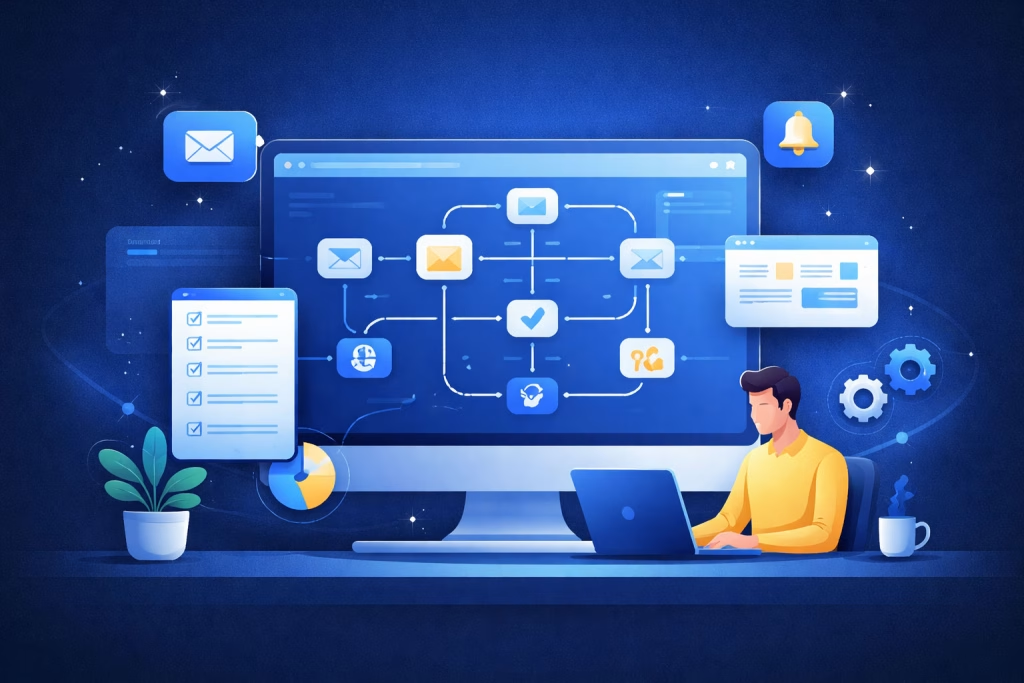
Automated email workflows, often referred to as “drip campaigns” or “triggered emails,” are the engines of behavioral email marketing. They are pre-programmed sequences of emails that are automatically sent to subscribers based on specific actions they take or conditions met. Think of them as skilled sentinels, watching for your subscribers’ movements and responding with timely, relevant messages.
Welcome Series: The First Impression Matters
The initial interaction a new subscriber has with your brand through email can set the tone for the entire relationship. A well-crafted welcome series is crucial.
Onboarding New Subscribers
This series is designed to introduce your brand, set expectations, and guide new subscribers towards engagement.
- Email 1: The Immediate Welcome: A warm greeting, confirmation of their subscription, and a brief overview of what they can expect. You might offer an immediate incentive like a discount code for their first purchase.
- Email 2: Introducing Your Brand Story/Values: Share your mission, what makes your brand unique, and the problem you solve. This builds an emotional connection.
- Email 3: Highlighting Key Products/Services: Showcase your most popular or relevant offerings, perhaps categorizing them based on common early interests.
- Email 4: Educational Content/Resources: Provide valuable content that educates them on how to get the most out of your products or services, or simply offers general industry insights.
- Email 5: Social Proof/Community Building: Encourage them to connect on social media, share testimonials, or introduce them to your community forum.
Example: A SaaS Company’s Welcome Series
A software-as-a-service (SaaS) company might include:
- Welcome: Acknowledgment of signup and a link to their account dashboard.
- Getting Started Guide: A step-by-step tutorial on using core features.
- Feature Spotlight: Deep dive into a specific, high-impact feature.
- Tips for Success: Advanced strategies and best practices for maximizing the software’s utility.
- Invitation to a Webinar: A live session demonstrating advanced features or industry trends.
Cart Abandonment Sequences: Reclaiming Lost Sales
Cart abandonment is a common e-commerce phenomenon. Every item left in a virtual cart represents a missed opportunity and often a moment of hesitation or distraction for the customer. These sequences are designed to gently nudge them back to complete their purchase.
The Psychology of Cart Abandonment
Understanding why customers abandon carts is key to crafting effective recovery emails. Common reasons include:
- Unexpected shipping costs: High shipping fees are a major deterrent.
- Complicated checkout process: Too many steps or required information can be frustrating.
- Distractions: Life happens, and subscribers may get interrupted before completing their purchase.
- Comparison shopping: They may be comparing prices before committing.
- Needing more information: They might have had last-minute questions.
Multi-Step Cart Abandonment Emails
A well-structured sequence can be highly effective:
- Email 1 (within 1-3 hours): The Gentle Reminder: A simple, friendly reminder of the items left in their cart. Include product images and a direct link to their cart. Focus on convenience.
- Email 2 (within 24 hours): Highlighting Benefits/Addressing Concerns: Reiterate the value proposition of the products. You might include social proof (e.g., “loved by thousands”) or address potential concerns like return policies.
- Email 3 (within 48-72 hours): Offer an Incentive: Introduce a limited-time discount or free shipping to overcome price objections or create urgency.
- Email 4 (Optional, 7+ days): The Last Chance: A final push, perhaps with a slightly larger discount or a clear indication that the offer will expire soon.
Example: A Fashion Retailer’s Cart Abandonment Flow
- First email: “Psst! You left something behind…” with images of the items.
- Second email: “Still thinking about that [Product Name]? It’s a customer favorite!” with a link to reviews.
- Third email: “Complete your order with 10% off! Valid for 24 hours.”
- Fourth email: “Your cart is about to expire. Here’s your last chance for [Product Name]!”
Post-Purchase Sequences: Nurturing Customer Loyalty
A customer’s journey doesn’t end at checkout; it truly begins. Post-purchase emails are vital for fostering loyalty, encouraging repeat business, and turning satisfied customers into brand advocates.
Order Confirmations and Shipping Updates
These transactional emails are crucial for transparency and customer satisfaction.
- Order Confirmation: A detailed summary of their order, including products, quantities, prices, and shipping address.
- Shipping Notification: Sent when the order ships, including tracking information and an estimated delivery date.
- Delivery Confirmation: A notification that their order has been successfully delivered.
Encouraging Reviews and Feedback
Gathering feedback is essential for product improvement and social proof.
- Review Request Email: Sent a few days after delivery, politely asking for a review of the purchased product. Make it easy with a direct link to the review section.
- Survey Emails: For more in-depth feedback on the overall customer experience.
Cross-selling and Upselling
After a customer has made a purchase and experienced your product, they are often open to related items.
- “You Might Also Like” Emails: Based on their purchase history, recommend complementary products.
- “Upgrade Your Experience” Emails: For services or products that have premium versions, suggest upgrading.
Example: An Electronics Retailer’s Post-Purchase Sequence
- Order Confirmation: Details of their new gadget.
- Shipping Update: “Your order is on its way!” with tracking.
- Delivery Confirmation: “Your new [Product Name] has arrived!”
- Review Request: “We’d love your feedback on your new [Product Name].”
- Cross-sell: “Complete your setup with these accessories for your [Product Name].”
Re-engagement Campaigns: Rekindling Dormant Relationships
Some subscribers, through no fault of your own, can become inactive. They might have subscribed during a period of intense interest, or their needs may have changed. Re-engagement campaigns are your last-ditch effort to win them back before they fully drift away.
Identifying Inactive Subscribers
Define what “inactive” means for your business. It could be subscribers who haven’t opened an email in 30, 60, or 90 days.
Crafting a Win-Back Strategy
The goal is to remind them of the value you offer and entice them back.
- Email 1: A Gentle Check-in: “We miss you!” or “Is this still relevant?” Highlight recent valuable content or updates.
- Email 2: The Special Offer: Present a compelling discount or exclusive offer to incentivize a return engagement.
- Email 3: Asking for Preferences: If they’re still not responding, try asking them what they’d like to see more or less of, or if they wish to unsubscribe from certain types of emails.
- Email 4: The Final Farewell (and Unsubscribe): Before removing them from your active list, give them a clear option to unsubscribe. This prevents future spam complaints and keeps your list clean.
Example: A Subscription Box Service’s Re-engagement Flow
- “Here’s What You’ve Missed!” highlighting new box themes or exclusive subscriber perks.
- “A Special Treat for You: 20% Off Your Next Box!”
- “Help Us Serve You Better: What Do You Want in Your Box?”
- “Last Chance to Subscribe. If not, we’ll say goodbye.”
Data-Driven Personalization: Beyond the Basic Merge Tag
Personalization is the heart of behavioral email marketing. It’s about moving beyond simply inserting a subscriber’s first name and delving into truly customized content that resonates with their individual journey. Think of it as speaking directly to each person in a crowded room, not just shouting a general announcement.
Dynamic Content: Tailoring Emails on the Fly
Dynamic content allows you to show different content blocks within a single email template based on subscriber data.
Product Recommendations
- Based on past purchases: “Since you loved [Product A], we think you’ll also enjoy [Product B].”
- Based on browsing history: “We noticed you were interested in [Category/Product]. Here are some options you might like.”
- Based on abandoned cart: Directly showcase items left behind.
Personalized Offers and Discounts
- Birthday/Anniversary discounts: Special offers to celebrate milestones.
- Loyalty-based discounts: Rewarding repeat customers with exclusive savings.
- Location-specific promotions: If you have physical stores, promote local events or offers.
Content Tailoring
- Interest-based content blocks: If a subscriber has shown interest in a particular topic, highlight relevant blog posts or articles.
- Lifecycle stage specific messaging: Tailor the tone and content to whether they are a new user, an engaged customer, or a lapsed one.
Example: An Online Bookstore’s Personalized Email
Imagine an email for a subscriber who frequently buys science fiction:
- Subject Line: “New Sci-Fi Releases Just for You, [Subscriber Name]!”
- Main Content: A banner showcasing new sci-fi arrivals.
- Personalized Section 1: “Customers who bought [Book they recently purchased] also enjoyed these titles…”
- Personalized Section 2: A block of content related to upcoming sci-fi conventions or author interviews.
- Call to Action: “Explore New Arrivals” or “Discover Your Next Favorite Read.”
Predictive Personalization: Anticipating Needs
Predictive personalization uses algorithms and historical data to anticipate what a subscriber might need or want next, even before they explicitly demonstrate it.
Predictive Product Recommendations
- “Next Purchase” predictions: Based on purchase patterns, suggest what they are likely to buy next. For example, if they buy ink cartridges regularly, predict when they’ll need more.
- “Complete the Set” suggestions: For products that are often bought together.
Trend-Based Recommendations
- Identifying emerging trends: If a new product category is gaining traction among similar customers, recommend it.
Example: A Cosmetics Brand’s Predictive Email
A customer who regularly buys anti-aging serum might receive an email that says:
- Subject Line: “Restock Alert for Your Favorite Anti-Aging Serum, [Subscriber Name]!”
- Body: “We noticed you might be running low on your [Product Name] serum. Keep your skin glowing with our best-selling formula. Plus, explore our new [Complementary Product] that pairs perfectly with it.”
Testing and Optimization: The Continuous Cycle of Improvement
Behavioral email marketing is not a set-it-and-forget-it strategy. It requires constant vigilance, testing, and refinement to ensure you’re hitting the mark with your audience. This is the ongoing process of tending your garden, ensuring it flourishes with each season.
A/B Testing Your Emails
A/B testing, or split testing, is a crucial method for optimizing your email campaigns. It involves sending two variations of an email to segments of your list to see which performs better.
What to Test
Almost every element of your email can be tested to find what resonates best.
- Subject Lines: The gateway to your email. Test for open rates.
- Sender Name: Who the email appears to be from.
- Preheader Text: The snippet of text that appears after the subject line in the inbox.
- Call to Actions (CTAs): The wording, color, placement, and size of your buttons.
- Email Copy: The tone, length, and specific messaging.
- Images and Videos: Visual elements and their impact.
- Layout and Design: The visual structure of the email.
- Personalization Elements: The effectiveness of different personalization levels.
- Offers and Discounts: The impact of different incentives.
Example: A Subject Line A/B Test
- Version A: “Don’t Miss Our Summer Sale!” (10% of list)
- Version B: “Your Exclusive Summer Savings Start Now!” (10% of list)
Analyze which subject line resulted in a higher open rate and use that for the remaining 80% of your send.
Analyzing Performance Metrics
Beyond A/B tests, you need to regularly analyze your overall email performance to identify trends and areas for improvement.
Key Performance Indicators (KPIs)
- Open Rate: Percentage of recipients who opened your email.
- Click-Through Rate (CTR): Percentage of recipients who clicked a link within your email.
- Conversion Rate: Percentage of recipients who took a desired action (e.g., made a purchase) after clicking.
- Unsubscribe Rate: Percentage of recipients who unsubscribed.
- Bounce Rate: Percentage of emails that could not be delivered.
- Revenue Per Email (RPE): The average revenue generated from each email sent.
Iterative Improvement: The Endless Garden
The insights gained from A/B testing and performance analysis should feed directly back into your strategy. This creates an iterative cycle of continuous improvement. As you learn more about your subscribers’ behaviors and preferences, you can refine your segments, optimize your workflows, and make your personalized content even more relevant. Think of it as a sculptor continually chipping away at stone, revealing the masterpiece within through patient refinement.
Behavioral email marketing is a powerful strategy that leverages customer behavior to tailor messages and improve engagement. For those looking to deepen their understanding of this approach, a related article discusses the significance of zero-party data in enhancing marketing strategies. By utilizing insights directly from customers, businesses can create more personalized experiences. You can read more about this concept in the article on unlocking the power of zero-party data strategy. This connection between behavioral insights and data collection can significantly elevate your email marketing efforts.
Real-World Examples of Behavioral Email Marketing in Action
To truly grasp the power of behavioral email marketing, let’s look at how various businesses leverage it effectively. These are not hypothetical scenarios, but proven strategies that drive significant results.
E-commerce Giants: Amazon and Their Recommendations
Amazon is arguably the king of behavioral marketing. Their recommendation engine is a masterclass in using past behavior to predict future needs.
Purchase and Browse History as Pillars
When you purchase an item, Amazon immediately starts suggesting complementary products. If you browse a specific category repeatedly, you’ll see more of those items in your emails and on the website.
“Customers Who Bought This Item Also Bought…”
This ubiquitous phrase directly leverages the collective behavior of millions of shoppers to guide individual purchasing decisions. Their emails are a constant flow of personalized product suggestions based on your unique browsing and buying habits.
SaaS Companies: HubSpot’s Educational Approach
HubSpot, a leader in inbound marketing, uses behavioral data to nurture leads and onboard new users effectively.
Triggered Emails Based on Feature Usage
If a user hasn’t used a key feature within their first week, HubSpot might send a targeted email with a tutorial or highlight the benefits of that feature.
Content Recommendations Based on Website Engagement
If a user has downloaded a blog post on SEO, they will receive further emails with related content on SEO, lead generation, or marketing automation, guiding them through their learning journey.
Subscription Services: Netflix’s Personalized Entertainment
Netflix doesn’t just recommend shows; it uses your viewing habits to curate what you see on your homepage and in your email digests.
Viewing History and Ratings as Drivers
If you binge-watch a particular genre, Netflix will prioritize showing you similar content. If you rate a show highly, it will recommend more shows with similar themes or actors.
Personalized “What’s New” Emails
Their emails are not generic updates; they highlight new releases that align with your past viewing preferences, making them highly engaging for the individual recipient.
Travel Companies: Booking.com and Flight Price Alerts
Travel companies excel at using behavioral triggers to capitalize on moments of intent.
Price Drop Alerts
If you’ve searched for flights or hotels but haven’t booked, Booking.com and similar platforms will often send you emails with price drop alerts for your desired destinations, creating urgency and encouraging booking.
Abandoned Booking Reminders
If you begin the booking process for a flight or hotel and don’t complete it, you’ll likely receive a reminder email with a link to finalize your reservation.
Retailers: Sephora’s Loyalty Program Integration
Beauty retailers like Sephora integrate their loyalty programs with behavioral email marketing to create highly engaged customers.
Birthday Gifts and Tier-Based Rewards
Based on your membership tier and purchase history, Sephora sends personalized birthday gifts and exclusive offers tied to your loyalty status.
Product Recommendations Based on Past Purchases
If you consistently buy a certain type of foundation, their emails will highlight new shades or complementary products within that line.
By understanding how these diverse businesses utilize behavioral data, you can begin to see the immense potential for your own email marketing strategies. It’s about turning your subscriber list into a living, breathing entity, and responding to its individual needs with precision and relevance.
FAQs
What is behavioral email marketing?
Behavioral email marketing is a strategy that involves sending targeted emails to users based on their actions, behaviors, or interactions with a website, app, or previous emails. It aims to deliver personalized content that matches the recipient’s interests and stage in the customer journey.
How does behavioral email marketing differ from traditional email marketing?
Unlike traditional email marketing, which often sends generic messages to a broad audience, behavioral email marketing uses data on user behavior to tailor emails. This approach increases relevance and engagement by addressing specific user needs and actions.
What types of user behaviors are commonly tracked for behavioral email marketing?
Common behaviors tracked include website visits, product views, cart abandonment, past purchases, email opens and clicks, and app usage. These behaviors help marketers create timely and relevant email campaigns.
Can you provide examples of behavioral email marketing campaigns?
Examples include cart abandonment emails reminding customers to complete a purchase, re-engagement emails targeting inactive users, personalized product recommendations based on browsing history, and post-purchase follow-ups requesting reviews or offering related products.
What are the benefits of using behavioral email marketing?
Behavioral email marketing typically results in higher open and click-through rates, improved customer engagement, increased conversions, and better customer retention by delivering personalized and timely messages that resonate with recipients.