


You’ve honed your craft, you’ve built a stellar reputation, and your service is in demand. But are you maximizing your reach and nurturing every potential client relationship? Email marketing, when done strategically, is your secret weapon. It’s not just about sending out the occasional newsletter; it’s about building a consistent, valuable dialogue that converts inquiries into loyal customers. This guide will walk you through how you, as a service business owner, can unlock the full potential of your email marketing efforts.
Before you even think about crafting a single email, you must understand who you’re talking to. Generic blasts will fall flat. Targeted, personalized communication is what drives engagement and conversions. Think about the different types of people who might need your services. Are they individuals seeking immediate solutions, or businesses looking for long-term partnerships? Are they tech-savvy early adopters, or do they prefer a more traditional approach?
Defining Your Ideal Customer Profile (ICP)
Your Ideal Customer Profile is more than just demographics. It’s a deep dive into their needs, pain points, aspirations, and buying behaviors.
Identifying Core Needs and Pain Points
What problems does your service solve? Really dig into this. For a financial advisor, it might be anxiety about retirement or a desire to grow wealth. For a therapist, it could be stress management or relationship issues. For a graphic designer, it’s the need for a compelling visual identity. Your emails should directly address these issues, showing that you truly understand their struggles.
Mapping the Customer Journey for Your Service
Consider the path a potential client takes from realizing they have a need to becoming a paying customer. This journey will inform the types of emails you send at each stage.
Awareness Stage: Recognizing a Need
At this point, your prospect might not even know your service exists, or they might be vaguely aware of a problem. Your emails here should be educational and problem-focused.
- Informative Content: Share blog posts, infographics, or short videos that highlight the issues your service addresses.
- “What If” Scenarios: Frame potential solutions in a way that sparks curiosity.
- Gated Lead Magnets: Offer valuable, free resources like checklists, templates, or mini-guides in exchange for an email address. This is your primary way of capturing leads.
Consideration Stage: Evaluating Options
Once they’re aware of their problem, they’ll start looking for solutions. This is where you position your service as the best choice.
- Case Studies and Testimonials: Show, don’t just tell, how you’ve helped others succeed.
- Service Spotlights: Detail the benefits and features of your specific offerings.
- Comparison Guides: Subtly highlight why your approach is superior to alternatives (without directly bashing competitors).
Decision Stage: Ready to Commit
Your prospect is now seriously considering their options and is ready to make a decision. Your emails need to be persuasive and clearly articulate the value proposition.
- Special Offers and Discounts: Limited-time promotions can create urgency.
- “Your Next Step” Guides: Clearly outline the onboarding process or how to book a consultation.
- Q&A or FAQ Emails: Address any lingering doubts or common questions.
Segmenting Your Email List for Maximum Relevance
A single list is a missed opportunity. By segmenting your subscribers, you can send highly relevant messages that resonate deeply.
Based on Demographics and Firmographics
If you serve diverse client types, segmenting by age, location, industry, or company size is crucial.
Based on Behavior and Engagement
- Past Purchasers: Nurture these valuable customers with loyalty programs or upsell opportunities.
- Engaged Subscribers: Those who regularly open and click your emails are prime candidates for advanced offers or direct sales pitches.
- Inactive Subscribers: Attempt to re-engage them with a special offer or ask for feedback. If they remain unresponsive, consider removing them to maintain list hygiene.
- Lead Source: Where did they come from? A webinar attendee might respond differently than someone who downloaded a guide.
Based on Interest and Preferences
Allow subscribers to opt into specific topics or service areas. This empowers them and ensures you’re not bombarding them with irrelevant information.
In the realm of email marketing strategies for service-based businesses, understanding how to effectively engage new subscribers is crucial. A related article that dives deeper into this topic is titled “Revamp Your Welcome Series: Build a Nurturing Drip Campaign.” This article offers valuable insights on creating a welcoming experience for your audience and nurturing leads through targeted email sequences. For more information, you can read the article here: Revamp Your Welcome Series: Build a Nurturing Drip Campaign.
Crafting Compelling Email Content: More Than Just Words
Your emails are your digital storefront, your personal consultant, your trusted advisor, all rolled into one. The content you create must reflect that. It needs to be valuable, engaging, and action-oriented.
The Power of a Strong Subject Line
Your subject line is the gatekeeper to your email. If it doesn’t grab attention, your message will likely remain unread.
Be Clear and Concise
Get straight to the point. What will the recipient gain from opening?
Create Curiosity or Urgency
Use intriguing questions or time-sensitive language, but avoid being misleading.
Personalize When Possible
Including the recipient’s name can significantly boost open rates.
Trigger Emotions (Carefully)
Words that evoke excitement, relief, or a sense of accomplishment can be effective.
Writing Engaging Body Copy
Once they’ve opened, your content needs to hold their attention and build trust.
Focus on Benefits, Not Just Features
Instead of saying “We offer a comprehensive SEO audit,” say “Unlock higher search rankings and attract more qualified leads with our comprehensive SEO audit.”
Use a Conversational Tone
Write as if you’re speaking directly to a single person. Avoid jargon and overly formal language.
Tell Stories
Anecdotes and success stories are powerful tools for connection and persuasion.
Break Up Large Blocks of Text
Use short paragraphs, bullet points, and subheadings to make your emails easy to scan and digest.
Incorporating a Clear Call to Action (CTA)
Every email should have a purpose, and that purpose should be reflected in a clear CTA. What do you want the reader to do next?
Make it Obvious
Use prominent buttons or clear, actionable text.
Be Specific
Instead of “Click Here,” try “Book Your Free Consultation” or “Download Your Guide Now.”
Create Urgency (When Appropriate)
“Limited spots available – register today!”
Limit the Number of CTAs
Too many options can lead to confusion and inaction. Focus on one primary goal per email.
Building Trust and Authority: The Bedrock of Service-Based Email Marketing

Your service relies on trust. Your email marketing should actively cultivate and reinforce that trust. Without it, even the most beautifully crafted emails will fail.
Establishing Yourself as an Expert
Consistently sharing valuable insights positions you as the go-to authority in your field.
Educational Content Series
Dedicate a series of emails to teaching your audience about a specific aspect of your expertise.
Industry Insights and Trends
Share your perspective on current events and how they impact your clients’ needs.
“Behind the Scenes” Content
Showcase your team, your process, or your company culture to humanize your brand.
Leveraging Social Proof
People trust the opinions of others, especially when making purchasing decisions.
Testimonial Spotlights
Feature positive customer feedback prominently in your emails.
Case Study Summaries
Share the highlights of successful projects and the quantifiable results achieved.
Endorsements and Awards
If you’ve received recognition, don’t be shy about sharing it.
User-Generated Content
Encourage clients to share their experiences and feature their posts (with permission).
Addressing Objections Proactively
Anticipate and address common concerns your potential clients might have.
“Is This Right for Me?” Content
Help prospects self-qualify by providing clear information about who benefits most from your services.
Pricing Transparency (Where Possible)
While not always feasible to list exact prices, providing a range or explaining your pricing structure can build confidence.
Addressing Risks and Guarantees
If you offer any guarantees or address potential risks associated with your service, clearly communicate them.
Automating Your Email Marketing: Efficiency and Personalization

Once you’ve laid the groundwork, automation becomes your best friend. It allows you to deliver timely, relevant messages without manual intervention, freeing up your time for what you do best – serving your clients.
Setting Up Welcome Series for New Subscribers
The first impression is crucial. A well-designed welcome series can onboard new leads effectively and establish an immediate connection.
The First Welcome Email
Thank them for subscribing, re-iterate the value they’ll receive, and set expectations.
Subsequent Emails in the Series
Introduce your services, share valuable content, and guide them towards a consultation or initial engagement.
Triggered Emails Based on Engagement
Send specific emails based on how a subscriber interacts with your content.
Implementing Lead Nurturing Workflows
Not every lead is ready to buy immediately. Nurturing campaigns keep your business top-of-mind and guide prospects through their decision-making process.
Drip Campaigns Based on Lead Source
Tailor your nurturing based on how a lead entered your funnel.
Content-Based Nurturing
Send follow-up content that aligns with the resources they’ve previously consumed.
Re-engagement Campaigns for Inactive Leads
Attempt to win back subscribers who have gone silent.
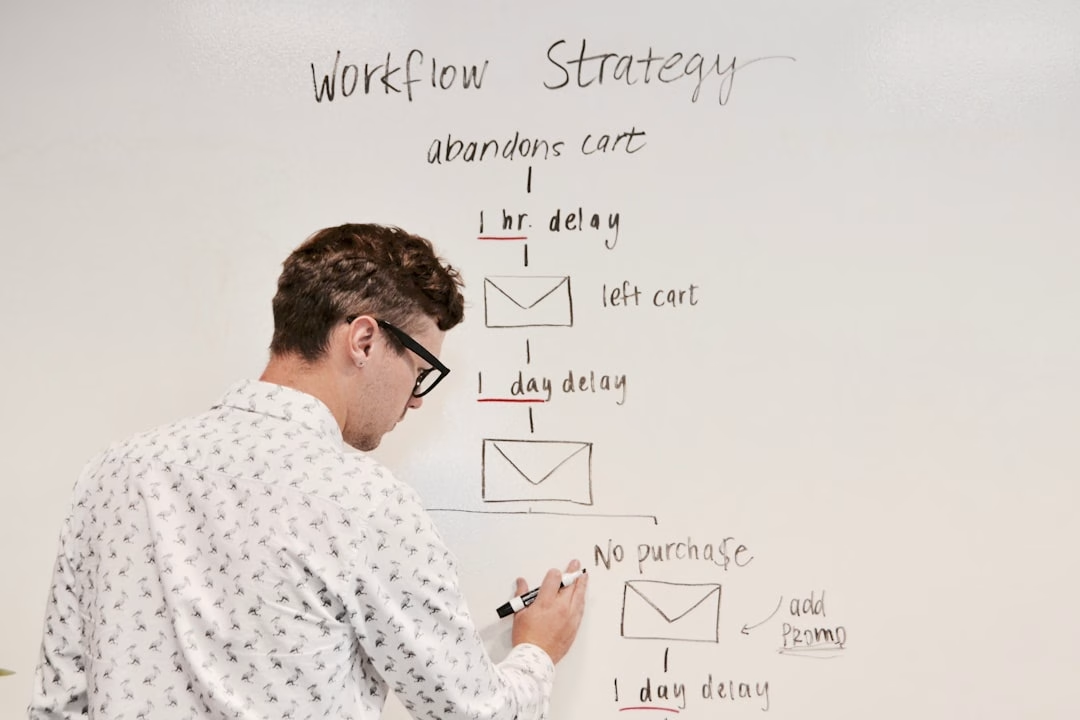
Utilizing Abandoned Cart Emails (for service packages or consultations)
Even in service businesses, there are moments where a prospect might leave before completing a booking or purchase.
Remind Them of What They Left Behind
Clearly state what they were in the process of booking or purchasing.
Offer Assistance or Answer Questions
Provide a direct link to contact you or an FAQ.
Include a Gentle Incentive
A small discount or added bonus can often seal the deal.
When considering effective email marketing strategies for service-based businesses, it’s essential to understand the importance of maintaining a clean email list. A well-managed list can significantly enhance your outreach efforts and improve engagement rates. For more insights on this topic, you might find it helpful to explore the article on the value of a clean email list, which discusses how marketers can effectively manage their suppression lists. You can read more about it here.
Measuring and Optimizing Your Email Efforts: Data-Driven Growth
| Strategy | Description |
|---|---|
| Targeted Email Lists | Creating segmented email lists based on customer preferences and behaviors. |
| Personalized Content | Customizing email content to address individual customer needs and interests. |
| Mobile Optimization | Ensuring that emails are optimized for mobile devices to reach a wider audience. |
| Clear Call-to-Action | Including a clear and compelling call-to-action to encourage customer engagement. |
| Analytics and Testing | Using data analytics to measure email performance and testing different strategies for improvement. |
You can’t improve what you don’t measure. Regularly analyzing your email marketing performance is essential for identifying what’s working and what needs tweaking.
Key Performance Indicators (KPIs) to Track
Understanding these metrics will reveal the health of your email campaigns.
Open Rate
The percentage of recipients who opened your email. A low open rate often indicates issues with your subject lines or sender reputation.
Click-Through Rate (CTR)
The percentage of recipients who clicked on a link within your email. A low CTR suggests your content or CTAs aren’t engaging enough.
Conversion Rate
The percentage of recipients who completed the desired action (e.g., booked a consultation, made a purchase) after clicking through from your email. This is the ultimate measure of your email’s success.
Bounce Rate
The percentage of emails that couldn’t be delivered. High bounce rates can damage your sender reputation. Differentiate between soft bounces (temporary issues) and hard bounces (permanent delivery failures, usually due to invalid email addresses).
Unsubscribe Rate
The percentage of recipients who opted out of your list. While a certain level is normal, a high unsubscribe rate signals that your content isn’t relevant or you’re emailing too frequently.
A/B Testing Your Emails for Continuous Improvement
Don’t guess what works best; test it! A/B testing allows you to make data-backed decisions about your email strategy.
Subject Line Variations
Test different subject lines to see which ones yield higher open rates.
CTA Button Placement and Wording
Experiment with where you place your CTA and the language you use to encourage clicks.
Email Layout and Design
See if a simpler or more visually engaging design performs better.
Sending Times
Determine the optimal time to send your emails for your specific audience.
List Hygiene and Maintenance
A clean, engaged list is a powerful asset. Regularly pruning inactive subscribers and ensuring data accuracy is crucial.
Identifying and Removing Inactive Subscribers
Periodically send re-engagement campaigns. If subscribers remain unresponsive, it’s often best to remove them to improve your deliverability and engagement metrics.
Verifying Email Addresses
Use tools to ensure the email addresses on your list are valid, reducing your bounce rate.
Encouraging Subscribers to Update Their Preferences
Periodically ask subscribers to confirm their interests and preferred communication frequency.
By consistently applying these strategies, you’ll transform your email marketing from a passive communication tool into a dynamic engine for growth, nurturing relationships, and maximizing the value of every client interaction. Your service is your passion; let your email marketing be the amplifier that shares that passion with the world and brings you the clients you deserve.
FAQs
What are some effective email marketing strategies for service-based businesses?
Some effective email marketing strategies for service-based businesses include segmenting your email list, personalizing your emails, providing valuable content, using automation to send targeted messages, and optimizing for mobile devices.
How can service-based businesses use email marketing to generate leads and sales?
Service-based businesses can use email marketing to generate leads and sales by offering exclusive promotions, showcasing customer testimonials, providing educational content, and nurturing leads through targeted email campaigns.
What are the benefits of using email marketing for service-based businesses?
The benefits of using email marketing for service-based businesses include building and maintaining customer relationships, increasing brand awareness, driving website traffic, generating leads and sales, and providing a cost-effective marketing channel.
How can service-based businesses measure the success of their email marketing efforts?
Service-based businesses can measure the success of their email marketing efforts by tracking key metrics such as open rates, click-through rates, conversion rates, unsubscribe rates, and overall return on investment (ROI) from email campaigns.
What are some best practices for service-based businesses to follow when implementing email marketing strategies?
Some best practices for service-based businesses to follow when implementing email marketing strategies include obtaining permission before sending emails, ensuring emails are mobile-friendly, testing different subject lines and content, maintaining a consistent sending schedule, and complying with email marketing regulations such as GDPR and CAN-SPAM.